
Safety
General information, not medical advice
Your prescriber and the leaflet in your pack know your situation. This page does not.
- Follow your prescriber and the leaflet
- Don't start, stop, or change a dose on your own
- Doses and warnings differ by country and product
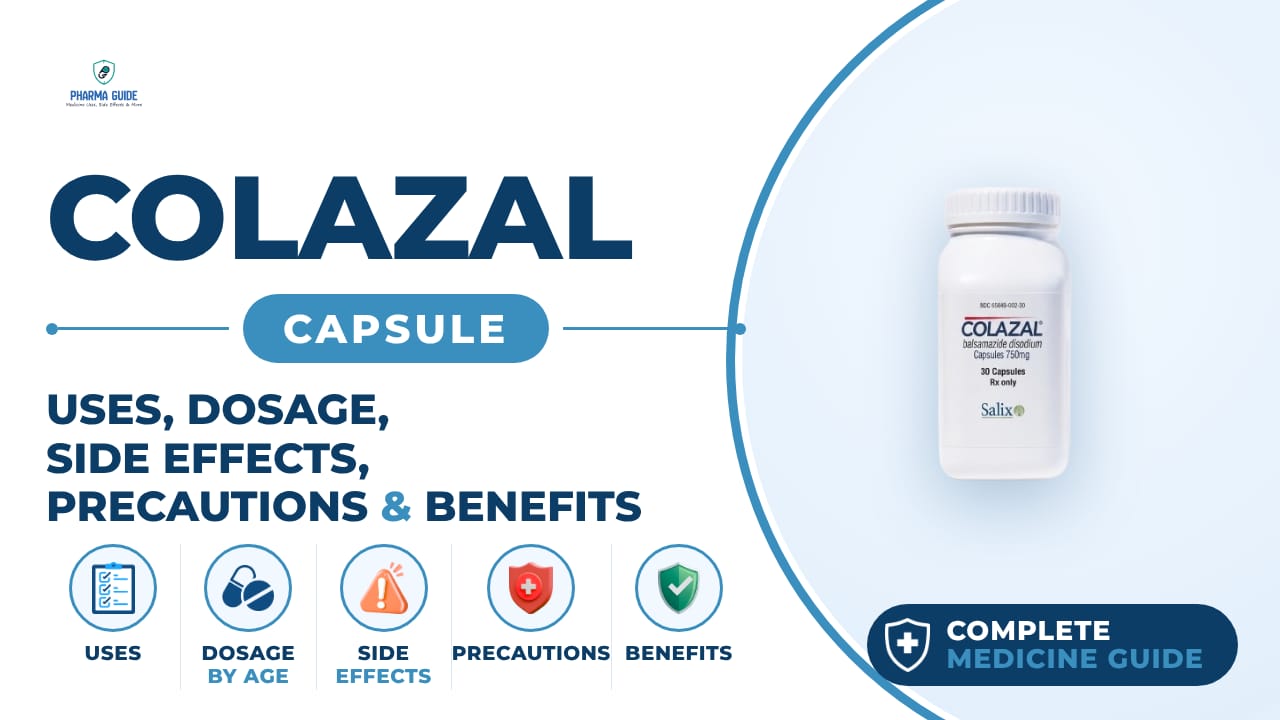
Colazal Capsule: Uses, Dosage, Side Effects, Precautions and Alternates
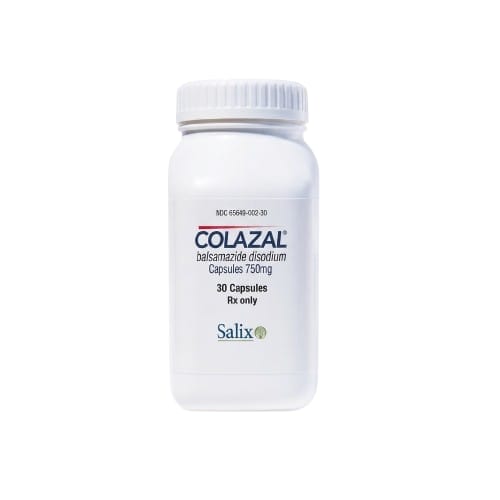
| Generic name | balsalazide |
|---|---|
| Drug class | 5-aminosalicylates |
| Forms | Capsule |
Quick overview
Colazal Capsule contains the active ingredient balsalazide, part of the 5-aminosalicylates drug class. It is a prescription anti-inflammatory medicine used to treat active ulcerative colitis, a disease that causes swelling and irritation in the colon. Colazal works in the colon to help control symptoms such as inflammation, diarrhea, rectal bleeding, and abdominal pain.
What is Colazal Capsule
Colazal is a prescription anti-inflammatory capsule used to treat active ulcerative colitis, a disease that causes swelling and irritation in the colon.
Colazal Capsule uses
- Mild to moderate ulcerative colitis
- Inflammation of the colon associated with ulcerative colitis
- Diarrhea associated with ulcerative colitis
- Rectal bleeding caused by ulcerative colitis
- Abdominal pain associated with ulcerative colitis
Benefits of Colazal Capsule
- Reduces inflammation in the colon.
- Helps relieve diarrhea.
- Helps reduce rectal bleeding.
- May ease abdominal discomfort.
- Helps control ulcerative colitis symptoms.
How Colazal Capsule works
Colazal travels through the body without being broken down until it reaches the colon. There, gut bacteria convert it into mesalamine, the active ingredient, which calms inflammation in the lining of the colon.
Colazal Capsule dosage
Colazal can be taken with or without food. Swallow the capsules whole; do not cut, break, crush, or chew them. If you cannot swallow a capsule whole, open it and sprinkle the contents into a spoonful of applesauce, then swallow right away — do not save the mixture for later. The medicine from the capsule may stain your teeth or tongue yellow or orange when mixed with food. Drink enough fluids while taking this medicine. Call your doctor if your symptoms do not improve or get worse. This medicine is usually taken only for a short time. Colazal capsules should not be given to children younger than 5 years old.
| Age group | Dose |
|---|---|
| Under 18 years | Not recommended |
| 18–64 years | 2250 mg, 3 times/day |
| 65+ years | 2250 mg, 3 times/day |
Available forms and strengths
- Capsule
Side effects of Colazal Capsule
Common
- Headache
- Mild or occasional nausea, vomiting, stomach pain, diarrhea
- Joint pain
- Fever
- Cold symptoms such as stuffy nose, sneezing, sore throat
- Trouble sleeping (insomnia)
- Loss of appetite
- Fatigue or gas
Serious
- Allergic reaction: hives, difficulty breathing, swelling of face, lips, tongue, or throat
- Pain or burning when you urinate
- Worsening colitis symptoms: fever, stomach pain, cramps, or bloody diarrhea
- Kidney problems: little or no urinating, swelling, rapid weight gain
- Liver problems: upper stomach pain, loss of appetite, dark urine, clay-colored stools, jaundice
- Low red blood cells (anemia): pale skin, unusual tiredness, feeling light-headed or short of breath, cold hands and feet
- Severe skin reactions such as Stevens-Johnson syndrome, toxic epidermal necrolysis, DRESS, or acute generalized exanthematous pustulosis
- Kidney stones: severe side or back pain, blood in urine
Warnings and precautions
- Do not use this medicine if you are allergic to balsalazide or mesalamine, or to aspirin or other salicylate medicines.
- This medicine can sometimes cause a reaction that looks like a worsening of ulcerative colitis, with cramping, stomach pain, bloody diarrhea, fever, headache, and rash. If this happens, stop the medicine and contact your doctor right away.
- People with a stomach condition called pyloric stenosis, or other blockages in the upper digestive tract, should avoid this medicine because it can get stuck and not reach the colon properly.
- People with certain skin conditions may have worse reactions to sunlight while taking this medicine. Protect your skin from the sun.
- Drink enough fluids while on this medicine to help lower the risk of kidney stones.
- Colazal capsules contain sodium, so talk to your doctor before use if you're on a low-salt diet.
- Tell your doctor if you are pregnant or plan to become pregnant. It isn't known for certain whether this medicine will harm an unborn baby, but untreated ulcerative colitis during pregnancy can cause problems like early delivery or low birth weight, so your doctor may decide the benefits outweigh the risks.
- If you are breastfeeding, tell your doctor if you notice diarrhea in your nursing baby, since small amounts of this medicine can pass into breast milk.
- Tell your doctor if you have ever had kidney disease. This medicine can affect kidney function, so your doctor may check your kidneys before and during treatment.
- Tell your doctor if you have ever had liver disease. There have been reports of liver failure in people with existing liver disease who took this type of medicine.
- No major direct interaction with alcohol is established, but alcohol may worsen gastrointestinal symptoms.
- Colazal generally does not directly impair driving.
Storage
- Store at room temperature away from moisture and heat.
- Store at 20° to 25°C (68° to 77°F); excursions permitted between 15° and 30°C (59° and 86°F).
When to see a doctor
- Get emergency medical help right away if you have signs of a serious allergic reaction, like hives, trouble breathing, or swelling of your face, lips, tongue, or throat.
- Call your doctor right away if you have signs of kidney problems, liver problems, worsening colitis, or anemia.
- Stop taking this medicine and contact your doctor immediately if you notice signs of a severe skin reaction or other signs of an allergic response.
- If you think you have taken too much of this medicine, seek emergency medical help or contact your local poison control center right away.
Alternatives
- Mesalamine
- Asacol
- Apriso
- Delzicol
Watch the video
FAQs
What is Colazal Capsule used for?
Colazal is a prescription anti-inflammatory capsule used to treat mild to moderate active ulcerative colitis, helping control inflammation, diarrhea, rectal bleeding, and abdominal pain caused by the disease.
How does Colazal Capsule work?
Colazal passes through the body intact until it reaches the colon, where gut bacteria convert it into mesalamine, the active ingredient that calms inflammation in the colon lining.
What is the dosage of Colazal Capsule for adults?
Adults aged 18 to 64 and those 65 and older typically take 2250 mg three times a day. It is not recommended for children under 18, and capsules should not be given to children younger than 5.
Can I open a Colazal capsule if I can't swallow it whole?
Yes, if you cannot swallow the capsule whole, you can open it and sprinkle the contents into a spoonful of applesauce and swallow it right away. Note that the medicine may stain teeth or tongue yellow or orange.
What are the serious side effects of Colazal Capsule?
Serious side effects include allergic reactions, worsening colitis symptoms, kidney problems, liver problems, anemia, severe skin reactions, and kidney stones. Seek medical help immediately if these occur.
General information, not medical advice
Your prescriber and the leaflet in your pack know your situation. This page does not.
- Follow your prescriber and the leaflet
- Don't start, stop, or change a dose on your own
- Doses and warnings differ by country and product
Sources
Video
Related medicines

Injectafer Injection: Uses, Dosage, Side Effects, Precautions and Alternates
Iron products
Injectafer (ferric carboxymaltose) treats iron deficiency anemia and heart failure-related iron deficiency via IV. Learn uses, dosage, side effects, and

Gliclazide Tablet: Uses, Dosage, Side Effects, Precautions and Alternates
Sulfonylurea (hypoglycemic/antidiabetic agent)
Gliclazide Tablet is a sulfonylurea for type 2 diabetes that boosts insulin release. Learn about dosage, side effects, warnings, and precautions.