
Safety
General information, not medical advice
Your prescriber and the leaflet in your pack know your situation. This page does not.
- Follow your prescriber and the leaflet
- Don't start, stop, or change a dose on your own
- Doses and warnings differ by country and product
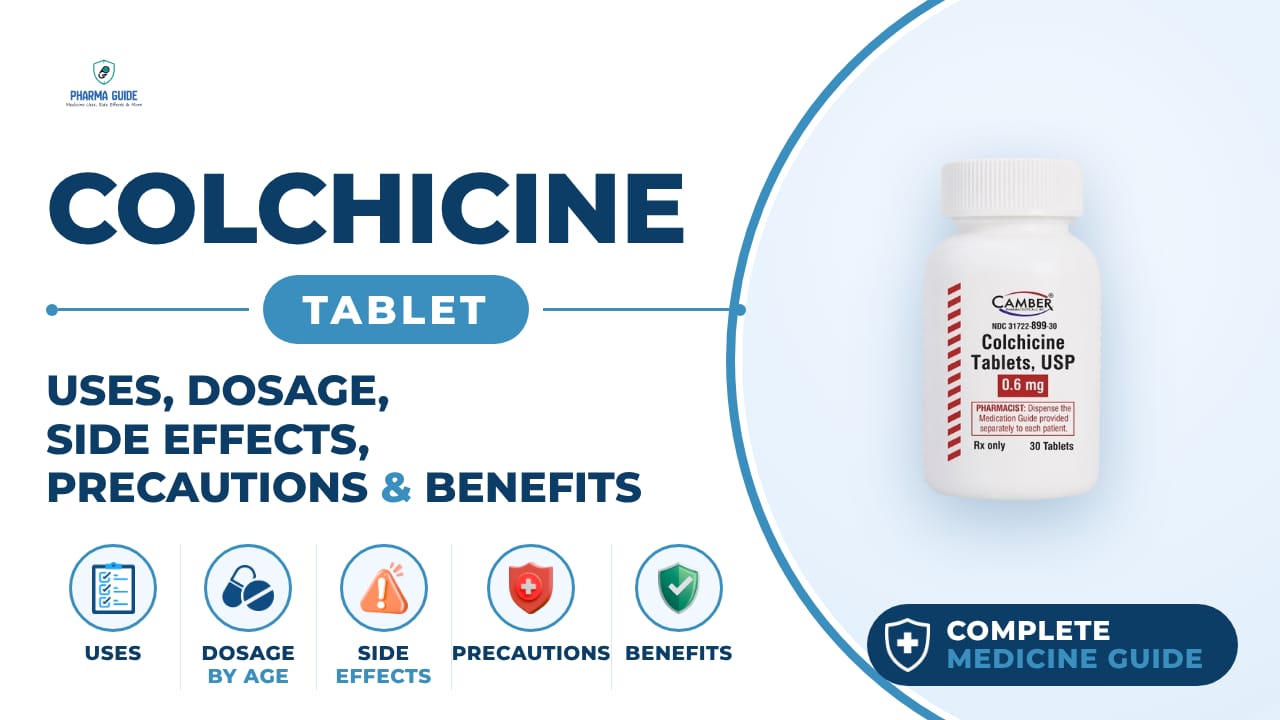
Colchicine Tablet: Uses, Dosage, Side Effects, Precautions and Alternates
| Generic name | colchicine |
|---|---|
| Drug class | alkaloid, antigout agent |
| Forms | Capsule, Tablet, Solution (liquid) |
Quick overview
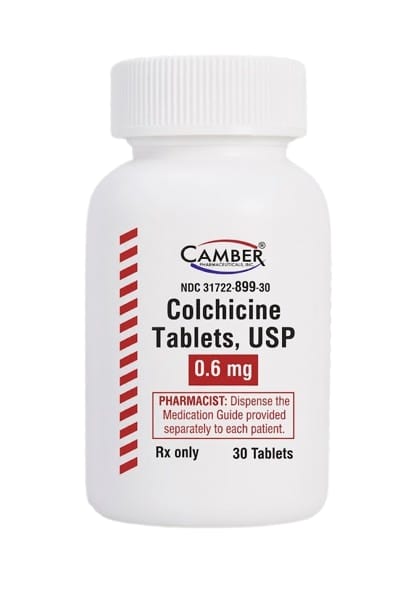
Colchicine Tablet (generic name: colchicine) is a prescription antigout alkaloid medicine made from the autumn crocus plant. It is used to prevent and treat gout attacks, treat familial Mediterranean fever, and lower the risk of certain heart-related problems in people with artery disease. It comes as a tablet, capsule, or liquid solution.
What is Colchicine Tablet
Colchicine is a medicine made from a plant called autumn crocus. It has been used for thousands of years to treat joint pain and swelling. It is a prescription-only medicine that comes as a tablet, capsule, or liquid.
Colchicine Tablet uses
- Preventing and treating gout attacks (gouty arthritis)
- Treating familial Mediterranean fever (FMF), a rare condition that causes fever and inflammation
- Lowering the risk of heart attack, stroke, certain heart procedures, and death related to heart disease in people with artery disease or multiple heart risk factors
- Used off-label for other inflammatory conditions under a doctor's supervision
Benefits of Colchicine Tablet
- Reduces how often gout flares happen when starting other gout medicines
- Helps reduce pain during a gout flare
- Lowers the number of FMF attacks
- Lowers the risk of serious heart problems in people with artery disease
How Colchicine Tablet works
Colchicine works by blocking the activity of certain white blood cells involved in inflammation. It attaches to small building blocks inside cells called tubulin, stopping these cells from forming the structures they need to move and release substances that cause swelling and pain.
Colchicine Tablet dosage
You may take this medicine with or without food. People taking small regular amounts for prevention should keep taking it as directed, even when feeling well, since stopping too soon can cause symptoms to return. People taking colchicine only during a gout attack should start at the first sign of the attack for the best effect.
Stop taking it for an attack as soon as pain is relieved, or at the first sign of nausea, vomiting, stomach pain, or diarrhea, or once the largest amount your doctor allowed has been taken. After taking colchicine tablets for an attack, wait at least 3 days before taking more; after an injection, wait at least 7 days. Elderly patients may need to wait even longer.
If you are taking the liquid form, shake it well before each use and measure it with a proper measuring device, not a household spoon. Avoid eating grapefruit or drinking grapefruit juice while taking this medicine, since it can increase the amount of colchicine in your body. Keep taking the medicine for the full course of treatment even if you start feeling better after a few doses.
| Age group | Dose |
|---|---|
| Under 18 years | Not recommended |
| 18–60 years | 0.5 mg, once/day |
| 60+ years | 0.5 mg, once/day |
Available forms and strengths
- Capsule
- Tablet
- Solution (liquid)
Side effects of Colchicine Tablet
Common
- Diarrhea
- Nausea
- Vomiting
- Stomach pain or cramping
- Sore throat
- Headache
- Fatigue
- Hair loss or thinning hair
- Loss of appetite
- Stomach bloating or cramping from gas
Serious
- Severe or prolonged diarrhea lasting more than two weeks
- Unusual bleeding or bruising, black tarry stools, or blood in urine or stool
- Signs of infection such as fever, chills, cough, sore throat, or painful urination
- Muscle pain, tenderness, or weakness
- Numbness, tingling, or burning feeling in the fingers or toes
- Dark-colored urine
- Severe tiredness that affects daily activities
- Signs of a serious allergic reaction such as swelling of the face, lips, mouth, tongue, or throat, trouble breathing, or widespread rash or hives
- Signs of low blood cell counts such as fever, pale skin, frequent infections, or a fast or abnormal heartbeat
Warnings and precautions
- Colchicine should only be used during pregnancy if the potential benefit to the mother justifies the possible risk to the unborn baby.
- Colchicine passes into breast milk, but it is generally considered safe to take while breastfeeding, based on evidence that it does not increase risk of harm to the baby. Tell your doctor if your breastfed baby develops diarrhea.
- People with severe kidney problems should not take colchicine, and dose changes may be needed for those with mild to moderate kidney problems, especially if combined with certain other medicines.
- People with severe liver problems should not take colchicine, and caution is needed since the medicine may be removed from the body more slowly.
- Drinking large amounts of alcohol while taking colchicine may increase the risk of stomach upset and raise uric acid levels, which can make gout worse, so alcohol intake should be limited.
- Colchicine has a narrow safety margin, meaning the difference between an effective dose and a dangerous dose is small. Overdose can be fatal, even at doses that are not extremely large.
- Taking too much colchicine can cause severe poisoning that affects multiple organs and can be deadly; there is no specific treatment, only supportive care.
- Do not take colchicine together with certain medicines, including some HIV medicines, certain antibiotics, antifungals, and cyclosporine, as this combination can cause dangerous levels of colchicine in the body.
- Keep this medicine safely stored away from children, as accidental ingestion by young children can be fatal.
- Never take more colchicine than prescribed to try to relieve a gout flare that isn't improving; instead, contact your doctor.
Storage
- Store the medicine in a closed container at room temperature, away from heat, moisture, and direct light.
- Keep from freezing.
- Keep out of the reach of children.
- Do not keep outdated medicine or medicine no longer needed.
- Ask your healthcare professional how you should dispose of any medicine you do not use.
- Tablets should be stored at room temperature, between 68 F to 77 F (20 C to 25 C), and can tolerate 59 F to 86 F (15 C to 30 C) briefly, such as during transport. Store in a cool, dry place and protect from light. Keep tablets in the blister pack until ready to use.
When to see a doctor
- Get medical help right away if you have signs of an allergic reaction, such as swelling of the face, lips, mouth, tongue, or throat, trouble breathing, wheezing, or widespread rash or hives.
- Get medical help right away if you notice unusual bleeding or bruising, fever, frequent infections, unusual tiredness, or a fast or abnormal heartbeat, as these can be signs of blood problems.
- Stop taking colchicine and get help right away if you have unexplained muscle pain, weakness, tenderness, dark urine, or fever, as these can be signs of serious muscle damage.
- Stop taking colchicine and call your doctor if you develop pain, burning, tingling, numbness, or weakness in your arms, hands, legs, or feet, as this could mean nerve damage.
- If you think you or someone else has taken too much colchicine, get medical help right away or contact a poison control center.
Alternatives
- Probenecid
- Febuxostat
- Allopurinol
Watch the video
FAQs
What is Colchicine Tablet used for?
It is used to prevent and treat gout attacks, treat familial Mediterranean fever, and lower the risk of heart attack, stroke, certain heart procedures, and death related to heart disease in people with artery disease or multiple heart risk factors.
How should I take Colchicine Tablet?
You may take it with or without food. People taking it for prevention should keep taking it as directed even when feeling well, while those taking it for an attack should start at the first sign of the attack and stop once pain is relieved or at the first sign of nausea, vomiting, stomach pain, or diarrhea.
Can I drink grapefruit juice with Colchicine Tablet?
No, you should avoid eating grapefruit or drinking grapefruit juice while taking this medicine, since it can increase the amount of colchicine in your body.
What are the serious side effects of Colchicine Tablet?
Serious side effects include severe or prolonged diarrhea, unusual bleeding or bruising, signs of infection, muscle pain or weakness, numbness or tingling in fingers or toes, dark-colored urine, severe tiredness, signs of allergic reaction, and signs of low blood cell counts.
Who should not take Colchicine Tablet?
People with severe kidney problems or severe liver problems should not take colchicine, and those with mild to moderate kidney problems may need dose changes, especially if combined with certain other medicines.
General information, not medical advice
Your prescriber and the leaflet in your pack know your situation. This page does not.
- Follow your prescriber and the leaflet
- Don't start, stop, or change a dose on your own
- Doses and warnings differ by country and product
Sources
- https://pmc.ncbi.nlm.nih.gov/articles/PMC10986813/
- https://www.mayoclinic.org/drugs-supplements/colchicine-oral-route/description/drg-20067653
- https://www.rupahealth.com/post/colchicine-uses-benefits-and-side-effects-explained
- https://www.goodrx.com/colchicine/most-common-colchicine-side-effects
- https://www.webmd.com/drugs/2/drug-4075/colchicine-oral/details
Video
Related medicines

Injectafer Injection: Uses, Dosage, Side Effects, Precautions and Alternates
Iron products
Injectafer (ferric carboxymaltose) treats iron deficiency anemia and heart failure-related iron deficiency via IV. Learn uses, dosage, side effects, and

Gliclazide Tablet: Uses, Dosage, Side Effects, Precautions and Alternates
Sulfonylurea (hypoglycemic/antidiabetic agent)
Gliclazide Tablet is a sulfonylurea for type 2 diabetes that boosts insulin release. Learn about dosage, side effects, warnings, and precautions.