
Safety
General information, not medical advice
Your prescriber and the leaflet in your pack know your situation. This page does not.
- Follow your prescriber and the leaflet
- Don't start, stop, or change a dose on your own
- Doses and warnings differ by country and product
Colestipol Tablet: Uses, Dosage, Side Effects, Precautions and Alternates
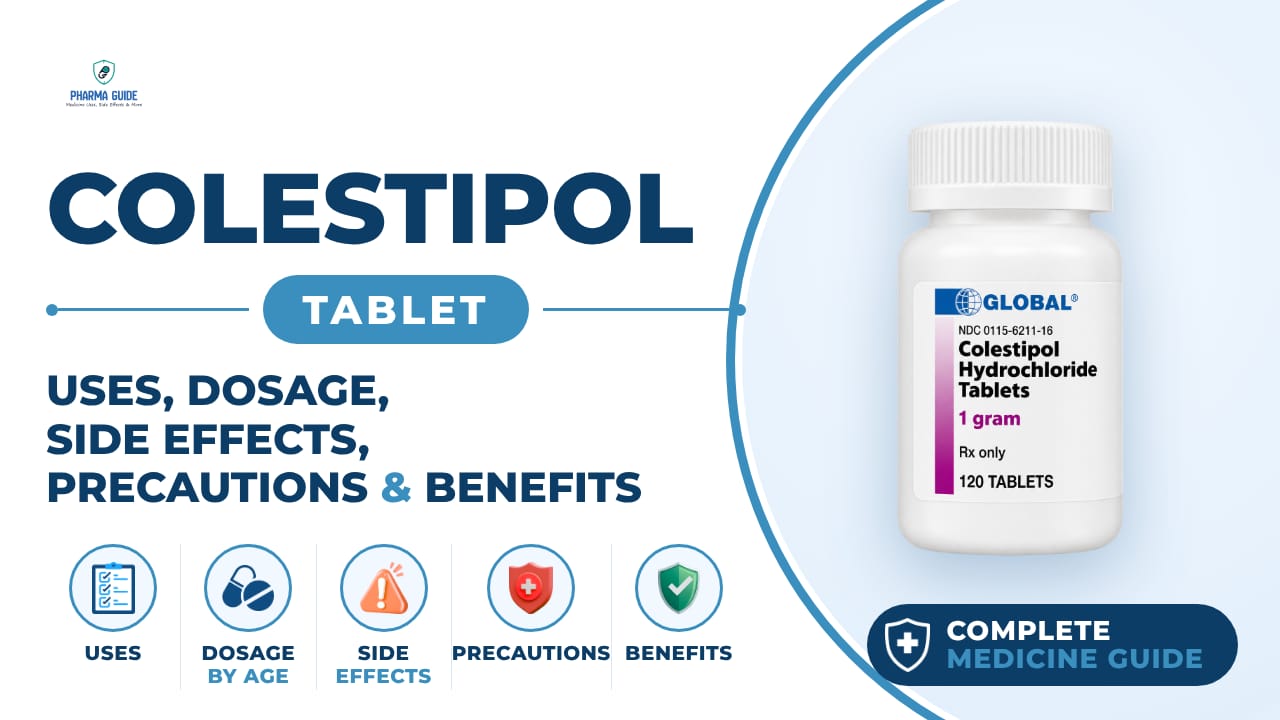
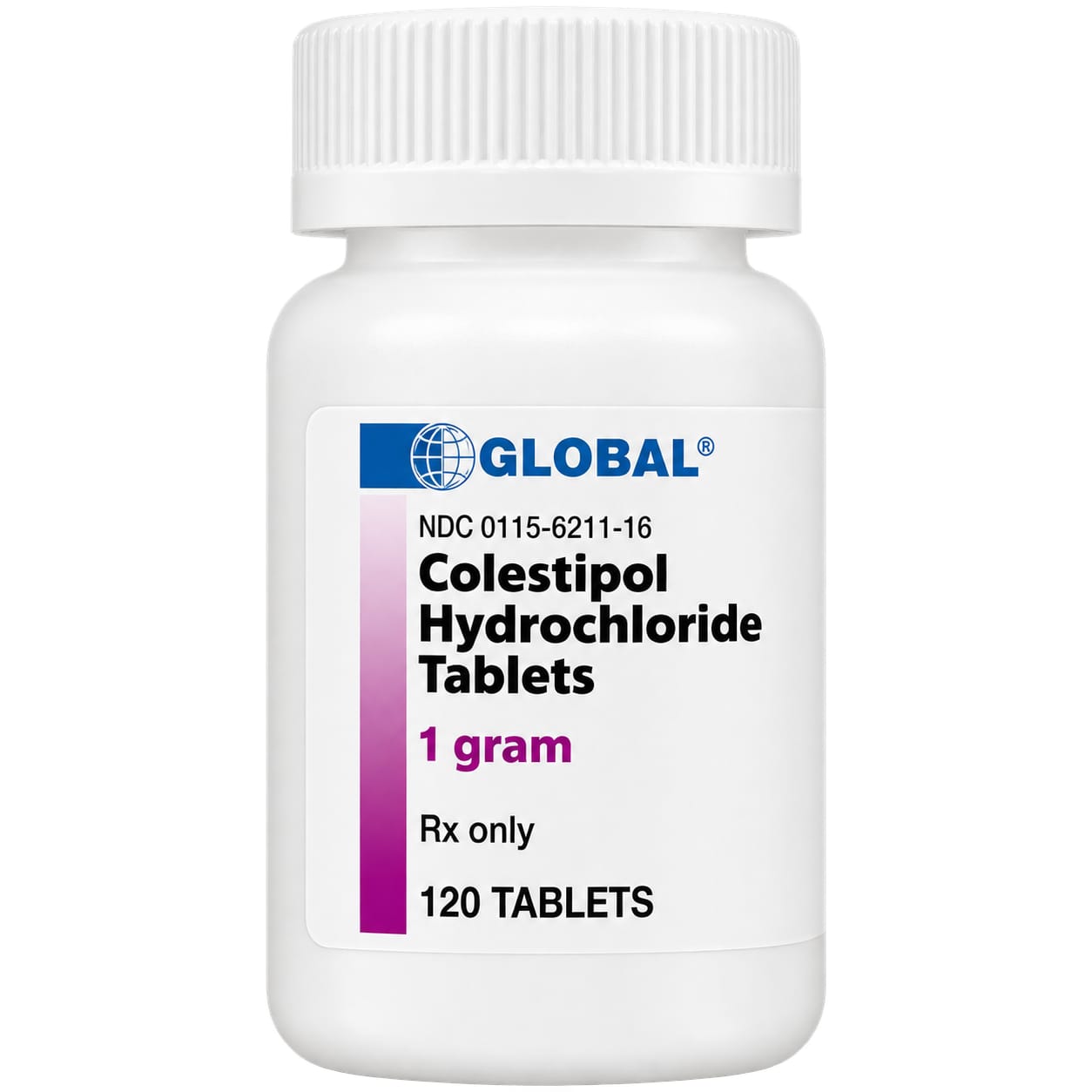
| Generic name | Colestipol hydrochloride |
|---|---|
| Drug class | Bile acid sequestrant |
| Forms | Tablet, Granules for oral suspension |
Quick overview
Colestipol Tablet (colestipol hydrochloride) is a bile acid sequestrant taken by mouth to help lower high cholesterol in adults, used together with diet and exercise. It works by removing bile acids from the body, prompting the liver to use more cholesterol from the blood. It is taken as whole tablets with plenty of liquid, and common side effects involve digestive symptoms such as constipation and gas.
What is Colestipol Tablet
Colestipol is a cholesterol-lowering medicine taken by mouth. It is used along with diet and exercise to treat high cholesterol in adults.
Colestipol Tablet uses
- Lowering elevated total and LDL ("bad") cholesterol in adults with high cholesterol who do not respond well enough to diet alone
- Treats high LDL (bad) cholesterol
- Helps lower total cholesterol levels
- Used alongside a cholesterol-lowering diet
- Helps manage primary hypercholesterolemia (high blood cholesterol)
- May be prescribed to help achieve cholesterol targets when diet alone is insufficient
Benefits of Colestipol Tablet
- Lowers LDL ("bad") cholesterol, which may reduce the risk of hardened arteries, heart attack, and stroke
- Can be combined with other cholesterol-lowering treatments such as niacin or lovastatin for added effect
- Helps reduce total cholesterol
- Supports management of high cholesterol alongside dietary changes
- May help reduce the risk associated with persistently elevated cholesterol when used as prescribed
- Can help lower cholesterol in people who cannot reach their target with diet alone
How Colestipol Tablet works
Colestipol attaches to bile acids in your intestines so they are removed from your body in your stool. Since bile acids are made from cholesterol, your liver uses more cholesterol from your blood to replace them, which lowers the amount of cholesterol in your blood.
Colestipol Tablet dosage
Swallow each tablet whole; do not cut, split, crush, or chew the tablets. Take one tablet at a time and swallow it promptly with a full glass of water or another liquid, drinking plenty of liquid as you swallow each tablet to make swallowing easier.
Take any other oral medications at least 1 hour before or 4 hours after taking colestipol, since it can interfere with how your body absorbs them. Continue taking colestipol even if you feel well; do not stop without talking to your doctor. Your doctor may gradually raise your dose over time depending on how you respond.
Follow a low-fat, low-cholesterol diet and any exercise plan recommended by your doctor or dietitian. It may take from a couple of weeks to several months before your cholesterol levels improve. If you have trouble swallowing tablets or a tablet feels stuck after swallowing, contact your doctor and do not take another dose without their advice.
| Age group | Dose |
|---|---|
| Under 18 years | Not established |
| 18–64 years | Initially 2 g once or twice daily; adjust gradually as prescribed |
| 65+ years | Initially 2 g once or twice daily; adjust gradually as prescribed |
Available forms and strengths
- Tablet
- Granules for oral suspension
Side effects of Colestipol Tablet
Common
- Constipation
- Belching
- Nausea
- Vomiting
- Gas
- Bloating
- Stomach pain or cramps
- Heartburn
- Diarrhea
- Hemorrhoids
Serious
- Unusual bleeding, such as bleeding from the gums or rectum
- Severe constipation or stomach pain
- Black, bloody, or tarry stools
- Trouble swallowing or a tablet feeling stuck in the throat or chest
- Signs of an allergic reaction such as hives, difficulty breathing, or swelling of the face, lips, tongue, or throat
Warnings and precautions
- Colestipol tablets must be swallowed one at a time, whole, with plenty of liquid. Do not cut, crush, or chew them, as this can cause choking or swallowing problems.
- Never swallow colestipol granules dry; mix them with liquid or food first, since taking them dry could cause choking.
- Colestipol can reduce absorption of folic acid and vitamins A, D, E, and K, which may require supplementation.
- Long-term use of colestipol can increase bleeding risk due to vitamin K deficiency.
- Colestipol can reduce how well other medicines are absorbed, so other oral medicines should be taken at least 1 hour before or 4 hours after colestipol.
- Colestipol can cause or worsen constipation, and the dose is increased gradually to help reduce this risk.
- Some granule forms may contain phenylalanine, which can be harmful to people with phenylketonuria (PKU).
- Colestipol is not expected to harm an unborn baby at normal doses because it is not absorbed into the body, but it can reduce absorption of vitamins needed during pregnancy. Tell your doctor if you are pregnant or planning to become pregnant.
- Colestipol can reduce absorption of vitamins that are important for breastfeeding. Tell your doctor if you are breastfeeding before taking this medicine.
- Tell your doctor if you have liver disease before taking colestipol.
- Try to limit alcohol while taking colestipol, since drinking too much alcohol can raise cholesterol and make it harder to reach your cholesterol goals.
Storage
- Keep this medication in the container it came in, tightly closed, and out of reach of children
- Store it at room temperature and away from excess heat and moisture (not in the bathroom)
- Protect from moisture
- Dispose of unneeded medications in a way so that pets, children, and other people cannot take them
- Do not flush this medication down the toilet; use a medicine take-back program
When to see a doctor
- Get emergency medical help right away if you have signs of an allergic reaction, such as hives, trouble breathing, or swelling of the face, lips, tongue, or throat.
- Call your doctor right away if you have unusual bleeding, such as bleeding from the gums or rectum.
- Call your doctor at once if you have trouble swallowing, severe constipation or stomach pain, or black, bloody, or tarry stools.
- If a tablet feels stuck in your throat or chest after swallowing, causing pressure or discomfort, contact your doctor and do not take another dose without their advice.
- Get medical help right away if you have trouble breathing or feel pressure or discomfort in your throat after taking colestipol.
- If you think you have taken too much colestipol, seek emergency medical help or contact your local poison control center.
Alternatives
- Cholestyramine
- Atorvastatin
- Rosuvastatin
Watch the video
FAQs
What is Colestipol Tablet used for?
It is used along with diet and exercise to lower elevated total and LDL (bad) cholesterol in adults who do not respond well enough to diet alone.
How does Colestipol Tablet work?
It attaches to bile acids in the intestines so they are removed in the stool. Since bile acids are made from cholesterol, the liver uses more cholesterol from the blood to replace them, lowering blood cholesterol levels.
How should I take Colestipol Tablet?
Swallow each tablet whole with a full glass of water or another liquid; do not cut, crush, or chew it. Take other oral medications at least 1 hour before or 4 hours after colestipol.
What are the common side effects of Colestipol Tablet?
Common side effects include constipation, belching, nausea, vomiting, gas, bloating, stomach pain or cramps, heartburn, diarrhea, and hemorrhoids.
What precautions should I know before taking Colestipol Tablet?
Colestipol can reduce absorption of folic acid and vitamins A, D, E, and K, and long-term use can increase bleeding risk due to vitamin K deficiency, so supplementation may be needed.
General information, not medical advice
Your prescriber and the leaflet in your pack know your situation. This page does not.
- Follow your prescriber and the leaflet
- Don't start, stop, or change a dose on your own
- Doses and warnings differ by country and product
Sources
Video
Related medicines
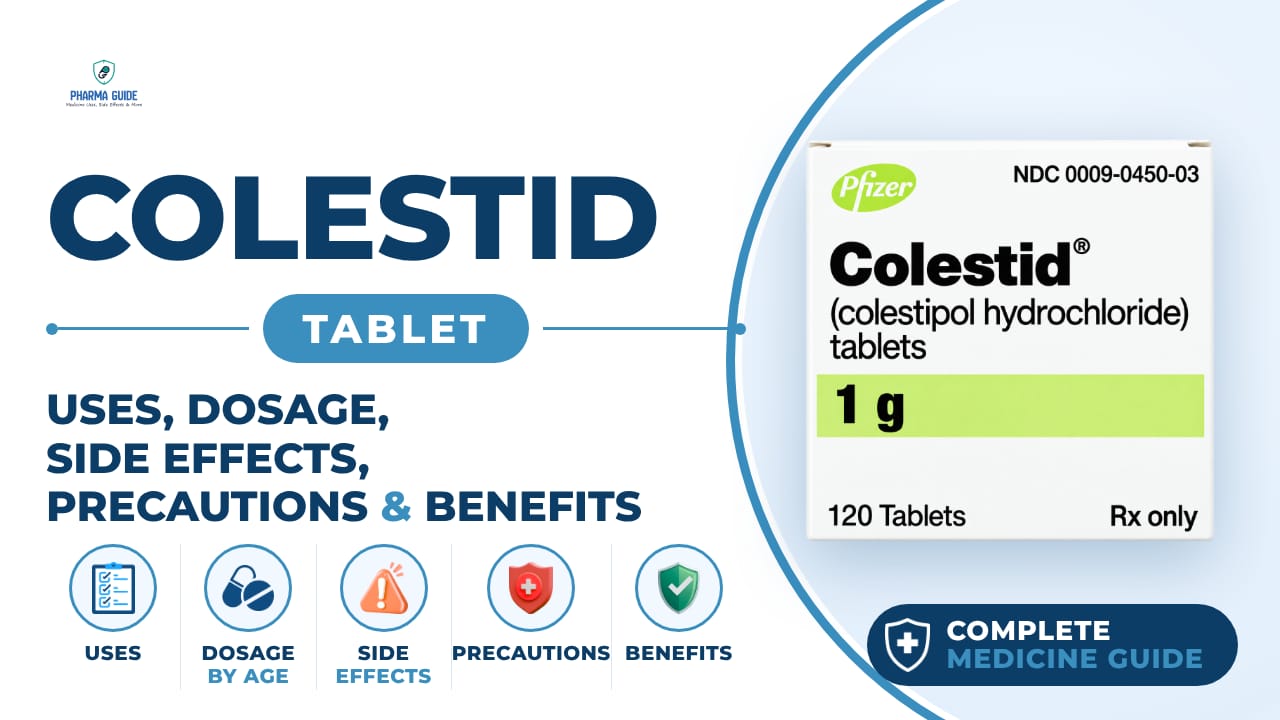
Colestid Tablet: Uses, Dosage, Side Effects, Precautions and Alternates
Bile acid sequestrant
Colestid Tablet (colestipol) lowers LDL cholesterol with diet and exercise. Learn how it works, dosage, side effects, warnings, and precautions.

Injectafer Injection: Uses, Dosage, Side Effects, Precautions and Alternates
Iron products
Injectafer (ferric carboxymaltose) treats iron deficiency anemia and heart failure-related iron deficiency via IV. Learn uses, dosage, side effects, and