
Safety
General information, not medical advice
Your prescriber and the leaflet in your pack know your situation. This page does not.
- Follow your prescriber and the leaflet
- Don't start, stop, or change a dose on your own
- Doses and warnings differ by country and product
Colistin Injection: Uses, Dosage, Side Effects, Precautions and Alternates
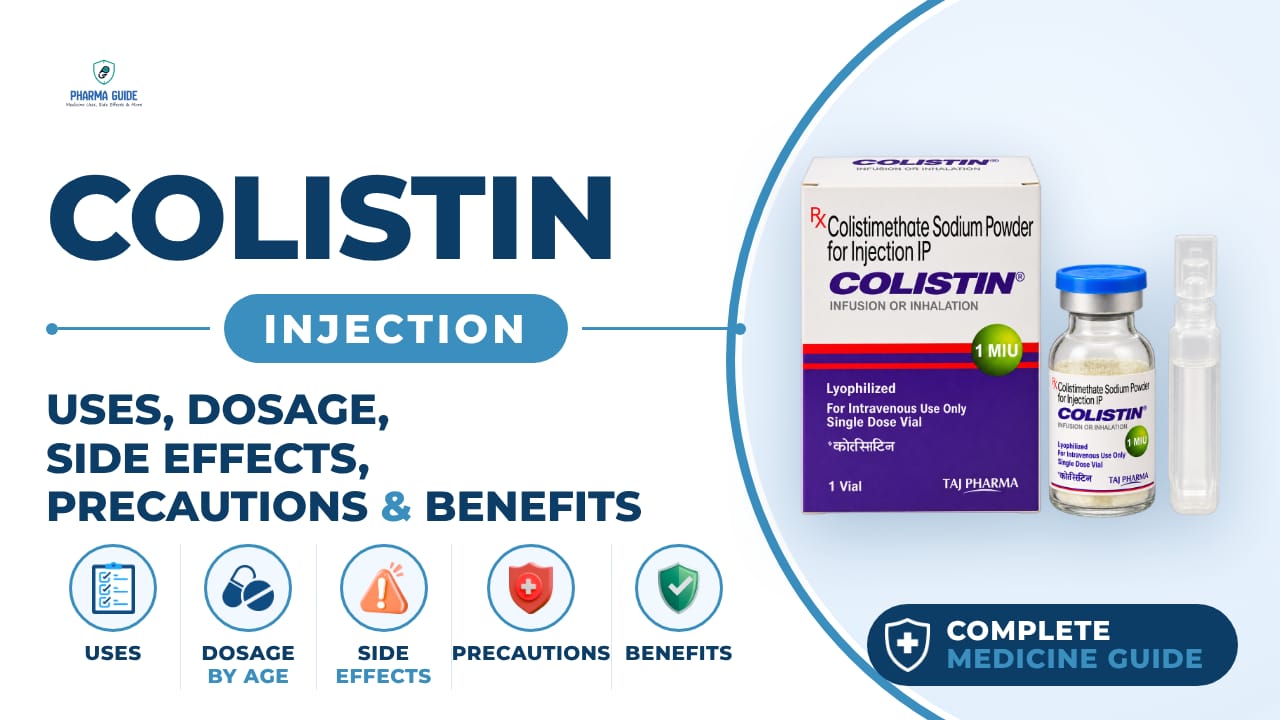
| Generic name | colistin (colistimethate sodium) |
|---|---|
| Drug class | Antibiotics, Other (polymyxin) |
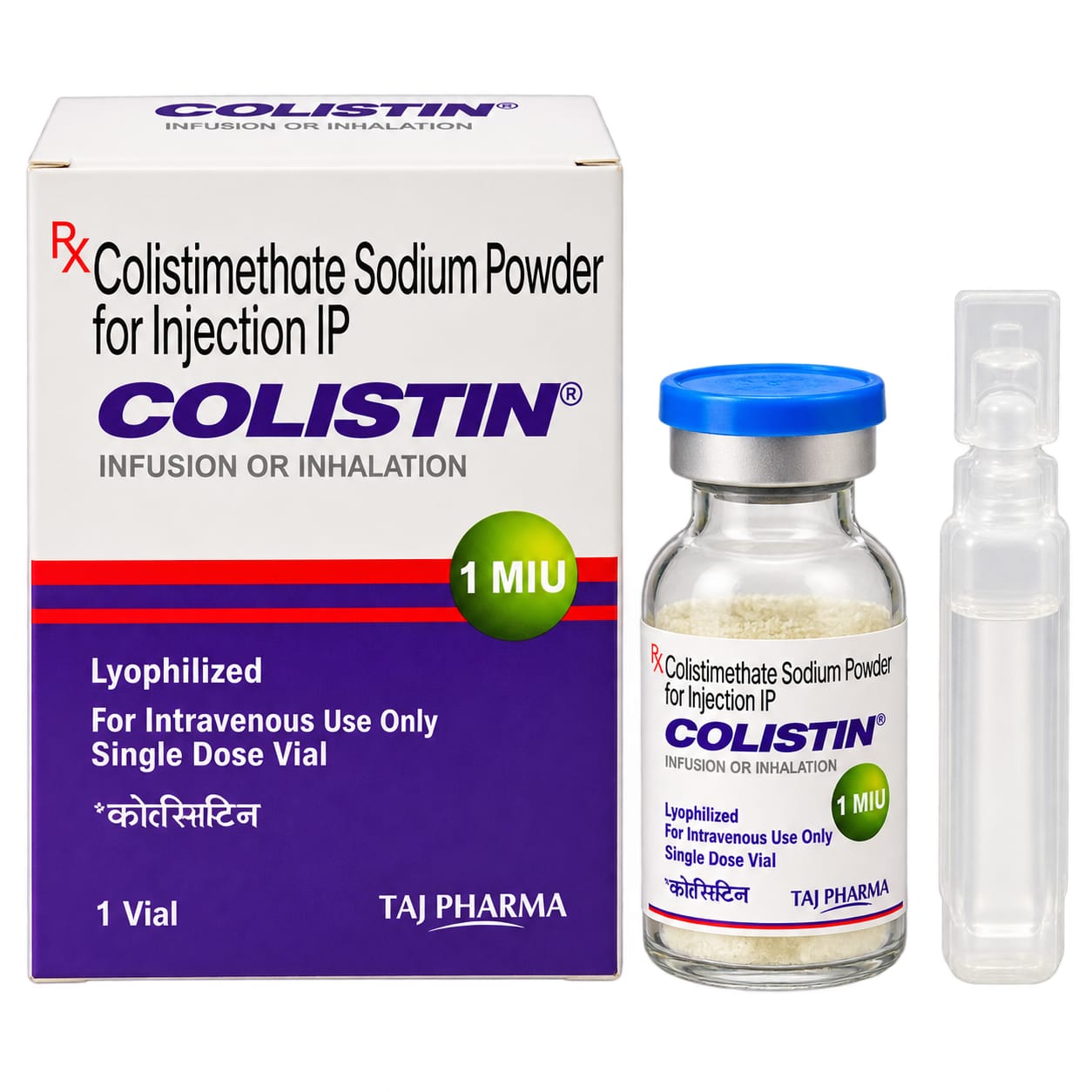
| Forms | Powder for injection |
Quick overview
Colistin Injection (colistimethate sodium) is an antibiotic belonging to the polymyxin class, given by injection to treat serious infections caused by certain gram-negative bacteria. It is often used as a last-resort treatment, including for infections caused by bacteria resistant to many other antibiotics. It is given into a vein or muscle and requires careful dosing, particularly in people with kidney problems.
What is Colistin Injection
Colistin is an antibiotic given by injection to treat serious infections caused by certain gram-negative bacteria. It is often used as a last-resort treatment, including for infections caused by bacteria that are resistant to many other antibiotics.
Colistin Injection uses
- Treatment of acute or chronic infections due to sensitive strains of certain Gram-negative bacilli, particularly Pseudomonas aeruginosa, Aerobacter aerogenes, Escherichia coli, and Klebsiella pneumoniae
- Used to start treatment for serious infections suspected to be caused by gram-negative organisms while waiting for lab test results
- Gram-negative bacterial infections unresponsive to other antibiotics, including multi-drug resistant infections
- Chronic pulmonary infections
Benefits of Colistin Injection
- Effective against a range of gram-negative bacteria, including some that have become resistant to other antibiotics
- Can be used to start treatment quickly for serious suspected gram-negative infections before test results are available
- Treats certain serious Gram-negative bacterial infections
- Used against some multidrug-resistant bacteria
- Has activity against selected Pseudomonas and Acinetobacter infections
- Provides an option when other antibiotics are ineffective or unsuitable
How Colistin Injection works
Colistin attaches to fat molecules on the outer surface of gram-negative bacteria. This causes the bacteria's contents to leak out, which kills the bacteria.
Colistin Injection dosage
Colistin is given by injection into a vein (intravenous) or into a muscle (intramuscular); it is not approved to be inhaled through a nebulizer. When given into a vein, the daily dose is usually split, with one portion injected slowly and the remaining portion given later by a slow intravenous drip. When given into a muscle, the daily dose is split into several injections given deep into the muscle.
Vials must be mixed with sterile water for injection before use, and swirled gently to avoid frothing. The reconstituted solution should be used on one patient on one occasion only, as soon as possible after mixing. People with reduced kidney function need their dose and dosing schedule adjusted, with longer gaps between doses.
| Age group | Dose |
|---|---|
| Children / adolescents | 2.5–5 mg/kg/day of colistin base activity, divided into 2–4 doses, with specialist supervision |
| 18–64 years | 2.5–5 mg/kg/day of colistin base activity, divided into 2–4 doses |
Available forms and strengths
- Powder for injection
Side effects of Colistin Injection
Common
- Dizziness
- Numbness and tingling of hands, feet, or tongue
- Slurred speech
- Vertigo
- Tingling or prickling sensation of skin (paresthesia)
- Fever
- Upset stomach
- Skin rash or hives
- Itching
- Decreased urine output
- Increased blood urea nitrogen (BUN)
- Elevated creatinine
- Fast heartbeat
- Increased thirst
- Unusual tiredness or weakness
Serious
- Seizures
- Severe allergic reaction (anaphylaxis)
- Respiratory distress or pause in breathing (apnea)
- Acute respiratory failure
- Acute kidney failure
- Muscle weakness
- Troubled breathing or swallowing
- Colon inflammation (pseudomembranous colitis) or severe diarrhea caused by C. difficile bacteria
Warnings and precautions
- Do not use this medicine if you have a history of allergic reaction to colistin or any of its ingredients.
- This medicine is approved only for injection into a vein or muscle. Using it as an inhaled mist (off-label) has been linked to a fatal case of lung and airway damage.
- Taking too much of this medicine can cause kidney failure, muscle weakness, and breathing to stop.
- Cases of breathing stopping (respiratory arrest) have been reported after injection of this medicine into a muscle, especially when kidney function is reduced or when it is combined with other medicines that affect muscle and nerve function.
- This medicine should not be given together with certain other antibiotics (such as kanamycin, streptomycin, polymyxin, neomycin) or muscle relaxant drugs except with great caution, because they can add to nerve and muscle side effects.
- Long-term use of this medicine may lead to a new infection, including severe diarrhea caused by C. difficile bacteria, sometimes appearing up to two months after the last dose.
- This medicine should only be used during pregnancy if it is clearly needed, because its safety in pregnant women has not been fully established and it may harm the unborn baby. It can cross into the baby's bloodstream.
- This medicine passes into breast milk, so it should be used carefully in breastfeeding mothers, and only if necessary. Watch the baby closely for any side effects if it is used.
- This medicine can harm the kidneys and should be used very carefully in people with kidney problems, since it is removed from the body mainly through the kidneys. Doses need to be reduced if kidney function is reduced, and treatment should stop right away if kidney function worsens.
- No standard liver-specific adjustment is usually specified, but overall organ function should be monitored.
- It isn't known how this medicine interacts with alcohol, so check with your doctor before drinking alcohol while taking it.
- This medicine can cause dizziness, numbness, tingling, vertigo, and slurred speech, so you should not drive or use hazardous machinery while being treated with it.
Storage
- Store below 25°C
- Once reconstituted, store the solution at 2°C to 8°C (refrigerate, do not freeze)
- Reconstituted solution must be used within 24 hours
- Unused portions of IV fluids containing colistimethate sodium should be discarded after 24 hours and fresh material prepared
- Any unused medicine or waste material should be disposed of in accordance with local requirements
When to see a doctor
- Get medical help right away if you notice less urine than usual, or signs that your kidneys may not be working properly.
- Seek medical help if you have watery or bloody diarrhea, with or without stomach cramps and fever, even if it happens up to two months after your last dose.
- Get emergency help if you have trouble breathing or breathing stops.
- Seek medical attention if you experience numbness, tingling, dizziness, vertigo, or slurred speech, as these can be signs of nerve-related side effects.
Alternatives
- Polymyxin B
- Meropenem
- Cefiderocol
Watch the video
FAQs
What is Colistin Injection used for?
It treats acute or chronic infections caused by sensitive gram-negative bacteria such as Pseudomonas aeruginosa, E. coli, and Klebsiella pneumoniae, including multidrug-resistant infections and chronic pulmonary infections, and is often used as a last-resort antibiotic.
How is Colistin Injection given?
It is given by injection into a vein or muscle, with the daily dose usually split into portions. It is not approved for use as an inhaled nebulizer treatment.
What are the common side effects of Colistin Injection?
Common side effects include dizziness, numbness or tingling of hands, feet, or tongue, slurred speech, vertigo, fever, upset stomach, skin rash, decreased urine output, and increased thirst or tiredness.
Is Colistin Injection safe for people with kidney problems?
It can harm the kidneys and must be used very carefully in people with kidney problems, since it is removed from the body mainly through the kidneys. Doses need to be reduced if kidney function is reduced, and treatment should stop immediately if kidney function worsens.
Can Colistin Injection be used during pregnancy or breastfeeding?
It should only be used during pregnancy if clearly needed, as its safety has not been fully established and it may harm the unborn baby. It also passes into breast milk, so it should be used cautiously in breastfeeding mothers with close monitoring of the baby.
General information, not medical advice
Your prescriber and the leaflet in your pack know your situation. This page does not.
- Follow your prescriber and the leaflet
- Don't start, stop, or change a dose on your own
- Doses and warnings differ by country and product
Sources
Video
Related medicines

Injectafer Injection: Uses, Dosage, Side Effects, Precautions and Alternates
Iron products
Injectafer (ferric carboxymaltose) treats iron deficiency anemia and heart failure-related iron deficiency via IV. Learn uses, dosage, side effects, and

Gliclazide Tablet: Uses, Dosage, Side Effects, Precautions and Alternates
Sulfonylurea (hypoglycemic/antidiabetic agent)
Gliclazide Tablet is a sulfonylurea for type 2 diabetes that boosts insulin release. Learn about dosage, side effects, warnings, and precautions.