
Safety
General information, not medical advice
Your prescriber and the leaflet in your pack know your situation. This page does not.
- Follow your prescriber and the leaflet
- Don't start, stop, or change a dose on your own
- Doses and warnings differ by country and product
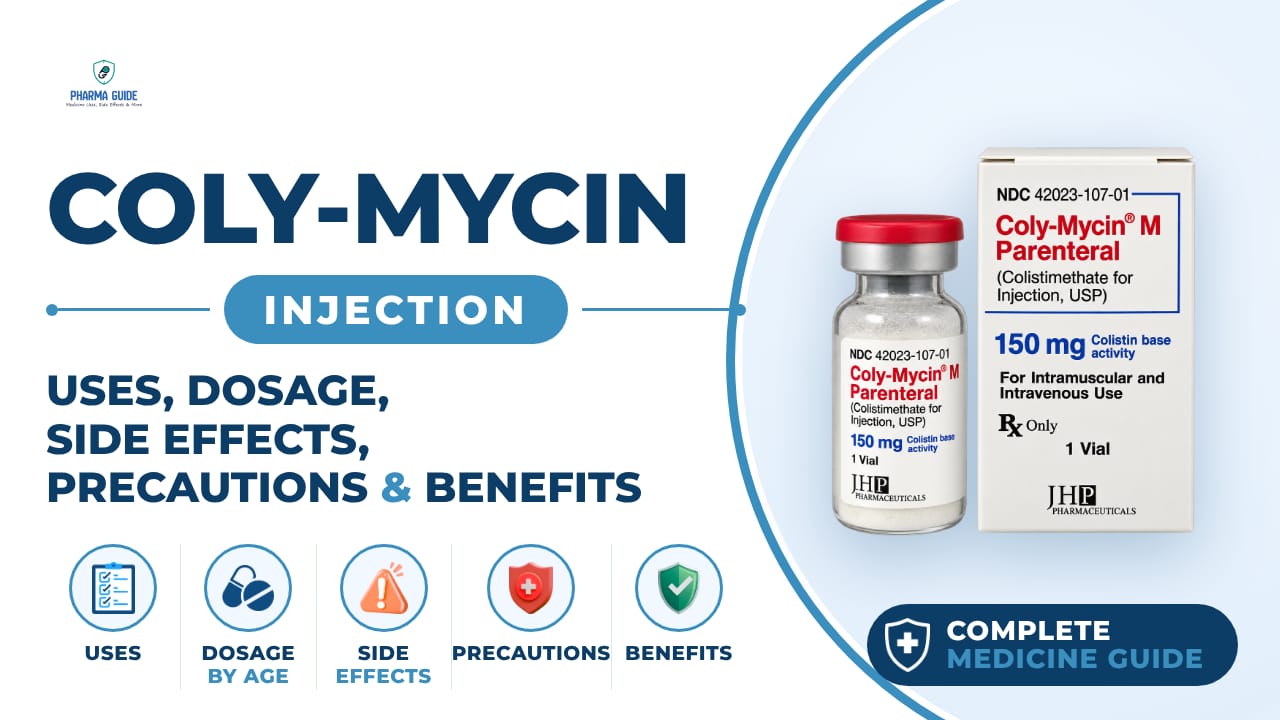
Coly-Mycin Injection: Uses, Dosage, Side Effects, Precautions and Alternates
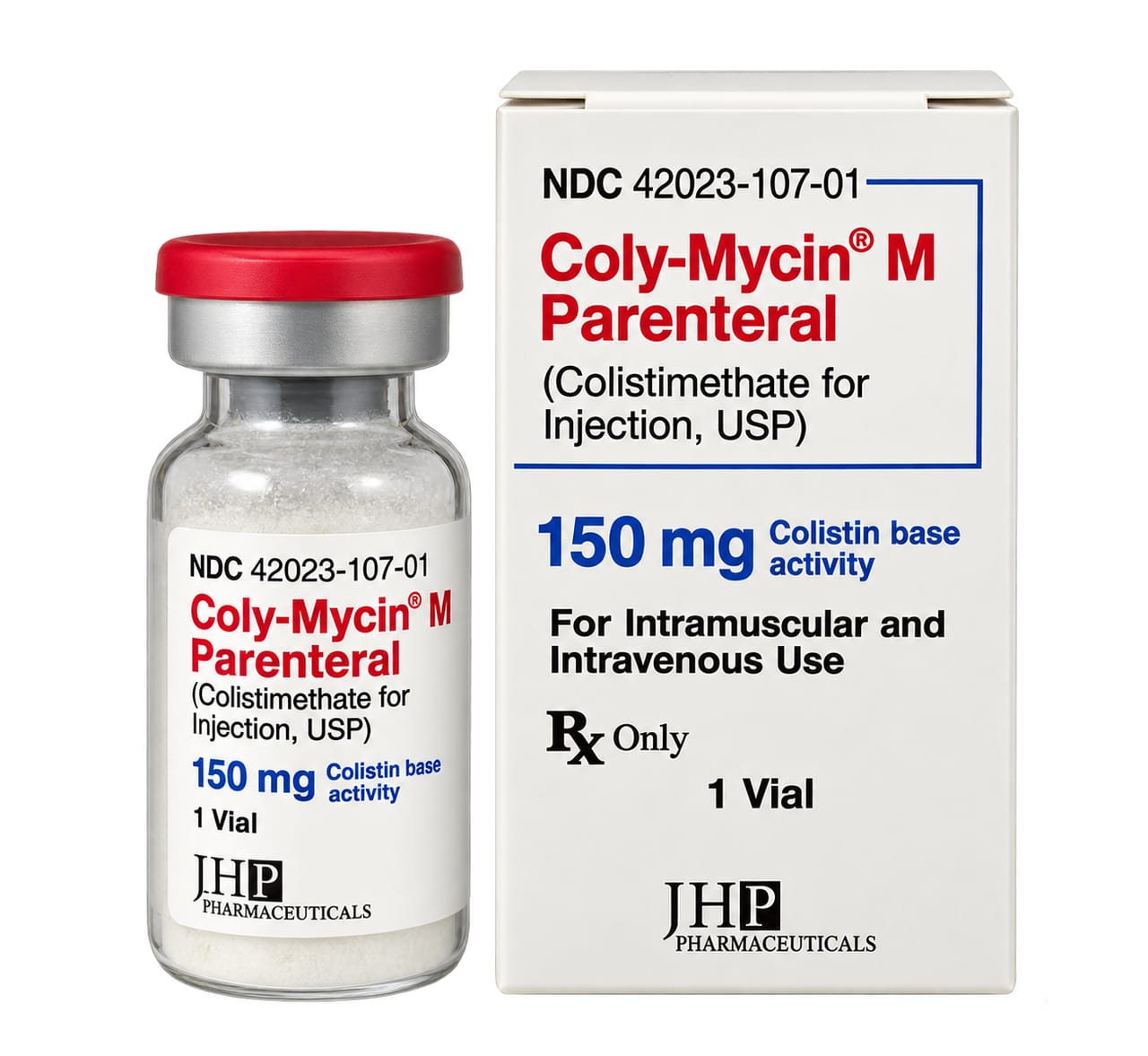
| Generic name | colistimethate |
|---|---|
| Drug class | Inhaled anti-infectives, Miscellaneous antibiotics |
| Forms | Injection (powder for solution, given into a muscle or vein) |
Quick overview
Coly-Mycin Injection (colistimethate) is an antibiotic given by injection into a muscle or vein to treat serious infections caused by certain gram-negative bacteria, including some Pseudomonas aeruginosa infections. It is typically used when other, more commonly used antibiotics have not worked well. It belongs to the miscellaneous antibiotics drug class and is also categorized among inhaled anti-infectives.
What is Coly-Mycin Injection
Coly-Mycin M is an antibiotic that fights bacteria. It is given by injection to treat serious infections caused by certain gram-negative bacteria, especially when other antibiotics don't work well.
Coly-Mycin Injection uses
- Treats serious Gram-negative bacterial infections
- Treats selected Pseudomonas aeruginosa infections
- May treat certain multidrug-resistant infections
- Used when safer or more routinely used antibiotics are ineffective
Benefits of Coly-Mycin Injection
- Provides activity against difficult-to-treat Gram-negative bacteria
- Can remain active against some multidrug-resistant organisms
- Provides systemic treatment for severe susceptible bacterial infections
Coly-Mycin Injection dosage
Follow all directions on your prescription label. Do not use this medicine in larger or smaller amounts or for longer than recommended.
Coly Mycin M is injected into a muscle, or into a vein through an IV. You may be shown how to use injections at home.
Coly Mycin M is a powder medicine that must be mixed with a liquid (diluent) before using it.
After mixing for injection into a vein (IV infusion), the medicine must be used right away and not stored for later use.
After mixing for injection into a muscle, the mixture may be stored in a refrigerator or at cool room temperature, but not frozen, and should be used within 7 days.
The medicine must be given slowly; an IV infusion may take a few minutes, or in some cases may be given over a much longer period, following your doctor's instructions carefully.
Use this medicine for the full prescribed length of time, even if symptoms improve before the infection clears, since skipping doses may increase the risk of antibiotic-resistant infection.
This medicine will not treat a viral infection such as the flu or a common cold.
If you need surgery, tell the surgeon ahead of time that you are using this medicine, as you may need to stop it for a short time.
| Age group | Dose |
|---|---|
| Children 1–11 years | 2.5–5 mg/kg/day IV/IM, divided into 2–4 doses |
| 12–17 years | 2.5–5 mg/kg/day IV/IM, divided into 2–4 doses |
| 18–64 years | 2.5–5 mg/kg/day IV/IM, divided into 2–4 doses |
Available forms and strengths
- Injection (powder for solution, given into a muscle or vein)
Side effects of Coly-Mycin Injection
Common
- Numbness or tingling in your hands, feet, mouth, or tongue
- Slurred speech
- Dizziness, spinning sensation
- Itching, mild rash
- Upset stomach
Serious
- Severe stomach pain, diarrhea that is watery or bloody
- A seizure (convulsions)
- Slow breathing
- Unusual muscle weakness
- Fever
- Kidney problems--little or no urination, painful or difficult urination, swelling in your feet or ankles, feeling tired or short of breath
- Signs of an allergic reaction: hives; difficult breathing; swelling of your face, lips, tongue, or throat
- Nephrotoxicity (kidney damage)
- Neurotoxicity (nervous system effects)
Warnings and precautions
- An overdose of this medicine can be fatal. Overdose symptoms may include confusion, dizziness, loss of balance or coordination, severe numbness or tingling, rapid eye movement, problems with speech, weak or shallow breathing, or loss of consciousness.
- Antibiotic medicines can cause diarrhea, which may be a sign of a new infection. Do not use anti-diarrhea medicine unless your doctor tells you to.
- Tell your doctor about all other medicines you use, especially other injected or IV antibiotics, since they can interact with this medicine.
- It is not known whether this medicine will harm an unborn baby. Tell your doctor if you are pregnant or plan to become pregnant. It should only be used during pregnancy if clearly needed and prescribed by a healthcare provider.
- It is not known whether this medicine passes into breast milk or if it could affect a nursing baby. Tell your doctor if you are breastfeeding.
- Tell your doctor if you have kidney disease, as this affects whether the medicine is safe for you. The medicine can also cause kidney problems.
- No standard liver-specific adjustment is generally specified; clinical monitoring is appropriate.
- Alcohol is best avoided during serious infection and IV antibiotic treatment.
- This medicine may impair your thinking or reactions, so be careful if you drive or do anything that requires you to be alert.
Storage
- Store unmixed Coly Mycin M powder at cool room temperature, away from moisture and heat.
- After mixing for IV infusion, use right away and do not store for later use.
- After mixing for intramuscular injection, you may store the mixture in a refrigerator or at cool room temperature. Do not freeze. Use within 7 days.
- Use a disposable needle only once and dispose of needles and syringes in a puncture-proof sharps container, following local laws.
- Keep the sharps disposal container out of the reach of children and pets.
When to see a doctor
Get emergency medical help if you have signs of an allergic reaction such as hives, difficulty breathing, or swelling of your face, lips, tongue, or throat.
Call your doctor right away if you have severe stomach pain, watery or bloody diarrhea, a seizure, slow breathing, unusual muscle weakness, fever, or signs of kidney problems like little or no urination, painful urination, or swelling in your feet or ankles.
Seek emergency medical attention if you think you have taken too much of this medicine, since an overdose can be fatal.
Alternatives
- Polymyxin B
- Cefiderocol
- Meropenem
Watch the video
FAQs
What is Coly-Mycin Injection used for?
It is used to treat serious infections caused by certain gram-negative bacteria, including selected Pseudomonas aeruginosa infections and some multidrug-resistant infections, especially when other antibiotics have not worked well.
How is Coly-Mycin Injection given?
It is injected into a muscle or into a vein through an IV. It comes as a powder that must be mixed with a liquid before use, and some patients may be shown how to give injections at home.
How long can mixed Coly-Mycin M be stored?
After mixing for IV infusion, it must be used right away. After mixing for intramuscular injection, it can be stored in a refrigerator or at cool room temperature, but not frozen, and should be used within 7 days.
What are the serious side effects of Coly-Mycin Injection?
Serious side effects include severe stomach pain, watery or bloody diarrhea, seizures, slow breathing, unusual muscle weakness, fever, kidney problems, allergic reactions, nephrotoxicity, and neurotoxicity.
What should I do if I think I've taken too much Coly-Mycin Injection?
Seek emergency medical attention right away, since an overdose can be fatal and may cause confusion, dizziness, loss of balance, severe numbness or tingling, speech problems, or weak breathing.
General information, not medical advice
Your prescriber and the leaflet in your pack know your situation. This page does not.
- Follow your prescriber and the leaflet
- Don't start, stop, or change a dose on your own
- Doses and warnings differ by country and product
Sources
Video
Related medicines

Injectafer Injection: Uses, Dosage, Side Effects, Precautions and Alternates
Iron products
Injectafer (ferric carboxymaltose) treats iron deficiency anemia and heart failure-related iron deficiency via IV. Learn uses, dosage, side effects, and

Gliclazide Tablet: Uses, Dosage, Side Effects, Precautions and Alternates
Sulfonylurea (hypoglycemic/antidiabetic agent)
Gliclazide Tablet is a sulfonylurea for type 2 diabetes that boosts insulin release. Learn about dosage, side effects, warnings, and precautions.