
Safety
General information, not medical advice
Your prescriber and the leaflet in your pack know your situation. This page does not.
- Follow your prescriber and the leaflet
- Don't start, stop, or change a dose on your own
- Doses and warnings differ by country and product
Combipatch Patch: Uses, Dosage, Side Effects, Precautions and Alternates
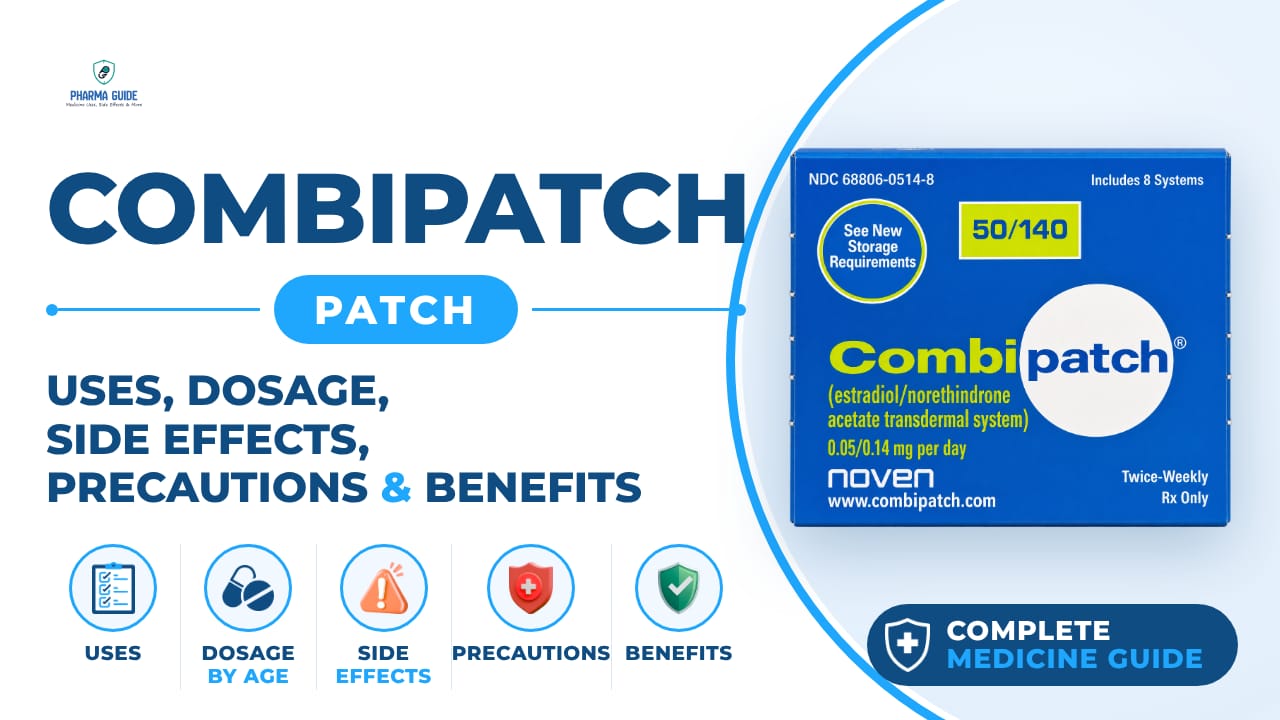
| Generic name | estradiol / norethindrone (norethindrone acetate) |
|---|---|
| Drug class | Estrogen / Progestin combination (sex hormone combination) |
| Forms | Transdermal patch (extended release skin patch) |
Quick overview
Combipatch is a prescription transdermal patch that combines two hormones, estradiol and norethindrone acetate, from the estrogen/progestin combination drug class. It is applied to the skin twice a week to treat moderate-to-severe menopause symptoms and low estrogen levels in women who still have a uterus. The patch delivers estrogen to relieve symptoms like hot flashes and vaginal dryness, while the progestin helps protect the uterine lining.
What is Combipatch Patch
Combipatch is a prescription skin patch that combines two hormones, estradiol (an estrogen) and norethindrone (a progestin). It is applied to the skin twice a week to treat menopause symptoms and low estrogen levels in women who still have a uterus.
Combipatch Patch uses
- Moderate-to-severe symptoms of menopause, like hot flashes, night sweats, vaginal dryness, and vaginal irritation, in people with a healthy uterus
- Low estrogen levels caused by certain health conditions, such as when the ovaries aren't working as they should
- Treatment of moderate to severe symptoms of vulvar and vaginal atrophy due to menopause
- Treatment of hypoestrogenism due to hypogonadism, castration, or primary ovarian failure
Benefits of Combipatch Patch
- Helps relieve moderate to severe hot flashes associated with menopause.
- Helps reduce night sweats and other vasomotor symptoms.
- Helps relieve vaginal dryness, irritation, and discomfort related to menopause.
- Provides estradiol replacement through the skin while norethindrone helps protect the uterine lining.
- Offers convenient continuous combined hormone therapy in a transdermal patch.
How Combipatch Patch works
Combipatch delivers two hormones through the skin. Estradiol restores estrogen levels in the body, which relieves symptoms like hot flashes, night sweats, and vaginal dryness. Norethindrone acts like progesterone and helps balance the effect of estrogen on the growth of the lining of the uterus, which helps protect against unwanted uterine lining growth.
Combipatch Patch dosage
Apply the patch to the skin of your lower stomach (below the waistline), and change it twice a week, every 3 to 4 days. Wash your hands with soap and water before and after applying the patch. Open the pouch carefully at the notch using your hands; do not use scissors, to avoid cutting the patch. Peel off the protective liner without touching the sticky side of the patch with your fingers.
Apply the patch to a clean, dry area of skin that is free of powder, oil, or lotion, and press it firmly in place with your hand for about 10 seconds, smoothing down the edges. Do not apply the patch on or near the breasts, over skin folds, or on oily, broken, burned, irritated, tattooed, or very hairy skin. Avoid the waistline area, since tight clothing or a belt may rub the patch off.
Rotate the application site each time you change the patch; wait at least one week before reusing the same area of skin. Wear the patch at all times until it's time to apply a new one, and avoid exposing it to the sun for long periods. You can bathe, shower, or swim while wearing the patch without affecting it, but check that the patch is still in place afterward.
If the patch falls off, reapply it or put on a new one at a different area and continue on your original schedule. If you forget to change your patch, apply a new one as soon as you can; if it's almost time for your next scheduled change, skip the missed one and continue your regular schedule — do not apply extra patches to make up for a missed one.
When removing a used patch, peel it off slowly to avoid skin irritation, and try not to touch the sticky side, since it may still contain active hormones. If sticky residue remains on the skin after removing the patch, let the area dry for 15 minutes, then gently rub it with oil or lotion to remove the adhesive.
This medicine is not meant for use in children. Use in older adults may need extra caution because of a higher chance of breast cancer, stroke, or dementia in this age group.
| Age group | Dose |
|---|---|
| Under 18 years | Not indicated; safety and effectiveness not established |
| 18+ years – Premenopausal women | Not routinely indicated |
| Postmenopausal women – Initial | 0.05 mg estradiol/0.14 mg norethindrone acetate per day, applied twice weekly |
| Postmenopausal women – Higher strength | 0.05 mg estradiol/0.25 mg norethindrone acetate per day, applied twice weekly when appropriate |
| 65+ years | Use the lowest effective individualized dose |
Available forms and strengths
- Transdermal patch (extended release skin patch)
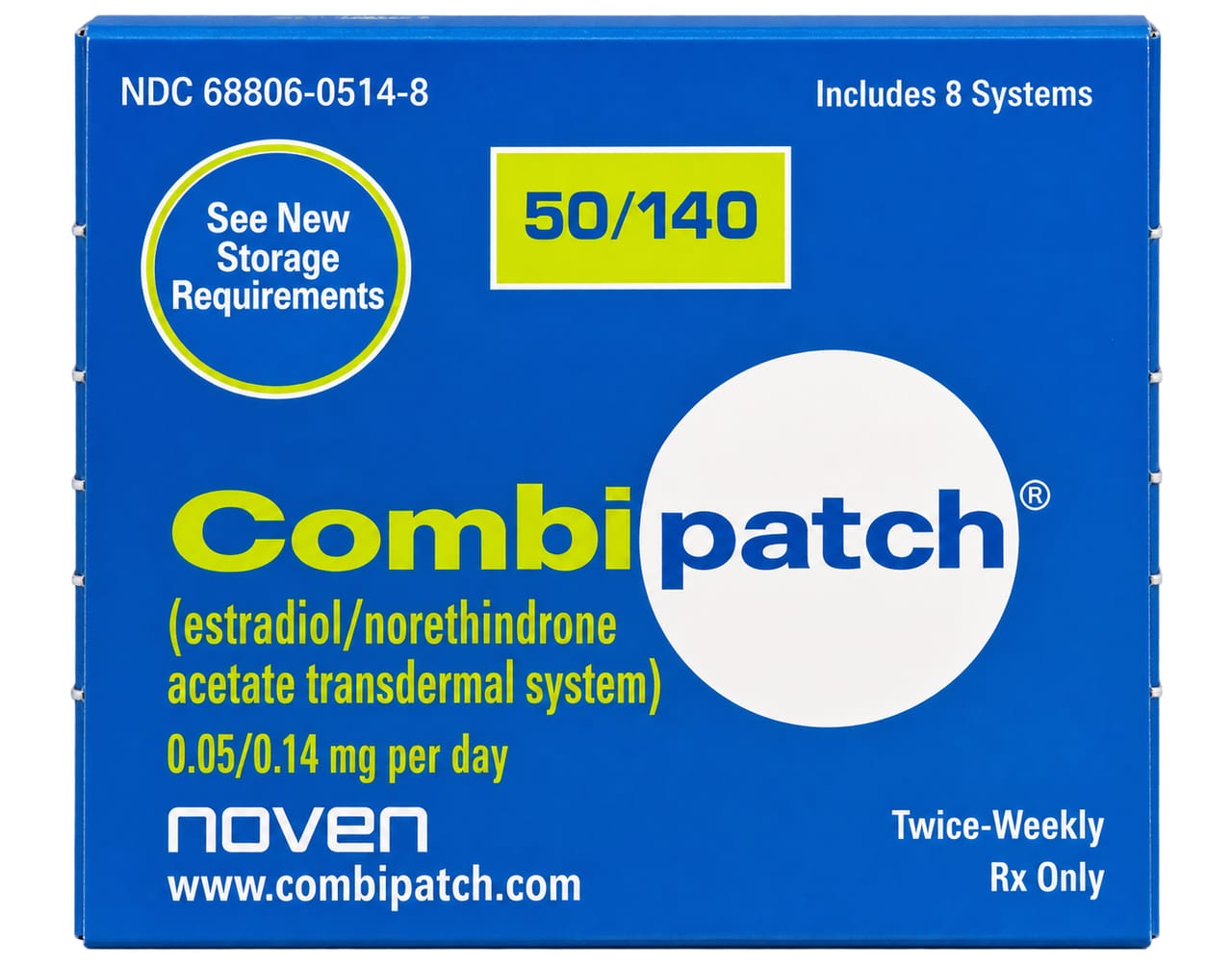
- 0.05 mg estradiol/0.14 mg norethindrone acetate per day
- 0.05 mg estradiol/0.25 mg norethindrone acetate per day
Side effects of Combipatch Patch
Common
- Breast pain
- Menstrual cramps
- Headache
- Vaginitis (vaginal pain, itching, burning, or discharge)
- Weakness
- Breathing problems
- Irregular vaginal bleeding or other related menstrual issues
- Back pain
- Nausea
- Sore throat
- Application site reactions (irritation, itchiness, redness, swelling, rash, dry skin)
- Vaginal discharge
- Stomach pain
- Diarrhea
- Indigestion or heartburn
- Passing gas
- Flu-like symptoms
- Runny nose
- Sinus infection
- Depression
- Trouble sleeping
- Nervousness
- Bloating or swelling of the face, arms, hands, lower legs, or feet
- Rapid weight gain
- Tingling of the hands or feet
- Unusual weight gain or loss
Serious
- Blood clot in arm or leg: swelling, pain, or tenderness in the arm or leg; skin that's warm to the touch
- Blood clot in the lung: trouble breathing, chest pain
- Heart attack: chest pain, arm pain, shortness of breath, cold sweat, lightheadedness
- Stroke: sudden weakness on one side of the body, drooping face, changes in speech or vision, confusion, bad headache
- Severe allergic reaction: hives, itchiness, stomach pain, vomiting, trouble breathing, swelling of the face, lips, or tongue
- Breast cancer
- Cancer of the lining of the uterus (womb)
- Cancer of the ovary
- Dementia
- High blood pressure
- High blood sugar
- Gallbladder disease
- Liver problems
- Changes in thyroid hormone levels
- Enlargement of benign tumors of the uterus (fibroids)
Warnings and precautions
- This medicine can raise the risk of blood clots, which can sometimes lead to a heart attack or stroke. Because of this, it should not be used to try to prevent heart disease.
- This medicine may increase the risk of breast cancer, and this risk may be higher than with estrogen-only therapy. Do not take this medicine if you currently have or have had breast cancer.
- Estrogen can thicken the lining of the uterus, which can raise the risk of uterine (endometrial) cancer in people with a uterus who use estrogen without enough progestin.
- People 65 years of age or older who take this type of hormone therapy may have a greater risk of dementia. It should not be used to try to prevent dementia.
- Do not use this medicine if you have had your uterus removed (a hysterectomy), because you would not need the progestin part of this medicine.
- Serious allergic reactions, including swelling of the face, lips, tongue, or throat and life-threatening anaphylaxis, have been reported with this medicine.
- Do not use this medicine if you have unusual vaginal bleeding that hasn't been checked by a doctor, since this could be a sign of cancer of the uterus.
- Do not use this medicine if you are pregnant or think you might be pregnant. Using it during pregnancy could harm an unborn baby.
- This medicine should not be used while breastfeeding. It can lower the amount and quality of breast milk, and the hormones can pass into breast milk.
- People with kidney damage should use this medicine with caution, since it can cause the body to hold onto extra fluid, which can worsen kidney problems.
- Do not use this medicine if you have liver damage, liver disease, or a history of liver problems. Tell your doctor if you develop signs like yellowing skin or eyes, ongoing stomach pain, nausea, or vomiting.
Storage
- Store refrigerated at 2–8°C (36–46°F) before dispensing or as directed on the product label.
- Once dispensed, patches may be stored at room temperature up to 25°C (77°F) for up to 6 months.
- Keep each patch in its original sealed protective pouch until ready to use.
- Do not freeze or expose patches to excessive heat or direct sunlight.
- Keep out of reach and sight of children and pets, including used patches.
When to see a doctor
- Get medical help right away if you have signs of a blood clot, heart attack, or stroke, such as swelling or pain in an arm or leg, chest pain, trouble breathing, sudden weakness on one side of the body, drooping face, or sudden changes in speech or vision.
- Call your doctor right away if you notice new breast lumps, unusual vaginal bleeding, changes in vision or speech, a sudden severe headache, or severe pain in your chest or legs with or without shortness of breath, weakness, or fatigue.
- Contact your doctor immediately if you have signs of a severe allergic reaction, including hives, itching, trouble breathing or swallowing, or swelling of the face, lips, or tongue.
- Check with your doctor immediately if you have severe headache or sudden loss of vision or any other change in vision.
Alternatives
- Femoston
- Kliovance
- Activelle
- Bijuva
- Climara Pro
Watch the video
FAQs
How often do you change the Combipatch Patch?
The patch is applied to the lower stomach and changed twice a week, every 3 to 4 days.
What should I do if the Combipatch Patch falls off?
If the patch falls off, reapply it or put on a new one at a different area and continue on your original schedule.
Who should not use Combipatch Patch?
People who have had a hysterectomy, have or had breast cancer, have unusual vaginal bleeding that hasn't been checked, have liver damage or disease, or are pregnant should not use this medicine.
What are the serious risks of using Combipatch Patch?
Serious risks include blood clots, heart attack, stroke, breast cancer, cancer of the uterine lining, dementia (in people 65 and older), liver problems, and severe allergic reactions.
How should Combipatch Patch be stored?
Before dispensing, store refrigerated at 2–8°C (36–46°F). Once dispensed, patches may be stored at room temperature up to 25°C (77°F) for up to 6 months, kept in their original sealed pouch.
General information, not medical advice
Your prescriber and the leaflet in your pack know your situation. This page does not.
- Follow your prescriber and the leaflet
- Don't start, stop, or change a dose on your own
- Doses and warnings differ by country and product
Sources
Video
Related medicines

Injectafer Injection: Uses, Dosage, Side Effects, Precautions and Alternates
Iron products
Injectafer (ferric carboxymaltose) treats iron deficiency anemia and heart failure-related iron deficiency via IV. Learn uses, dosage, side effects, and

Gliclazide Tablet: Uses, Dosage, Side Effects, Precautions and Alternates
Sulfonylurea (hypoglycemic/antidiabetic agent)
Gliclazide Tablet is a sulfonylurea for type 2 diabetes that boosts insulin release. Learn about dosage, side effects, warnings, and precautions.