
Safety
General information, not medical advice
Your prescriber and the leaflet in your pack know your situation. This page does not.
- Follow your prescriber and the leaflet
- Don't start, stop, or change a dose on your own
- Doses and warnings differ by country and product
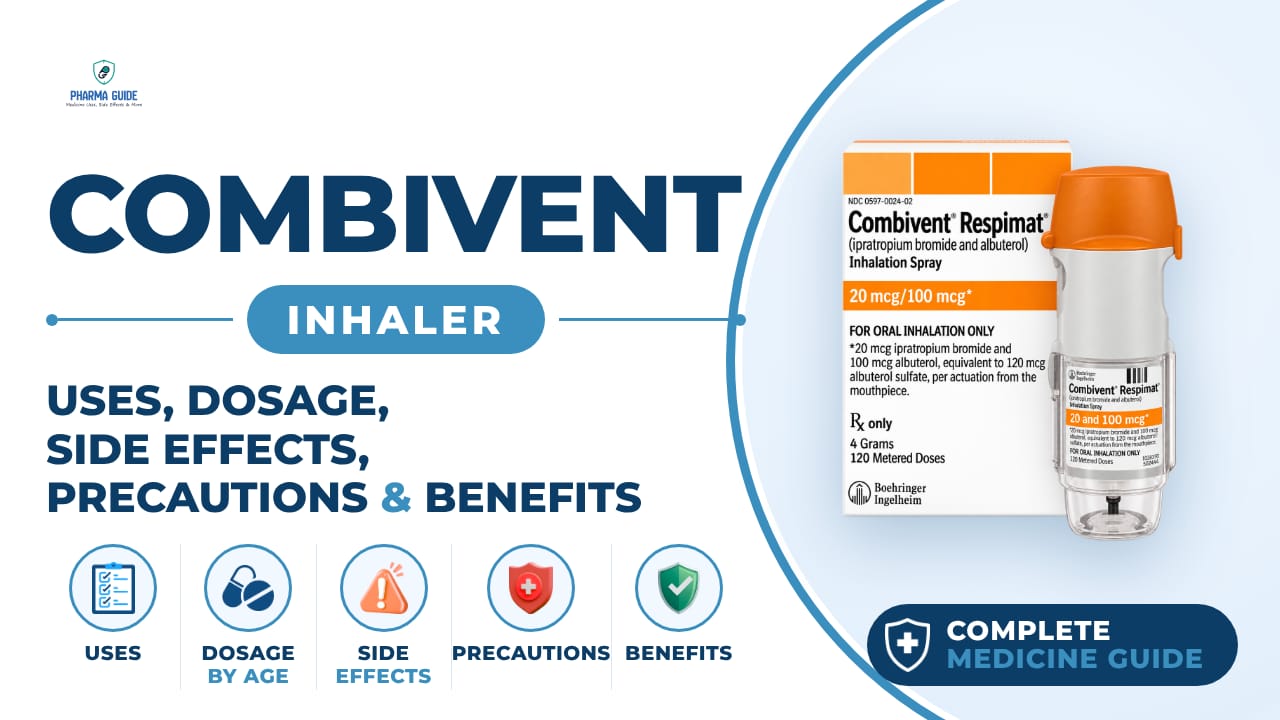
Combivent Inhaler: Uses, Dosage, Side Effects, Precautions and Alternates
| Generic name | Ipratropium bromide and albuterol sulfate (albuterol/salbutamol) |
|---|---|
| Drug class | Bronchodilator combination (short-acting anticholinergic and short-acting beta2 agonist) |
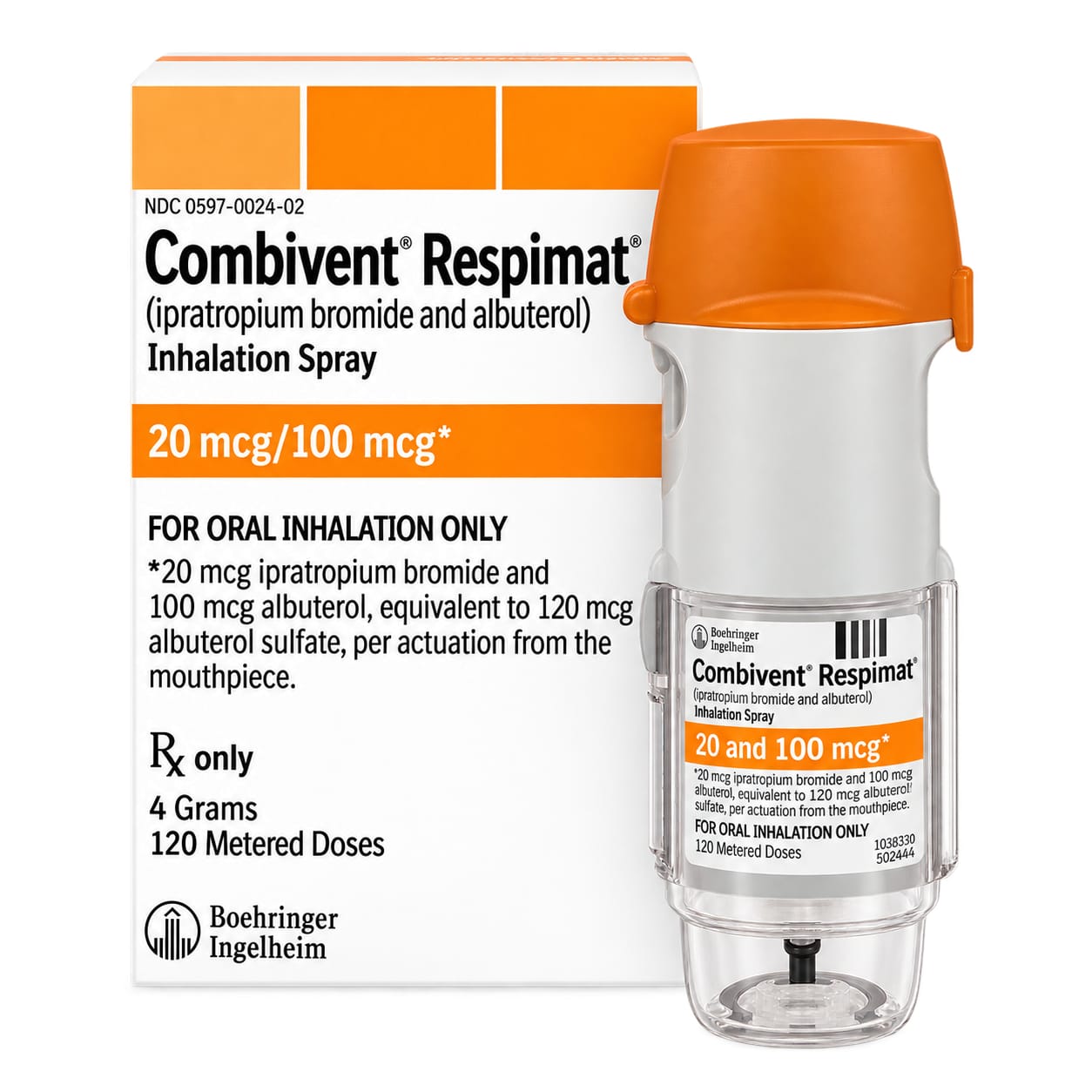
| Forms | Inhalation spray (metered-dose inhaler) delivering 20 mcg ipratropium bromide and 100 mcg albuterol per actuation |
Quick overview
Combivent Inhaler (ipratropium bromide and albuterol sulfate) is an inhaled bronchodilator combination used as an add-on treatment for chronic obstructive pulmonary disease (COPD) in people who are already using a regular inhaled bronchodilator but still have bronchospasm. It combines a short-acting anticholinergic and a short-acting beta2 agonist to help relax the airways. It is not for children, and it is not intended for sudden COPD attacks.
What is Combivent Inhaler
Combivent Respimat is an inhaled medicine that combines two bronchodilators, ipratropium bromide and albuterol sulfate. It is used as an add-on treatment for people with chronic obstructive pulmonary disease (COPD) who are already using a regular inhaled bronchodilator but still have airway tightening.
Combivent Inhaler uses
- Add-on treatment for chronic obstructive pulmonary disease (COPD) in patients who are on a regular aerosol bronchodilator but still have evidence of bronchospasm and need a second bronchodilator
Benefits of Combivent Inhaler
- Helps relieve bronchospasm
- Improves airflow
- Reduces shortness of breath
- Combines two bronchodilator mechanisms
- Used for maintenance treatment of COPD with persistent bronchospasm
How Combivent Inhaler works
The medicine contains two different types of airway-relaxing drugs. One (ipratropium) blocks nerve signals that tighten airway muscles, and the other (albuterol) activates receptors that relax airway muscles. Using both together is designed to open the airways more than either one alone.
Combivent Inhaler dosage
This medicine is for oral inhalation only; do not swallow it or spray it into the eyes. It is typically taken as one inhalation four times a day, with extra inhalations allowed as needed up to the maximum allowed in 24 hours. Priming is required before first use, and again if the inhaler has not been used for more than 3 days or more than 21 days.
To use it, breathe out slowly and fully, close your lips around the mouthpiece without covering the air vents, point the inhaler toward the back of the throat, and press the dose-release button while breathing in slowly and deeply. Hold your breath for about 10 seconds after inhaling, or as long as comfortable.
Do not increase the dose or how often you use it without talking to your doctor. This medicine is not for sudden COPD attacks; always keep your rescue inhaler with you for sudden symptoms. It is not approved for use in children, as safety and effectiveness have not been established. No dosage adjustment is needed for older adults based on available data.
| Age group | Dose |
|---|---|
| 18–64 years | 1 inhalation 4 times daily |
| 65 years and older | Usually 1 inhalation 4 times daily, with individualized monitoring |
Available forms and strengths
- Inhalation spray (metered-dose inhaler) delivering 20 mcg ipratropium bromide and 100 mcg albuterol per actuation
Side effects of Combivent Inhaler
Common
- Upper respiratory infection
- Stuffy or runny nose and sore throat (nasopharyngitis)
- Cough
- Bronchitis
- Headache
- Trouble breathing (dyspnea)
- Nervousness
- Shakiness (tremor)
Serious
- Sudden worsening of breathing, wheezing, or tightness in the chest (paradoxical bronchospasm)
- Chest pain or discomfort
- Fast, pounding, or uneven heartbeat; fluttering in the chest
- Lightheadedness, dizziness, or fainting
- Dry mouth, increased thirst, muscle cramps, nausea, vomiting (possible signs of low potassium)
- Blurred vision, eye pain, halos around lights, redness or swelling of the eye
- Decrease in how much or how often you urinate
- Allergic reaction: hives, rash, swelling of the face, mouth, or tongue, difficulty breathing, trouble swallowing, wheezing, shortness of breath
Warnings and precautions
- This medicine can cause sudden, severe airway tightening (paradoxical bronchospasm) that can be life-threatening. Stop using it right away if this happens.
- It can affect the heart, including changes in heart rate, blood pressure, and heart rhythm. Use with caution if you have heart problems.
- Avoid spraying it into your eyes, as it may cause eye pain, blurred vision, or worsen narrow-angle glaucoma.
- It can cause urinary retention, so use it with caution if you have prostate enlargement or bladder problems.
- Do not use more than the recommended dose. Deaths have occurred in people who overused similar inhaled medicines.
- Serious allergic reactions, including anaphylaxis, can occur after using this medicine.
- Use with caution if you have seizure disorders, an overactive thyroid, or diabetes.
- This medicine can lower blood potassium levels in some people, which could affect the heart.
- There is limited human data on using this medicine during pregnancy. Tell your doctor if you are pregnant before using it, so they can weigh the benefits and risks, especially around the time of labor and delivery.
- It isn't known for certain how much of this medicine passes into breast milk, but drug levels in the blood after inhaling it are low, so levels in breast milk are expected to be low too. Talk to your doctor about your need for the medicine and any possible effects on your baby.
- This medicine has not been specifically studied in people with kidney problems. Tell your doctor if you have kidney disease.
- This medicine has not been specifically studied in people with liver problems. Tell your doctor if you have liver disease.
- This medicine can cause dizziness, blurred vision, or other visual problems. Be careful when driving a car or doing other activities that require clear vision and alertness until you know how it affects you.
Storage
- Store at room temperature, 68°F to 77°F (20°C to 25°C); brief excursions to 59°F to 86°F (15°C to 30°C) are allowed
- Avoid freezing the cartridge and inhaler
- Keep out of reach of children
- Do not spray into eyes
- Clean the mouthpiece, including the metal part inside, with a damp cloth or tissue at least once a week
- Throw away the inhaler three months after the cartridge is inserted, even if not used up, or when the inhaler locks, or when it expires, whichever comes first
When to see a doctor
- Get emergency help if you have signs of a severe allergic reaction, such as hives, trouble breathing, or swelling of your face, lips, tongue, or throat.
- Call your doctor right away if you have wheezing, choking, or other new breathing problems after using this medicine.
- Seek medical help if your breathing problems get worse quickly, or if your usual medicine doesn't seem to be working as well as before.
- Contact your doctor immediately if you develop eye pain, blurred vision, or see halos around lights after using this medicine.
- Tell your doctor if you have difficulty urinating while using this medicine.
- If you think you have used too much of this medicine, get emergency medical help, as an overdose can be fatal.
Alternatives
- Tiotropium
- Ipratropium
- Albuterol
Watch the video
FAQs
What is Combivent Inhaler used for?
It is used as an add-on treatment for chronic obstructive pulmonary disease (COPD) in patients who are already on a regular inhaled bronchodilator but still have bronchospasm and need a second bronchodilator.
How is Combivent Inhaler used?
It is for oral inhalation only, typically one inhalation four times a day, with extra inhalations allowed as needed up to the maximum allowed in 24 hours. It should not be swallowed or sprayed into the eyes, and priming is required before first use or after not being used for more than 3 or 21 days.
Can Combivent Inhaler be used for sudden COPD attacks?
No, this medicine is not for sudden COPD attacks. Patients should always keep a rescue inhaler with them for sudden symptoms.
What are the serious side effects of Combivent Inhaler?
Serious side effects include sudden worsening of breathing (paradoxical bronchospasm), chest pain, fast or uneven heartbeat, lightheadedness or fainting, signs of low potassium, eye pain or blurred vision, decreased urination, and allergic reactions including swelling and difficulty breathing.
Is Combivent Inhaler safe for children?
No, it is not approved for use in children, as safety and effectiveness have not been established.
General information, not medical advice
Your prescriber and the leaflet in your pack know your situation. This page does not.
- Follow your prescriber and the leaflet
- Don't start, stop, or change a dose on your own
- Doses and warnings differ by country and product
Sources
- COMBIVENT RESPIMAT Prescribing Information, Boehringer Ingelheim Pharmaceuticals, Inc. (FDA label, revised 2/2025)
- SingleCare: What is Combivent Respimat? Uses, warnings & side effects (updated May 14, 2025)
- Drugs.com: Combivent Respimat (albuterol / ipratropium) (medically reviewed Oct 31, 2024)
Video
Related medicines

Injectafer Injection: Uses, Dosage, Side Effects, Precautions and Alternates
Iron products
Injectafer (ferric carboxymaltose) treats iron deficiency anemia and heart failure-related iron deficiency via IV. Learn uses, dosage, side effects, and

Gliclazide Tablet: Uses, Dosage, Side Effects, Precautions and Alternates
Sulfonylurea (hypoglycemic/antidiabetic agent)
Gliclazide Tablet is a sulfonylurea for type 2 diabetes that boosts insulin release. Learn about dosage, side effects, warnings, and precautions.