
Safety
General information, not medical advice
Your prescriber and the leaflet in your pack know your situation. This page does not.
- Follow your prescriber and the leaflet
- Don't start, stop, or change a dose on your own
- Doses and warnings differ by country and product
Combogesic Tablet: Uses, Dosage, Side Effects, Precautions and Alternates
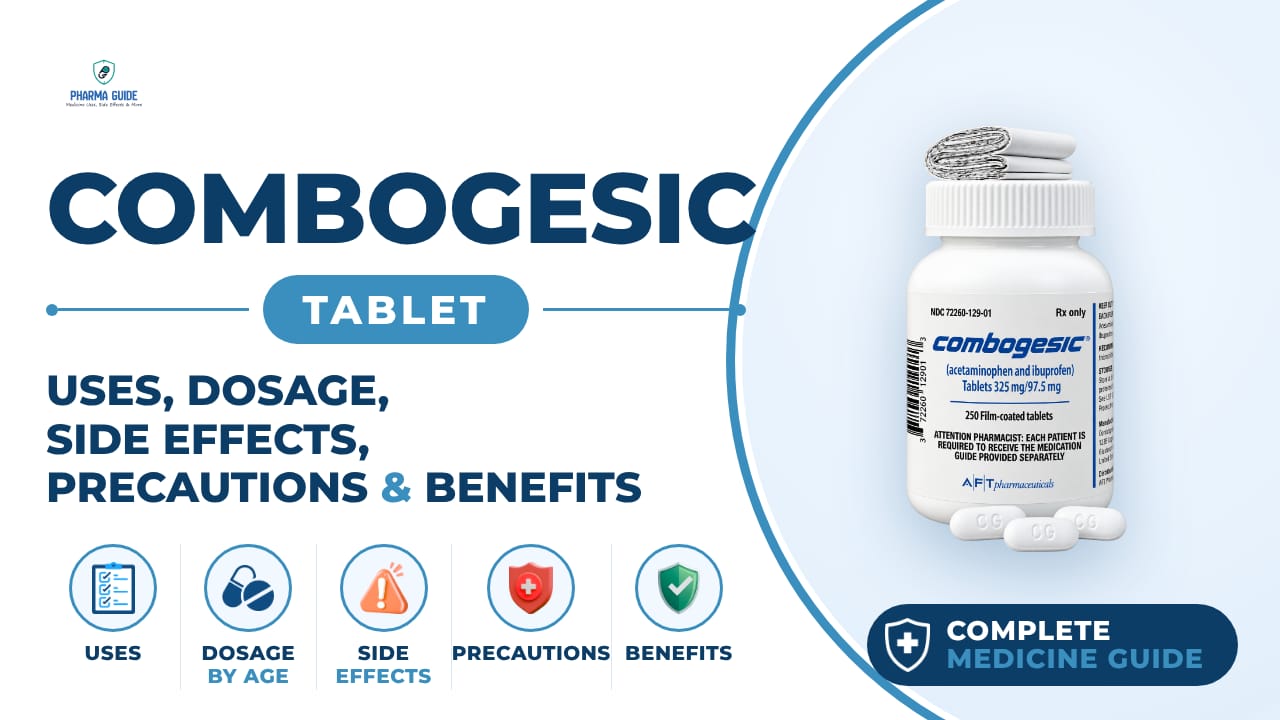
| Generic name | Acetaminophen / Ibuprofen |
|---|---|
| Drug class | Analgesic / NSAID combination |
| Forms | Tablet (film-coated), Injection (intravenous solution, used in hospital settings) |
Quick overview
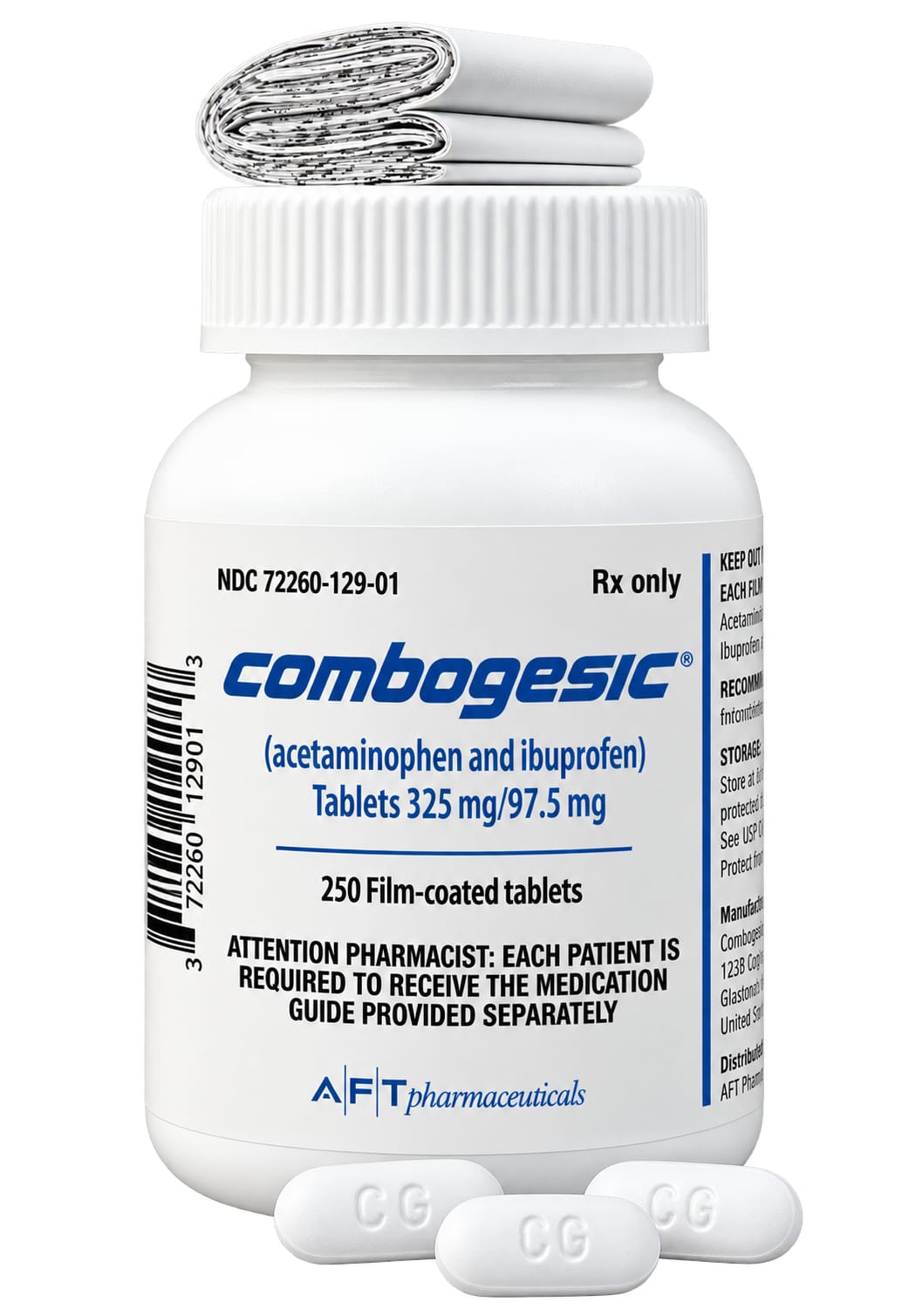
Combogesic Tablet is a prescription medicine that combines acetaminophen, a pain reliever, with ibuprofen, a nonsteroidal anti-inflammatory drug (NSAID). It is used for short-term relief of mild to moderate pain in adults and to reduce fever. It may also help manage symptoms of severe diarrhea-predominant IBS. The medicine carries warnings about stomach bleeding, liver damage, and heart-related risks, so it should be used exactly as directed.
What is Combogesic Tablet
Combogesic is a prescription tablet that combines acetaminophen (a pain reliever) and ibuprofen (a nonsteroidal anti-inflammatory drug, or NSAID). It is used for short-term relief of mild to moderate pain in adults.
Combogesic Tablet uses
- Short-term management of mild to moderate acute pain in adults
- Reduction of fever
- Treats severe diarrhea-predominant IBS
- Reduces bowel urgency
- Helps reduce frequent diarrhea
- May reduce abdominal discomfort associated with IBS-D
Benefits of Combogesic Tablet
- Combines two pain medications into one tablet for convenience
- Starts working within a few minutes to help relieve pain
- Provides more effective pain relief than either acetaminophen or ibuprofen used alone
- May decrease bowel urgency
- Can reduce diarrhea frequency
How Combogesic Tablet works
Acetaminophen helps block pain signals from reaching the brain and also helps lower fever. Ibuprofen is an NSAID that blocks a protein called COX, which is involved in causing inflammation, helping to relieve pain, redness, and swelling.
Combogesic Tablet dosage
Take only as directed by your health care provider; do not take more, more often, or for longer than recommended. Take with a full glass of water. Take with food or milk if stomach upset occurs; otherwise, it can be taken with or without food, though food may slightly lower peak levels of acetaminophen, which is not considered clinically important. Do not take with other products containing acetaminophen or ibuprofen/other NSAIDs. If you miss a dose, take it as soon as you remember, but if it is almost time for your next dose, skip the missed dose and continue your regular schedule; do not double up. This medicine is not for use in children or adolescents under 18 years of age. See your health care provider regularly if you use this medicine for more than 3 days.
| Age group | Dose |
|---|---|
| Under 18 years | Safety and effectiveness are not established; no standard pediatric dose |
| 18–39 years | Usually starts at 0.5 mg twice daily |
| 40–74 years | Usually starts at 0.5 mg twice daily |
Available forms and strengths
- Tablet (film-coated)
- Injection (intravenous solution, used in hospital settings)
Side effects of Combogesic Tablet
Common
- Nausea
- Vomiting
- Headache
- Dizziness
- Sleepiness (somnolence)
- Constipation
- Indigestion or heartburn
- Swollen face
- Itchiness
Serious
- Stomach bleeding (blood in vomit, black or bloody stools, severe stomach pain)
- Liver damage (yellowing of skin/eyes, dark urine, nausea, vomiting, stomach pain, unusual tiredness, loss of appetite)
- Heart attack (chest pain or tightness spreading to arm or jaw, dizziness, cold sweat, trouble breathing)
- Stroke (severe headache, blurred vision, trouble speaking or walking, weakness on one side of the body, drooping face)
- Heart failure (trouble breathing, tiredness, dizziness, swelling, sudden weight gain)
- Kidney damage (little or no urination, needing to urinate more often, tiredness, dry/itchy skin, loss of appetite, muscle cramps, swelling in ankles or feet)
- Serious allergic reaction or skin reaction (rash, hives, painful blisters, peeling skin, trouble breathing, swelling of face/lips/throat, fever)
- Brain inflammation (aseptic meningitis) - severe headache, stiff neck, fever, weakness, sensitivity to light
Warnings and precautions
- This medicine can increase the risk of serious heart-related problems such as heart attack and stroke, which can be fatal. It should not be used around the time of heart bypass surgery.
- This medicine can cause stomach bleeding, which may happen without warning. The risk is higher in older adults, people with a history of ulcers, those taking blood thinners or steroids, and people who drink alcohol regularly.
- This medicine contains acetaminophen, which has been linked to cases of severe liver failure, sometimes requiring a liver transplant or leading to death. Most cases happen when people take more than the recommended amount or combine it with other acetaminophen-containing products.
- Acetaminophen can cause serious skin reactions, including skin reddening, blisters, or rash.
- Do not take this medicine with other products that also contain acetaminophen or ibuprofen/other NSAIDs, since this raises the risk of serious harm such as accidental overdose or damage to the liver, kidneys, or heart.
- This medicine should not be used in women in the third trimester of pregnancy, and should be avoided in the second half of pregnancy generally, due to risks to the unborn baby's heart, kidneys, and the birth process.
- Combogesic should not be used in the third trimester of pregnancy and caution is needed earlier in pregnancy; it may harm an unborn baby, especially after 20 weeks.
- Small amounts of the medicine's ingredients pass into breast milk, so caution is advised if breastfeeding.
- This medicine is not recommended for people with kidney disease, especially severe or worsening kidney disease, since ibuprofen can build up and cause damage.
- This medicine is not recommended for people with severe or active liver disease because acetaminophen is processed by the liver and can cause serious liver injury.
- Avoid drinking alcohol while taking this medicine, as it raises the risk of liver damage and stomach bleeding.
- This medicine can cause drowsiness, dizziness, blurred vision, or other effects that may affect alertness, so caution should be used when driving or doing tasks that need focus.
Storage
- Store in the original blister package in order to protect from light
- Keep out of the sight and reach of children
- Store at room temperature (15 to 30°C)
- Do not use this medicine after the expiry date which is stated on the carton and on the blister
- Do not use this medicine if you notice packaging is torn or shows signs of tampering
- Do not store Combogesic or any other medicine in the bathroom near a sink
- Do not leave it on a window sill or in the car
- A locked cupboard at least one-and-a-half metres above the ground is a good place to store medicines
When to see a doctor
- Get emergency help right away if you vomit blood or material that looks like coffee grounds, or if you have bleeding from the back passage, black sticky stools, or bloody diarrhea.
- Get emergency medical help if your face, lips, or tongue swell, especially if it causes trouble swallowing or breathing.
- Stop the medicine and call a doctor if you notice signs of stomach bleeding, if your pain lasts more than 5 days, if fever lasts more than 3 days, or if any new symptoms appear.
- Call a Poison Control Centre or a healthcare professional immediately if you suspect an overdose, even if there are no symptoms yet, since early signs of liver damage may feel like the flu or include nausea, vomiting, stomach pain, loss of appetite, yellowing skin or eyes, or dark urine.
- Seek medical help right away for symptoms of a heart attack, such as dizziness, tiredness, cold sweat, trouble breathing, or chest pain/tightness spreading to the arm or jaw.
- Seek medical help right away for symptoms of a stroke, such as severe headache, blurred vision, trouble speaking, trouble walking, weakness on one side of the body, or drooping face.
Alternatives
- Rifaximin
- Eluxadoline
- Loperamide
Watch the video
FAQs
What is Combogesic Tablet used for?
Combogesic Tablet is used for short-term management of mild to moderate acute pain in adults, reducing fever, and treating severe diarrhea-predominant IBS, including reducing bowel urgency and frequency of diarrhea.
How does Combogesic Tablet work?
Acetaminophen helps block pain signals from reaching the brain and lowers fever, while ibuprofen blocks a protein called COX that is involved in causing inflammation, helping relieve pain, redness, and swelling.
Can Combogesic Tablet be used in children?
No, Combogesic Tablet is not for use in children or adolescents under 18 years of age, as safety and effectiveness have not been established in this age group.
What are the serious side effects of Combogesic Tablet?
Serious side effects include stomach bleeding, liver damage, heart attack, stroke, heart failure, kidney damage, serious allergic or skin reactions, and brain inflammation (aseptic meningitis).
Is it safe to take Combogesic Tablet during pregnancy?
Combogesic should not be used in the third trimester of pregnancy and should generally be avoided in the second half of pregnancy due to risks to the unborn baby's heart, kidneys, and the birth process.
General information, not medical advice
Your prescriber and the leaflet in your pack know your situation. This page does not.
- Follow your prescriber and the leaflet
- Don't start, stop, or change a dose on your own
- Doses and warnings differ by country and product
Sources
Video
Related medicines

Injectafer Injection: Uses, Dosage, Side Effects, Precautions and Alternates
Iron products
Injectafer (ferric carboxymaltose) treats iron deficiency anemia and heart failure-related iron deficiency via IV. Learn uses, dosage, side effects, and

Gliclazide Tablet: Uses, Dosage, Side Effects, Precautions and Alternates
Sulfonylurea (hypoglycemic/antidiabetic agent)
Gliclazide Tablet is a sulfonylurea for type 2 diabetes that boosts insulin release. Learn about dosage, side effects, warnings, and precautions.