
Safety
General information, not medical advice
Your prescriber and the leaflet in your pack know your situation. This page does not.
- Follow your prescriber and the leaflet
- Don't start, stop, or change a dose on your own
- Doses and warnings differ by country and product
Combutol Tablet: Uses, Dosage, Side Effects, Precautions and Alternates
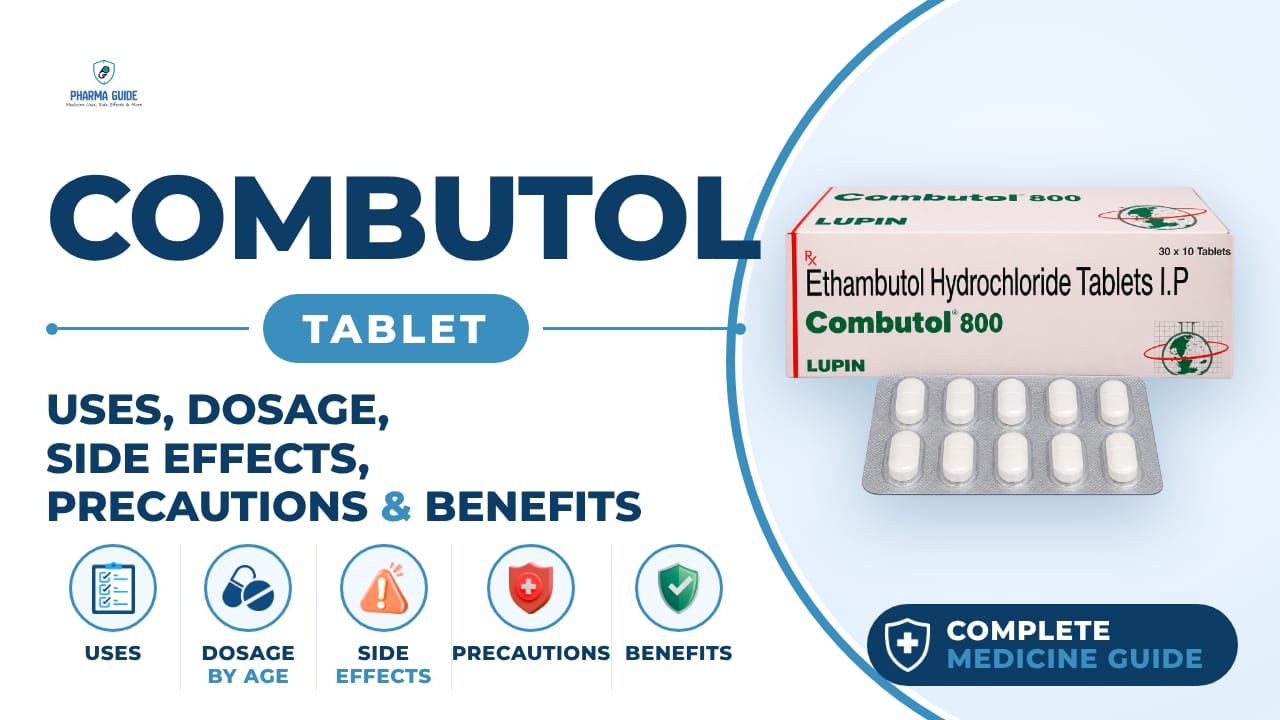
| Generic name | Ethambutol |
|---|---|
| Drug class | Antitubercular / antimycobacterial agent |
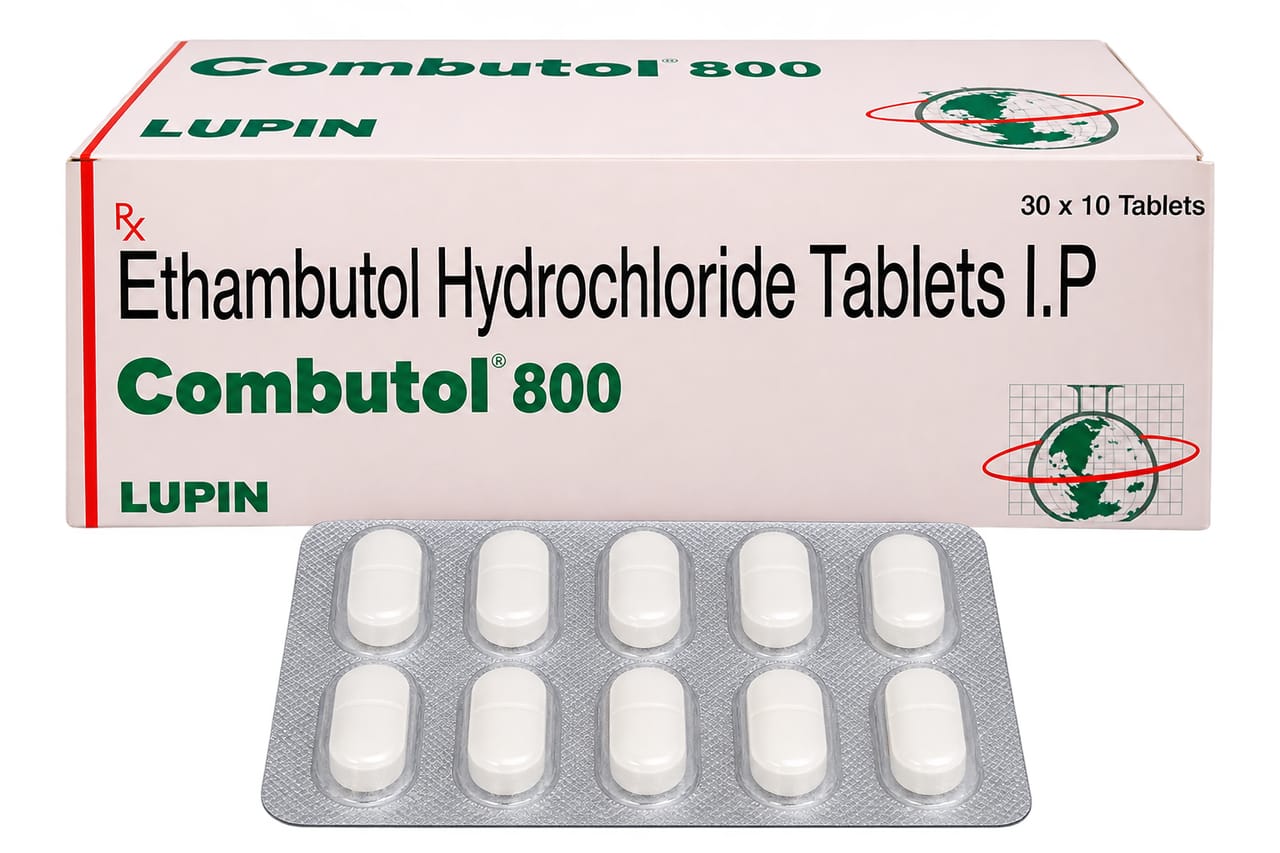
| Forms | Tablet |
Quick overview
Combutol Tablet contains Ethambutol, an antitubercular medicine used to treat tuberculosis (TB), a bacterial infection that mainly affects the lungs but can spread to other organs like the kidneys, spine, and brain. It is usually taken along with other TB medicines as part of a full treatment plan. Combutol works by blocking the bacteria from building their protective cell wall, helping stop the infection from growing and spreading.
What is Combutol Tablet
Combutol is a prescription antibiotic medicine used to treat tuberculosis (TB), a bacterial infection that mainly affects the lungs but can spread to other organs like the kidneys, spine, and brain. It contains the active ingredient Ethambutol and is usually taken along with other TB medicines.
Combutol Tablet uses
- Treats active tuberculosis (TB), including infection of the lungs and other organs like the kidneys and spine
- Helps stop the growth and spread of TB-causing bacteria
- Used together with other anti-TB medicines to make treatment more effective and lower the chance of drug resistance
Benefits of Combutol Tablet
- Can be easily combined with other anti-TB drugs to improve overall treatment effectiveness
- Helps reduce the risk of the bacteria becoming resistant to treatment
- Reliable, affordable, and simple to take, which is important where TB is a common health problem
How Combutol Tablet works
Ethambutol gets into the TB bacteria and blocks them from building their cell wall. This weakens the bacteria's protective outer layer so they cannot grow, multiply, or spread, which helps the immune system clear the infection.
Combutol Tablet dosage
Take this medicine by mouth, usually once a day, at the same time each day. You may take it with or without food, based on your doctor's advice. Swallow the tablet whole with water; do not break or chew it. If you take aluminum-containing antacids, take this medicine at least 4 hours before the antacid.
This medicine is usually given together with other TB medicines as part of a full treatment plan. Take the full course exactly as your doctor prescribes, even if you start feeling better, to prevent the infection from coming back or becoming drug-resistant. This medicine is not recommended for children under 13 years of age.
| Age group | Dose |
|---|---|
| Under 5 years | 15–25 mg/kg/day, only under TB-specialist supervision |
| 5–18 years | 15–25 mg/kg/day |
| 18–60 years | 15 mg/kg/day for usual initial treatment |
| 60+ years | 15 mg/kg/day, with renal-function adjustment if needed |
Available forms and strengths
- Tablet
Side effects of Combutol Tablet
Common
- Nausea or vomiting
- Stomach pain
- Joint aches
- Headache
- Dizziness
- Fever
- Rash
- Loss of appetite
- Upset stomach
- Numbness or tingling in hands and feet
- Coughing
Serious
- Blurred vision or other sudden changes in vision
- Hepatitis (liver inflammation)
- Color blindness
- Hallucinations
- Chest pain
- Difficulty breathing
- Severe allergic reactions including rash, itching, or swelling
Warnings and precautions
- This medicine can cause vision problems, including blurred vision or color blindness, which may be reversible. Tell your doctor right away about any changes in your eyesight, and mention any past eye problems before starting treatment.
- Do not take this medicine if you have optic neuritis (inflammation of the optic nerve), as it can lead to vision loss.
- This medicine only works against bacterial infections like TB and will not help with viral or fungal infections.
- Using this medicine without a confirmed bacterial infection, or not taking it correctly, can fail to treat the infection and may increase the risk of bacteria becoming drug-resistant.
- This medicine is not recommended for children under 13 years old or for adults over 65.
- Pregnancy: Sources disagree on this: one says it is safe in pregnancy, while another says it should only be used if clearly needed because safety is not well established, and uncontrolled TB itself can be dangerous for mother and baby. Talk to your doctor about your specific situation.
- Breastfeeding: This medicine passes into breast milk in small amounts. It is generally considered safe for breastfeeding, but you should watch your baby for any unusual symptoms and discuss it with your doctor first.
- Kidney: This medicine is removed from the body by the kidneys, so people with kidney problems may need a lower dose. Tell your doctor if you have kidney disease before starting treatment.
- Liver: This medicine can sometimes harm the liver. Your doctor may check your liver function before you start, and you should report any signs of liver problems right away.
- Alcohol: Drinking alcohol while taking this medicine can be dangerous and may make side effects like dizziness worse. It's best to avoid alcohol during treatment.
- Driving: This medicine can cause blurred vision or dizziness in some people, which may make it unsafe to drive or use machinery until you know how it affects you.
Storage
- Store at room temperature in a dry place away from moisture and direct heat
- Keep the medicine away from children and pets
- Protect the medicine from moisture by keeping it in its original packaging
- Use the medicine before its expiry date
When to see a doctor
- Get emergency medical help right away if you think you have taken too much of this medicine, as overdose can cause serious problems like color blindness or hallucinations.
- Contact your doctor immediately if you notice serious side effects such as sudden vision changes, blurred vision, or skin rash.
- If you suspect an overdose, seek emergency medical treatment or contact your doctor right away.
Alternatives
- Ethambutol
- Ebutol
- Abutol
Watch the video
FAQs
What is Combutol Tablet used for?
Combutol Tablet is used to treat active tuberculosis (TB), including infection of the lungs and other organs like the kidneys and spine. It is taken together with other anti-TB medicines to make treatment more effective and lower the chance of drug resistance.
How does Combutol Tablet work?
Ethambutol gets into the TB bacteria and blocks them from building their cell wall. This weakens the bacteria's protective outer layer so they cannot grow, multiply, or spread, helping the immune system clear the infection.
What are the serious side effects of Combutol Tablet?
Serious side effects include blurred vision or other sudden changes in vision, hepatitis, color blindness, hallucinations, chest pain, difficulty breathing, and severe allergic reactions including rash, itching, or swelling.
Is Combutol Tablet safe during pregnancy?
Sources disagree on this: one says it is safe in pregnancy, while another says it should only be used if clearly needed because safety is not well established, and uncontrolled TB itself can be dangerous for mother and baby. Talk to your doctor about your specific situation.
Can children take Combutol Tablet?
This medicine is not recommended for children under 13 years of age.
General information, not medical advice
Your prescriber and the leaflet in your pack know your situation. This page does not.
- Follow your prescriber and the leaflet
- Don't start, stop, or change a dose on your own
- Doses and warnings differ by country and product
Sources
- US Food and Drug Administration (FDA) - Package leaflet information for the user; Myambutol (ethambutol hcl)
- KD Tripathi. Seventh Edition. New Delhi, India: Jaypee Brothers Medical Publishers; 2013: Page No 769
- April Hazard Vallerand, Cynthia A. Sanoski. Sixteenth Edition. Philadelphia, China: F. A. Davis Company; 2019: Page No 535-536
- Ethambutol: MedlinePlus Drug Information
- Gumbo T. Chemotherapy of Tuberculosis, Mycobacterium Avium Complex Disease, and Leprosy. Goodman & Gilman's: The Pharmacological Basis of Therapeutics. 12th ed.
- Chambers HF, Deck DH. Antimycobacterial Drugs. Basic and Clinical Pharmacology. 11th ed.
- Conde, M. B., et al. (2009). Moxifloxacin versus ethambutol in the initial treatment of tuberculosis. The Lancet, 373(9670), 1183-1189.
- https://en.wikipedia.org/wiki/Ethambutol
- https://www.ncbi.nlm.nih.gov/books/NBK559050/
- https://www.webmd.com/drugs/2/drug-8082/ethambutol-oral/details
Video
Related medicines

Injectafer Injection: Uses, Dosage, Side Effects, Precautions and Alternates
Iron products
Injectafer (ferric carboxymaltose) treats iron deficiency anemia and heart failure-related iron deficiency via IV. Learn uses, dosage, side effects, and

Gliclazide Tablet: Uses, Dosage, Side Effects, Precautions and Alternates
Sulfonylurea (hypoglycemic/antidiabetic agent)
Gliclazide Tablet is a sulfonylurea for type 2 diabetes that boosts insulin release. Learn about dosage, side effects, warnings, and precautions.