
Safety
General information, not medical advice
Your prescriber and the leaflet in your pack know your situation. This page does not.
- Follow your prescriber and the leaflet
- Don't start, stop, or change a dose on your own
- Doses and warnings differ by country and product
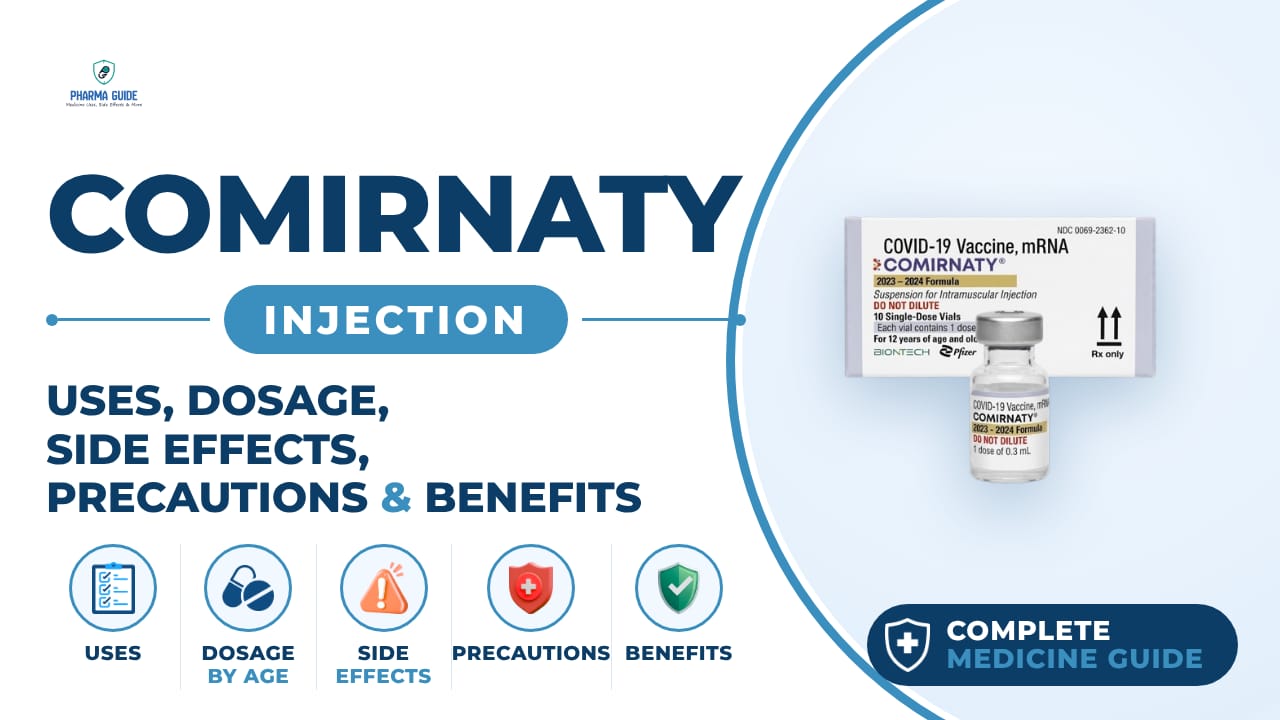
Comirnaty Injection: Uses, Dosage, Side Effects, Precautions and Alternates
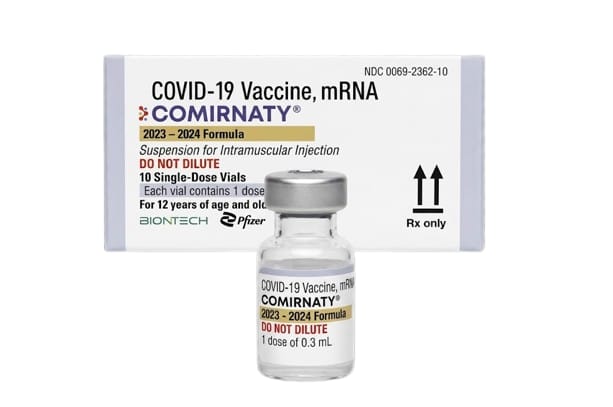
| Generic name | COVID-19 vaccine, mRNA (Pfizer) |
|---|---|
| Drug class | Viral vaccines (mRNA vaccine) |
| Forms | Prefilled syringes, Multidose vials |
Quick overview
Comirnaty Injection is an mRNA COVID-19 vaccine made by Pfizer-BioNTech that helps protect against COVID-19 caused by the SARS-CoV-2 virus. It does not contain live virus, so it cannot cause COVID-19. It is given as a single injection into the upper arm muscle, with dosing based on age. Common side effects include injection site reactions, tiredness, and headache, while rare but serious effects such as myocarditis have also been reported.
What is Comirnaty Injection
Comirnaty is an mRNA vaccine made by Pfizer-BioNTech that helps protect people against COVID-19, the disease caused by the SARS-CoV-2 virus. It does not contain any live virus, so it cannot give you COVID-19.
Comirnaty Injection uses
- Prevent COVID-19 disease caused by SARS-CoV-2
- Help protect adults aged 65 and older, or people aged 5 through 64 with an underlying condition that puts them at high risk for severe COVID-19
- If you do get COVID-19 after vaccination, it may make the illness less severe and help prevent long COVID
Benefits of Comirnaty Injection
- Helps your body build immunity to the COVID-19 virus
- May make illness less severe if you do get infected
- Can help prevent long COVID
How Comirnaty Injection works
Comirnaty uses messenger RNA (mRNA) to give your cells instructions to make a piece of the COVID-19 virus called the spike protein. Your immune system then recognizes this protein as foreign and makes antibodies and immune cells against it, so your body is ready to fight the real virus if you are exposed to it later.
Comirnaty Injection dosage
Comirnaty is given as an injection into the muscle of your upper arm by a doctor, nurse, or pharmacist. If you have had any COVID-19 vaccine before, you may need to wait a period of time before getting this vaccine. A primary course may involve more than one dose, spaced several weeks apart depending on your age and vaccine history. People with weakened immune systems may be offered an extra dose later in the schedule. You will usually be watched for a short time after your injection in case of an immediate reaction. Be careful before driving or using machines until you know how the vaccine affects you.
| Age group | Dose |
|---|---|
| Under 12 years | 0.3 mL, once |
| 12–60 years | 0.3 mL, once |
| 60+ years | 0.3 mL, once |
Available forms and strengths
- Prefilled syringes
- Multidose vials
Side effects of Comirnaty Injection
Common
- Pain, swelling, or redness at the injection site
- Tiredness
- Headache
- Muscle pain
- Chills
- Joint pain
- Fever
- Nausea
- Feeling unwell
- Swollen lymph nodes
- Decreased appetite
- Diarrhea
- Vomiting
- Dizziness
- Enlarged lymph nodes
- Arm pain
- Insomnia
- Itching at injection site
Serious
- Severe allergic reactions
- Myocarditis (inflammation of the heart muscle)
- Pericarditis (inflammation of the lining outside the heart)
- Fainting around the time of the injection
- Febrile seizures in children 5 through 11 years of age
- Temporary one-sided facial drooping
- Extensive swelling of the vaccinated limb
- Swelling of the face (especially in people who have had facial dermatological fillers)
- A skin reaction with red spots or patches that may look like a target or bulls-eye (erythema multiforme)
Warnings and precautions
- Do not get this vaccine if you have had a severe allergic reaction to a previous dose of Comirnaty, the Pfizer-BioNTech COVID-19 vaccine, or any of its ingredients.
- There is a small chance of a severe allergic reaction, usually within minutes to an hour after the dose. Signs include trouble breathing, swelling of the face and throat, fast heartbeat, a bad rash all over the body, and dizziness or weakness.
- Myocarditis and pericarditis have happened in some people after mRNA COVID-19 vaccines, most often in males aged 12 to 24, usually within a week of vaccination.
- Tell your doctor if you have a bleeding disorder or take a blood thinner, have a weakened immune system or take medicine that affects your immune system, have had myocarditis or pericarditis before, have a fever, or have ever fainted after an injection.
- This vaccine may not fully protect everyone who gets it, and it isn't known how long protection lasts.
- If you are pregnant or planning to become pregnant, talk with your doctor before getting this vaccine. Pregnant people with COVID-19 are at higher risk of severe illness than people who are not pregnant. There isn't enough information to fully understand the risks or benefits of the vaccine before 24 weeks of pregnancy, but large amounts of data from later pregnancy have not shown harm to the pregnancy or newborn.
- It isn't known whether the vaccine passes into breast milk or how it might affect a breastfeeding baby or milk supply. Talk to your doctor about the benefits of breastfeeding along with your need for the vaccine.
- It isn't known whether drinking alcohol affects this vaccine.
- Some side effects of the vaccine may temporarily affect your ability to drive or use machines, so be careful until you know how the vaccine affects you.
Storage
- Store in freezer at -90°C to -60°C
- Store in the original package in order to protect from light
- Once removed from the freezer, the unopened vial may be stored and transported refrigerated for a limited time, not exceeding the printed expiry date
- Once thawed, the vaccine cannot be re-frozen
- Once the vaccine vial is diluted, it should be used immediately or within 6 hours and kept refrigerated; discard any unused vaccine
- Do not use this vaccine if you notice particulates in the dilution or discolouration
- A doctor, nurse, or pharmacist will prepare the injection and dispose of any unused vaccine
- Do not throw away any medicines via wastewater or household waste; ask your pharmacist how to dispose of unused medicine
When to see a doctor
- Get medical help right away if you or your child have chest pain, shortness of breath, or a fast, fluttering, or pounding heartbeat after getting the vaccine, especially within 2 weeks of the dose — these can be signs of myocarditis or pericarditis.
- In children, also watch for fainting, unusual ongoing tiredness, repeated vomiting, ongoing stomach pain, or unusual cool, pale skin, and seek medical help if these occur.
- Call your doctor right away or go to the nearest hospital emergency department if you notice temporary one-sided facial drooping.
- Call your doctor right away or go to the nearest hospital emergency department if you have a severe allergic reaction.
Alternatives
- Vaxzevria
- Covovax
- Nuvaxovid
Watch the video
FAQs
What is Comirnaty Injection used for?
Comirnaty is used to prevent COVID-19 disease caused by SARS-CoV-2, particularly in adults 65 and older or people aged 5 through 64 with an underlying condition putting them at high risk for severe COVID-19. If infection does occur after vaccination, it may make the illness less severe and help prevent long COVID.
How is Comirnaty Injection given?
Comirnaty is given as an injection into the muscle of the upper arm by a doctor, nurse, or pharmacist. The dose is 0.3 mL given once, though a primary course may involve more than one dose depending on age and vaccine history, and people with weakened immune systems may be offered an extra dose later.
What are the common side effects of Comirnaty Injection?
Common side effects include pain, swelling, or redness at the injection site, tiredness, headache, muscle pain, chills, joint pain, fever, nausea, feeling unwell, swollen lymph nodes, decreased appetite, diarrhea, vomiting, and dizziness.
What serious side effects should I watch for after Comirnaty Injection?
Serious side effects include severe allergic reactions, myocarditis, pericarditis, fainting around the time of injection, febrile seizures in children 5 through 11, temporary one-sided facial drooping, extensive swelling of the vaccinated limb, and facial swelling in people who have had facial dermatological fillers.
Is Comirnaty Injection safe during pregnancy?
If you are pregnant or planning to become pregnant, talk with your doctor before getting this vaccine. There isn't enough information to fully understand the risks or benefits before 24 weeks of pregnancy, but large amounts of data from later pregnancy have not shown harm to the pregnancy or newborn.
General information, not medical advice
Your prescriber and the leaflet in your pack know your situation. This page does not.
- Follow your prescriber and the leaflet
- Don't start, stop, or change a dose on your own
- Doses and warnings differ by country and product
Sources
Video
Related medicines

Injectafer Injection: Uses, Dosage, Side Effects, Precautions and Alternates
Iron products
Injectafer (ferric carboxymaltose) treats iron deficiency anemia and heart failure-related iron deficiency via IV. Learn uses, dosage, side effects, and

Gliclazide Tablet: Uses, Dosage, Side Effects, Precautions and Alternates
Sulfonylurea (hypoglycemic/antidiabetic agent)
Gliclazide Tablet is a sulfonylurea for type 2 diabetes that boosts insulin release. Learn about dosage, side effects, warnings, and precautions.