
Safety
General information, not medical advice
Your prescriber and the leaflet in your pack know your situation. This page does not.
- Follow your prescriber and the leaflet
- Don't start, stop, or change a dose on your own
- Doses and warnings differ by country and product
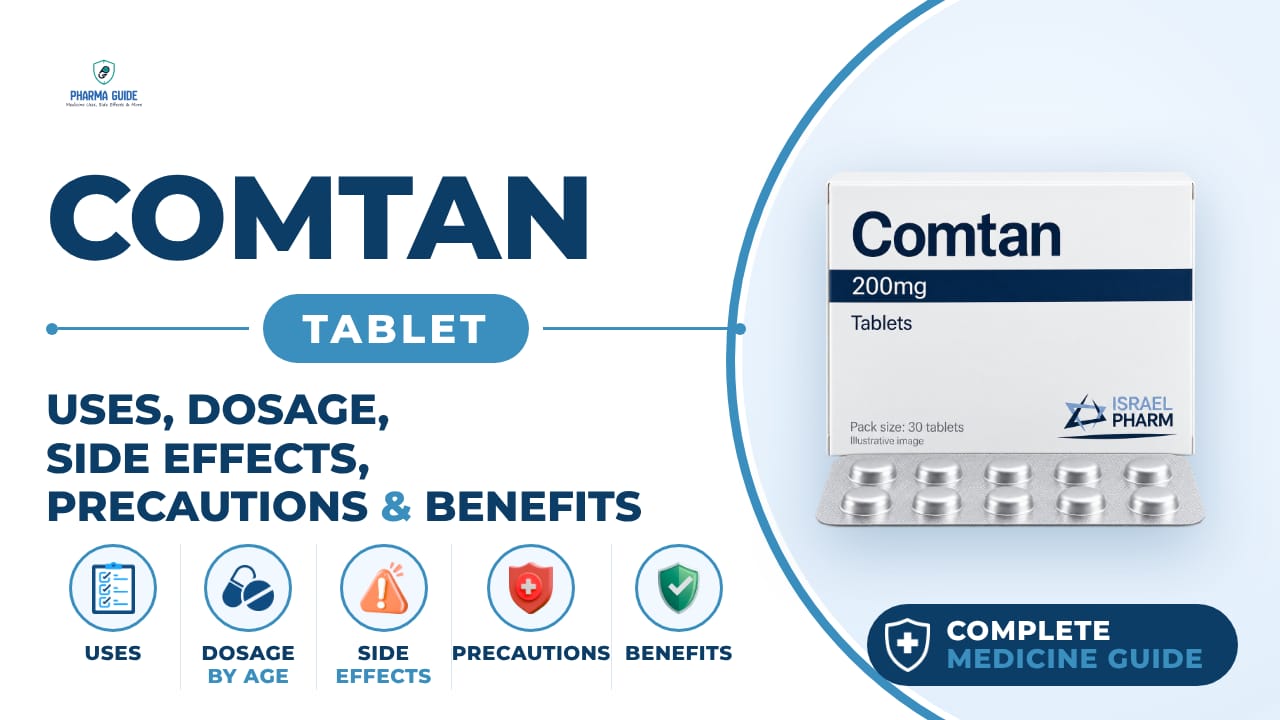
Comtan Tablet: Uses, Dosage, Side Effects, Precautions and Alternates
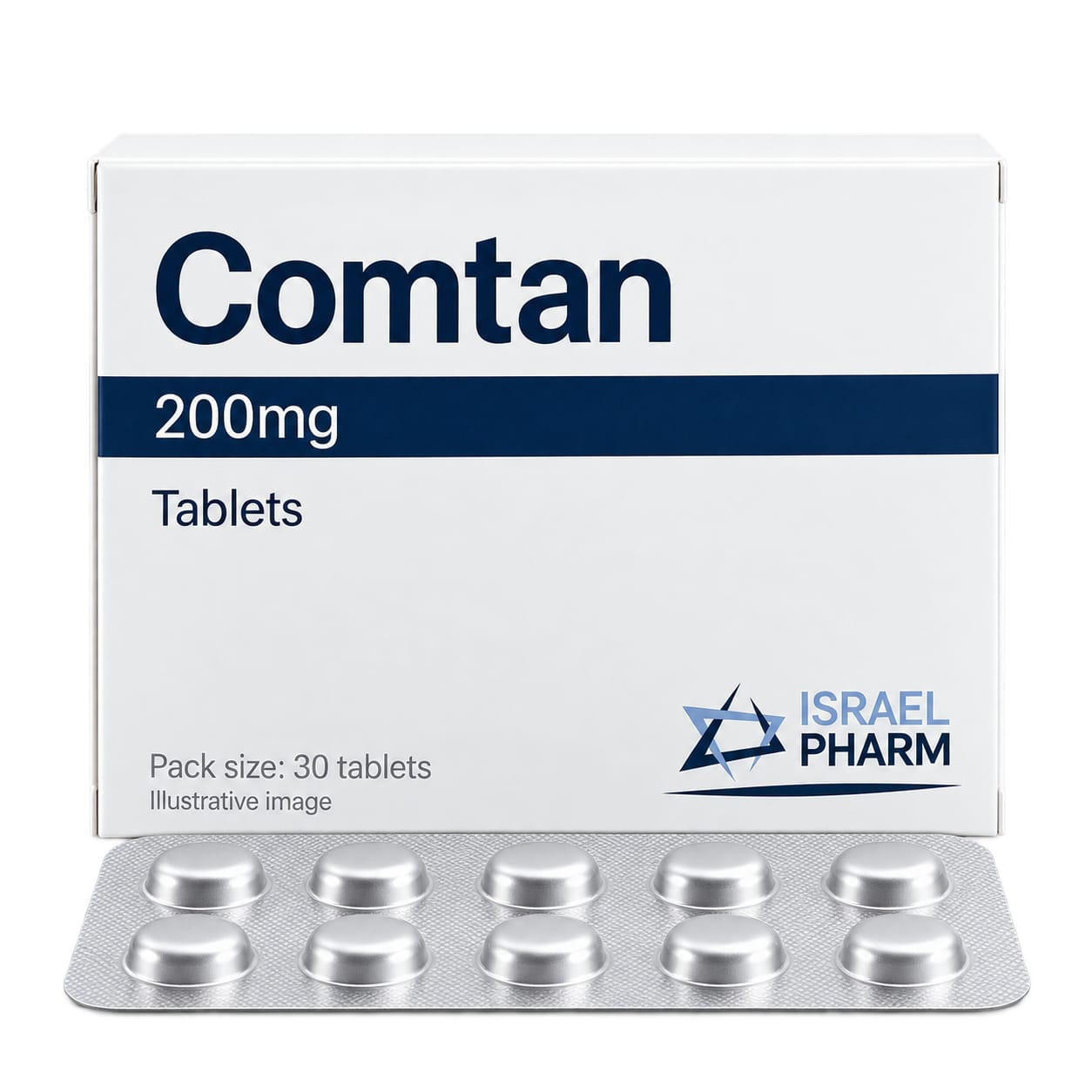
| Generic name | entacapone |
|---|---|
| Drug class | COMT (catechol-O-methyltransferase) inhibitor / dopaminergic antiparkinsonism agent |
| Forms | Tablet (200 mg, oval, brownish-orange, film-coated) |
Quick overview
Comtan Tablet contains entacapone, a COMT inhibitor used only together with carbidopa and levodopa to treat Parkinson's disease. It has no effect on Parkinson's symptoms when taken alone. Comtan helps manage "wearing-off" symptoms between levodopa doses, such as stiffness, tremors, muscle spasms, and poor muscle control.
What is Comtan Tablet
Comtan is a prescription tablet containing entacapone. It is used only together with carbidopa and levodopa to treat Parkinson's disease, and has no effect on Parkinson's symptoms if taken alone.
Comtan Tablet uses
- Used together with carbidopa and levodopa to treat 'wearing-off' symptoms of Parkinson's disease, such as stiffness, tremors, muscle spasms, and poor muscle control.
- Treats end-of-dose wearing-off symptoms in Parkinson's disease.
- Helps prolong the effects of Levodopa/Carbidopa.
- Reduces periods of reduced mobility between levodopa doses.
- Helps manage fluctuations in movement control.
- Supports treatment of muscle stiffness and slowness associated with Parkinson's disease.
Benefits of Comtan Tablet
- Allows more levodopa to reach the brain and extends how long each dose works
- Helps reduce tremors, stiffness, muscle spasms, and slowed movement linked to end-of-dose wearing-off
- Extends the therapeutic effects of levodopa
- May reduce daily OFF time
- Helps improve movement control
- Can increase periods of improved mobility
How Comtan Tablet works
Comtan blocks an enzyme called COMT that normally breaks down levodopa. By slowing this breakdown, more levodopa reaches the brain and its effects last longer, giving steadier control of Parkinson's symptoms.
Comtan Tablet dosage
Comtan must always be taken together with carbidopa and levodopa; it does not work on its own. Take each tablet at the same time as a dose of levodopa. It can be taken with or without food; if it upsets your stomach, take it with a meal or snack, but avoid fatty meals. Take it with a full glass of water, and drink plenty of liquids while taking this medicine.
If you take iron supplements, take them at least 2 to 3 hours before or after Comtan, since taking them together can reduce how much iron your body absorbs. Do not stop taking this medicine suddenly without checking with your doctor; any dose change should be guided by your doctor. If you miss a dose, wait until your next scheduled levodopa dose and take Comtan then; do not double up to make up for a missed dose.
| Age group | Dose |
|---|---|
| 18–39 years | 200 mg with each Levodopa/Carbidopa dose; maximum 1,600 mg daily |
| 40–64 years | 200 mg with each Levodopa/Carbidopa dose; maximum 1,600 mg daily |
| 65–74 years | 200 mg with each Levodopa/Carbidopa dose; maximum 1,600 mg daily, with closer monitoring |
| 75 years and older | 200 mg with each Levodopa/Carbidopa dose; maximum 1,600 mg daily, with careful monitoring |
Available forms and strengths
- Tablet (200 mg, oval, brownish-orange, film-coated)
Side effects of Comtan Tablet
Common
- Involuntary or uncontrolled muscle movements (dyskinesia)
- Nausea, vomiting, diarrhea, stomach pain, or constipation
- Dry mouth
- Dizziness, drowsiness, or fatigue
- Harmless red, orange, brown, or black coloring of the urine
- Increased sweating
- Headache, aches and pains, or leg cramps
- Difficulty sleeping or unusual dreams
Serious
- Falling asleep suddenly during daily activities without warning
- Severe or ongoing diarrhea, which can sometimes be a sign of colitis (bowel inflammation)
- Hallucinations, confusion, agitation, or unusual thoughts or behavior
- New or intense urges, such as gambling, compulsive shopping, binge eating, or increased sexual urges
- Signs of liver problems: yellowing of skin or eyes, dark urine, loss of appetite, feeling generally unwell, or right-sided upper belly pain
- High fever, severe muscle stiffness, sweating, fast or uneven heartbeat, or tremors (possible neuroleptic malignant syndrome), especially after suddenly stopping the medicine
- Unexplained muscle pain, tenderness, or weakness, especially with fever, tiredness, and dark urine (possible rhabdomyolysis)
- Signs of anemia such as tiredness, headaches, shortness of breath, dizziness, or looking pale
- Severe allergic reaction: hives, difficulty breathing, swelling of face, lips, tongue, or throat
Warnings and precautions
- Do not stop taking Comtan suddenly. Rapid withdrawal can cause high fever, severe muscle stiffness, confusion, and a serious condition resembling neuroleptic malignant syndrome.
- Comtan can cause sudden sleep attacks during normal daily activities, sometimes without any warning signs of drowsiness beforehand.
- People with Parkinson's disease may have a higher chance of developing skin cancer (melanoma). Talk to your doctor about regular skin checks.
- Taking Comtan with a type of antidepressant called a non-selective MAO inhibitor is usually not recommended because it may seriously disrupt how the body breaks down certain natural chemicals.
- Diarrhea caused by Comtan can sometimes be a sign of colitis (bowel inflammation) and may be severe, watery, and linked to dehydration or weight loss.
- It is not known whether Comtan will harm an unborn baby, and one source advises against using it during pregnancy. Tell your doctor if you are pregnant or planning to become pregnant.
- It is not known whether entacapone passes into breast milk or could harm a nursing baby. One source advises not breastfeeding while taking Comtan.
- People with severe kidney disease needing dialysis should check with their doctor, as the dose of Comtan may need to be adjusted.
- People with liver disease should use Comtan with caution, since liver problems can cause the drug to build up more in the body. Tell your doctor if you have liver disease.
- Avoid drinking alcohol while taking Comtan, as it can increase some of the medicine's side effects.
- Comtan can make you drowsy or cause you to suddenly fall asleep, even if you feel alert. Be careful driving or operating machinery until you know how this medicine affects you.
Storage
- Store at room temperature away from moisture and heat.
- Store it in a cool dry place away from moisture, heat or sunlight; for example, do not store it in the bathroom or near a sink, or in the car or on window sills.
- Keep your medicine in the original container until it is time to take it.
- Keep it where young children cannot reach it.
- If you no longer need to use this medicine or it is out of date, take it to any pharmacy for safe disposal.
When to see a doctor
- Get emergency help right away if you have signs of a severe allergic reaction, such as hives, trouble breathing, or swelling of the face, lips, tongue, or throat.
- Call your doctor right away if you have agitation, confusion, unusual thoughts or behavior, or hallucinations.
- Seek medical help immediately for very stiff muscles, high fever, sweating, fast or uneven heartbeat, tremors, or feeling like you might pass out.
- Contact your doctor right away if you have severe or ongoing diarrhea.
- Tell your doctor about any unexplained muscle pain, tenderness, or weakness, especially if combined with fever, unusual tiredness, and dark-colored urine, as this can signal a serious muscle problem.
- Seek urgent medical attention if you think you have taken too much Comtan, even if you feel fine.
- Get medical help for serious eye symptoms like sudden vision loss, blurred vision, eye pain, or seeing halos around lights, or for serious heart symptoms like fast or pounding heartbeat, chest fluttering, or sudden dizziness and passing out.
Alternatives
- Rasagiline
- Safinamide
- Tolcapone
- Opicapone
Watch the video
FAQs
What is Comtan Tablet used for?
Comtan is used together with carbidopa and levodopa to treat 'wearing-off' symptoms of Parkinson's disease, such as stiffness, tremors, muscle spasms, and poor muscle control. It has no effect on Parkinson's symptoms if taken alone.
How does Comtan Tablet work?
Comtan blocks an enzyme called COMT that normally breaks down levodopa. By slowing this breakdown, more levodopa reaches the brain and its effects last longer, giving steadier control of Parkinson's symptoms.
What is the dosage of Comtan Tablet?
Comtan must always be taken together with carbidopa and levodopa, with each tablet taken at the same time as a dose of levodopa. The typical dose is 200 mg with each Levodopa/Carbidopa dose, up to a maximum of 1,600 mg daily.
What are the common side effects of Comtan Tablet?
Common side effects include involuntary muscle movements (dyskinesia), nausea, vomiting, diarrhea, stomach pain, constipation, dry mouth, dizziness, drowsiness, fatigue, harmless discoloration of urine, increased sweating, headache, and difficulty sleeping.
Can I stop taking Comtan Tablet suddenly?
No, you should not stop taking Comtan suddenly. Rapid withdrawal can cause high fever, severe muscle stiffness, confusion, and a serious condition resembling neuroleptic malignant syndrome. Any dose change should be guided by your doctor.
General information, not medical advice
Your prescriber and the leaflet in your pack know your situation. This page does not.
- Follow your prescriber and the leaflet
- Don't start, stop, or change a dose on your own
- Doses and warnings differ by country and product
Sources
Video
Related medicines

Injectafer Injection: Uses, Dosage, Side Effects, Precautions and Alternates
Iron products
Injectafer (ferric carboxymaltose) treats iron deficiency anemia and heart failure-related iron deficiency via IV. Learn uses, dosage, side effects, and

Gliclazide Tablet: Uses, Dosage, Side Effects, Precautions and Alternates
Sulfonylurea (hypoglycemic/antidiabetic agent)
Gliclazide Tablet is a sulfonylurea for type 2 diabetes that boosts insulin release. Learn about dosage, side effects, warnings, and precautions.