
Safety
General information, not medical advice
Your prescriber and the leaflet in your pack know your situation. This page does not.
- Follow your prescriber and the leaflet
- Don't start, stop, or change a dose on your own
- Doses and warnings differ by country and product
Consensi Tablet: Uses, Dosage, Side Effects, Precautions and Alternates
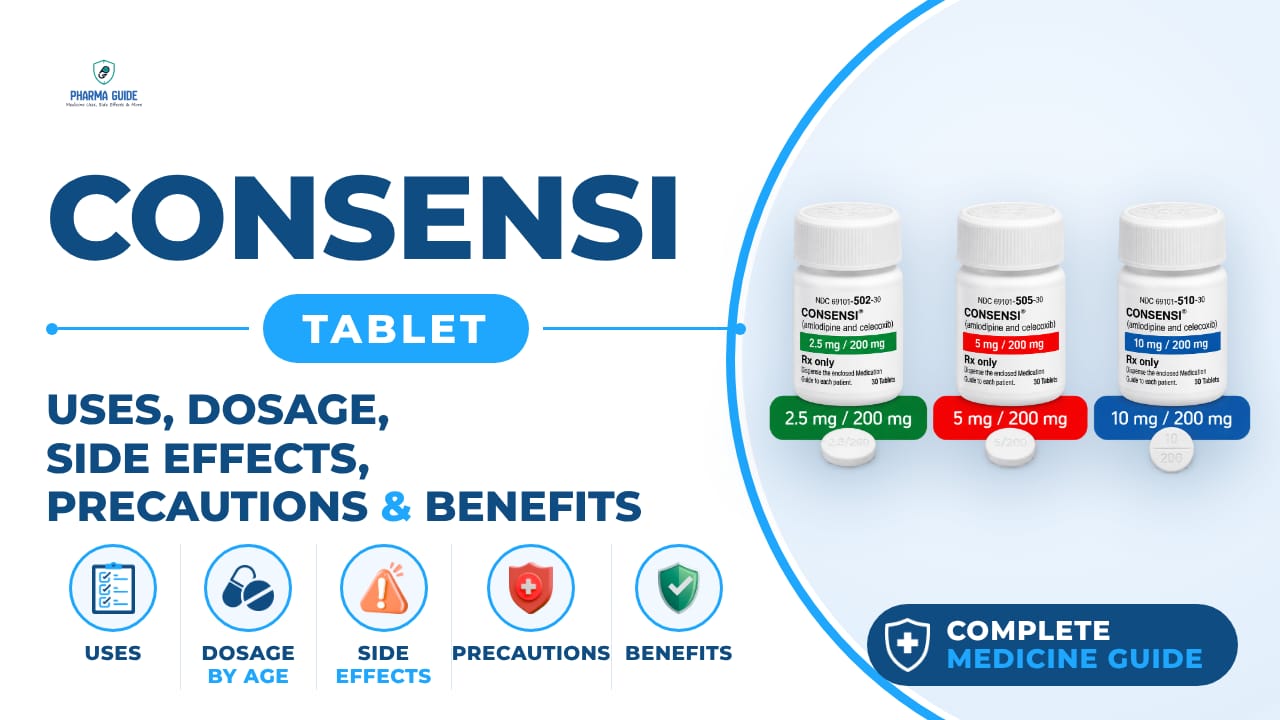
| Generic name | amlodipine and celecoxib |
|---|---|
| Drug class | Cox-2 inhibitor (NSAID) and calcium channel blocker combination (antihypertensive combination) |
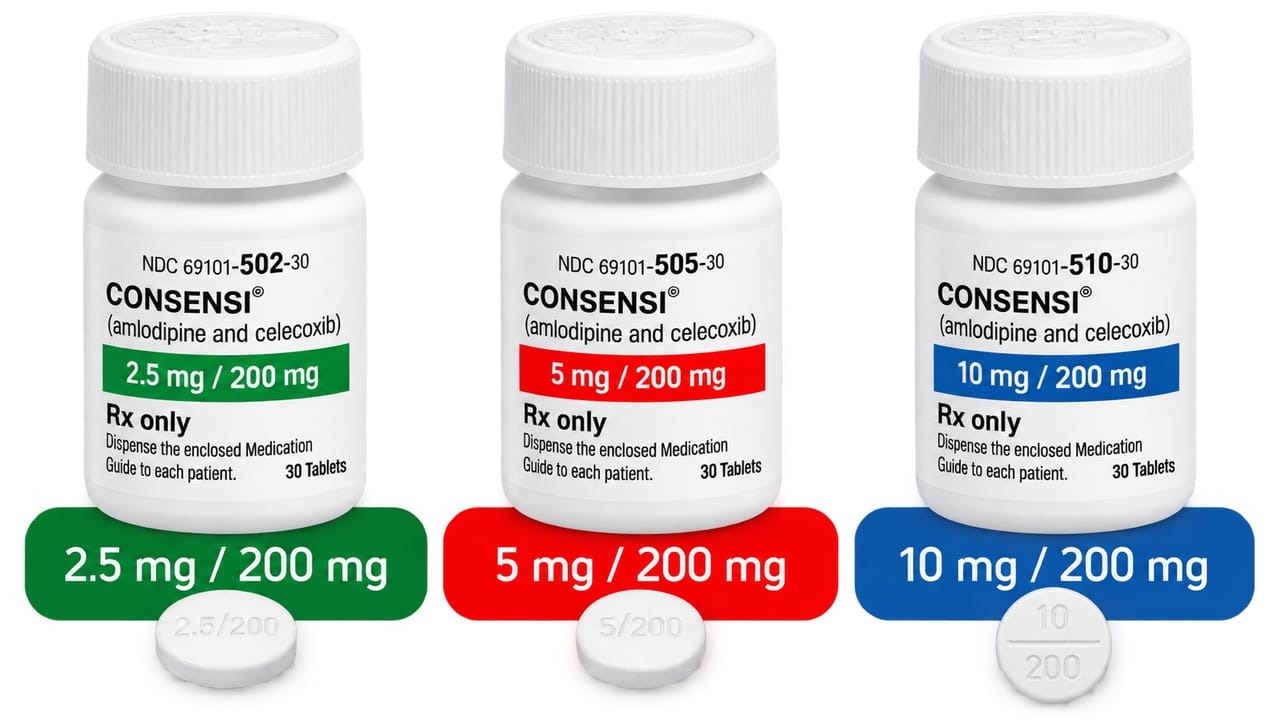
| Forms | Tablets (2.5 mg/200 mg, 5 mg/200 mg, and 10 mg/200 mg amlodipine/celecoxib strengths) |
Quick overview
Consensi Tablet combines amlodipine, a calcium channel blocker, with celecoxib, a nonsteroidal anti-inflammatory drug (NSAID), in one pill. It is used in adults who need treatment for both high blood pressure and osteoarthritis symptoms at the same time. The Consensi brand and its generics have been discontinued in the United States.
What is Consensi Tablet
Consensi is a prescription tablet that combines two medicines in one pill: amlodipine, a calcium channel blocker for high blood pressure, and celecoxib, a nonsteroidal anti-inflammatory drug (NSAID) for osteoarthritis pain. It is used in adults who need treatment with both medicines together. Note: the Consensi brand and its generics have been discontinued in the United States.
Consensi Tablet uses
- Treating high blood pressure (hypertension) in adults
- Managing the signs and symptoms of osteoarthritis in adults
Benefits of Consensi Tablet
- Helps lower blood pressure, which reduces the risk of fatal and non-fatal heart attacks and strokes
- Reduces joint pain, swelling, and stiffness caused by osteoarthritis
How Consensi Tablet works
Consensi works in two ways. The amlodipine part relaxes and widens blood vessels by blocking calcium from entering vascular muscle cells, which lowers blood pressure. The celecoxib part blocks an enzyme called COX-2, which lowers substances in the body called prostaglandins that cause pain and inflammation in the joints.
Consensi Tablet dosage
Take this medicine exactly as your healthcare provider tells you to, usually once a day. Take it with a full glass of water, and do not lie down for at least 10 minutes after taking it. If your stomach feels upset, you can take it with food, milk, or an antacid. It can be taken with or without food, since food does not significantly change how much medicine your body absorbs.
If your joint pain goes away, do not stop taking this medicine until your doctor prescribes a different medicine for your blood pressure, since it is also controlling your blood pressure. It may take up to two weeks of regular use before you feel the full benefit for your joint symptoms. If you miss a dose, take it as soon as you remember, but skip it if it is almost time for your next dose — do not double up. Older, smaller, or frail adults, or those with mild liver problems, are usually started on a lower dose by their doctor.
| Age group | Dose |
|---|---|
| Under 18 years | Not recommended |
| 18–64 years | 1 tablet once daily |
| 65 years & older | 1 tablet once daily; use cautiously |
| Adults | 1 tablet once daily |
| Maximum | 1 tablet per day |
Available forms and strengths
- Tablets (2.5 mg/200 mg, 5 mg/200 mg, and 10 mg/200 mg amlodipine/celecoxib strengths)
Side effects of Consensi Tablet
Common
- Swelling of the arms, legs, hands, and feet
- Joint swelling
- Dizziness
- Stomach pain
- Diarrhea
- Heartburn
- Headache
- Frequent urination
- Hot or warm feeling in the face (flushing)
- Gas
- Tiredness
- Extreme sleepiness
- Belching
- Body aches or pain
- Runny or stuffy nose
Serious
- Liver problems, including liver failure
- Worsening chest pain (angina) or heart attack
- Heart failure
- Serious kidney problems, including kidney failure
- Increased potassium levels (hyperkalemia)
- Life-threatening allergic reactions
- Life-threatening skin reactions such as Stevens-Johnson syndrome or toxic epidermal necrolysis
- Low red blood cells (anemia)
- Serious stomach or intestinal bleeding, ulcers, or tears
- Heart attack or stroke
Warnings and precautions
- This medicine can increase the risk of a heart attack or stroke that can lead to death. This risk can happen early in treatment and may increase with higher doses or longer use.
- Do not take this medicine right before or after a heart bypass surgery (CABG), and avoid taking it after a recent heart attack unless your healthcare provider tells you to.
- This medicine increases the risk of bleeding, ulcers, and tears in the esophagus, stomach, and intestines, which can happen at any time without warning and can be fatal.
- Do not take other medicines that contain NSAIDs or salicylates while on this medicine, since it increases the risk of stomach problems without added pain relief.
- This medicine should only be used exactly as prescribed, at the lowest dose possible, and for the shortest time needed.
- Do not take this medicine if you've had an asthma attack, hives, or other allergic reaction to aspirin or other NSAIDs, or an allergic reaction to sulfonamides, or if you are allergic to its ingredients.
- Tell your doctor if you are pregnant or plan to become pregnant.
- This medicine should not be used starting at about 30 weeks of pregnancy, and if used between 20 and 30 weeks, your doctor may need to monitor the fluid around your baby.
- This medicine can pass into breast milk in small amounts. Talk with your healthcare provider about the best way to feed your baby if you take this medicine.
- Tell your doctor if you have kidney problems before starting this medicine, since it can cause new or worsening kidney problems.
- Tell your doctor if you have liver problems before starting this medicine, since it can cause serious liver problems including liver failure.
- Drinking alcohol regularly while taking this medicine can increase your risk of stomach bleeding, so it's best to limit alcohol and ask your doctor how much is safe.
- This medicine may make you dizzy. Do not drive, use machinery, or do anything that needs alertness until you know how it affects you.
Storage
- Store the tablets at room temperature between 68°F and 77°F (20°C to 25°C)
- Store away from light and moisture; do not store in the bathroom
- Keep all medicines out of the reach of children and pets
- Do not flush this medication down the toilet or pour it into a drain unless told to do so; ask your pharmacist how to properly dispose of unused medicine
When to see a doctor
- Get emergency help right away if you have shortness of breath or trouble breathing, chest pain, weakness on one side of your body, slurred speech, or swelling of the face or throat.
- Stop taking this medicine and call your healthcare provider right away if you have nausea, feel more tired or weaker than usual, diarrhea, itching, yellowing of your skin or eyes, indigestion or stomach pain, flu-like symptoms, vomit blood, black or bloody stools, unusual weight gain, or skin rash or blisters with fever.
- Check with your doctor right away if you notice pain or tenderness in the upper stomach, pale stools, dark urine, loss of appetite, nausea, vomiting, or yellow eyes or skin, which could be signs of a serious liver problem.
- Check with your doctor right away if you have bloody urine, decreased urination, increased blood pressure, increased thirst, lower back or side pain, swelling of the face, fingers, or legs, trouble breathing, or unusual tiredness, which could signal a serious kidney problem.
- Call your doctor right away if you notice symptoms of high potassium levels, such as stomach pain, confusion, trouble breathing, irregular heartbeat, nausea, nervousness, or numbness or tingling in your hands, feet, or lips.
- Call your doctor right away if you have a rash, itching, trouble breathing or swallowing, or swelling of your hands, face, or mouth, as this may be a serious allergic reaction.
Alternatives
- Valsartan
- Lasix
- Amlodipine
Watch the video
FAQs
What is Consensi Tablet used for?
Consensi Tablet is used in adults to treat high blood pressure and to manage the signs and symptoms of osteoarthritis at the same time.
What are the active ingredients in Consensi Tablet?
Consensi combines amlodipine, a calcium channel blocker for high blood pressure, with celecoxib, an NSAID for osteoarthritis pain, in one tablet.
How should Consensi Tablet be taken?
It is usually taken once a day with a full glass of water, and you should not lie down for at least 10 minutes after taking it. It can be taken with or without food.
Is Consensi Tablet still available?
No, the Consensi brand and its generics have been discontinued in the United States.
What are the serious risks of taking Consensi Tablet?
Consensi can increase the risk of heart attack or stroke, serious stomach or intestinal bleeding and ulcers, liver problems, kidney problems, and high potassium levels.
General information, not medical advice
Your prescriber and the leaflet in your pack know your situation. This page does not.
- Follow your prescriber and the leaflet
- Don't start, stop, or change a dose on your own
- Doses and warnings differ by country and product
Sources
Video
Related medicines

Injectafer Injection: Uses, Dosage, Side Effects, Precautions and Alternates
Iron products
Injectafer (ferric carboxymaltose) treats iron deficiency anemia and heart failure-related iron deficiency via IV. Learn uses, dosage, side effects, and

Gliclazide Tablet: Uses, Dosage, Side Effects, Precautions and Alternates
Sulfonylurea (hypoglycemic/antidiabetic agent)
Gliclazide Tablet is a sulfonylurea for type 2 diabetes that boosts insulin release. Learn about dosage, side effects, warnings, and precautions.