
Safety
General information, not medical advice
Your prescriber and the leaflet in your pack know your situation. This page does not.
- Follow your prescriber and the leaflet
- Don't start, stop, or change a dose on your own
- Doses and warnings differ by country and product
ConZip Capsule: Uses, Dosage, Side Effects, Precautions and Alternates
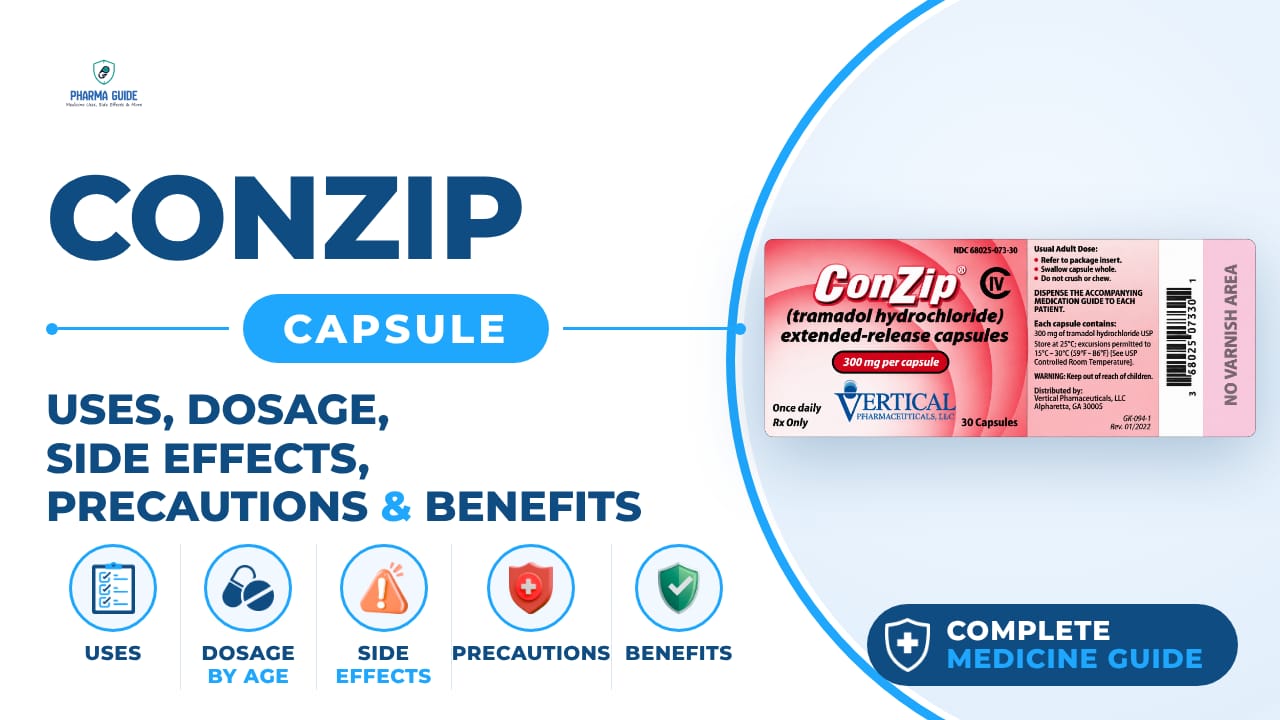
| Generic name | Tramadol Hydrochloride |
|---|---|
| Drug class | Opioids (opioid agonist) |
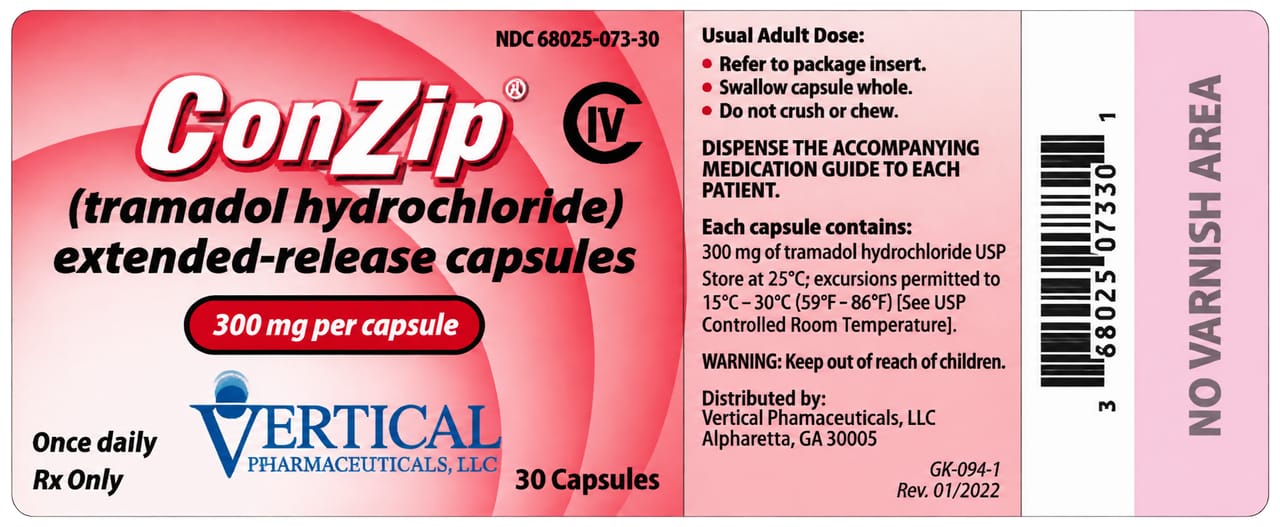
| Forms | Extended-release capsules (100 mg, 200 mg, and 300 mg) |
Quick overview
ConZip Capsule is an extended-release form of tramadol hydrochloride, an opioid agonist pain medicine. It is used for around-the-clock management of severe and ongoing pain that requires daily opioid treatment and is not meant for occasional or as-needed use. It provides steady, once-daily pain relief and carries serious risks related to misuse, breathing problems, and interactions with alcohol or other drugs.
What is ConZip Capsule
ConZip is a strong prescription opioid pain medicine in an extended-release capsule form. It contains tramadol and is used for around-the-clock management of severe and ongoing pain that needs daily opioid treatment, not for occasional or as-needed use.
ConZip Capsule uses
- Management of severe and persistent pain that requires an opioid analgesic and cannot be adequately treated with other options, including immediate-release opioids
Benefits of ConZip Capsule
- Provides continuous, once-daily pain control for severe, ongoing pain
- Extended-release form maintains steady pain relief over 24 hours rather than requiring multiple daily doses
How ConZip Capsule works
ConZip contains tramadol, which relieves pain in two ways: it (and its active breakdown product M1) attaches to opioid receptors in the brain and spinal cord to block pain signals, and it also weakly blocks the reabsorption of two brain chemicals, norepinephrine and serotonin, which also helps reduce pain.
ConZip Capsule dosage
Take ConZip exactly as prescribed by your doctor, using the lowest dose that controls your pain for the shortest time needed. Take your dose once a day at the same time every day. It can be taken with or without food, but take it the same way every time. Swallow the capsule whole with liquid; do not split, break, chew, crush, dissolve, snort, or inject it, since this can cause a fatal overdose. Do not use two doses at one time if you miss a dose — take your next dose at your usual time. Do not change your dose or stop taking it suddenly without talking to your doctor first, since this can cause withdrawal symptoms. Ask your doctor before using any other opioid medicines while taking this one. This medicine is not meant to be used only when pain occurs.
| Age group | Dose |
|---|---|
| Under 18 years | Not recommended |
| 18–64 years | 100 mg once daily initially; adjust gradually according to response |
| 65 years & older | Start cautiously at the lowest appropriate dose |
| Adults — maximum | 300 mg once daily |
Available forms and strengths
- Extended-release capsules (100 mg, 200 mg, and 300 mg)
Side effects of ConZip Capsule
Common
- Itching
- Constipation
- Nausea
- Vomiting
- Stomach pain
- Dizziness
- Drowsiness
- Tiredness
- Headache
- Dry mouth
- Sweating
- Weakness
- Loss of appetite
- Trouble sleeping
- Diarrhea
- Skin rash
- Joint pain
Serious
- Signs of an allergic reaction such as hives, difficulty breathing, or swelling of the face or throat
- Severe skin reaction with fever, sore throat, burning eyes, skin pain, or a red or purple rash with blistering and peeling
- Slowed or stopped breathing, blue-colored lips, long pauses in breathing, or being very hard to wake up
- Headache, hunger, weakness, sweating, irritability, dizziness, fast heart rate, or feeling jittery (signs of low blood sugar)
- Increased sensitivity to pain or pain getting worse
- Seizures, confusion, problems with thinking or memory, weakness, or feeling unsteady
- Noisy breathing, sighing, shallow breathing, breathing that stops during sleep, a slow heart rate or weak pulse, or feeling like you might pass out
- Signs of low cortisol levels such as nausea, vomiting, loss of appetite, dizziness, or worsening tiredness and weakness
- Symptoms of serotonin syndrome, such as agitation, hallucinations, fever, sweating, shivering, fast heart rate, muscle stiffness, twitching, loss of coordination, nausea, vomiting, or diarrhea
Warnings and precautions
- Misusing this opioid medicine can lead to addiction, overdose, or death. Keep it stored where others cannot access it.
- Using alcohol or other drugs that cause drowsiness or slow breathing together with this medicine can cause fatal side effects.
- This medicine can slow or stop breathing, which can lead to death, especially when combined with alcohol or other drugs that cause drowsiness or slow breathing.
- Never share this medicine with anyone else, especially someone with a history of drug addiction, because it could cause their death. Selling or giving it away is illegal.
- Swallow capsules whole; breaking, chewing, crushing, or dissolving them can cause a fatal overdose.
- This medicine should not be given to children younger than 12, and should not be given to anyone under 18 who recently had tonsil or adenoid surgery.
- Seizures have occurred in some people taking this medicine, especially those with certain risk factors like depression, head injury, epilepsy, or drug/alcohol addiction.
- Do not take this medicine if you have recently used alcohol, sedatives, tranquilizers, or narcotics, or if you have used an MAO inhibitor in the past 14 days.
- Long-term use of this medicine may affect fertility in men or women, making it harder to become pregnant.
- Stopping this medicine suddenly can cause withdrawal symptoms; talk to your doctor before stopping.
- Using this medicine during pregnancy for an extended period can cause the baby to be born with withdrawal symptoms that may be life-threatening if not recognized and treated.
- Tell your doctor if you are pregnant or planning to become pregnant.
- Breastfeeding is not recommended while taking this medicine because it can pass into breast milk and cause life-threatening side effects in a nursing baby.
- This medicine has not been studied in people with kidney impairment and should not be used in those with severe kidney impairment. Tell your doctor if you have kidney disease.
- This medicine has not been studied in people with liver impairment and should not be used in those with severe liver impairment. Tell your doctor if you have liver disease.
- Do not drink alcohol or use products containing alcohol while taking this medicine, since it can cause dangerous side effects or death.
- Avoid driving or doing other hazardous activities until you know how this medicine affects you, since it can cause dizziness or drowsiness that may lead to falls, accidents, or injuries.
Storage
- Store at room temperature between 68°F and 77°F (20°C to 25°C), with brief excursions allowed between 59°F and 86°F (15°C to 30°C)
- Keep away from moisture and heat
- Keep out of the reach and sight of children and in a location not accessible by others, including visitors to the home
- Do not keep leftover medicine; ask your pharmacist about a drug take-back program
- If no take-back program is available, mix the medicine (do not crush) with an unpalatable substance such as dirt, cat litter, or used coffee grounds, place it in a sealed plastic bag, and throw it in the household trash; remove personal information from the empty bottle label
When to see a doctor
- Get emergency medical help right away if you have signs of an allergic reaction like hives, difficulty breathing, or swelling of the face or throat, or a severe skin reaction with fever, sore throat, burning eyes, or a red/purple skin rash with blistering and peeling.
- A caregiver should give naloxone and/or seek emergency medical help if you have slow breathing with long pauses, blue-colored lips, or if you are hard to wake up.
- Seek medical attention right away if you have symptoms of serotonin syndrome, such as agitation, hallucinations, fever, sweating, shivering, fast heart rate, muscle stiffness, twitching, loss of coordination, nausea, vomiting, or diarrhea.
- Seek emergency medical attention right away if you think you have taken too much of this medicine; an overdose can be fatal, and symptoms may include severe drowsiness, pinpoint pupils, slow breathing, or no breathing.
- Get emergency medical help right away if you have trouble breathing, shortness of breath, a fast heartbeat, chest pain, swelling of the face, tongue, or throat, extreme drowsiness, feeling faint, agitation, high body temperature, trouble walking, stiff muscles, or confusion.
Alternatives
- Tapentadol ER
- Oxycodone ER
- Hydromorphone ER
- Morphine ER
Watch the video
FAQs
What is ConZip Capsule used for?
It is used for around-the-clock management of severe and persistent pain that requires an opioid analgesic and cannot be adequately treated with other options, including immediate-release opioids.
How should ConZip Capsule be taken?
Take it once a day at the same time every day, with or without food, swallowing the capsule whole with liquid. Do not split, break, chew, crush, dissolve, snort, or inject it, as this can cause a fatal overdose.
What is the maximum dose of ConZip Capsule?
For adults, the initial dose is typically 100 mg once daily, adjusted gradually according to response, with a maximum of 300 mg once daily.
What are the serious side effects of ConZip Capsule?
Serious side effects include slowed or stopped breathing, severe allergic reactions, seizures, serotonin syndrome, low blood sugar symptoms, and signs of low cortisol levels.
Can ConZip Capsule be used during pregnancy or breastfeeding?
Extended use during pregnancy can cause life-threatening withdrawal symptoms in the baby, and breastfeeding is not recommended because the medicine can pass into breast milk and harm a nursing baby.
General information, not medical advice
Your prescriber and the leaflet in your pack know your situation. This page does not.
- Follow your prescriber and the leaflet
- Don't start, stop, or change a dose on your own
- Doses and warnings differ by country and product
Sources
Video
Related medicines
Exalgo Tablet: Uses, Dosage, Side Effects, Precautions and Alternates
Opioids (opioid agonist)
Exalgo Tablet (hydromorphone) is a discontinued extended-release opioid for moderate to severe pain. Learn uses, dosage, side effects, and warnings.

Injectafer Injection: Uses, Dosage, Side Effects, Precautions and Alternates
Iron products
Injectafer (ferric carboxymaltose) treats iron deficiency anemia and heart failure-related iron deficiency via IV. Learn uses, dosage, side effects, and