
Safety
General information, not medical advice
Your prescriber and the leaflet in your pack know your situation. This page does not.
- Follow your prescriber and the leaflet
- Don't start, stop, or change a dose on your own
- Doses and warnings differ by country and product
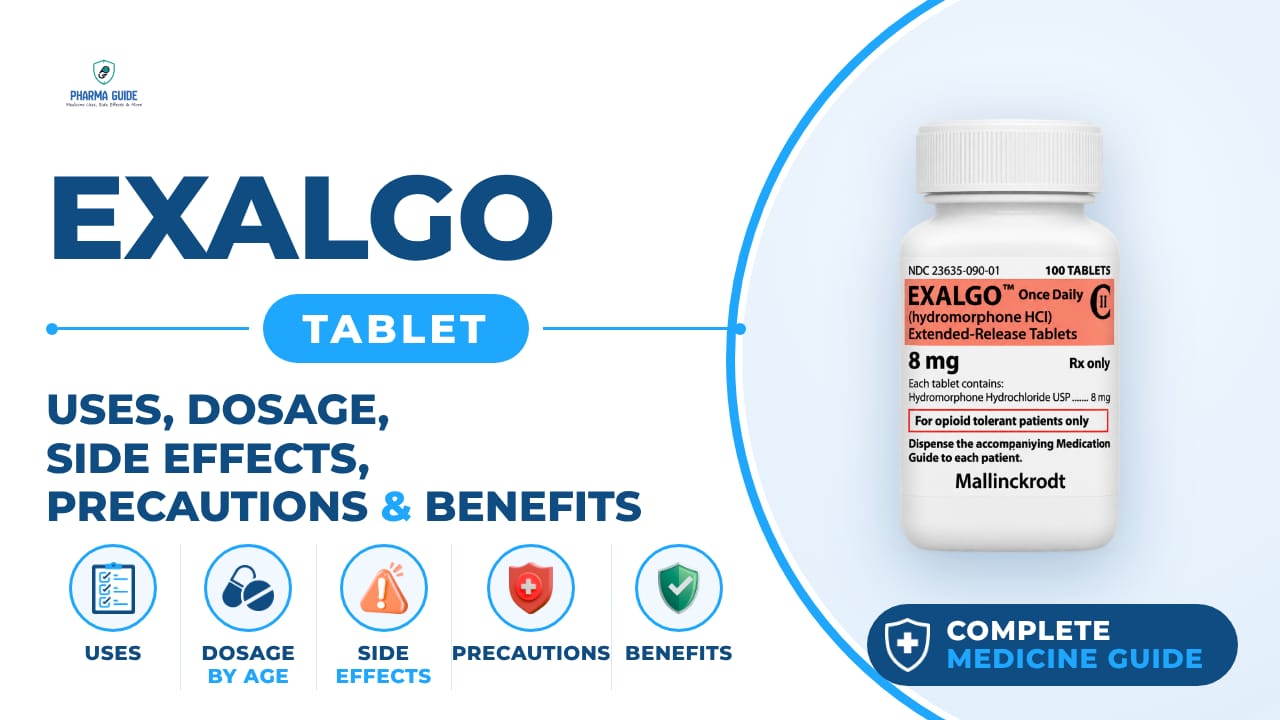
Exalgo Tablet: Uses, Dosage, Side Effects, Precautions and Alternates
| Generic name | hydromorphone hydrochloride |
|---|---|
| Drug class | Opioids (opioid agonist) |
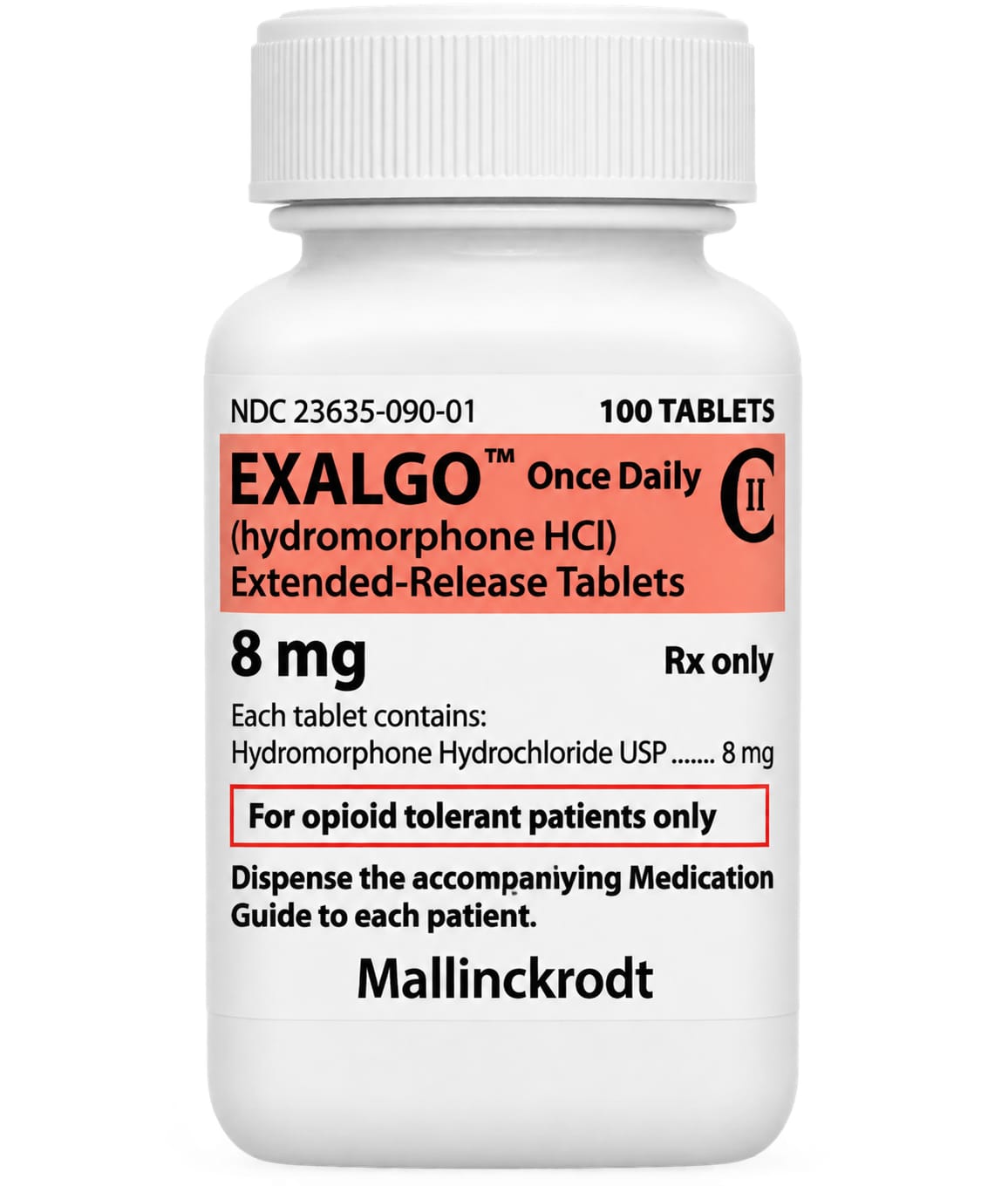
| Forms | Extended-release tablets (8 mg, 12 mg, 16 mg, and 32 mg strengths) |
Quick overview
Exalgo Tablet (hydromorphone hydrochloride) was a brand-name, extended-release opioid pain medicine. It has been discontinued in the U.S., but generic hydromorphone extended-release tablets may still be available. It was used for around-the-clock management of moderate to severe pain in opioid-tolerant patients. It is habit-forming and carries serious risks, including slowed or stopped breathing.
What is Exalgo Tablet
Exalgo was a brand-name extended-release opioid pain medicine containing hydromorphone. It has been discontinued in the U.S., but generic hydromorphone extended-release tablets may still be available. An opioid is sometimes called a narcotic.
Exalgo Tablet uses
- Management of moderate to severe pain in opioid-tolerant patients who need continuous, around-the-clock pain relief for an extended period of time
- Used when other pain treatments, such as non-opioid pain medicines or immediate-release opioid medicines, did not treat pain well enough or were not tolerated
Benefits of Exalgo Tablet
- Provided extended, once-daily pain control for moderate to severe chronic pain
- In clinical studies, Exalgo provided superior pain relief compared to placebo in opioid-tolerant patients with moderate-to-severe low back pain
How Exalgo Tablet works
Hydromorphone attaches mainly to opioid receptors called mu-receptors, found mostly in the brain and spinal cord. This action blocks pain signals and provides pain relief, though other effects like slowed breathing and drowsiness happen because these same receptors affect other body functions.
Exalgo Tablet dosage
Take exactly as prescribed by your doctor and follow all directions on your prescription label. It is taken once daily, at approximately the same time every day, with or without food. Swallow the tablet whole; do not crush, break, chew, dissolve, or split it, since this can release a potentially fatal dose all at once. Do not take more than your prescribed dose in 24 hours. Stop taking all other around-the-clock opioid pain medicines when starting this medicine. Do not stop taking this medicine suddenly; ask your doctor how to safely lower your dose over time. You may notice an empty tablet shell in your stool; this is normal. Elderly patients may be more sensitive to this medicine and are usually started on lower doses with closer monitoring. Patients with liver or kidney problems may need a reduced dose and closer monitoring.
| Age group | Dose |
|---|---|
| Under 18 years | Not recommended |
| 18–64 years | Dose is individualized based on previous opioid use; opioid-tolerant patients are converted to an appropriate once-daily dose |
| 65 years & older | Start cautiously and use the lowest appropriate dose, with close medical supervision |
| Maximum | No simple fixed age-based maximum; dose must be individualized |
Available forms and strengths
Extended-release tablets (8 mg, 12 mg, 16 mg, and 32 mg strengths)
Side effects of Exalgo Tablet
Common
- Constipation
- Nausea
- Vomiting
- Stomach pain
- Dizziness
- Drowsiness
- Headache
- Tired feeling
- Feelings of extreme happiness or sadness
- Sweating
- Mild itching
- Dry mouth
- Flushing (warmth, redness, or tingly feeling)
- Diarrhea
- Blurred vision
- Double vision
- Sleep problems (insomnia)
- Strange dreams
Serious
- Noisy breathing, sighing, shallow breathing, or breathing that stops during sleep
- Confusion, feelings of extreme happiness or sadness
- Severe weakness or drowsiness
- A light-headed feeling, like you might pass out
- Infertility, missed menstrual periods
- Impotence, sexual problems, loss of interest in sex
- Low cortisol levels — nausea, vomiting, loss of appetite, dizziness, worsening tiredness or weakness
- Symptoms of serotonin syndrome — agitation, hallucinations, fever, sweating, shivering, fast heart rate, muscle stiffness, twitching, loss of coordination, nausea, vomiting, or diarrhea
- Signs of an allergic reaction — hives, difficulty breathing, swelling of the face, lips, tongue, or throat
- Severe stomach or abdominal pain
- Difficulty urinating
Warnings and precautions
- This medicine can slow or stop your breathing, especially when starting treatment or after a dose change. Never take larger amounts or use it for longer than prescribed.
- Never crush, break, or open the tablet. It must be swallowed whole, or it could release a potentially fatal dose all at once.
- This medicine can be habit-forming, even at regular doses. Misuse of narcotic pain medication can cause addiction, overdose, or death.
- Taking this medicine with sedatives, alcohol, or other drugs that slow breathing can cause dangerous sedation, coma, or death.
- Taking this medicine during pregnancy for a prolonged period can cause life-threatening withdrawal symptoms in the newborn baby.
- Do not stop taking this medicine suddenly, as this can cause withdrawal symptoms. Your doctor will need to lower your dose gradually.
- Accidental swallowing of even one dose, especially by a child, can result in a fatal overdose.
- Do not take this medicine if you have used a certain type of antidepressant called an MAO inhibitor within the past 14 days, as this can cause a dangerous drug interaction.
- This medicine may cause severe low blood pressure, including fainting when standing up.
- People with certain stomach or intestinal problems, such as narrowing of the intestines or previous surgery, may be at higher risk of a blockage.
- This medicine is not recommended during pregnancy.
- It may harm an unborn baby, and using it during pregnancy could cause the baby to become dependent on the drug, leading to life-threatening withdrawal symptoms after birth.
- Tell your doctor if you are pregnant or plan to become pregnant.
- Breastfeeding is not recommended while taking this medicine, since hydromorphone passes into breast milk and could harm a nursing baby, including causing excess sleepiness and breathing problems.
- People with kidney problems may need a lower dose and should be closely watched for breathing and nervous system depression, since the body may not clear this drug as well.
- People with liver problems may need a much lower dose and should be closely watched, since liver impairment can significantly raise levels of the drug in the blood.
- An alternative pain medicine may be recommended for severe liver impairment.
- Do not drink alcohol while taking this medicine. Combining alcohol with hydromorphone can cause dangerous side effects or death.
- This medicine can affect your thinking and reactions.
- Do not drive or operate machinery until you know how it affects you, since dizziness or severe drowsiness can cause falls or accidents.
Storage
- Store at room temperature away from moisture, heat, and light
- Store at 25°C (77°F); brief exposure to temperatures between 15° and 30°C (59° to 86°F) is permitted
- Do not keep leftover tablets; ask your pharmacist about a drug take-back disposal program
- If there is no take-back program, flush any unused tablets down the toilet to reduce the danger of accidental overdose
When to see a doctor
- Get emergency medical help right away if you think you have taken too much of this medicine. Overdose can cause life-threatening breathing problems that can lead to death.
- Get emergency medical help if you have signs of a serious allergic reaction: hives, difficulty breathing, or swelling of your face, lips, tongue, or throat.
- Seek medical attention right away if you have symptoms of serotonin syndrome, such as agitation, hallucinations, fever, sweating, shivering, fast heart rate, muscle stiffness, twitching, loss of coordination, nausea, vomiting, or diarrhea.
- Get emergency medical help if you have trouble breathing, shortness of breath, fast heartbeat, chest pain, swelling of your face, tongue, or throat, extreme drowsiness, or feel faint.
- Contact your healthcare provider immediately if you develop symptoms of a stomach or intestinal blockage, such as abdominal swelling, abdominal pain, severe constipation, or vomiting.
- Seek medical attention if you develop symptoms that could suggest adrenal insufficiency, such as nausea, vomiting, loss of appetite, fatigue, weakness, dizziness, and low blood pressure.
Alternatives
- Oxycodone
- Morphine
- Buprenorphine
Watch the video
FAQs
Is Exalgo Tablet still available?
Exalgo has been discontinued in the U.S., but generic hydromorphone extended-release tablets may still be available.
What is Exalgo Tablet used for?
It is used for management of moderate to severe pain in opioid-tolerant patients who need continuous, around-the-clock pain relief for an extended period of time, typically when other pain treatments did not work well enough or were not tolerated.
How should Exalgo Tablet be taken?
It is taken once daily at approximately the same time every day, with or without food. The tablet must be swallowed whole and never crushed, broken, chewed, dissolved, or split, since this can release a potentially fatal dose all at once.
What are the serious side effects of Exalgo Tablet?
Serious side effects include noisy, shallow, or stopped breathing during sleep, confusion, severe weakness or drowsiness, light-headedness, symptoms of low cortisol, serotonin syndrome, allergic reactions, severe stomach pain, and difficulty urinating.
Can I drink alcohol while taking Exalgo Tablet?
No, alcohol should not be consumed while taking this medicine, as combining it with hydromorphone can cause dangerous side effects or death.
General information, not medical advice
Your prescriber and the leaflet in your pack know your situation. This page does not.
- Follow your prescriber and the leaflet
- Don't start, stop, or change a dose on your own
- Doses and warnings differ by country and product
Sources
Video
Related medicines
ConZip Capsule: Uses, Dosage, Side Effects, Precautions and Alternates
Opioids (opioid agonist)
ConZip Capsule is an extended-release tramadol for around-the-clock severe pain relief. Learn its uses, dosage, side effects, and safety warnings.

Injectafer Injection: Uses, Dosage, Side Effects, Precautions and Alternates
Iron products
Injectafer (ferric carboxymaltose) treats iron deficiency anemia and heart failure-related iron deficiency via IV. Learn uses, dosage, side effects, and