
Safety
General information, not medical advice
Your prescriber and the leaflet in your pack know your situation. This page does not.
- Follow your prescriber and the leaflet
- Don't start, stop, or change a dose on your own
- Doses and warnings differ by country and product
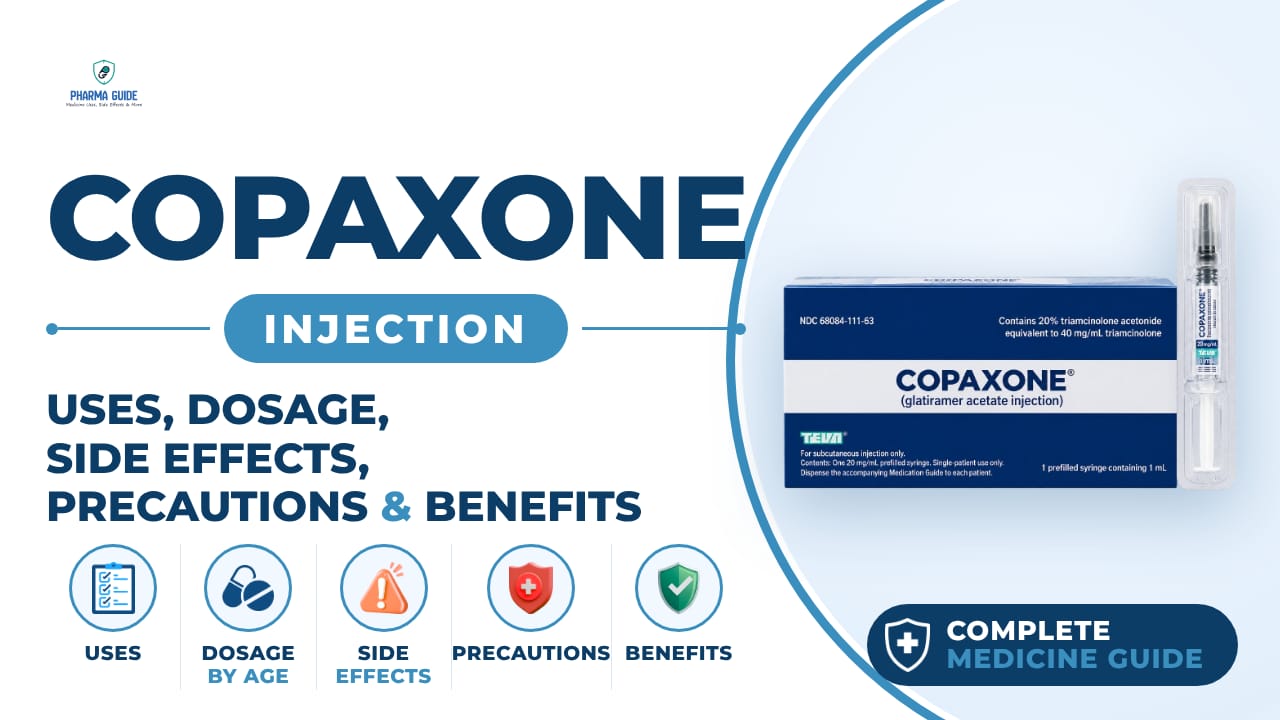
Copaxone Injection: Uses, Dosage, Side Effects, Precautions and Alternates
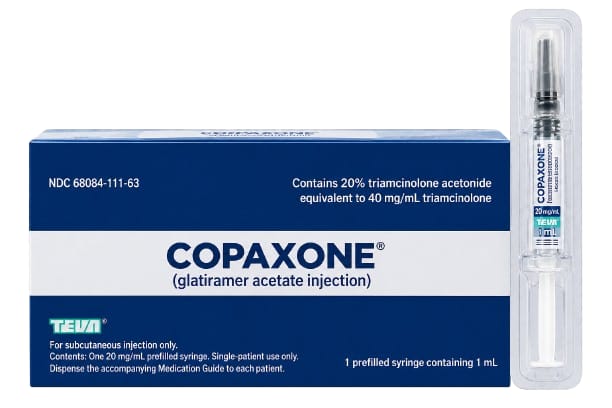
| Generic name | glatiramer acetate |
|---|---|
| Drug class | Other immunostimulants (immunomodulatory agent) |
| Forms | Injection |
Quick overview
Copaxone Injection is a brand-name prescription medicine containing glatiramer acetate, classified as an immunostimulant and immunomodulatory agent. It is used to treat certain forms of multiple sclerosis in adults, including clinically isolated syndrome, relapsing-remitting MS, and active secondary progressive MS. It is given as a subcutaneous injection and works by changing immune cell activity to help reduce attacks on nerve coverings. It is not approved for use in children under 18.
What is Copaxone Injection
Copaxone is a brand-name prescription medicine used to treat certain forms of multiple sclerosis (MS) in adults. It contains the active drug glatiramer acetate and works to help stop the immune system from attacking the nerves.
Copaxone Injection uses
- Clinically isolated syndrome (CIS), an episode of MS-like symptoms lasting at least 24 hours
- Relapsing-remitting multiple sclerosis (RRMS)
- Active secondary progressive multiple sclerosis (SPMS)
Benefits of Copaxone Injection
- Can reduce the number of MS relapses
- Can slow worsening of the disease
- Reduces the number of new brain lesions seen on MRI scans
How Copaxone Injection works
Copaxone is thought to work by changing the activity of certain immune cells, called suppressor T cells, which help stop the immune system from attacking the protective coating (myelin) around nerves. With fewer attacks on myelin, people tend to have fewer MS relapses and slower worsening of disability. It is not a general immune suppressant, and exactly how it works is not fully understood.
Copaxone Injection dosage
Copaxone is given as an injection under the skin (subcutaneous); never inject into a vein or muscle. Your healthcare provider will teach you or your caregiver how to give the injection, and your first dose should be given with a healthcare provider or nurse present.
Take the syringe out of the refrigerator about 20 minutes before injecting so it can warm to room temperature. Check that the liquid is clear and colorless to slightly yellow before use; do not use if cloudy or containing particles.
Rotate injection sites each time (abdomen away from the belly button, front of thighs, back of hips below the waist, or back of upper arms) and do not use the same site more than once a week. Do not inject into skin that is red, swollen, lumpy, scarred, or pitted, or into areas with birthmarks, stretch marks, or tattoos. Do not rub or massage the injection site for at least 24 hours after injecting.
Each prefilled syringe is for one use only; do not reuse or share syringes. The two strengths are not interchangeable and have different schedules: one is taken once daily, the other three times a week spaced at least 48 hours apart. Copaxone is not approved for use in children under 18 years of age.
| Age group | Dose |
|---|---|
| Under 18 years | Not recommended |
| 18–64 years | 20 mg, once/day |
| 65+ years | 20 mg, once/day |
Available forms and strengths
- Injection
Side effects of Copaxone Injection
Common
- Redness, pain, itching, lumps, or swelling at the injection site
- Flushing
- Skin rash
- Shortness of breath
- Anxiety
- Weakness
- Infections such as colds or flu
- Back pain or pain in other parts of the body
- Heart palpitations
- Sweating more than usual
- Weight gain or weight loss
- Nausea and vomiting
Serious
- Liver problems that may be severe, including liver failure or hepatitis
- Postinjection reaction (flushing, chest pain, fast heart rate, trouble breathing, throat tightness, anxiety, hives)
- Skin damage at the injection site, including permanent pitting (lipoatrophy) or, rarely, skin tissue death (necrosis)
- Chest pain
- Serious allergic reaction (anaphylaxis), which can be life-threatening or fatal
Warnings and precautions
- Copaxone can cause serious allergic reactions (anaphylaxis) that may be life-threatening or fatal. These can happen anytime, from right after the first dose to years into treatment, even if you've never reacted before.
- Do not use Copaxone if you have ever had an allergic reaction to glatiramer acetate or mannitol.
- Copaxone can cause an immediate postinjection reaction with symptoms like flushing, chest pain, fast heartbeat, anxiety, trouble breathing, throat tightness, or hives that can happen within seconds to minutes after an injection.
- Localized damage to fatty tissue under the skin (lipoatrophy), and rarely skin tissue death (necrosis), can occur at injection sites and may be permanent.
- Copaxone can cause serious liver injury, including liver failure and hepatitis with jaundice.
- Using an autoinjector not compatible with your specific glatiramer acetate product may cause you to receive the wrong dose.
- It is not known for certain if Copaxone is safe to use during pregnancy. Some women have used it during pregnancy without clear evidence it increases risks of birth defects or miscarriage, and animal studies did not show harm, but talk with your doctor about whether it's right for you.
- It is not known for sure whether Copaxone passes into breast milk or affects a breastfed child, though low systemic exposure means it is not expected to cause clinically relevant exposure in infants. Talk with your doctor about the best way to feed your baby.
- The effects of Copaxone in people with kidney problems have not been studied, so its handling in the body in this situation is not known.
- Copaxone can cause liver problems, including liver failure, in some people. Watch for symptoms like nausea, loss of appetite, tiredness, dark urine, pale stools, or yellowing of the skin or eyes, and tell your doctor right away if these occur.
- Alcohol is not known to directly interact with Copaxone, but it could worsen certain side effects like flushing or nausea. Some rare reports describe alcohol intolerance in people using the drug.
Storage
- Store prefilled syringes in the refrigerator between 36°F to 46°F (2°C to 8°C)
- If refrigeration is not possible, you may store at room temperature between 59°F to 86°F (15°C to 30°C) for up to 1 month
- Protect from light and high temperature
- Do not freeze; if a syringe freezes, throw it away in a sharps disposal container
- Keep syringes in their individual blister packs inside the original carton
- Keep out of reach of children
- Dispose of used needles and syringes right away in an FDA-cleared sharps disposal container; do not throw loose needles or syringes in household trash; follow community guidelines for disposing of a full sharps container
When to see a doctor
- Stop using Copaxone and get emergency help right away if you have widespread rash, swelling of the face/eyelids/lips/mouth/throat/tongue, sudden shortness of breath or wheezing, uncontrolled shaking, trouble swallowing or speaking, or fainting/dizziness.
- Call your healthcare provider right away if you have symptoms of an immediate post-injection reaction such as flushing, chest pain, fast heartbeat, anxiety, breathing problems, or swelling/rash/hives/itching, and don't give yourself more injections until your provider says it's okay.
- Call your healthcare provider right away if you have chest pain while using Copaxone.
- Call your healthcare provider right away if you notice symptoms of liver problems such as nausea, loss of appetite, tiredness, dark urine, pale stools, yellowing skin or eyes, easy bleeding, confusion, or sleepiness.
Alternatives
- Mayzent
- Aubagio
- Glatopa
Watch the video
FAQs
What is Copaxone Injection used for?
Copaxone is used to treat certain forms of multiple sclerosis in adults, including clinically isolated syndrome, relapsing-remitting MS, and active secondary progressive MS.
How is Copaxone Injection given?
Copaxone is given as a subcutaneous injection under the skin, never into a vein or muscle. Injection sites should be rotated and not reused within a week.
What are the common side effects of Copaxone Injection?
Common side effects include redness, pain, itching, or swelling at the injection site, flushing, skin rash, shortness of breath, anxiety, weakness, infections, back pain, heart palpitations, sweating, weight changes, and nausea or vomiting.
What are the serious risks of Copaxone Injection?
Serious risks include liver problems such as liver failure or hepatitis, postinjection reactions, skin damage like lipoatrophy or necrosis at injection sites, chest pain, and serious allergic reactions including anaphylaxis.
How should Copaxone Injection be stored?
Store prefilled syringes in the refrigerator between 36°F to 46°F, or at room temperature between 59°F to 86°F for up to 1 month if refrigeration isn't possible. Protect from light and do not freeze.
General information, not medical advice
Your prescriber and the leaflet in your pack know your situation. This page does not.
- Follow your prescriber and the leaflet
- Don't start, stop, or change a dose on your own
- Doses and warnings differ by country and product
Sources
Video
Related medicines

Injectafer Injection: Uses, Dosage, Side Effects, Precautions and Alternates
Iron products
Injectafer (ferric carboxymaltose) treats iron deficiency anemia and heart failure-related iron deficiency via IV. Learn uses, dosage, side effects, and

Gliclazide Tablet: Uses, Dosage, Side Effects, Precautions and Alternates
Sulfonylurea (hypoglycemic/antidiabetic agent)
Gliclazide Tablet is a sulfonylurea for type 2 diabetes that boosts insulin release. Learn about dosage, side effects, warnings, and precautions.