
Safety
General information, not medical advice
Your prescriber and the leaflet in your pack know your situation. This page does not.
- Follow your prescriber and the leaflet
- Don't start, stop, or change a dose on your own
- Doses and warnings differ by country and product
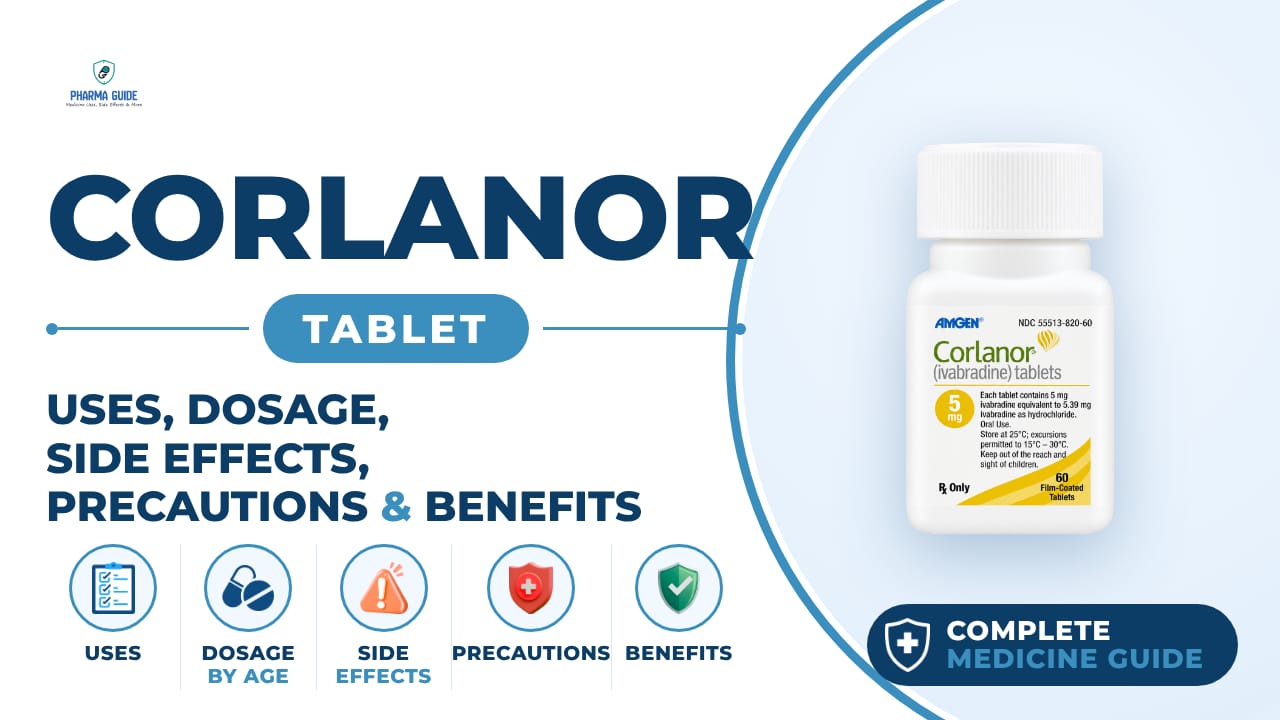
Corlanor Tablet: Uses, Dosage, Side Effects, Precautions and Alternates
| Generic name | ivabradine |
|---|---|
| Drug class | Miscellaneous cardiovascular agents |
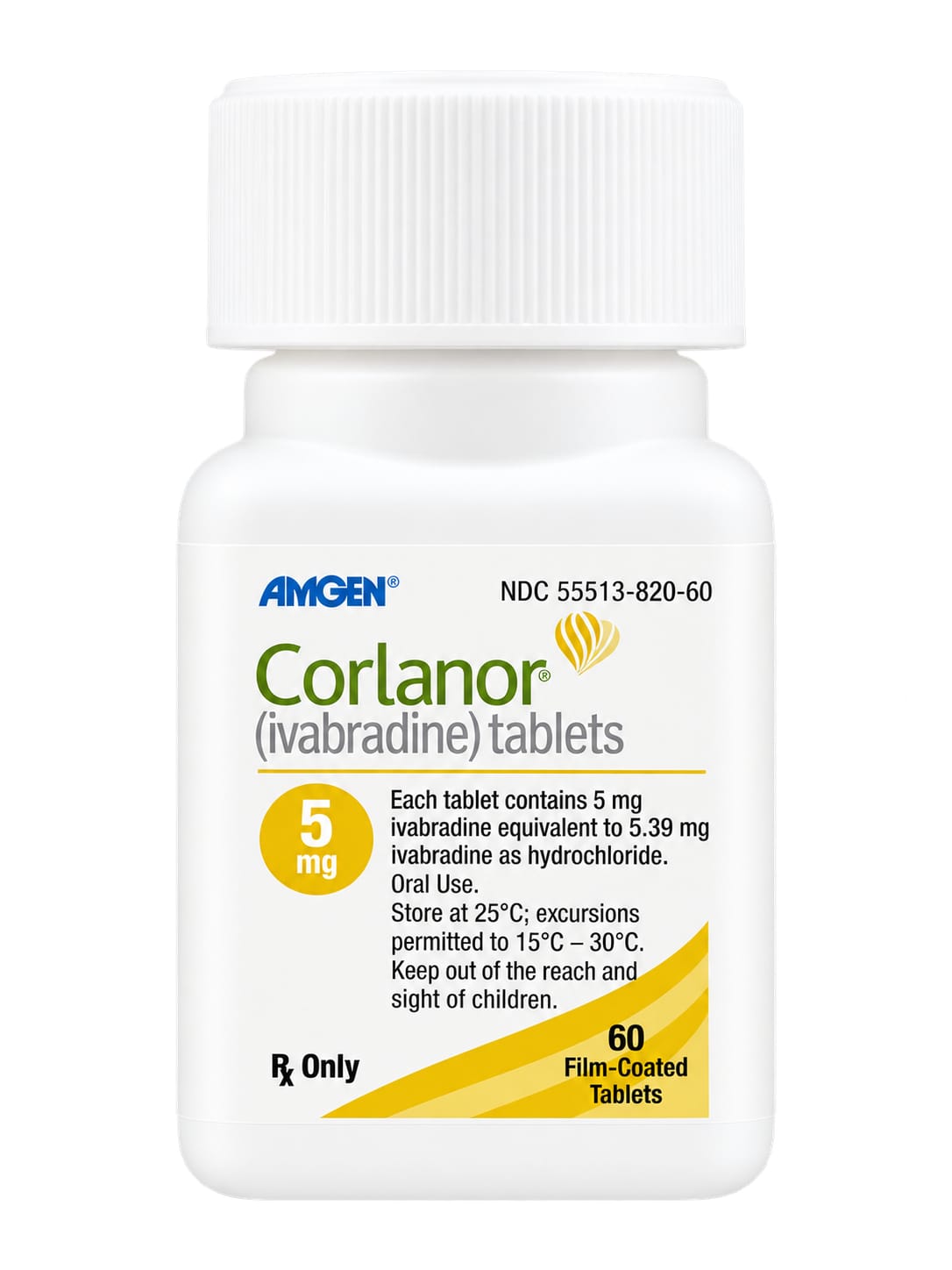
| Forms | Tablets (5 mg, 7.5 mg), Oral solution (5 mg/5 mL) |
Quick overview
Corlanor Tablet (generic name ivabradine) is a prescription medicine belonging to the miscellaneous cardiovascular agents class. It works by affecting the heart's electrical activity to slow the heart rate and is used to treat chronic symptomatic heart failure in adults and stable heart failure due to dilated cardiomyopathy in children 6 months and older. It is taken twice daily with food, and dosing may be adjusted by a doctor based on heart rate.
What is Corlanor Tablet
Corlanor is a prescription medicine that works by affecting the heart's electrical activity to slow the heart rate. It is a hyperpolarization-activated cyclic nucleotide-gated channel blocker.
Corlanor Tablet uses
- Treats adults with chronic (long-lasting) heart failure with symptoms, to reduce the risk of hospitalization for worsening heart failure
- Treats children 6 months of age and older who have stable heart failure with symptoms caused by an enlarged heart (dilated cardiomyopathy)
Benefits of Corlanor Tablet
- Can lower the risk of being hospitalized for worsening heart failure in adults with chronic symptomatic heart failure
- Reduces heart rate in children with heart failure due to dilated cardiomyopathy
How Corlanor Tablet works
Corlanor blocks a channel in the heart's natural pacemaker area (the sinoatrial node) that controls the heart's electrical signals. By blocking this channel, the medicine slows the spontaneous pacemaker activity of the heart, which lowers heart rate without affecting the heart's pumping strength.
Corlanor Tablet dosage
Take Corlanor exactly as your doctor tells you, and do not stop taking it without talking with your doctor. Take Corlanor twice each day with food. Tell your doctor if you have trouble swallowing tablets, since an oral solution form is available. If a dose is missed or spit out, do not give or take another dose to make up for it — just take the next dose at the usual time.
For the oral solution, use the calibrated oral syringe and medicine cup provided by the pharmacist to measure the dose accurately; the oral solution should not be given by a child to themselves. Avoid drinking grapefruit juice and taking St. John's wort while on this medicine. Your doctor may change your dose over time based on your heart rate.
| Age group | Dose |
|---|---|
| 1–17 years, under 40 kg | 0.05 mg/kg twice daily initially; adjusted according to heart rate |
| Pediatric patients ≥40 kg | 2.5 mg twice daily initially |
Available forms and strengths
- Tablets (5 mg, 7.5 mg)
- Oral solution (5 mg/5 mL)
Side effects of Corlanor Tablet
Common
- Slow or irregular heartbeat (bradycardia)
- Increased blood pressure
- Temporary brightness or visual disturbances (phosphenes), such as halos around lights or seeing multiple images, especially in the first 2 months of treatment
- Eyes being more sensitive to light
Serious
- Irregular or rapid heartbeat (atrial fibrillation) — symptoms include heart pounding or racing, chest pressure, worsened shortness of breath, or near fainting/fainting
- Serious slowing of heart rate (bradycardia) with symptoms like dizziness, fatigue, or lack of energy; in young children, signs may include poor feeding, difficulty breathing, or turning blue
- Allergic reaction: hives, difficulty breathing, swelling of face, lips, tongue, or throat
- Fainting, very low blood pressure
- Serious heart rhythm problems such as torsade de pointes, ventricular fibrillation, or ventricular tachycardia
- Severe headache, blurred vision, pounding in neck or ears
Warnings and precautions
- Corlanor should not be used in people with recently worsened heart failure symptoms, very low blood pressure, certain serious heart rhythm conditions (unless they have a working pacemaker), a significantly slow heart rate, severe liver problems, or complete dependence on a pacemaker for heart rate.
- Corlanor increases the risk of developing atrial fibrillation, an irregular heart rhythm. Your heart rhythm should be checked regularly, and the medicine should be stopped if this condition develops.
- Corlanor can cause an overly slow heart rate, sinus arrest, or heart block, especially in people with certain pre-existing heart conditions or those taking other heart-rate-lowering medicines.
- Taking strong CYP3A4 inhibitor medicines together with Corlanor is not allowed because it can raise levels of the drug in the body and worsen slow heart rate effects.
- Avoid grapefruit juice and St. John's wort while taking this medicine, as they can change how the drug works and increase the risk of side effects.
- Corlanor may harm an unborn baby based on animal studies. Women who can become pregnant should use effective birth control during treatment and tell their doctor right away if they become pregnant.
- Breastfeeding is not recommended while taking Corlanor because of potential risk to the breastfed infant.
- No dose adjustment is needed for people with moderate kidney impairment, but there is no information on use in people with very severe kidney impairment.
- No dose adjustment is needed for mild or moderate liver impairment, but Corlanor should not be used in people with severe liver impairment.
- Alcohol may worsen dizziness or low blood pressure.
- Corlanor can cause temporary bright spots or visual disturbances, especially with sudden changes in light. Be careful when driving or operating machinery, especially at night, and let your eyes adjust slowly to light changes.
Storage
- Store Corlanor tablets and oral solution at room temperature between 68°F to 77°F (20°C to 25°C), with brief excursions permitted to 59°F–86°F
- Keep the oral solution ampules in their unopened foil pouch until ready to use, to protect from light
- Do not save or reuse any leftover Corlanor oral solution, since it is sterile and has no preservative
- Keep Corlanor and all medicines out of the reach of children
When to see a doctor
- Get medical help right away if you notice signs of an allergic reaction, such as hives, difficulty breathing, or swelling of the face, lips, tongue, or throat.
- Call your doctor right away if you feel your heart pounding or racing, have chest pressure, worsened shortness of breath, or feel like you might faint — these can be signs of an irregular or rapid heartbeat.
- Tell your doctor if you notice a slow heart rate or symptoms like dizziness, fatigue, or lack of energy. In young children, watch for poor feeding, trouble breathing, or turning blue.
- If you or your child take too much Corlanor, contact your doctor or go to the nearest emergency room right away.
- Tell your doctor right away if you become pregnant while taking this medicine.
Alternatives
- Bisoprolol
- Metoprolol succinate
- Carvedilol
Watch the video
FAQs
What is Corlanor Tablet used for?
Corlanor treats adults with chronic symptomatic heart failure to reduce hospitalization risk, and children 6 months and older with stable heart failure due to dilated cardiomyopathy.
How does Corlanor work?
Corlanor blocks a channel in the heart's sinoatrial node that controls electrical signals, slowing the heart's pacemaker activity and lowering heart rate without affecting pumping strength.
How should Corlanor be taken?
Corlanor is taken twice daily with food, exactly as prescribed. If a dose is missed or spit out, do not double up—just take the next dose at the usual time.
What are the common side effects of Corlanor?
Common side effects include slow or irregular heartbeat, increased blood pressure, temporary visual disturbances like halos or seeing multiple images, and increased eye sensitivity to light.
Can I drink grapefruit juice while taking Corlanor?
No, grapefruit juice and St. John's wort should be avoided while taking Corlanor, as they can change how the drug works and increase the risk of side effects.
General information, not medical advice
Your prescriber and the leaflet in your pack know your situation. This page does not.
- Follow your prescriber and the leaflet
- Don't start, stop, or change a dose on your own
- Doses and warnings differ by country and product
Sources
Video
Related medicines

Injectafer Injection: Uses, Dosage, Side Effects, Precautions and Alternates
Iron products
Injectafer (ferric carboxymaltose) treats iron deficiency anemia and heart failure-related iron deficiency via IV. Learn uses, dosage, side effects, and

Gliclazide Tablet: Uses, Dosage, Side Effects, Precautions and Alternates
Sulfonylurea (hypoglycemic/antidiabetic agent)
Gliclazide Tablet is a sulfonylurea for type 2 diabetes that boosts insulin release. Learn about dosage, side effects, warnings, and precautions.