
Safety
General information, not medical advice
Your prescriber and the leaflet in your pack know your situation. This page does not.
- Follow your prescriber and the leaflet
- Don't start, stop, or change a dose on your own
- Doses and warnings differ by country and product
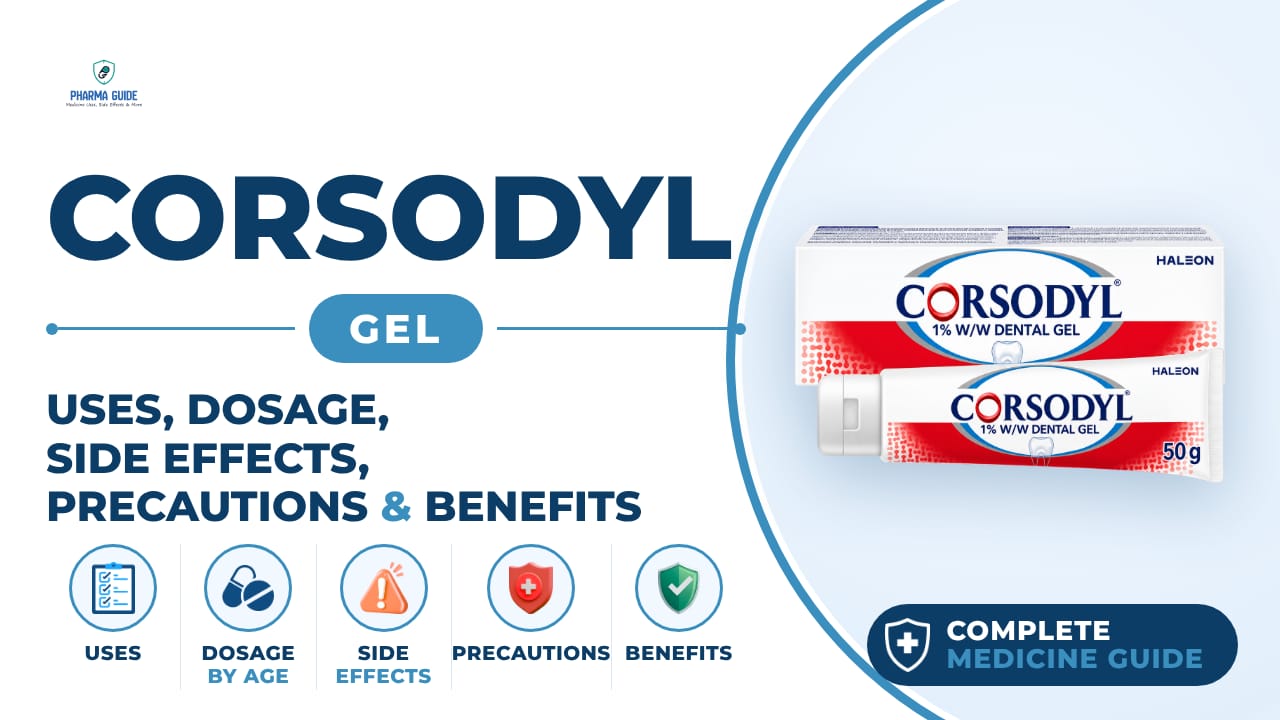
Corsodyl Gel: Uses, Dosage, Side Effects, Precautions and Alternates
| Generic name | Chlorhexidine digluconate |
|---|---|
| Drug class | Antiseptic/antibacterial agent |
| Forms | Oromucosal gel |
Quick overview
Corsodyl Gel is an oromucosal gel containing chlorhexidine digluconate, an antibacterial ingredient used to treat gum problems and other mouth infections directly where they occur. It helps inhibit plaque formation, aids in treating and preventing gingivitis, supports gum healing, and helps manage mouth ulcers, oral thrush, and denture sore mouth. It is applied with a toothbrush or directly to affected areas, and common effects include taste changes and temporary staining of the teeth and tongue.
What is Corsodyl Gel
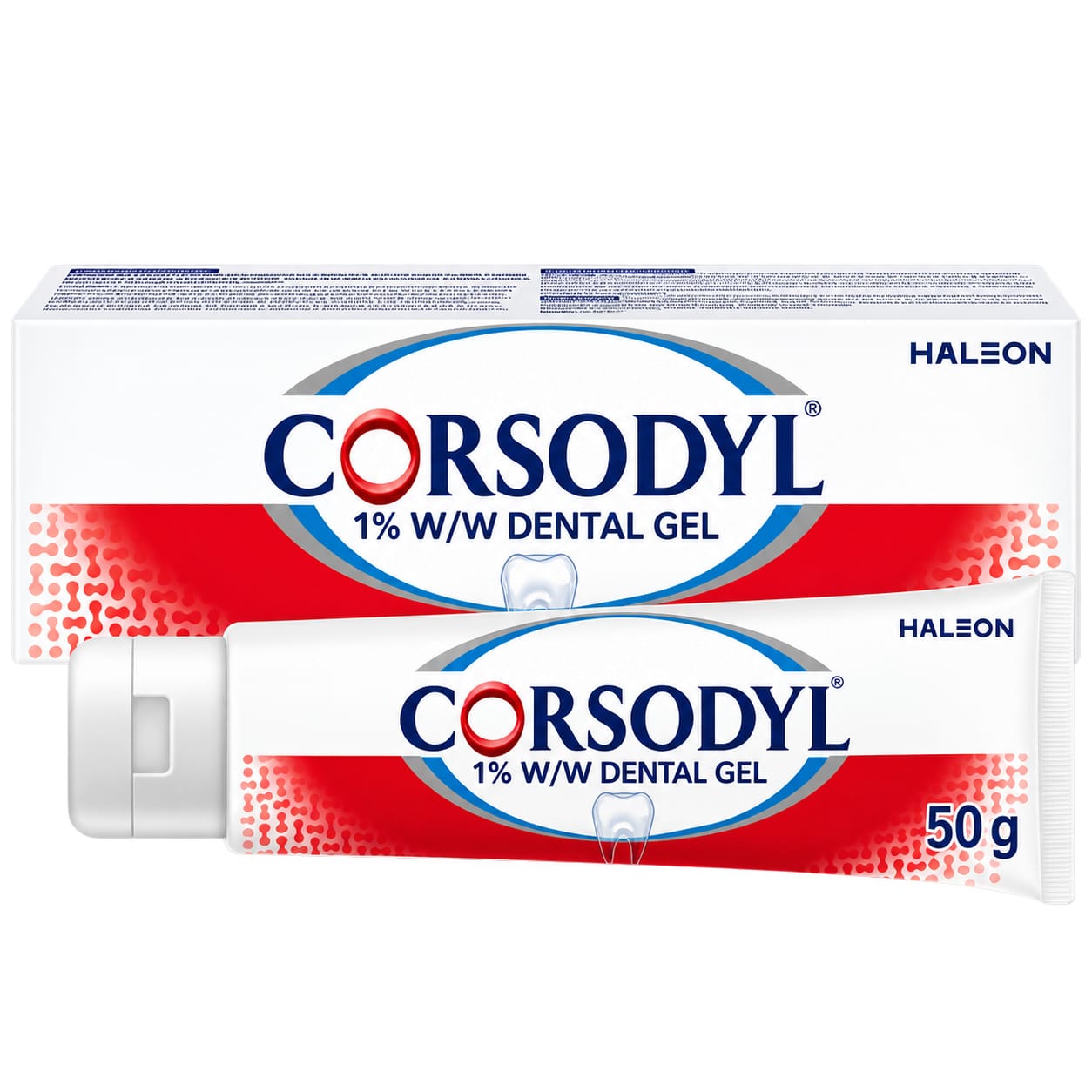
Corsodyl 1% w/w Dental Gel is a medicine containing the antibacterial ingredient chlorhexidine digluconate. It is used to treat gum problems and other mouth infections directly where they occur.
Corsodyl Gel uses
- Inhibits the formation of dental plaque
- Aids the treatment and prevention of gingivitis (gum disease, which may cause bleeding gums)
- Helps maintain oral hygiene
- Promotes gum healing after dental surgery or treatment
- Helps manage recurrent mouth ulcers (aphthous ulceration)
- Helps manage recurring oral thrush (oral candidal infections)
- Helps manage denture sore mouth (denture stomatitis)
- Helps prevent cavities in people at high risk of tooth decay, used alongside fluoride
Benefits of Corsodyl Gel
- Targets problem areas in the mouth directly and effectively
- Provides longer contact time with the gum surface than a mouthwash rinse
- Forms a protective antibacterial layer over the teeth and gums to help prevent plaque build-up for up to 12 hours
How Corsodyl Gel works
The gel contains chlorhexidine digluconate, a strong antibacterial ingredient that gets into plaque bacteria and kills it within 30 seconds. It then forms a protective layer over the teeth and gums that helps stop plaque from building up for up to 12 hours.
Corsodyl Gel dosage
For oral use only; do not swallow and keep out of eyes and ears. Brush the teeth with the gel on a moistened toothbrush, once or twice daily for about one minute, then spit out any excess without rinsing. For mouth ulcers or oral thrush, apply the gel directly to the affected area using a fingertip or cotton bud, once or twice daily for about one minute. For denture sore mouth, brush all over the dentures with the gel on a moistened toothbrush, once or twice daily for about one minute. For prevention of cavities, apply the gel nightly in a close-fitting tray as advised by a dentist.
Ordinary toothpaste can stop Corsodyl from working, so use toothpaste before Corsodyl, rinse the mouth well, and wait about 5 minutes before applying the gel, or use the gel at a different time of day. Children under 12 should not use this product unless a dentist or healthcare professional recommends it. The normal adult dose is suitable for elderly patients and children aged 12 and over unless a dentist advises otherwise.
| Age group | Dose |
|---|---|
| 12–17 years | Adult dose is appropriate: brush with about 2–2.5 cm (approximately 1 inch) of gel once or twice daily for about 1 minute |
| 18–64 years | About 2–2.5 cm of gel once or twice daily for about 1 minute |
| 65–74 years | Same standard adult dose |
Available forms and strengths
Corsodyl is available as an oromucosal gel at a strength of 1% w/w.
Side effects of Corsodyl Gel
Common
- Coated tongue
- Dry mouth
- Changes in taste (loss of taste or altered taste)
- Pain or burning sensation on the tongue
- Numbness or tingling sensation in the mouth or tongue
- Temporary staining or discolouration of the teeth and tongue, and tooth-coloured fillings
- Irritation, swelling, or peeling of the lining of the mouth
- Swelling of the parotid (salivary) gland
Serious
- Hypersensitivity reactions and anaphylaxis (severe allergic reaction)
Warnings and precautions
- Do not use this product if you have ever had an allergic reaction to chlorhexidine digluconate or to any of the other ingredients.
- Do not use in children under 12 years old unless a dentist has recommended it.
- Only use the gel in the mouth. If it gets into your eyes or ears, wash it out promptly and thoroughly with water.
- Do not use the gel immediately after brushing your teeth, because toothpaste ingredients can stop Corsodyl from working properly.
- If your mouth becomes sore, swollen, or irritated, stop using the gel and speak to a healthcare professional.
- Do not let fabrics that have touched the gel come into contact with bleach, as this can cause brown stains.
- The gel contains an ingredient called macrogolglycerol hydroxystearate, which may cause skin reactions.
- There is no evidence that using Corsodyl during pregnancy harms the unborn baby, so no special precautions are needed.
- There is no evidence that using Corsodyl while breastfeeding harms the infant, so no special precautions are needed.
- No routine kidney-related dose adjustment is required because use is local in the mouth. No routine liver-specific dose adjustment is established. No important direct alcohol interaction is established, although alcohol may irritate oral tissues. No effects on the ability to drive or use machines have been reported or are known.
Storage
- Do not store above 25°C
- Use within 1 month of opening
When to see a doctor
- Stop using the gel and get immediate medical help if you develop swelling or have difficulty breathing, as this may be a serious allergic reaction.
- If changes in taste, or numbness, tingling, or burning of the tongue continue, speak to a healthcare professional.
- Stop using the gel and get immediate help if you have a serious allergic reaction.
Alternatives
- Chlorhexidine mouthwash
- Corsodyl mouthwash
- Chlorhexidine dental products
Watch the video
FAQs
What is Corsodyl Gel used for?
Corsodyl Gel is used to inhibit plaque formation, treat and prevent gingivitis, promote gum healing, and help manage mouth ulcers, oral thrush, and denture sore mouth.
How do you use Corsodyl Gel?
Brush teeth with the gel on a moistened toothbrush once or twice daily for about one minute, then spit out without rinsing. For mouth ulcers or oral thrush, apply directly to the affected area with a fingertip or cotton bud.
Can I use Corsodyl Gel straight after brushing with toothpaste?
No, ordinary toothpaste can stop Corsodyl from working. Use toothpaste first, rinse your mouth well, and wait about 5 minutes before applying the gel, or use it at a different time of day.
What are the common side effects of Corsodyl Gel?
Common effects include coated tongue, dry mouth, changes in taste, burning or numbness of the tongue, temporary staining of teeth and tongue, and irritation or swelling of the mouth lining.
Can children use Corsodyl Gel?
Children under 12 should not use this product unless a dentist or healthcare professional recommends it; the normal adult dose applies to those aged 12 and over.
General information, not medical advice
Your prescriber and the leaflet in your pack know your situation. This page does not.
- Follow your prescriber and the leaflet
- Don't start, stop, or change a dose on your own
- Doses and warnings differ by country and product
Sources
- https://www.haleonhealthpartner.com/en-gb/oral-health/brands/corsodyl/products/intensive-treatment/
- https://www.dmi.ie/sites/admin/plugins/elfinder/files/dmi/products/downloads/GLAX-05363/FACT%20SHEET.pdf?srsltid=AYCX9vLee8bZUnh1bfHkWVDcE1pviZz7MKnzzFyRMZ0xKUhfQYAELJjF
- https://well.co.uk/corsodyl-gel-50g/?srsltid=AYCX9vKPlggI3fjwCOlqFnwIWb10U2GAbnthMU0hZ5-Zd7mt47Oqk8uq
Video
Related medicines

Injectafer Injection: Uses, Dosage, Side Effects, Precautions and Alternates
Iron products
Injectafer (ferric carboxymaltose) treats iron deficiency anemia and heart failure-related iron deficiency via IV. Learn uses, dosage, side effects, and

Gliclazide Tablet: Uses, Dosage, Side Effects, Precautions and Alternates
Sulfonylurea (hypoglycemic/antidiabetic agent)
Gliclazide Tablet is a sulfonylurea for type 2 diabetes that boosts insulin release. Learn about dosage, side effects, warnings, and precautions.