
Safety
General information, not medical advice
Your prescriber and the leaflet in your pack know your situation. This page does not.
- Follow your prescriber and the leaflet
- Don't start, stop, or change a dose on your own
- Doses and warnings differ by country and product
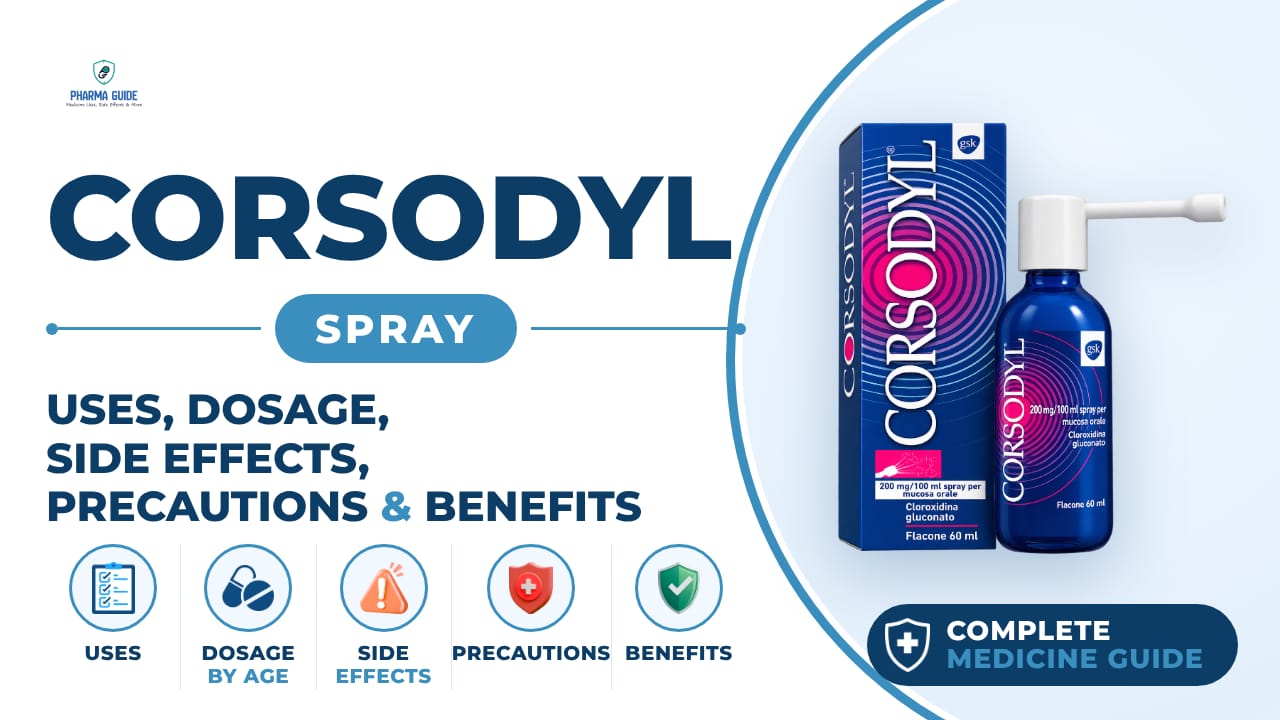
Corsodyl Spray: Uses, Dosage, Side Effects, Precautions and Alternates
| Generic name | Chlorhexidine Digluconate |
|---|---|
| Drug class | Antiseptic and Antimicrobial Agent |
| Forms | Spray, Oral solution (mouthwash), Dental gel |
Quick overview
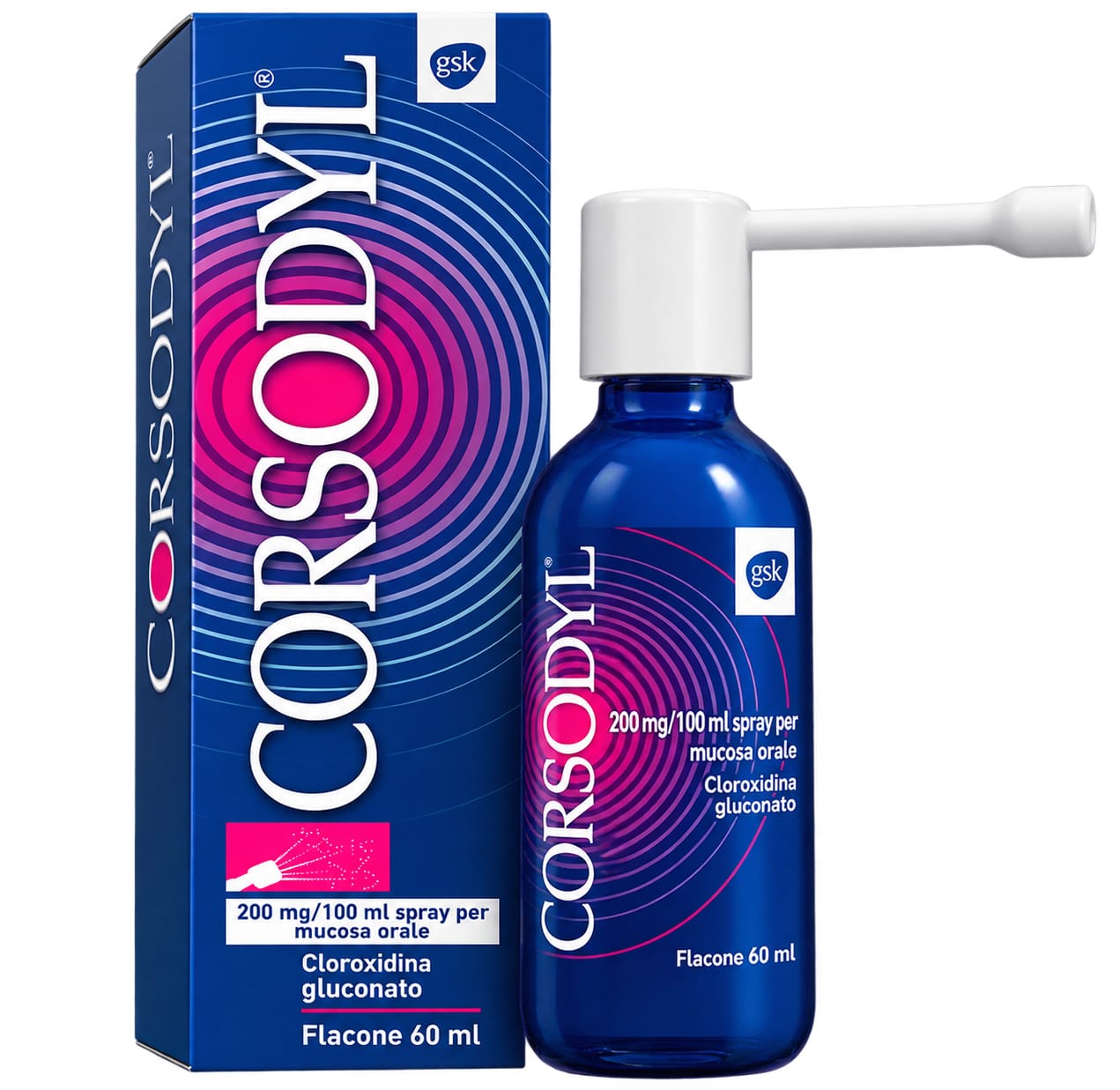
Corsodyl Spray is an antiseptic mouth spray containing 0.2% chlorhexidine digluconate, applied with a pump-action nozzle directly to teeth, gums, or sore areas of the mouth. It is used to treat and help prevent gum disease, support healing after dental procedures, and help manage bad breath caused by oral bacteria. It works by breaking down bacterial membranes and forming a protective layer that continues working for several hours. It is intended for short-term use and should be used exactly as directed.
What is Corsodyl Spray
Corsodyl Spray is an antiseptic mouth spray containing 0.2% chlorhexidine digluconate. It has a pump-action nozzle so you can apply it directly to teeth, gums, or sore areas of the mouth, making it a good option for people who find rinsing with mouthwash difficult.
Corsodyl Spray uses
- Treats and helps prevent gum disease (gingivitis), including red, swollen, or bleeding gums
- Helps gums heal after dental surgery or other dental procedures
- Can help manage bad breath caused by oral bacteria
- May help manage mouth ulcers, denture sores, or oral thrush when recommended by a dentist
- Helps reduce dental plaque
- Supports healing after dental surgery or treatment
Benefits of Corsodyl Spray
- Kills bacteria that cause plaque quickly after application
- Forms a protective layer over teeth and gums that keeps working for several hours
- Targets specific, hard-to-reach areas of the mouth
- Convenient for people who have difficulty rinsing with mouthwash or who have a sensitive gag reflex
- No rinsing required after application, which can be helpful after oral surgery
How Corsodyl Spray works
The active ingredient, chlorhexidine digluconate, works by breaking down the outer membranes of bacteria in the mouth, which kills them and reduces the bacteria that cause plaque, gum inflammation, and bad breath. It also sticks to the surfaces inside your mouth and keeps releasing its antibacterial effect for several hours after you use it, helping to support healing of the gums.
Corsodyl Spray dosage
Brush your teeth as normal and wait at least 30 minutes before using the spray, since some toothpaste ingredients can stop the spray from working properly. Remove the cap from the spray bottle, point the nozzle directly at the affected gum area or inside of the cheek, and press the pump to release the spray, moving the nozzle to cover all affected areas. Do not rinse your mouth, eat, or drink for at least 30 minutes after use, and replace the cap after use.
Use is typically twice a day, usually morning and evening. This is meant for short-term use; if symptoms do not improve after a period of use, see your dentist. Children under 12 should not use the product unless a dentist recommends it.
| Age group | Dose |
|---|---|
| 12–17 years | Up to 12 pump sprays twice daily |
| 18–64 years | 1–2 sprays to the affected area, up to 2 times daily |
| 65 years and older | 1–2 sprays to the affected area, up to 2 times daily |
Available forms and strengths
- Spray (0.2% chlorhexidine digluconate)
- Oral solution (mouthwash)
- Dental gel
Side effects of Corsodyl Spray
Common
- Temporary brown staining of teeth, tongue, and dental restorations
- Temporary change in taste
- Mild irritation or burning sensation in the mouth
- Dry mouth
Serious
- Swelling of the parotid (salivary) glands
- Mouth ulcers or soreness with prolonged use
- Severe allergic reactions including rash, itching, swelling of the face or throat, or difficulty breathing (rare)
Warnings and precautions
- Do not use this spray if you are allergic to chlorhexidine digluconate or any other ingredient in it.
- Do not use if you have open wounds or mouth ulcers that a dentist hasn't checked.
- Children under 12 should not use this product unless a dentist recommends it.
- This spray can temporarily stain your teeth and tongue. You can lower the risk of staining by avoiding tea, coffee, or red wine for about an hour after using it.
- This spray is meant for short-term use, generally up to four weeks, unless a dentist or pharmacist tells you otherwise. Using it for longer can increase the risk of staining and changes in taste.
- Wait at least 30 minutes after brushing your teeth before using the spray, because some toothpaste ingredients can stop it from working as well.
- This spray is for use in the mouth only. Do not swallow it, inject it, or let it touch your eyes, ears, or other parts of the body outside the mouth.
- There isn't much safety information on using this spray during pregnancy. Although very little of the active ingredient is absorbed into the body, you should talk to your dentist, pharmacist, or doctor before using it if you are pregnant.
- There isn't much safety information on using this spray while breastfeeding. Talk to your dentist, pharmacist, or doctor before using it if you are breastfeeding.
- No specific kidney-related dose adjustment or precaution is generally required because chlorhexidine is very poorly absorbed when used correctly in the mouth. Do not swallow the spray.
- No specific liver-related precaution or dose adjustment is established for normal oral use. Use only as directed and avoid swallowing.
- Corsodyl Spray contains about 7% v/v ethanol. It is intended for oral topical use and should not be swallowed.
- No known effect on the ability to drive or operate machinery has been reported with chlorhexidine oral products.
Storage
- Store below 25°C in a cool, dry place
- Keep out of direct sunlight
- Keep the cap on when not in use
- Keep out of the reach and sight of children
- Do not use after the expiry date printed on the bottle
- Do not freeze
- Do not dispose of medicines via wastewater or household waste — return unused product to your pharmacist
When to see a doctor
- Get emergency medical help right away if you have a severe allergic reaction, such as sudden trouble breathing or wheezing, or swelling of the face, lips, tongue, or throat.
- Get medical help if someone accidentally swallows a large amount of the product, especially a child, as this needs to be checked right away.
- If your gum or mouth symptoms don't improve after using the spray for a few weeks, see your dentist for a full check-up.
- If you notice anything unusual or a side effect that bothers you, stop using the spray and talk to your pharmacist or dentist.
Alternatives
- Chlorhexidine mouthwash
- Corsodyl Original Mouthwash
- Corsodyl Dental Gel
Watch the video
FAQs
How often should I use Corsodyl Spray?
It is typically used twice a day, usually morning and evening, for short-term use.
How long after brushing my teeth can I use Corsodyl Spray?
Wait at least 30 minutes after brushing before using the spray, since some toothpaste ingredients can stop it from working properly.
Can children use Corsodyl Spray?
Children under 12 should not use the product unless a dentist recommends it.
Does Corsodyl Spray stain teeth?
Yes, it can cause temporary brown staining of teeth, tongue, and dental restorations. You can lower the risk by avoiding tea, coffee, or red wine for about an hour after use.
How long can I use Corsodyl Spray for?
It is meant for short-term use, generally up to four weeks, unless a dentist or pharmacist advises otherwise.
General information, not medical advice
Your prescriber and the leaflet in your pack know your situation. This page does not.
- Follow your prescriber and the leaflet
- Don't start, stop, or change a dose on your own
- Doses and warnings differ by country and product
Sources
Video
Related medicines

Injectafer Injection: Uses, Dosage, Side Effects, Precautions and Alternates
Iron products
Injectafer (ferric carboxymaltose) treats iron deficiency anemia and heart failure-related iron deficiency via IV. Learn uses, dosage, side effects, and

Gliclazide Tablet: Uses, Dosage, Side Effects, Precautions and Alternates
Sulfonylurea (hypoglycemic/antidiabetic agent)
Gliclazide Tablet is a sulfonylurea for type 2 diabetes that boosts insulin release. Learn about dosage, side effects, warnings, and precautions.