
Safety
General information, not medical advice
Your prescriber and the leaflet in your pack know your situation. This page does not.
- Follow your prescriber and the leaflet
- Don't start, stop, or change a dose on your own
- Doses and warnings differ by country and product
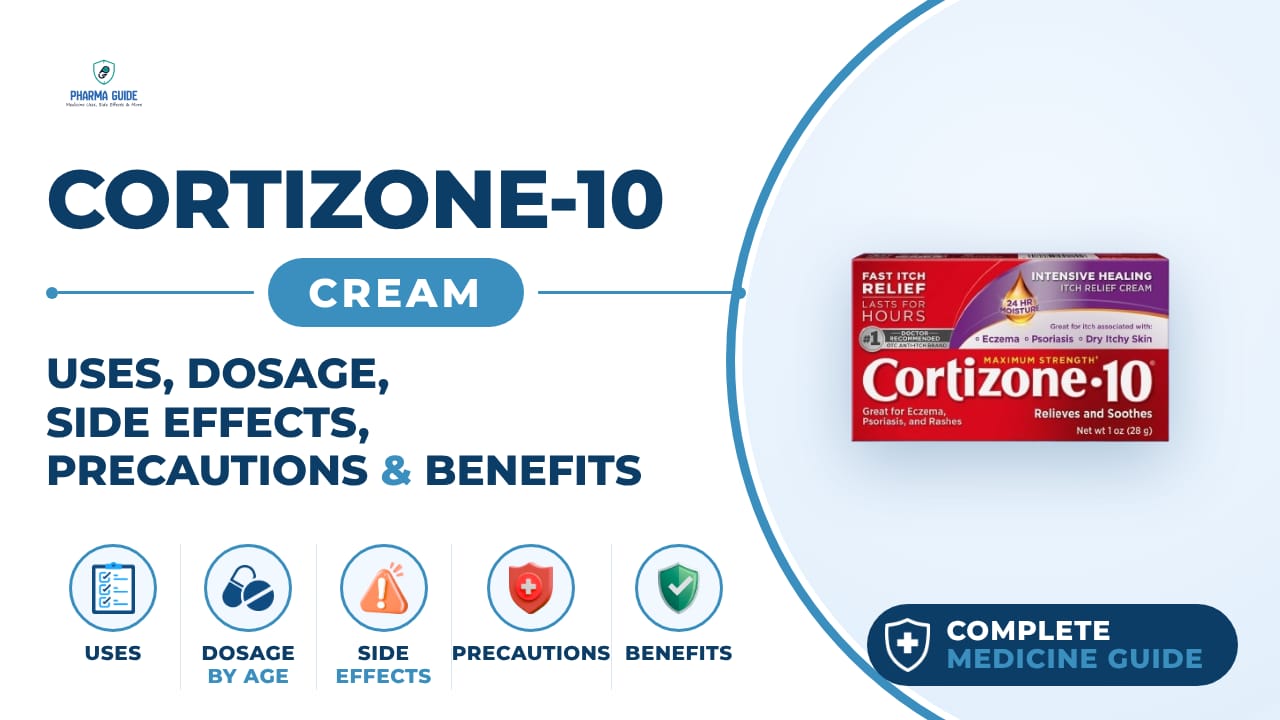
Cortizone-10 Cream: Uses, Dosage, Side Effects, Precautions and Alternates
| Generic name | hydrocortisone topical |
|---|---|
| Drug class | Topical steroids |
| Forms | cream, liquid, lotion, ointment, foam/spray, topical solution |
Quick overview
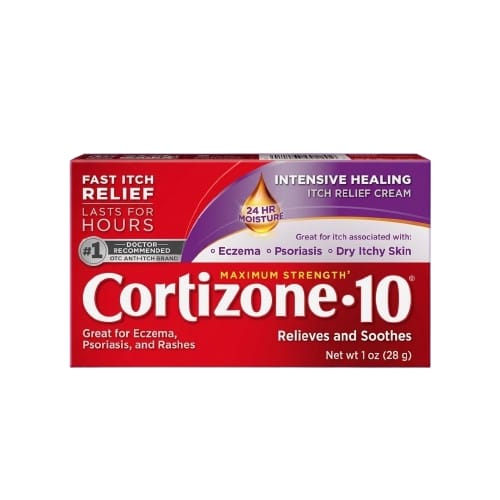
Cortizone-10 Cream (hydrocortisone topical) is a topical steroid used on the skin to relieve inflammation and itching from skin conditions that respond to steroid treatment, including mild eczema and other rashes. It works by calming the skin's inflammatory response and reducing swelling. It is applied as a thin layer to the affected area, with dosing frequency varying by age, and is not recommended for children under 2 years old.
What is Cortizone-10 Cream
Cortizone-10 is a steroid medicine that is used on the skin to treat inflammation and itching caused by skin conditions that respond to steroid medication, including mild eczema and other rashes.
Cortizone-10 Cream uses
- Treats inflammation and itching caused by skin conditions that respond to steroid medication
- Used for swelling, redness, itching, or rashes caused by skin conditions such as eczema
- Used to temporarily relieve itching from minor skin irritations, inflammation, and rashes
Benefits of Cortizone-10 Cream
- Can reduce itching and redness in mild, localized eczema flares, often within hours to a couple of days
- Lower risk of side effects compared with stronger topical steroids when used appropriately
- Accessible and useful for mild, localized flares
How Cortizone-10 Cream works
Hydrocortisone calms down the skin's inflammatory response. It reduces inflammation by quieting the immune system's defense cells and stopping them from releasing substances that cause swelling. It may also narrow blood vessels in the treated area, which can help reduce swelling.
Cortizone-10 Cream dosage
Follow all directions on your prescription label or product instructions and use the medicine exactly as directed. Do not take by mouth; it is for use only on the skin. Wash your hands before and after applying, unless you are treating a hand condition. Apply a thin layer to the affected skin and rub it in gently.
Do not apply over a large area of skin unless your doctor has told you to. Do not cover treated skin with a bandage unless your doctor tells you to. Shake lotion and spray forms well just before each use. If treating the diaper area, do not use plastic pants or tight-fitting diapers. Do not use on healthy skin or over large areas of skin.
Use it at the same time every day as directed, and do not use it more often or longer than directed. Stop using it and call your doctor if your symptoms do not improve after about 7 days, or if they get worse or come back after improving. Children can absorb more of the medicine through the skin and may be more likely to have side effects.
| Age group | Dose |
|---|---|
| Under 2 years | Not recommended |
| 2–17 years | Thin layer, 1–2 times/day |
| 18–60 years | Thin layer, 1–4 times/day |
| 60+ years | Thin layer, 1–4 times/day |
Available forms and strengths
- Cream
- Liquid
- Lotion
- Ointment
- Foam/spray
- Topical solution
Side effects of Cortizone-10 Cream
Common
- Skin redness, itching, stinging, rash
- Redness or crusting around hair follicles
- Burning, dryness, or other irritation of treated skin
- Rash, redness, itching, or irritation around the mouth
- Appearance and color changes in treated skin
- Signs of skin infection (swelling, redness, warmth, oozing)
- Numbness, tingling, or burning pain
- Unexpected hair growth at the application site
Serious
- Signs of an allergic reaction: hives, difficulty breathing, swelling of the face, lips, tongue, or throat
- Worsening of the skin condition
- Pain, tenderness, headache
- Blurred vision, eye pain or redness, seeing halos around lights
- High blood sugar: increased thirst, increased urination, dry mouth, fruity breath odor
- Signs of increased adrenal gland hormones: hunger, weight gain, swelling, skin discoloration, slow wound healing, sweating, acne, increased body hair, tiredness, mood changes, muscle weakness, missed menstrual periods, sexual changes
- Fragile or thinning skin that bruises easily
- Signs of adrenal insufficiency: nausea and vomiting, weakness, tiredness, low blood pressure
- Signs of Cushing's syndrome: rounded, rosy face, weight gain especially in the upper body, fat buildup in the upper back or base of the neck, thinning skin that bruises easily, feeling very weak or tired, depression or anxiety, high blood sugar, high blood pressure, sleep problems
- Vision problems such as cloudy vision, changes in color vision, or seeing halos around lights, which could signal cataracts or glaucoma
Warnings and precautions
- Do not use this medicine if you are allergic to it.
- Tell your doctor if you have had any type of skin infection, a skin reaction to any steroid medicine, cataracts or glaucoma, thinning of the skin where you will apply it, problems with your adrenal gland, or liver disease.
- This medicine can increase blood or urine sugar levels, so tell your doctor if you have diabetes.
- Do not give this medicine to a child without medical advice.
- Avoid applying it to the face, underarms, or groin area unless your doctor has told you to.
- Avoid using other medications on the areas you treat with this medicine unless your doctor tells you to.
- Do not get this medicine in your eyes; if contact occurs, rinse with water.
- High doses or long-term use can lead to thinning skin, easy bruising, changes in body fat, increased acne or facial hair, menstrual problems, impotence, or loss of interest in sex.
- This medicine can damage and reduce the effectiveness of latex products such as condoms and diaphragms; avoid letting the medicine touch latex products.
- Do not use for diaper rash unless your care team tells you to, and do not cover the diaper area with tight-fitting diapers or plastic pants, as this can increase absorption and risk of side effects.
- It is not known if this medicine will harm an unborn baby. Tell your doctor if you are pregnant or planning to become pregnant.
- Ask your doctor if it is safe to breastfeed while using this medicine.
- Tell your doctor if you have liver disease before using this medicine.
- It is not known whether drinking alcohol affects this medicine.
Storage
- Store at room temperature away from moisture and heat
- Do not freeze
- Keep the bottle tightly closed when not in use
- Store the foam canister away from open flame or high heat
- Do not puncture or burn an empty canister
- Store at room temperature between 15 and 30 degrees C (59 and 86 degrees F)
- Get rid of any unused medication after the expiration date
- Take the medication to a medication take-back program if possible, or follow label/package instructions for disposal; if safe to put in the trash, mix it with something like cat litter or coffee grounds, seal it in a bag, and throw it away
When to see a doctor
- Get emergency medical help if you have signs of an allergic reaction such as hives, difficulty breathing, or swelling of the face, lips, tongue, or throat.
- Stop using the medicine and call your doctor if your symptoms do not improve after 7 days of use, or if they get worse or come back after improving.
- If someone accidentally swallows the medicine, seek emergency medical attention or contact a poison control center right away.
- Call your care team if you are exposed to measles or chickenpox, or if you develop sores or blisters that do not heal properly.
- Seek medical help right away for signs of a serious allergic reaction, including breathing problems, racing heart, fever, swollen lymph nodes, swelling of the face or throat, trouble swallowing, hives, nausea, dizziness, stomach cramps, or joint pain.
- If you think you have used too much of this medicine, contact a poison control center or emergency room right away.
Alternatives
- Hydrocortisone Cream
- CeraVe Itch Relief Cream
- Eumovate Cream
Watch the video
FAQs
What is Cortizone-10 Cream used for?
It treats inflammation and itching from skin conditions that respond to steroid medication, including mild eczema, rashes, redness, and swelling, and temporarily relieves itching from minor skin irritations.
How do you use Cortizone-10 Cream?
Apply a thin layer to the affected skin and rub it in gently. Do not apply over large areas, do not cover with a bandage unless told to, and use it at the same time each day as directed, without using it more often or longer than instructed.
Can Cortizone-10 Cream be used on children?
It is not recommended for children under 2 years old. For ages 2 to 17, a thin layer can be applied 1 to 2 times a day, but children should not be given this medicine without medical advice since they may absorb more through the skin and have a higher risk of side effects.
What are the side effects of Cortizone-10 Cream?
Common side effects include skin redness, itching, stinging, burning, dryness, or irritation at the application site. Serious effects can include signs of allergic reaction, worsening of the skin condition, thinning or fragile skin, high blood sugar, and signs of adrenal gland or Cushing's syndrome issues.
When should I stop using Cortizone-10 Cream and call a doctor?
Stop using it and call your doctor if your symptoms do not improve after about 7 days of use, or if they get worse or come back after improving.
General information, not medical advice
Your prescriber and the leaflet in your pack know your situation. This page does not.
- Follow your prescriber and the leaflet
- Don't start, stop, or change a dose on your own
- Doses and warnings differ by country and product
Sources
Video
Related medicines

Injectafer Injection: Uses, Dosage, Side Effects, Precautions and Alternates
Iron products
Injectafer (ferric carboxymaltose) treats iron deficiency anemia and heart failure-related iron deficiency via IV. Learn uses, dosage, side effects, and

Gliclazide Tablet: Uses, Dosage, Side Effects, Precautions and Alternates
Sulfonylurea (hypoglycemic/antidiabetic agent)
Gliclazide Tablet is a sulfonylurea for type 2 diabetes that boosts insulin release. Learn about dosage, side effects, warnings, and precautions.