
Safety
General information, not medical advice
Your prescriber and the leaflet in your pack know your situation. This page does not.
- Follow your prescriber and the leaflet
- Don't start, stop, or change a dose on your own
- Doses and warnings differ by country and product
Cortrosyn Injection: Uses, Dosage, Side Effects, Precautions and Alternates
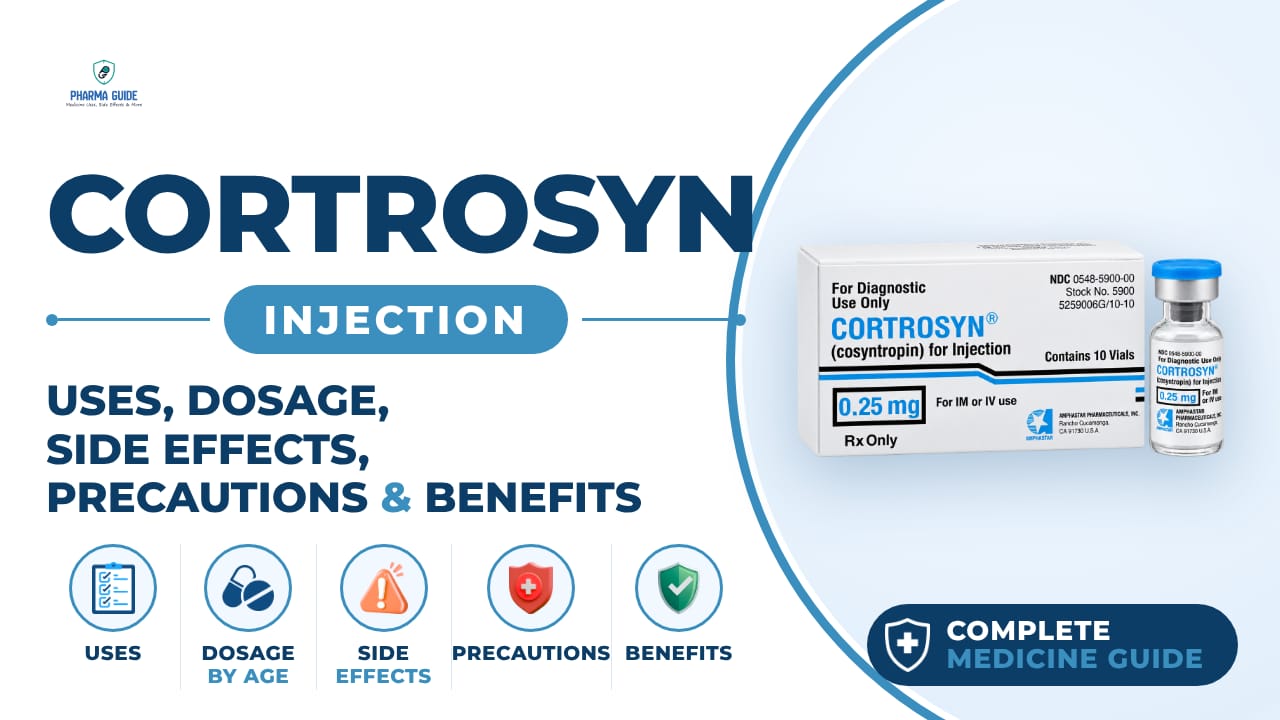
| Generic name | Cosyntropin |
|---|---|
| Drug class | Corticotropin (ACTH diagnostic agent) |
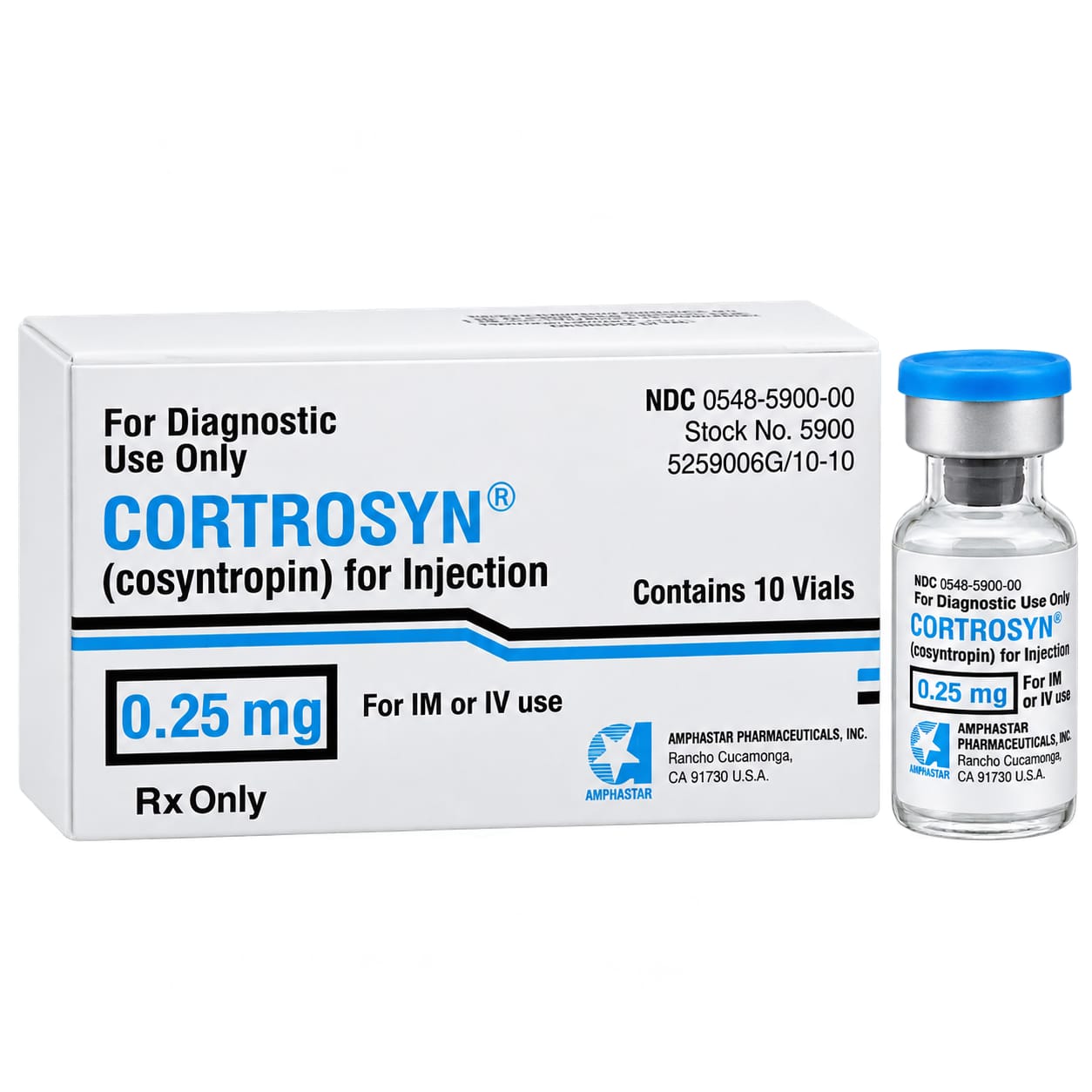
| Forms | Lyophilized powder for injection, 0.25 mg per vial, to be mixed into a solution before use |
Quick overview
Cortrosyn Injection (cosyntropin) is a corticotropin, or ACTH diagnostic agent, used to test adrenal gland function. It is given as an injection by a healthcare professional as part of a medical test, not as a treatment taken on your own. It works by stimulating the adrenal glands to release cortisol, which is then measured to check how well the adrenal glands are working.
What is Cortrosyn Injection
Cortrosyn is a man-made (synthetic) version of a natural hormone called adrenocorticotropic hormone, or ACTH, which is normally made by the pituitary gland. It is given as an injection by a healthcare professional as part of a medical test, not as a treatment you take on your own.
Cortrosyn Injection uses
- Used as a diagnostic agent to screen patients thought to have adrenal gland problems (adrenocortical insufficiency)
- Used as part of an ACTH stimulation test to help diagnose conditions such as Addison's disease, Cushing syndrome, or hypopituitarism
Benefits of Cortrosyn Injection
- Allows a quick, 30-minute test of adrenal gland function using only two blood draws, which can be done in an office or outpatient setting
- Provides a standardized adrenal stimulation test
- Helps measure adrenal cortisol reserve
- Can help distinguish normal from impaired adrenal function
- Requires only a short diagnostic procedure
How Cortrosyn Injection works
Cortrosyn works like the body's natural ACTH hormone. It stimulates the adrenal glands to release cortisol, and your doctor measures how much cortisol is released to check how well your adrenal glands are working.
Cortrosyn Injection dosage
This medicine is given to you by a nurse or other healthcare professional; you do not give it to yourself. It can be given as a shot into a vein (IV) through a line placed in your arm, wrist, or hand, or as a shot into a muscle (IM) in your upper arm, thigh, or buttocks. It can also be given as a slow IV drip over several hours for a stronger test of adrenal function.
A blood sample is taken before you get the dose, and another blood sample is taken about 30 minutes afterward to check your hormone levels. You should stay under medical observation for about an hour after the injection in case of an allergic reaction. Tell your doctor about all medicines you take, including hydrocortisone and estrogen-containing products, since these can affect the test results.
| Age group | Dose |
|---|---|
| 12–17 years | Common diagnostic dose: 0.25 mg IV or IM once |
| 18–64 years | Standard ACTH stimulation test dose: 0.25 mg IV or IM once |
| 65–74 years | Usually the same 0.25 mg single diagnostic dose, with routine clinical monitoring |
Available forms and strengths
- Lyophilized powder for injection, 0.25 mg per vial, to be mixed into a solution before use
Side effects of Cortrosyn Injection
Common
- Redness and pain at the injection site
- Chest pain
- Abdominal pain and stomach churning, nausea
- Headache, numbness, slurred speech
- Low blood pressure, feeling flushed
- Rash
- Fast or slow heartbeats
- Increased blood pressure
- Swelling in the hands or feet
Serious
- Allergic reaction with symptoms such as redness and pain at the injection site, hives, itchiness, general lack of wellbeing, or difficulty breathing
- Severe allergic reaction (anaphylaxis) with swelling of the face, lips, tongue, or throat
- Fainting or paralysis
- Severe headache, confusion, slurred speech, arm or leg weakness, trouble walking, loss of coordination, very stiff muscles, high fever, profuse sweating, or tremors
- Serious eye symptoms such as sudden vision loss, blurred vision, or eye pain
Warnings and precautions
- Allergic reactions can occur, including redness and pain at the injection site, hives, itching, severe discomfort, or difficulty breathing. If any warning signs of a reaction occur, the medicine should be stopped right away.
- Getting this medicine more than once may raise the chance of having an allergic reaction, so tell any new doctor if you have had this type of hormone treatment before.
- Do not use this medicine if you are allergic to it or to any of its ingredients.
- Because of the risk of an allergic reaction, this medicine should only be given under medical supervision, with the patient monitored for about an hour afterward.
- If you are pregnant or think you might be pregnant, tell your healthcare professional before using this medicine so the benefits and risks can be weighed. It is not known if this medicine passes into breast milk, so caution should be used if you are breastfeeding.
- No standard kidney-specific dose adjustment is generally required for the diagnostic dose. No routine liver-specific adjustment is established.
- Avoiding alcohol around endocrine testing may help keep test conditions consistent. This medicine usually has little effect on driving, but dizziness or weakness after testing may occur.
Storage
- Store at 15-30°C
- Keep out of reach and sight of children
When to see a doctor
- Get emergency medical help right away if you have signs of a serious allergic reaction, such as redness and pain at the injection site, hives, itchiness, general unwellness, or difficulty breathing.
- If you think you were given too much of this medicine, contact your healthcare professional or go to a hospital emergency department right away, even if you do not have symptoms.
- If you miss your scheduled dose or appointment for this test, contact your healthcare professional as soon as possible to reschedule.
Alternatives
- Corticorelin testing
- Insulin tolerance test
- Metyrapone test
Watch the video
FAQs
What is Cortrosyn Injection used for?
It is used as a diagnostic agent to screen for adrenal gland problems and as part of an ACTH stimulation test to help diagnose conditions such as Addison's disease, Cushing syndrome, or hypopituitarism.
How is Cortrosyn Injection given?
It is given by a healthcare professional as a shot into a vein (IV) or into a muscle (IM), or sometimes as a slow IV drip over several hours for a stronger test of adrenal function.
How does Cortrosyn Injection work?
It works like the body's natural ACTH hormone by stimulating the adrenal glands to release cortisol, which is then measured to check how well the adrenal glands are working.
What happens during the test with Cortrosyn Injection?
A blood sample is taken before the dose and another about 30 minutes afterward to check hormone levels, and you should stay under medical observation for about an hour after the injection in case of an allergic reaction.
What are the common side effects of Cortrosyn Injection?
Common side effects include redness and pain at the injection site, chest pain, abdominal pain, nausea, headache, low blood pressure, flushing, rash, and changes in heart rate or blood pressure.
General information, not medical advice
Your prescriber and the leaflet in your pack know your situation. This page does not.
- Follow your prescriber and the leaflet
- Don't start, stop, or change a dose on your own
- Doses and warnings differ by country and product
Sources
Video
Related medicines

Injectafer Injection: Uses, Dosage, Side Effects, Precautions and Alternates
Iron products
Injectafer (ferric carboxymaltose) treats iron deficiency anemia and heart failure-related iron deficiency via IV. Learn uses, dosage, side effects, and

Gliclazide Tablet: Uses, Dosage, Side Effects, Precautions and Alternates
Sulfonylurea (hypoglycemic/antidiabetic agent)
Gliclazide Tablet is a sulfonylurea for type 2 diabetes that boosts insulin release. Learn about dosage, side effects, warnings, and precautions.