
Safety
General information, not medical advice
Your prescriber and the leaflet in your pack know your situation. This page does not.
- Follow your prescriber and the leaflet
- Don't start, stop, or change a dose on your own
- Doses and warnings differ by country and product
Cotellic Tablet: Uses, Dosage, Side Effects, Precautions and Alternates
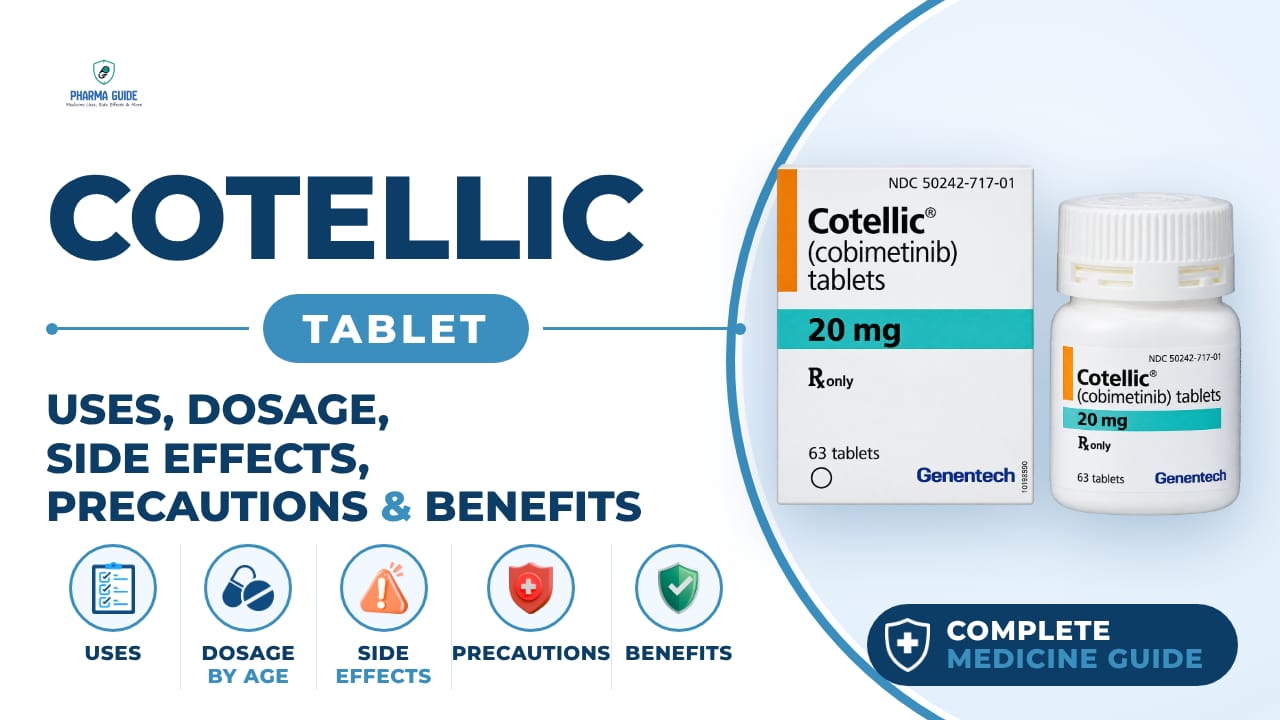
| Generic name | cobimetinib |
|---|---|
| Drug class | MEK inhibitor (multikinase inhibitor, antineoplastic agent) |
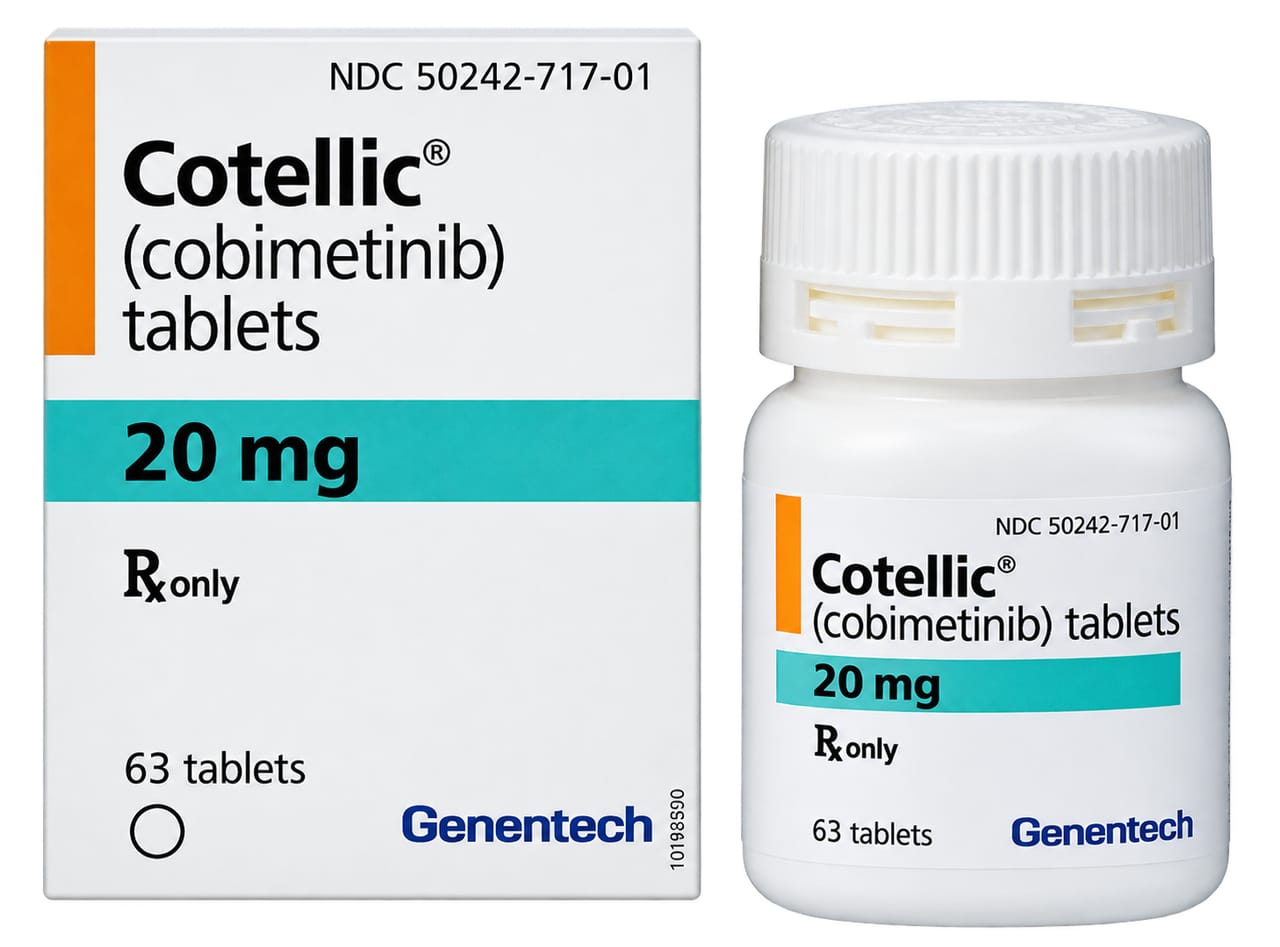
| Forms | Film-coated tablet (20 mg) |
Quick overview
Cotellic Tablet contains cobimetinib, a MEK inhibitor used as an anti-cancer (antineoplastic) agent. It is used, in combination with vemurafenib, to treat melanoma that has spread and cannot be removed by surgery when the melanoma has a specific BRAF gene change, and it is also used alone to treat adults with certain blood cancers called histiocytic neoplasms. It works by blocking a protein called MEK that helps cancer cells grow. The usual dose is 60 mg once a day, taken for 21 days followed by a 7-day break in a 28-day cycle.
What is Cotellic Tablet
Cotellic is a cancer medicine that interferes with the growth and spread of cancer cells in the body. It contains the active ingredient cobimetinib and belongs to a group of medicines called anti-neoplastic (or anti-cancer) agents.
Cotellic Tablet uses
- Treats a type of skin cancer called melanoma that has spread to other parts of the body and cannot be removed by surgery, used in combination with another medicine called Zelboraf (vemurafenib), only when the melanoma has a specific change (mutation) in the BRAF gene
- Used alone to treat adults with blood cancers called histiocytic neoplasms
Benefits of Cotellic Tablet
- In a major study, adding Cotellic to vemurafenib delayed worsening of melanoma for about 12.3 months on average, compared with about 7.2 months with vemurafenib alone
- Works in a targeted way on specific proteins involved in cancer growth rather than affecting all dividing cells
How Cotellic Tablet works
Cotellic blocks a protein called MEK that helps cancer cells grow and divide. In melanoma caused by a BRAF gene change, an abnormal BRAF protein switches on MEK, letting cancer cells grow out of control. When Cotellic is combined with vemurafenib (which blocks the abnormal BRAF protein), the two medicines together slow down the growth and spread of the cancer more than either one alone.
Cotellic Tablet dosage
Take this medicine exactly as your doctor has prescribed. Swallow the tablets whole with a glass of water. You can take this medicine with or without food.
It is taken once a day for 21 days in a row, followed by a 7-day break, making up one 28-day treatment cycle; start the next cycle after the break. Try to take your dose at about the same time each day to help it work best and to help you remember.
If you vomit after taking a dose, do not take another dose that day — continue your normal schedule the next day. If you forget a dose and it is more than 12 hours before your next dose, take the missed dose as soon as you remember; if it is less than 12 hours before your next dose, skip the missed dose and take your next dose at the usual time. Do not take a double dose to make up for a missed one.
Continue taking this medicine until your doctor tells you to stop. No dose adjustment is generally needed because of age alone in people 65 and older. Safety and effectiveness in children have not been established.
| Age group | Dose |
|---|---|
| Under 18 years | Not recommended |
| 18–64 years | 60 mg, once/day |
| 65+ years | 60 mg, once/day |
Available forms and strengths
- Film-coated tablet (20 mg)
Side effects of Cotellic Tablet
Common
- Diarrhoea
- Nausea
- Vomiting
- Fever
- Chills
- Dehydration
- Anaemia
- Sunburn or sun sensitivity (photosensitivity)
- Rashes, spots, itching, dry or scaly skin
- Hardened or thickened areas of the skin
- Painful red lumps or warts
- Acne-like bumps on the face, scalp, chest, or upper back
- Tiredness
- Swelling of arms, legs, or feet
- Mouth sores or inflammation
- Coughing
- Increased liver enzymes or blood sugar
- Decreased sodium or phosphate levels
- Increased creatine phosphokinase (a marker of muscle breakdown)
- Increased blood pressure
Serious
- Signs of severe skin reactions: widespread rash, blisters, peeling skin
- Signs of muscle damage: muscle aches, spasms, weakness, dark or reddish urine
- Signs of serious bleeding: red or black tarry stools, blood in urine or stools, unusual vaginal bleeding, headaches, dizziness, or weakness, coughing up blood or vomit like coffee grounds
- Signs of a serious allergic reaction: shortness of breath, wheezing, swelling of the face, lips, tongue, or other parts of the body, rash, itching, or hives
- Signs of heart problems: persistent coughing or wheezing, shortness of breath, difficulty breathing, tiredness, fast heartbeat, swelling of ankles and feet
- Signs of severe eye or vision problems: blurred vision, loss of vision, changes in color, seeing a blurred outline around objects, eye pain, swelling, or redness
- Signs of liver problems: nausea, upper stomach pain, tiredness, loss of appetite, dark urine, pale stools, yellowing of skin or eyes
- New skin cancers or skin lesions, such as non-healing sores, new lumps, or changing moles
Warnings and precautions
- This medicine can cause serious bleeding, including bleeding in the gut, blood in the urine, vaginal bleeding, and rarely bleeding in the brain. This medicine can cause eye problems such as fluid buildup behind the retina or retinal detachment, which can affect vision.
- This medicine can reduce how well the heart pumps blood. Your doctor will check your heart function with tests before and regularly during treatment.
- This medicine can cause muscle breakdown (rhabdomyolysis), which can be serious. This medicine can make your skin much more sensitive to sunlight, causing severe sunburn-like reactions. Avoid sun exposure and use strong sunscreen and protective clothing.
- People taking this medicine with vemurafenib have developed new skin cancers, including squamous cell carcinoma, basal cell carcinoma, and new melanomas. Avoid drinking grapefruit juice while taking this medicine, as it can raise the amount of the medicine in your blood. Do not stop taking this medicine or change your dose without checking with your doctor first, and do not let yourself run out of medicine.
- This medicine is not recommended during pregnancy because it is not known whether it could harm an unborn baby. Women who can become pregnant should use two effective forms of birth control during treatment and for a period after the last dose. Tell your doctor right away if you become pregnant.
- It is not known whether this medicine passes into breast milk. Talk to your doctor about the risks and benefits if you are breastfeeding or planning to breastfeed.
- Tell your doctor if you have kidney problems. This medicine should be used with caution in people with severe kidney impairment, though no dose change is usually needed for mild to moderate kidney problems.
- Tell your doctor if you have liver problems. Your doctor will check your liver function with blood tests before and during treatment, and may adjust your dose if needed.
- It isn't clear if alcohol directly affects this medicine, but both alcohol and this medicine can increase bleeding risk, and heavy drinking may weaken your body's ability to fight cancer, so it's best to limit alcohol.
- Be careful driving or using machinery until you know how this medicine affects you, since it can affect your vision. If it affects your vision, talk to your doctor before driving or operating machinery.
Storage
- Keep your tablets in the blister pack until it is time to take them
- Keep the tablets in a cool dry place where the temperature stays below 30°C
- Do not store this medicine in the bathroom or near a sink. Do not leave it on a window sill or in the car
- Keep it where young children cannot reach it. A locked cupboard at least one-and-a-half metres above the ground is a good place to store medicines
- If you no longer need to use this medicine or it is out of date, take it to any pharmacy for safe disposal
- Do not use this medicine after the expiry date
When to see a doctor
- Get emergency help right away if you have signs of a serious allergic reaction, such as swelling of the face, lips, tongue, or other parts of the body, shortness of breath or difficulty breathing, or rash, itching, or hives
- Call your doctor straight away if you have new or worsening eye problems, such as eye pain, swelling, redness, blurred vision, loss of vision, changes in color vision, or seeing a blurred outline around objects
- Call your doctor straight away if you notice changes in your skin, such as non-healing sores, new red, pale, or pearly lumps, or new or changing moles, freckles, or spots
- Call your doctor straight away if you become pregnant while taking this medicine
- Call your doctor right away if you notice a severe skin reaction, such as a rash covering a large area of your body, blisters, or peeling skin
- Call your doctor right away if you notice signs of muscle damage, such as muscle aches, spasms, weakness, or dark reddish urine
- Call your doctor right away if you notice signs of a serious bleeding problem, such as tarry black stools, blood in urine or stools, unusual vaginal bleeding, or severe headache, dizziness, or weakness
- Call your doctor right away if you notice signs of heart problems, such as persistent coughing or wheezing, shortness of breath, tiredness, fast heartbeat, or swelling of the ankles and feet
- If you think you or someone else may have taken too much of this medicine, get urgent medical attention right away, even if there are no symptoms
Alternatives
- Tafinlar
- Zelboraf
- Braftovi
Watch the video
FAQs
What is Cotellic Tablet used for?
Cotellic treats melanoma that has spread and cannot be removed by surgery, used in combination with vemurafenib, when the melanoma has a specific BRAF gene change. It is also used alone to treat adults with blood cancers called histiocytic neoplasms.
What is the usual dose of Cotellic Tablet?
The usual dose is 60 mg once a day, taken for 21 days followed by a 7-day break, making up one 28-day treatment cycle. Tablets should be swallowed whole with water, with or without food.
What should I do if I miss a dose of Cotellic Tablet?
If it is more than 12 hours before your next dose, take the missed dose as soon as you remember. If it is less than 12 hours before your next dose, skip the missed dose and take your next dose at the usual time. Do not take a double dose.
What are the serious side effects of Cotellic Tablet?
Serious side effects include severe skin reactions, muscle damage (rhabdomyolysis), serious bleeding, allergic reactions, heart problems, severe eye or vision problems, liver problems, and new skin cancers or skin lesions.
Can I drink alcohol while taking Cotellic Tablet?
It isn't clear if alcohol directly affects this medicine, but both alcohol and Cotellic can increase bleeding risk, and heavy drinking may weaken your body's ability to fight cancer, so it's best to limit alcohol.
General information, not medical advice
Your prescriber and the leaflet in your pack know your situation. This page does not.
- Follow your prescriber and the leaflet
- Don't start, stop, or change a dose on your own
- Doses and warnings differ by country and product
Sources
Video
Related medicines

Injectafer Injection: Uses, Dosage, Side Effects, Precautions and Alternates
Iron products
Injectafer (ferric carboxymaltose) treats iron deficiency anemia and heart failure-related iron deficiency via IV. Learn uses, dosage, side effects, and

Gliclazide Tablet: Uses, Dosage, Side Effects, Precautions and Alternates
Sulfonylurea (hypoglycemic/antidiabetic agent)
Gliclazide Tablet is a sulfonylurea for type 2 diabetes that boosts insulin release. Learn about dosage, side effects, warnings, and precautions.