
Safety
General information, not medical advice
Your prescriber and the leaflet in your pack know your situation. This page does not.
- Follow your prescriber and the leaflet
- Don't start, stop, or change a dose on your own
- Doses and warnings differ by country and product
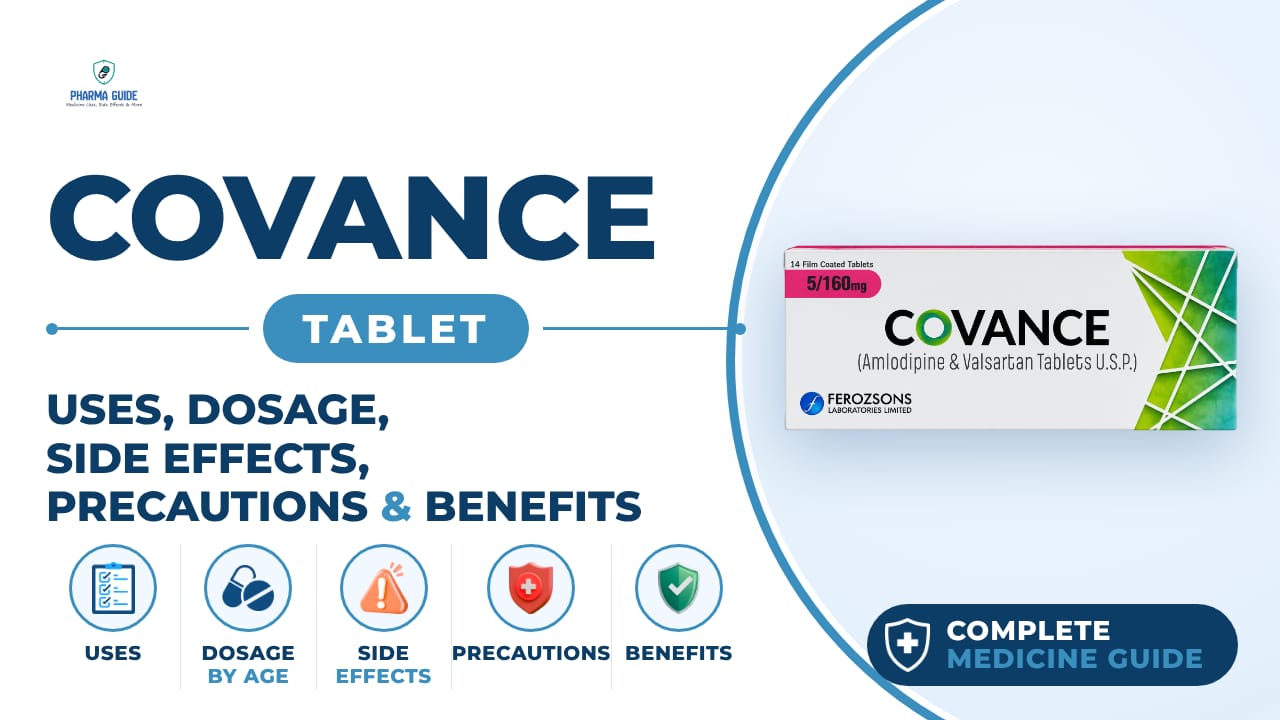
Covance Tablet: Uses, Dosage, Side Effects, Precautions and Alternates
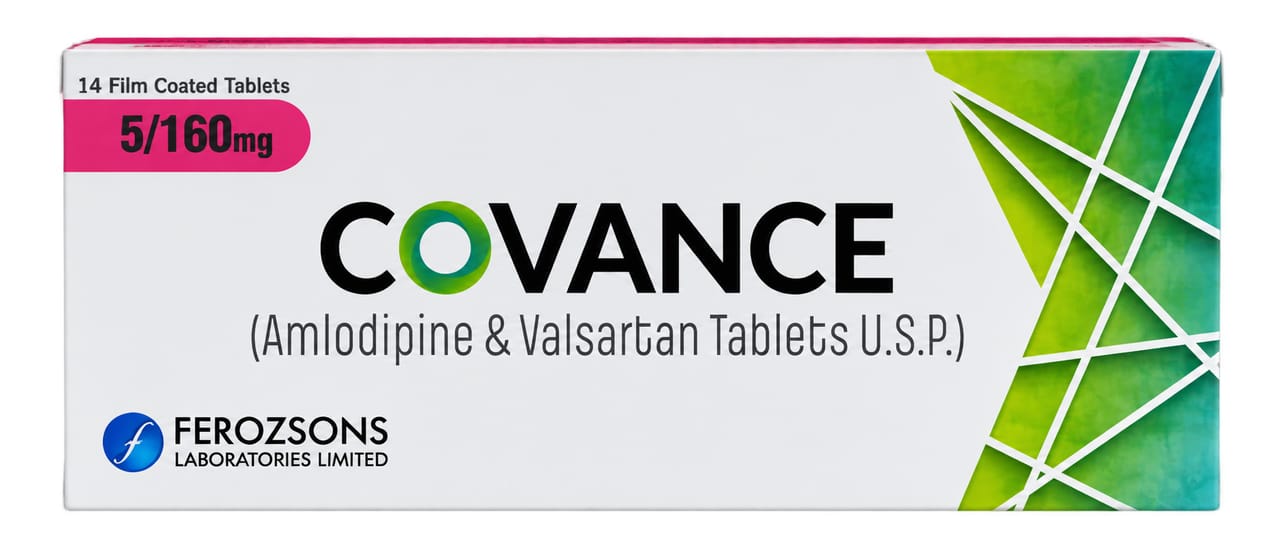
| Generic name | Losartan |
|---|---|
| Drug class | Angiotensin-II receptor blockers, Anti-hypertensive Agents |
| Forms | Tablet |
Quick overview
Covance Tablet contains Losartan, a medicine belonging to the Angiotensin-II receptor blocker class of anti-hypertensive agents. It is used to lower and control high blood pressure, either alone or in combination with other medicines. It also helps protect the kidneys in people with diabetes and may reduce the risk of stroke in certain conditions.
What is Covance Tablet
Covance 50 MG Tablet is a blood pressure-lowering medicine used alone or in combination with other medicines for the treatment of hypertension.
Covance Tablet uses
- Hypertension (high blood pressure)
- Helps protect the kidneys from damage due to diabetes (Diabetic Nephropathy)
- Reduces the risk of stroke
- Hypertension with left ventricular hypertrophy
Benefits of Covance Tablet
- Helps lower and control blood pressure
- Helps lower the risk of stroke in people with high blood pressure and an enlarged heart muscle
- Helps protect the kidneys in people with type 2 diabetes and high blood pressure
How Covance Tablet works
Covance blocks the action of a chemical messenger that causes narrowing of the blood vessels. This relaxes the blood vessels and allows blood to flow more easily, which lowers blood pressure.
Covance Tablet dosage
Covance Tablet may be taken with or without food. Take it at the same time every day to maintain a constant level of this medicine in your body. Swallow the tablet whole; do not crush or chew it. You may have to take this medicine for the long term, so avoid stopping it without consulting your doctor. It is not recommended for use in children below six years of age. Follow lifestyle changes like a low salt and low-fat diet and regular exercise to get the best results.
| Age group | Dose |
|---|---|
| Under 18 Years | Use only if prescribed by a healthcare professional |
| Adults (18–64 Years) | 50 mg once daily, may be adjusted to 25–100 mg/day based on response |
| Older Adults (65+ Years) | 25–50 mg once daily, adjusted according to blood pressure response |
Available forms and strengths
Tablet (50 mg)
Side effects of Covance Tablet
Common
- Fatigue
- Low blood pressure
- Cold hands and feet
- Headache
- Indigestion
- Diarrhoea
- Dizziness
- Drowsiness
- Cough
- Constipation
- Sore throat
- Back pain
- Stomach pain
Serious
- Difficulty or painful urination
- Chest tightness
- Weakness in arms, hands, legs or feet
- Edema
- Low blood sugar levels
- High potassium levels in the blood
Warnings and precautions
- This medicine may cause high blood potassium levels (hyperkalaemia), which can increase the risk of heart rhythm problems. Avoid potassium-rich foods and supplements during treatment.
- Avoid this medicine if you are allergic to it; seek immediate medical attention if you notice symptoms like skin rash, itching or swelling of the face, tongue or throat, severe dizziness, or breathing difficulty.
- Using this medicine together with aliskiren may increase the risk of serious side effects such as kidney problems, low blood pressure, and high blood potassium levels, especially if you have diabetes or kidney problems.
- This medicine may increase the risk of low blood pressure, especially if you have low blood sodium levels or are dehydrated.
- Use with caution if you have severe congestive heart failure due to an increased risk of kidney damage and reduced blood flow to the heart.
- This medicine is unsafe for use during pregnancy as it can cause harm to the developing foetus. Due to a lack of safety information, this medicine is not recommended for use while breastfeeding.
- Inform your doctor if you have kidney problems before starting this medicine, as caution is advised. This medicine is broken down by the liver and should be used with caution if you have liver problems; it is not recommended if you have severe liver disease.
- The interaction with alcohol is unknown, so it is advisable to consult your doctor before drinking alcohol while on this medicine.
- This medicine may cause dizziness or drowsiness, so avoid driving or operating machines if you feel this way.
Storage
- Store below 30°C
- Avoid exposing the medication to direct light or moisture
- Keep the medicine in its original packaging until it is time to take it
- Keep out of reach and sight of children
When to see a doctor
- Seek immediate medical attention if you notice symptoms such as skin rash, itching or swelling of the face, tongue, or throat, severe dizziness, or difficulty breathing.
- Contact your doctor if you experience weakness, irregular heartbeat, confusion, or tingling of the hands and feet, which may be signs of high potassium levels.
- Contact your doctor if you suspect you have taken more than the prescribed dose of this medicine.
Alternatives
- Valsartan
- Olmesartan
- Irbesartan
Watch the video
FAQs
What is Covance Tablet used for?
Covance Tablet is used to treat high blood pressure, protect kidneys from diabetic damage, reduce stroke risk, and manage hypertension with left ventricular hypertrophy.
How does Covance Tablet work?
Covance blocks the action of a chemical messenger that causes narrowing of blood vessels, relaxing them so blood flows more easily, which lowers blood pressure.
What is the dosage of Covance Tablet for adults?
Adults aged 18–64 years typically take 50 mg once daily, which may be adjusted between 25–100 mg/day based on response. Older adults usually take 25–50 mg once daily.
What are the common side effects of Covance Tablet?
Common side effects include fatigue, low blood pressure, cold hands and feet, headache, indigestion, diarrhoea, dizziness, drowsiness, cough, constipation, sore throat, back pain, and stomach pain.
Is Covance Tablet safe during pregnancy?
No, Covance Tablet is unsafe during pregnancy as it can harm the developing foetus, and it is also not recommended while breastfeeding due to lack of safety information.
General information, not medical advice
Your prescriber and the leaflet in your pack know your situation. This page does not.
- Follow your prescriber and the leaflet
- Don't start, stop, or change a dose on your own
- Doses and warnings differ by country and product
Sources
- https://www.practo.com/medicine-info/covance-50-mg-tablet-31026
- https://dailymed.nlm.nih.gov/dailymed/drugInfo.cfm?setid=3cdcf8cc-4964-4c53-e054-00144ff88e88
- https://medlineplus.gov/druginfo/meds/a695008.html
- https://www.medicines.org.uk/emc/medicine/8320
- https://www.medicines.org.uk/emc/files/pil.5875.pdf
- https://pubchem.ncbi.nlm.nih.gov/compound/Losartan
Video
Related medicines

Injectafer Injection: Uses, Dosage, Side Effects, Precautions and Alternates
Iron products
Injectafer (ferric carboxymaltose) treats iron deficiency anemia and heart failure-related iron deficiency via IV. Learn uses, dosage, side effects, and

Gliclazide Tablet: Uses, Dosage, Side Effects, Precautions and Alternates
Sulfonylurea (hypoglycemic/antidiabetic agent)
Gliclazide Tablet is a sulfonylurea for type 2 diabetes that boosts insulin release. Learn about dosage, side effects, warnings, and precautions.