
Safety
General information, not medical advice
Your prescriber and the leaflet in your pack know your situation. This page does not.
- Follow your prescriber and the leaflet
- Don't start, stop, or change a dose on your own
- Doses and warnings differ by country and product
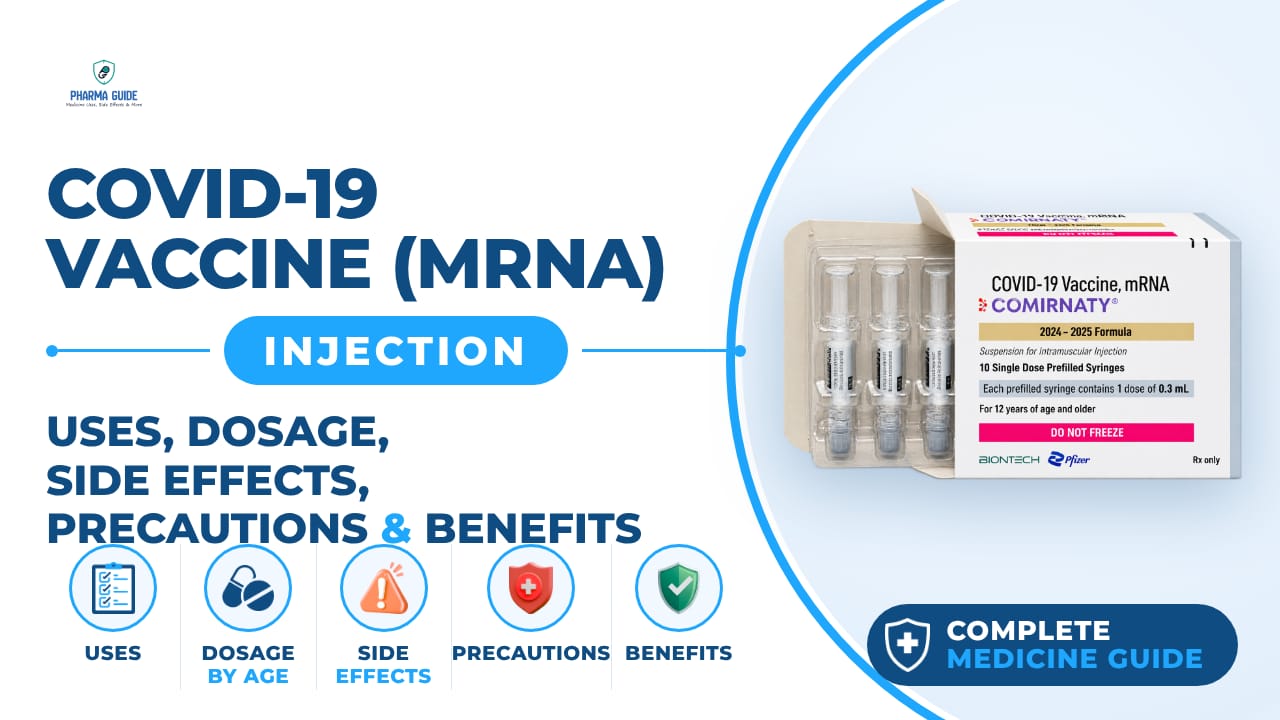
COVID-19 Vaccine (mRNA) Injection: Uses, Dosage, Side Effects, Precautions and Alternates
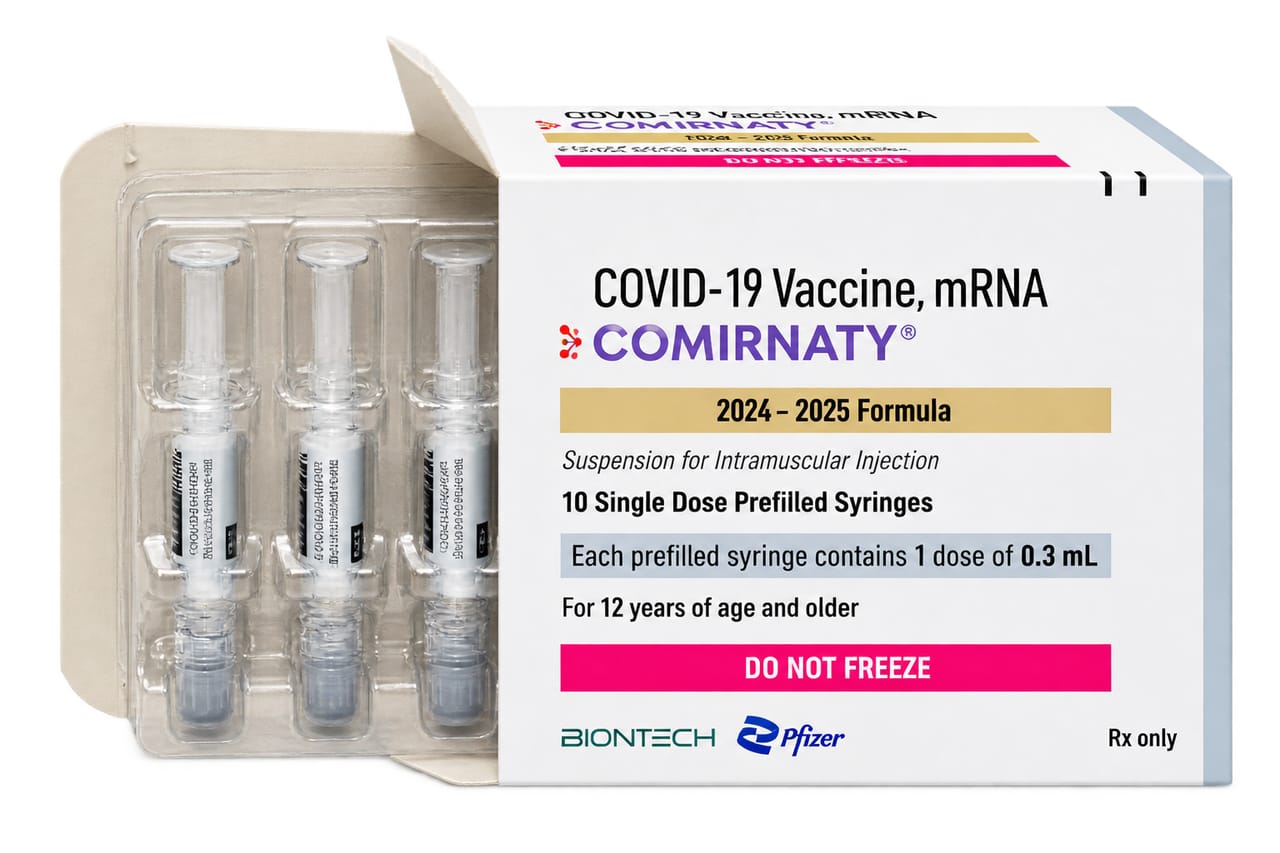
| Generic name | SARS-CoV-2 (COVID-19) vaccine, mRNA |
|---|---|
| Forms | Suspension (liquid) given by injection |
Quick overview
COVID-19 Vaccine (mRNA) Injection is a shot used to help prevent COVID-19 disease and lower the risk of severe illness caused by the SARS-CoV-2 virus. It is given to people at high risk for severe COVID-19 and works by prompting the body's cells to make a small, harmless piece of the virus so the immune system can build antibodies against it. It is administered by a healthcare professional and is not self-administered. Common side effects include soreness at the injection site, tiredness, and headache, while rare but serious reactions can involve allergic responses or heart inflammation.
What is COVID-19 Vaccine (mRNA) Injection
This is a vaccine given as a shot to help protect against COVID-19, the disease caused by the SARS-CoV-2 virus. It does not contain the actual virus. Instead, it teaches your body's cells to make a small piece of the virus so your immune system can build defenses in case you are exposed later.
COVID-19 Vaccine (mRNA) Injection uses
- Preventing COVID-19 disease
- Lowering the risk of severe illness from COVID-19 caused by the SARS-CoV-2 virus
- Used in people at high risk for severe COVID-19
Benefits of COVID-19 Vaccine (mRNA) Injection
- Can prevent COVID-19 disease or lower the risk of serious illness
- Clinical trials found strong effectiveness at preventing COVID-19 infection after two doses
How COVID-19 Vaccine (mRNA) Injection works
The vaccine causes your body's cells to make a small piece of the virus. This piece is not harmful on its own, but it triggers your immune system to make antibodies that are ready to fight the real virus if you are ever exposed to it.
COVID-19 Vaccine (mRNA) Injection dosage
This vaccine is given as a shot into a muscle by a nurse or other trained health professional in a medical facility; it is not self-administered. For people 2 years of age and older, it is usually given as a single dose for the season. If you have already gotten a COVID-19 vaccine before, you generally need to wait at least two months after your last dose before getting another one. If you are getting the low-dose version of the vaccine, you may need to wait at least three months after any other COVID-19 vaccine. For children 6 months to 2 years of age, the healthcare provider will decide how many doses your child needs and when to give them. You will receive written information for recipients and caregivers along with the vaccine; read it carefully and ask your doctor any questions. Your provider may ask you to stay for observation after the shot to watch for fainting or other reactions.
| Age group | Dose |
|---|---|
| Children (6 Months–4 Years) | Dose and number of doses depend on vaccine product and previous vaccination history |
| Children (5–11 Years) | Pediatric dose according to the specific mRNA vaccine formulation |
| Adults (18–64 Years) | Recommended dose schedule based on vaccine type and vaccination history |
| Older Adults (65+ Years) | Recommended updated dose(s) based on age and health risk factors |
Available forms and strengths
- Suspension (liquid) given by injection
Side effects of COVID-19 Vaccine (mRNA) Injection
Common
- Sore, painful, red, or swollen arm at the injection site
- Tiredness or unusual weakness
- Headache
- Muscle pain
- Chills
- Joint pain
- Fever
- Nausea
- Feeling unwell or irritable
- Swollen or tender lymph nodes in the neck, armpit, or groin
- Decreased appetite
- Diarrhea
- Vomiting
Serious
- Difficulty breathing
- Swelling of the face or throat
- Fast or pounding heartbeat
- Rash, itching, or hives
- Dizziness or weakness
- Fainting or feeling faint, vision changes, or ringing in the ears
- Chest pain that may spread to the arm, neck, or shoulder
- Shortness of breath or chest tightness
- Seizures or muscle spasms/jerking
- Sudden loss of consciousness
- Loss of bladder control
- Blue or pale skin
Warnings and precautions
- This vaccine can cause serious allergic reactions, including a life-threatening reaction called anaphylaxis. Tell your doctor right away if you develop a rash, itching, fast heartbeat, trouble breathing or swallowing, or swelling of your hands, face, or mouth after the shot.
- This vaccine may raise the risk of serious heart problems such as myocarditis (inflammation of the heart muscle) or pericarditis (inflammation of the lining around the heart). This is more commonly seen in males aged 12 to 24, usually within a week of vaccination.
- Fainting can happen after getting this vaccine, so your provider may want to watch you for a while after the injection.
- Before getting the vaccine, tell your doctor if you have or have had inflammation of the heart muscle or its lining, a bleeding disorder, are taking a blood thinner, have a weakened immune system, or are on medicine that affects your immune system.
- This vaccine will not treat COVID-19 if you already have the infection, and it may not protect everyone who receives it, so you should still take precautions to reduce your risk.
- It is not fully known whether this vaccine is safe during pregnancy, but getting COVID-19 while pregnant can cause serious problems. Talk with your doctor about the risks and benefits before getting the vaccine while pregnant.
- There isn't enough research on how this vaccine affects breastfeeding infants. You and your doctor should weigh the possible benefits against the possible risks before deciding.
- Inform your healthcare provider about any severe allergic reaction to a previous COVID-19 vaccine dose or ingredients.
- Delay vaccination if you have a moderate or severe illness until recovery.
- Ask your healthcare professional about using this vaccine along with alcohol, since interactions may be possible.
- Tell your doctor about heart conditions or previous myocarditis/pericarditis.
When to see a doctor
- Get emergency care right away if you have trouble breathing, swelling of your face or throat, a fast heartbeat, rash, or dizziness or weakness after the vaccine.
- Seek emergency care if you have chest pain, shortness of breath, or a fast, fluttering, or pounding heartbeat, since these can be signs of heart inflammation linked to the vaccine.
- Tell your provider right away if you feel dizzy, have vision changes, or hear ringing in your ears, as these can be warning signs before fainting.
- Contact your doctor immediately if you notice a rash, itching, fast heartbeat, trouble breathing or swallowing, or swelling of your hands, face, or mouth after the shot.
- Check with your doctor right away if you notice anxiety, blue or pale skin, chest pain that may move into your arm, neck, or shoulder, fever, chills, a fast heartbeat, trouble breathing, or unusual tiredness or weakness after vaccination.
Alternatives
- Viral Vector COVID-19 Vaccines (where available)
- Protein-Based COVID-19 Vaccines
- Novavax COVID-19 Vaccine
Watch the video
FAQs
What is the COVID-19 mRNA Vaccine Injection used for?
It is used for preventing COVID-19 disease and lowering the risk of severe illness caused by the SARS-CoV-2 virus, especially in people at high risk for severe COVID-19.
How does the COVID-19 mRNA Vaccine work?
It causes your body's cells to make a small, harmless piece of the virus, which triggers your immune system to make antibodies ready to fight the real virus if you are exposed later.
How is the COVID-19 mRNA Vaccine given?
It is given as a shot into a muscle by a nurse or trained health professional in a medical facility. For people 2 years and older, it is usually a single dose for the season, with at least two months between doses if previously vaccinated.
What are the common side effects of the COVID-19 mRNA Vaccine?
Common side effects include soreness, pain, redness, or swelling at the injection site, tiredness, headache, muscle pain, chills, joint pain, fever, nausea, and feeling unwell.
Can the COVID-19 mRNA Vaccine cause heart problems?
Yes, it may raise the risk of myocarditis or pericarditis, which is more commonly seen in males aged 12 to 24, usually within a week of vaccination.
General information, not medical advice
Your prescriber and the leaflet in your pack know your situation. This page does not.
- Follow your prescriber and the leaflet
- Don't start, stop, or change a dose on your own
- Doses and warnings differ by country and product
Sources
Video
Related medicines

Injectafer Injection: Uses, Dosage, Side Effects, Precautions and Alternates
Iron products
Injectafer (ferric carboxymaltose) treats iron deficiency anemia and heart failure-related iron deficiency via IV. Learn uses, dosage, side effects, and

Gliclazide Tablet: Uses, Dosage, Side Effects, Precautions and Alternates
Sulfonylurea (hypoglycemic/antidiabetic agent)
Gliclazide Tablet is a sulfonylurea for type 2 diabetes that boosts insulin release. Learn about dosage, side effects, warnings, and precautions.