
Safety
General information, not medical advice
Your prescriber and the leaflet in your pack know your situation. This page does not.
- Follow your prescriber and the leaflet
- Don't start, stop, or change a dose on your own
- Doses and warnings differ by country and product
Cozaar Tablet: Uses, Dosage, Side Effects, Precautions and Alternates
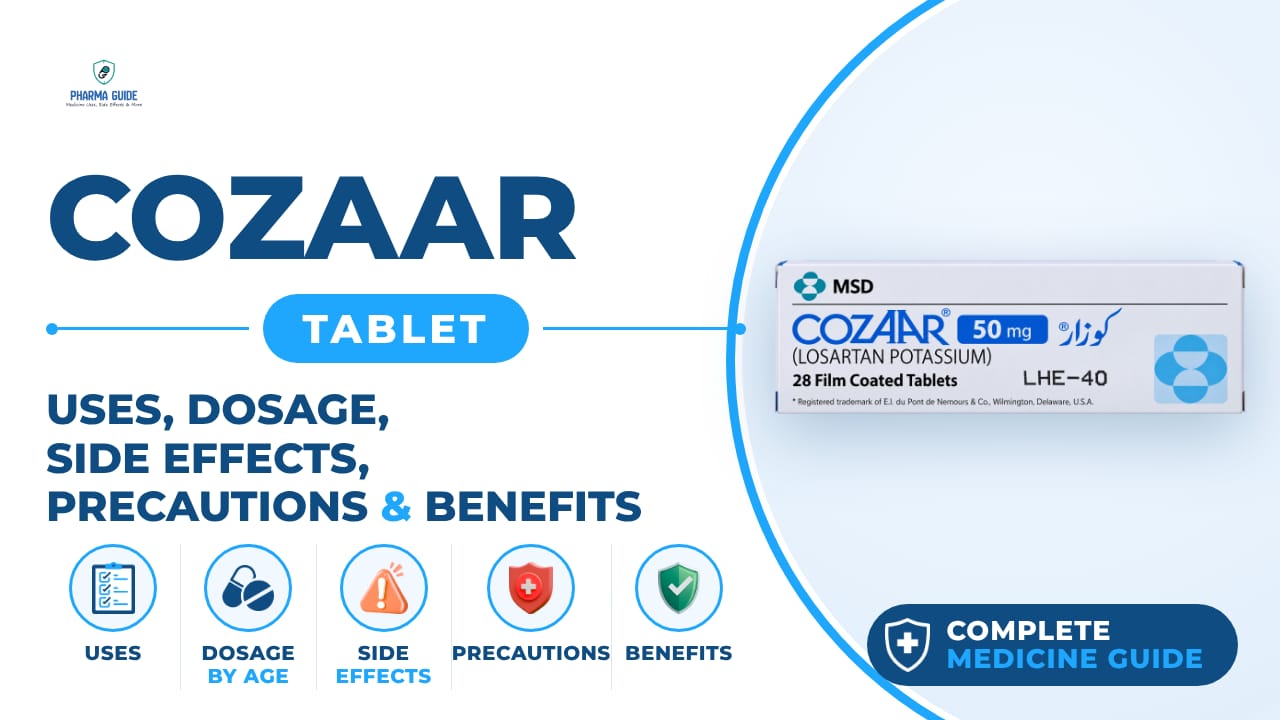
| Generic name | losartan potassium |
|---|---|
| Drug class | Angiotensin receptor blockers (angiotensin II receptor antagonists) |
| Forms | Oral tablet (25 mg, 50 mg, 100 mg), Oral suspension (can be prepared from tablets) |
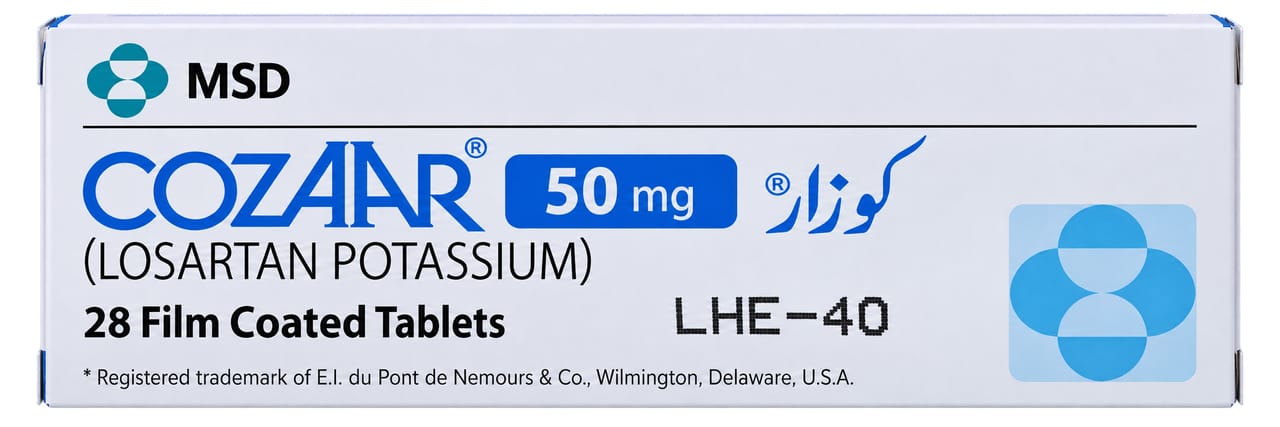
Quick overview
Cozaar is a prescription medicine containing losartan potassium, an angiotensin receptor blocker (ARB) taken by mouth. It is used to treat high blood pressure, lower stroke risk in certain patients with heart changes, and treat kidney disease in people with type 2 diabetes and high blood pressure. It works by relaxing blood vessels to lower blood pressure, and it must be used exactly as prescribed, with regular monitoring.
What is Cozaar Tablet
Cozaar is a prescription medicine called an angiotensin receptor blocker (ARB). It contains losartan potassium and comes as a tablet taken by mouth.
Cozaar Tablet uses
- Treats high blood pressure (hypertension) in adults and children at least 6 years old
- Lowers the risk of stroke in people who have high blood pressure and a heart condition called left ventricular hypertrophy (enlargement of the walls of the left side of the heart)
- Treats kidney disease (diabetic nephropathy) in people who have type 2 diabetes and high blood pressure
Benefits of Cozaar Tablet
- Lowering blood pressure lowers the risk of fatal and nonfatal cardiovascular events, primarily strokes and heart attacks
- Reduces the risk of stroke in patients with hypertension and left ventricular hypertrophy (though this benefit may not apply to Black patients)
- Slows the worsening of diabetic kidney disease by reducing the rate of progression of nephropathy
How Cozaar Tablet works
Cozaar blocks the action of a natural substance called angiotensin II that tightens blood vessels. By blocking this effect, it lets blood vessels relax so blood pressure goes down.
Cozaar Tablet dosage
Take Cozaar exactly as prescribed by your doctor and follow all directions on your prescription label. Cozaar is usually taken once per day and may be taken with or without food. Keep using Cozaar even if you feel well, since high blood pressure often has no symptoms. Your blood pressure will need to be checked often and you may need frequent blood tests.
If you miss a dose, take it as soon as you remember, but skip the missed dose if it is almost time for your next dose; do not take two doses at once. Call your doctor if you are vomiting, have a lot of diarrhea, or are sweating more than usual, since this can lead to dehydration.
| Age group | Dose |
|---|---|
| Under 6 years | Safety/effectiveness not established |
| 6–17 years | 0.7 mg/kg once daily, up to 50 mg initially |
| 18–64 years | Usually 50 mg once daily; range 25–100 mg/day |
| 65+ years | Usually adult dosing; consider kidney function, potassium and blood pressure |
Available forms and strengths
- Oral tablet (25 mg, 50 mg, 100 mg)
- Oral suspension (can be prepared from tablets)
Side effects of Cozaar Tablet
Common
- Dizziness
- Tiredness
- Low blood pressure
- Low blood sugar
- Diarrhea
- Back pain
- Cold symptoms such as stuffy nose, sneezing, sore throat
- Upper respiratory infection
- Chest pain
Serious
- Allergic reaction: hives, difficulty breathing, swelling of face, lips, tongue, or throat
- Light-headed feeling, like you might pass out
- High blood potassium: nausea, weakness, tingly feeling, chest pain, irregular heartbeats, loss of movement
- Kidney problems: swelling, urinating less, feeling tired or short of breath
- Breakdown of skeletal muscle tissue (rhabdomyolysis) leading to kidney failure: unexplained muscle pain, tenderness, or weakness, especially with fever, unusual tiredness, and dark colored urine
Warnings and precautions
- Cozaar can cause harm or death to an unborn baby. Stop taking it and call your doctor right away if you become pregnant.
- Do not use Cozaar if you are pregnant. It can cause injury or death to the unborn baby, especially during the second or third trimester. Tell your doctor right away if you become pregnant.
- It is not known if Cozaar passes into breast milk. Talk to your doctor about whether to take Cozaar or breastfeed, since you should not do both.
- Tell your doctor if you have kidney disease. Cozaar can affect kidney function, especially in people who are volume-depleted or have certain kidney conditions.
- Tell your doctor if you have liver problems. A lower starting dose is recommended for people with mild-to-moderate liver impairment.
- Cozaar can make you feel dizzy or lightheaded, especially when standing up quickly, which could affect activities requiring alertness such as driving.
- If you have diabetes, do not take Cozaar together with medicines containing aliskiren.
- You may also need to avoid taking Cozaar with aliskiren if you have kidney disease.
- In rare cases, Cozaar can cause a condition that breaks down muscle tissue, which can lead to kidney failure.
- Do not use potassium supplements or salt substitutes containing potassium unless your doctor tells you to.
Storage
- Store at 20–25°C (68–77°F).
- Protect from light and moisture.
- Keep in a dry place and original packaging.
- Avoid excessive heat.
- Keep out of reach of children.
When to see a doctor
- Get emergency medical help right away if you have signs of an allergic reaction such as hives, difficulty breathing, or swelling of the face, lips, tongue, or throat.
- Call your doctor right away if you have unexplained muscle pain, tenderness, or weakness, especially with fever, unusual tiredness, and dark colored urine.
- Call your doctor right away if you feel like you might faint or pass out.
- Call your doctor if you have symptoms of high blood potassium, such as nausea, weakness, tingling, chest pain, irregular heartbeats, or loss of movement.
- Call your doctor if you have symptoms of kidney problems, such as swelling, urinating less, feeling tired or short of breath.
- If you take too much Cozaar, contact your doctor or a poison control center, or go to the nearest hospital emergency room right away.
Alternatives
- Hydrochlorothiazide
- Olmesartan
- Telmisartan
- Candesartan
- Valsartan
Watch the video
FAQs
What is Cozaar Tablet used for?
Cozaar treats high blood pressure in adults and children at least 6 years old, lowers stroke risk in people with hypertension and left ventricular hypertrophy, and treats diabetic kidney disease in people with type 2 diabetes and high blood pressure.
How does Cozaar work?
Cozaar blocks the action of angiotensin II, a natural substance that tightens blood vessels, allowing blood vessels to relax so blood pressure goes down.
What is the usual dose of Cozaar for adults?
Adults 18-64 years usually take 50 mg once daily, with a dosage range of 25-100 mg per day, taken exactly as prescribed.
What are the serious side effects of Cozaar?
Serious side effects include allergic reactions, light-headedness or fainting, high blood potassium, kidney problems, and rhabdomyolysis (breakdown of skeletal muscle tissue) that can lead to kidney failure.
Can I take Cozaar if I am pregnant?
No, Cozaar can cause harm or death to an unborn baby, especially during the second or third trimester, so you should stop taking it and call your doctor right away if you become pregnant.
General information, not medical advice
Your prescriber and the leaflet in your pack know your situation. This page does not.
- Follow your prescriber and the leaflet
- Don't start, stop, or change a dose on your own
- Doses and warnings differ by country and product
Sources
Video
Related medicines

Injectafer Injection: Uses, Dosage, Side Effects, Precautions and Alternates
Iron products
Injectafer (ferric carboxymaltose) treats iron deficiency anemia and heart failure-related iron deficiency via IV. Learn uses, dosage, side effects, and

Gliclazide Tablet: Uses, Dosage, Side Effects, Precautions and Alternates
Sulfonylurea (hypoglycemic/antidiabetic agent)
Gliclazide Tablet is a sulfonylurea for type 2 diabetes that boosts insulin release. Learn about dosage, side effects, warnings, and precautions.