
Safety
General information, not medical advice
Your prescriber and the leaflet in your pack know your situation. This page does not.
- Follow your prescriber and the leaflet
- Don't start, stop, or change a dose on your own
- Doses and warnings differ by country and product
Creon Capsule: Uses, Dosage, Side Effects, Precautions and Alternates
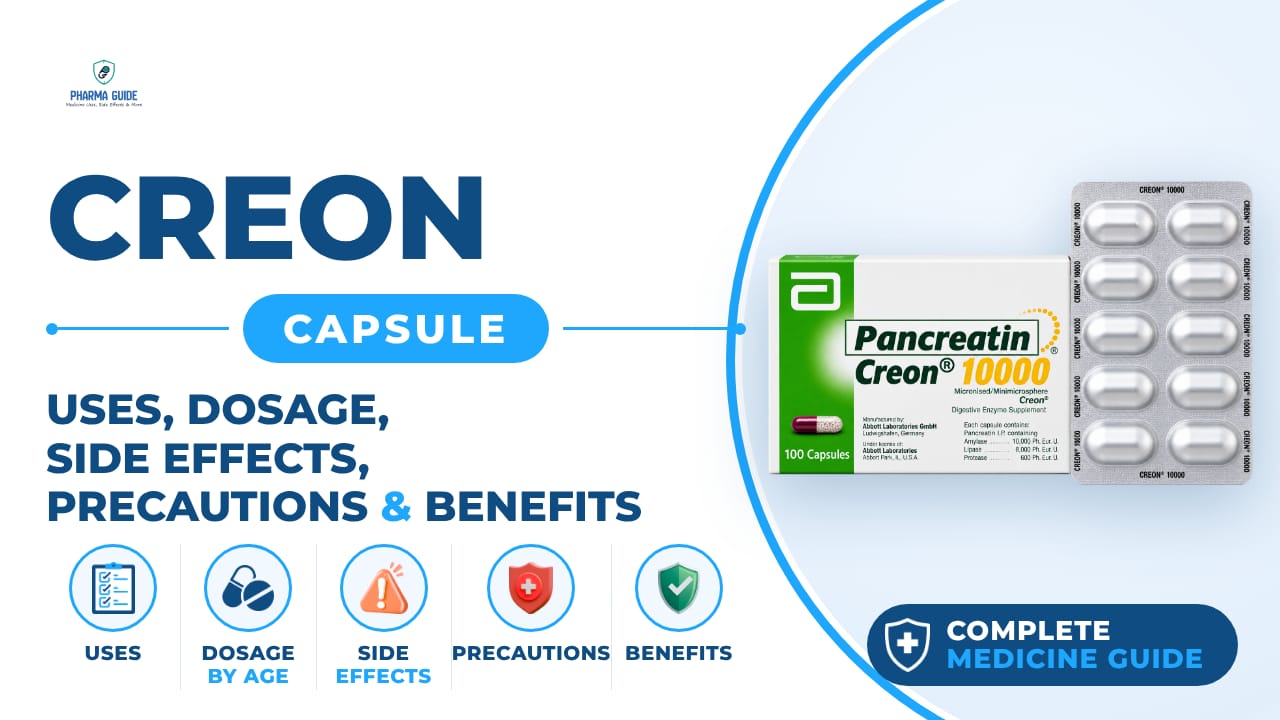
| Generic name | Pancrelipase (pancreatin) |
|---|---|
| Drug class | Digestive enzymes (pancreatic enzyme replacement therapy) |
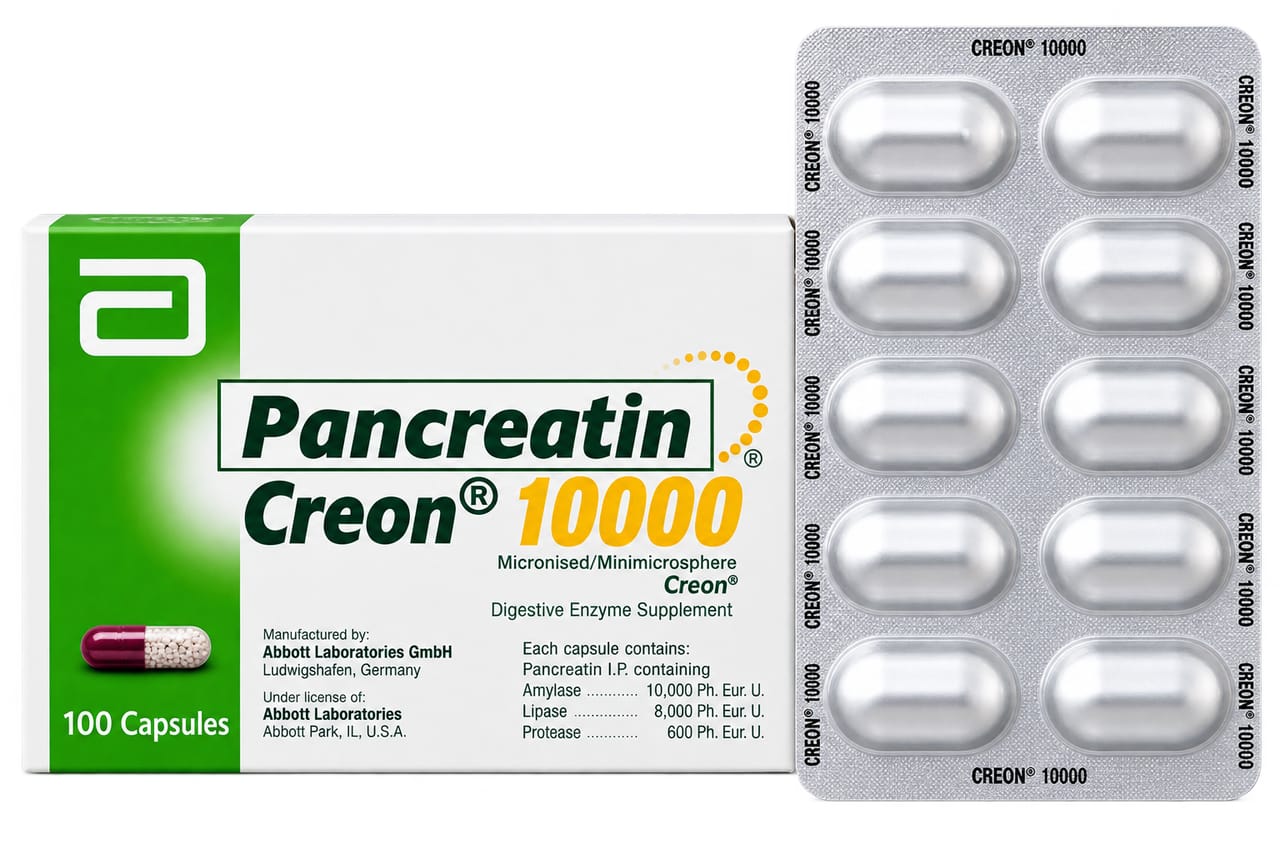
| Forms | Delayed-release capsules |
Quick overview
Creon Capsule contains pancrelipase (pancreatin), a mixture of digestive enzymes made from pig pancreas, including lipase, protease, and amylase. It is a prescription medicine used to treat exocrine pancreatic insufficiency (EPI), a condition in which the pancreas does not make enough enzymes to digest food. Creon replaces these missing enzymes to help the body break down fats, proteins, and carbohydrates during digestion.
What is Creon Capsule
Creon is a prescription medicine used to treat exocrine pancreatic insufficiency (EPI), a condition where the pancreas does not make enough enzymes to digest food. It contains a mixture of digestive enzymes called pancrelipase, made from the pancreas of pigs, including lipase, protease, and amylase. These enzymes replace those the body cannot make in sufficient amounts and help break down fats, proteins, and carbohydrates during digestion.
Creon Capsule uses
- Treats exocrine pancreatic insufficiency (EPI) caused by cystic fibrosis
- Treats EPI caused by chronic pancreatitis (long-term inflammation of the pancreas)
- Treats EPI caused by a pancreatectomy (surgical removal of part or all of the pancreas)
- Treats EPI caused by blockage of the pancreatic ducts
- Treats EPI caused by certain other conditions that damage the pancreas, such as type 2 diabetes
Benefits of Creon Capsule
- Helps the body absorb nutrients more effectively from food
- Reduces symptoms of EPI such as weight loss, diarrhea, greasy or oily stools, bloating, and vitamin deficiencies
- Supports normal digestion of fats, proteins, and carbohydrates
How Creon Capsule works
In people with exocrine pancreatic insufficiency, the pancreas does not release enough digestive enzymes, so food is not properly digested. Creon capsules pass through the stomach and then open to release their enzymes in the small intestine, where they help break down fats, proteins, and carbohydrates into smaller parts the body can absorb and use for energy and nutrition.
Creon Capsule dosage
Take Creon with every meal and snack, usually with three meals a day and two or three snacks, at the start of the meal or snack. Swallow capsules whole with a full glass of water; do not crush, chew, or hold them in the mouth, as this can irritate the mouth.
If you cannot swallow capsules, you may open them and sprinkle the contents onto a small amount of soft, acidic food (such as applesauce) and swallow right away without chewing; do not save the mixture for later. Do not mix the medicine with infant formula or breast milk; give before each feeding instead.
Do not inhale the powder or let it touch your skin, as it may cause irritation, especially to the nose and lungs. Avoid taking with hot beverages like tea or coffee, as this may stop the medicine from working properly. If you take antacids, take them at least one hour before your dose, as antacids may affect how well the medicine works. Drink plenty of water every day while taking this medicine.
If you skip a meal or snack, skip that dose too; take the next dose with your next meal or snack; do not double up. Tell your doctor about any changes in weight, since children's and teenagers' doses are often based on weight.
| Age group | Dose |
|---|---|
| Under 1 year | 3,000 lipase units per 120 mL feeding |
| 1–3 years | 1,000 lipase units/kg per meal |
| 4–17 years | 500 lipase units/kg per meal |
| 18–64 years | Usually 500 lipase units/kg per meal initially |
| 65+ years | Usually adult weight-based dosing; individualized according to response |
Available forms and strengths
- Delayed-release capsules
Side effects of Creon Capsule
Common
- Stomach pain, gas, vomiting
- Diarrhea or other changes in bowel movements
- Rectal itching
- Headache, dizziness
- Runny or stuffy nose, cough, sore throat
- Changes in blood sugar
- Abnormal stools (unusual color, form, or smell)
- Nausea
- Constipation
Serious
- Signs of an allergic reaction: hives, difficulty breathing, swelling of the face, lips, tongue, or throat
- Joint pain or swelling, or signs of high uric acid such as painful or swollen joints, pain in the big toe, or kidney stones
- Symptoms of a rare but serious bowel disorder (fibrosing colonopathy): severe or unusual stomach pain, vomiting, bloating, diarrhea, or constipation
- A child not growing at a normal rate while using this medicine
- Mouth irritation such as sores, ulcers, or burning/stinging in the mouth
- Irritation or inflammation in the anal region if too much medicine is taken
Warnings and precautions
- Call your doctor right away if you have symptoms of a rare but serious bowel disorder, including severe or unusual stomach pain, vomiting, bloating, diarrhea, or constipation.
- Do not chew the capsules or hold them in your mouth, as this can irritate the inside of the mouth.
- If you have a pork allergy, you may also be allergic to this medicine because it is made from pig pancreas.
- This medicine should be used with caution in people with a bowel-narrowing condition called fibrosing colonopathy, and their dose and colon health should be closely monitored.
- Several children with cystic fibrosis taking high doses of pancreatic enzyme supplements have had narrowing of the bowel that required surgery.
- Tell your doctor if you are pregnant or plan to become pregnant. This medicine has not been well studied in pregnancy, but it is not expected to expose the baby to the drug since it mostly stays in the digestive tract.
- Tell your doctor if you are breastfeeding or plan to breastfeed. It is not known if this medicine passes into breast milk, but only a tiny amount is absorbed into the body, so it is not expected to affect a breastfed child.
- This medicine can increase uric acid levels in the blood, which may be worse in people with reduced kidney function. Tell your doctor if you have kidney disease.
- This medicine does not directly interact with alcohol, but alcohol can damage the pancreas and worsen the condition this medicine is used to treat. Tell your doctor if you drink alcohol.
- This medicine does not affect your ability to drive or use machines.
Storage
- Store at room temperature between 59°F to 77°F (15°C to 25°C)
- Avoid heat
- You may store at a temperature between 77°F to 104°F (25°C to 40°C) for up to 30 days; throw away any medicine stored at these temperatures for more than 30 days
- Keep in a dry place and in the original container
- After opening the bottle, keep it closed tightly between uses to protect it from moisture
- If there is a moisture-absorbing packet (desiccant) in the bottle, keep it in the bottle; do not eat it or throw it away
- Keep capsules in the bottle until it is time to take them
- Keep in a cool, dry place where the temperature stays below 25°C; in warmer climates it may be necessary to store in the refrigerator
- After opening, use within 6 months
- Store away from moisture, heat, or sunlight; do not store in the bathroom, near a sink, in the car, or on window sills
- Keep out of reach of children; a locked cupboard at least one-and-a-half metres above the ground is a good storage place
- If you no longer need the medicine or it is out of date, take it to a pharmacy for safe disposal
When to see a doctor
- Get emergency medical help if you have signs of an allergic reaction, such as hives, trouble breathing, or swelling of the face, lips, tongue, or throat.
- Call your doctor right away, or go to the emergency department, if you have severe or prolonged stomach pain.
- Call your doctor at once if you have joint pain or swelling, or symptoms of a serious bowel disorder such as severe or unusual stomach pain, vomiting, bloating, diarrhea, or constipation.
- Call your doctor straight away if you are still having problems with fatty stools or stomach pain while taking this medicine.
- If you think you have taken too much of this medicine, drink plenty of water and get urgent medical help, even if you feel fine.
Alternatives
- Pancreatin preparations
- Viokace
- Pertzye
- Pancreaze
- Zenpep
Watch the video
FAQs
What is Creon Capsule used for?
Creon is used to treat exocrine pancreatic insufficiency (EPI) caused by conditions such as cystic fibrosis, chronic pancreatitis, pancreatectomy, blockage of the pancreatic ducts, or other conditions that damage the pancreas, including type 2 diabetes.
How should I take Creon Capsule?
Take Creon with every meal and snack, usually with three meals and two or three snacks a day, at the start of eating. Swallow the capsules whole with a full glass of water; do not crush, chew, or hold them in your mouth.
Can I open the Creon capsule if I have trouble swallowing it?
Yes, if you cannot swallow capsules, you may open them and sprinkle the contents onto a small amount of soft, acidic food like applesauce and swallow right away without chewing. Do not save the mixture for later, and do not mix it with infant formula or breast milk.
What are the serious side effects of Creon Capsule?
Serious side effects include signs of an allergic reaction, joint pain or swelling or signs of high uric acid, symptoms of a rare bowel disorder called fibrosing colonopathy, a child not growing at a normal rate, mouth irritation, and anal irritation if too much medicine is taken.
Is Creon Capsule safe for people with a pork allergy?
People with a pork allergy may also be allergic to Creon because it is made from pig pancreas, so this should be discussed with a doctor.
General information, not medical advice
Your prescriber and the leaflet in your pack know your situation. This page does not.
- Follow your prescriber and the leaflet
- Don't start, stop, or change a dose on your own
- Doses and warnings differ by country and product
Sources
- https://www.drugs.com/creon.html
- https://www.medicalnewstoday.com/articles/creon#side-effects
- Creon 40000 Capsule product page (Practo)
- cmi-creon-40-000-capsules.pdf (Consumer Medicine Information)
Video
Related medicines

Injectafer Injection: Uses, Dosage, Side Effects, Precautions and Alternates
Iron products
Injectafer (ferric carboxymaltose) treats iron deficiency anemia and heart failure-related iron deficiency via IV. Learn uses, dosage, side effects, and

Gliclazide Tablet: Uses, Dosage, Side Effects, Precautions and Alternates
Sulfonylurea (hypoglycemic/antidiabetic agent)
Gliclazide Tablet is a sulfonylurea for type 2 diabetes that boosts insulin release. Learn about dosage, side effects, warnings, and precautions.