
Safety
General information, not medical advice
Your prescriber and the leaflet in your pack know your situation. This page does not.
- Follow your prescriber and the leaflet
- Don't start, stop, or change a dose on your own
- Doses and warnings differ by country and product
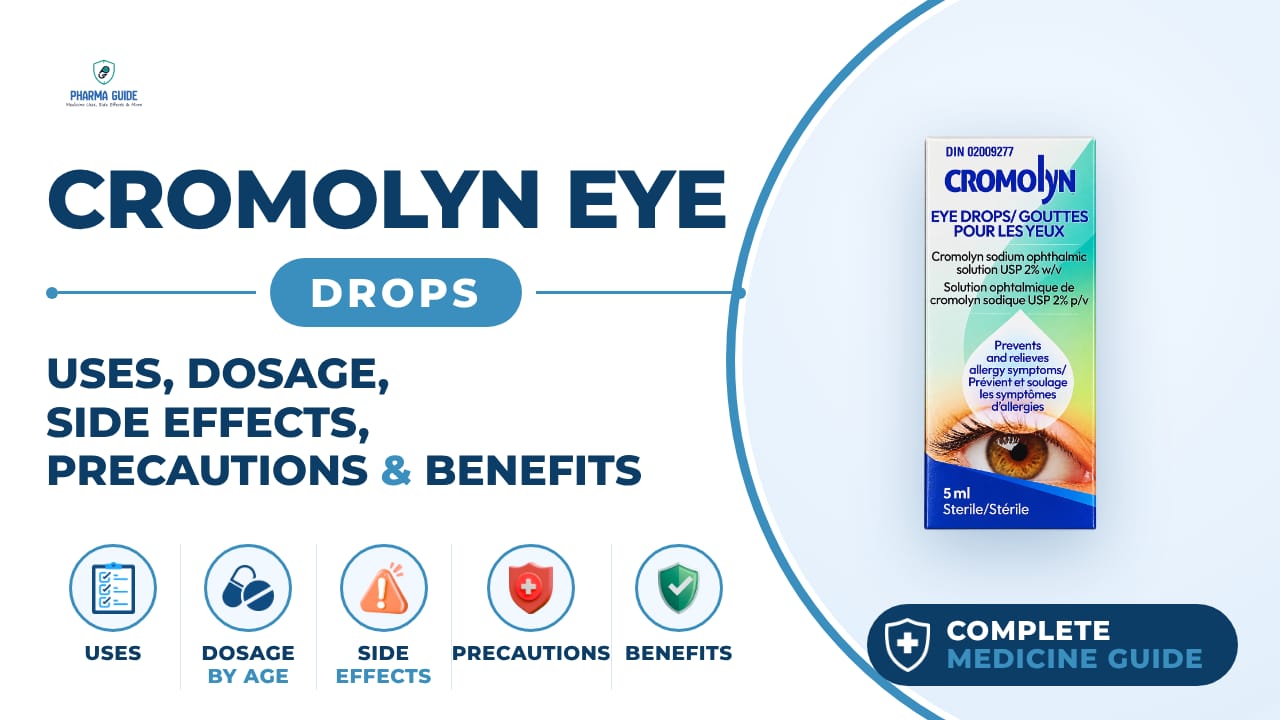
Cromolyn Eye Drops: Uses, Dosage, Side Effects, Precautions and Alternates
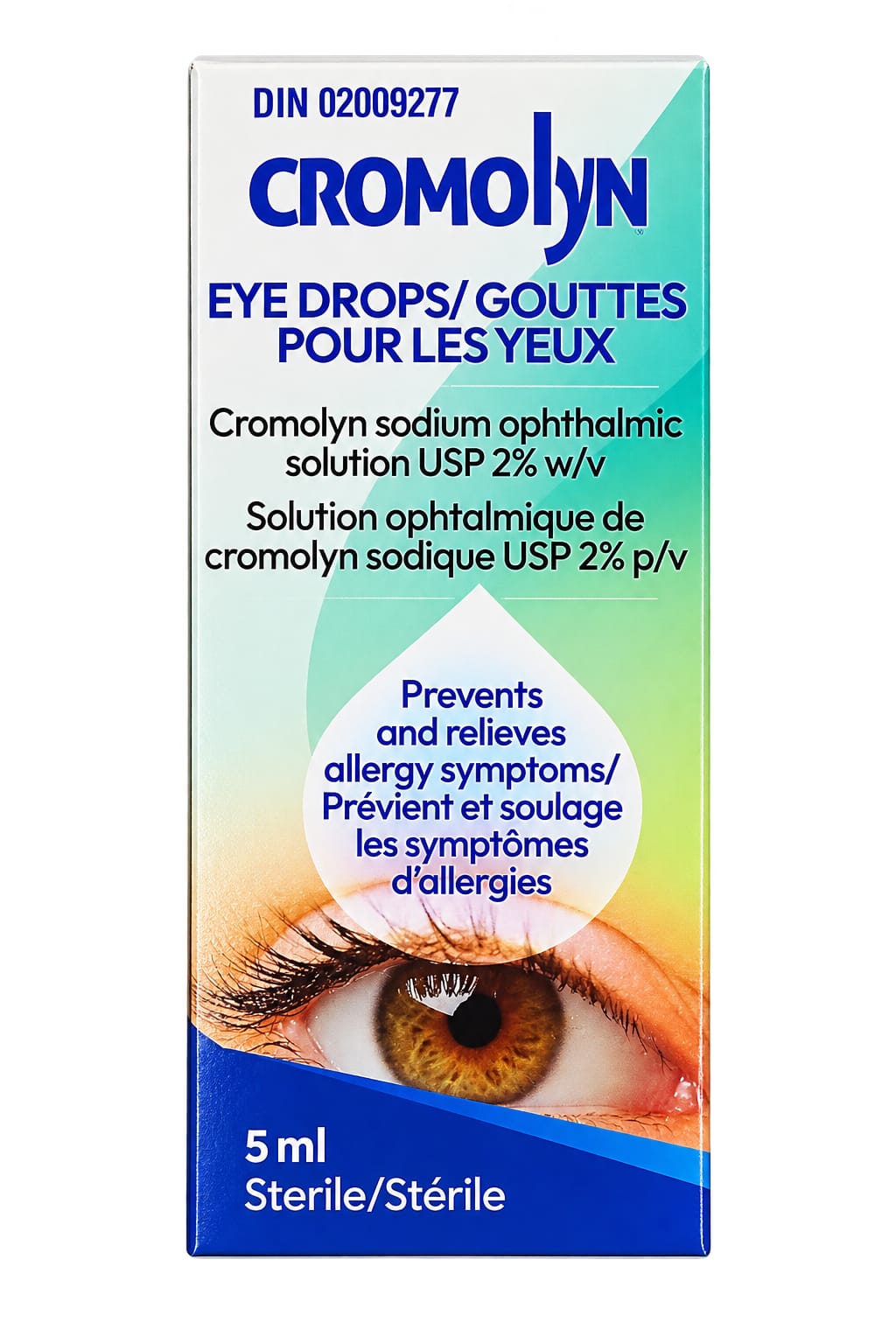
| Generic name | Cromolyn Sodium (Sodium Cromoglycate) |
|---|---|
| Drug class | Anti-allergic Agent (Mast Cell Stabilizer) |
| Forms | Ophthalmic solution in plastic dropper bottles (5 mL, 10 mL, or 12.5 mL) |
Quick overview
Cromolyn Eye Drops (Cromolyn Sodium, also known as Sodium Cromoglycate) is a non-prescription eye medicine belonging to the anti-allergic agent (mast cell stabilizer) drug class. It is used to prevent and relieve the eye symptoms of seasonal allergic conjunctivitis, including itching, tearing, and congestion. It is approved for use in adults and children 5 years of age and older.
What is Cromolyn Eye Drops
Cromolyn Eye Drops is a non-prescription eye medicine used to prevent and relieve the eye symptoms of seasonal allergic conjunctivitis.
Cromolyn Eye Drops uses
- Prevention of the signs and symptoms of seasonal allergic conjunctivitis (itching, tearing, congestion, etc.)
- Treats vernal conjunctivitis
- Treats vernal keratoconjunctivitis
- Treats vernal keratitis
- Reduces eye itching
- Helps reduce tearing and redness
Benefits of Cromolyn Eye Drops
- In most patients, symptoms like tearing, itching, and congestion improve within 2-3 days of starting treatment
- With continued use, patients usually stay free from eye symptoms during allergy season
- Can reduce recurring allergic eye symptoms
- Has minimal systemic absorption
How Cromolyn Eye Drops works
During an allergic reaction, cells in the eyes called mast cells release substances that cause redness, itching, and watery eyes. This medicine acts on the mast cells to stop them from releasing those substances, helping prevent the release of allergy-triggering substances and stabilizing mast cells.
Cromolyn Eye Drops dosage
This medicine should only be used in adults and children 5 years of age and older. Apply the drops at regular intervals for the medicine to work best. Wash your hands before and after using the drops, and do not touch the dropper tip to your eyes or any other surface, to keep it clean. Replace the cap after each use.
Use the drops continually throughout your usual allergy season, even when you feel symptom-free, since this helps keep symptoms away. If you miss a dose, use it as soon as you remember; if it is almost time for your next dose, skip the missed one and do not double up. Ask a healthcare professional for guidance if you are unsure how to apply the drops to your own eyes or a child's eyes.
To use: tilt your head back, gently pull down the lower eyelid, look up, place the drops in the pouch formed, then close your eyes gently for a moment.
| Age group | Dose |
|---|---|
| Under 4 years | Safety and effectiveness are not established |
| 4–11 years | 1–2 drops in each affected eye, 4–6 times daily at regular intervals |
| 12–17 years | 1–2 drops in each affected eye, 4–6 times daily |
| 18–64 years | 1–2 drops in each affected eye, 4–6 times daily |
Available forms and strengths
Ophthalmic solution in plastic dropper bottles (5 mL, 10 mL, or 12.5 mL)
Side effects of Cromolyn Eye Drops
Common
- Stinging or burning in the eye right after applying the drops
- Watery, itchy eyes
- Dryness around the eyes
- Puffy eyes
- Eye irritation
- Sties (infection of an oil gland in the eyelid)
Serious
- Eye pain
- Changes in vision
- Pain when exposed to light
- Redness or irritation of the eye that is severe or sudden
- Excessive or milky (non-clear) discharge from the eye
- Abnormal pupils
- Condition that worsens or does not improve within 72 hours
- Signs of a serious allergic reaction such as skin rash, itching, hives, or swelling of the face, lips, tongue, or throat
Warnings and precautions
- Do not use this medicine to treat an eye injury or eye infection.
- Do not wear soft contact lenses while using this medicine.
- Do not use this medicine along with any other eye treatment unless your doctor tells you to.
- Keep the medicine away from direct sunlight and throw away the bottle 4 weeks after opening it.
- Do not use the drops if the solution changes color or becomes cloudy.
- If you are pregnant or planning to become pregnant, talk to your doctor before using this medicine. There have been no reports so far of harm to the mother or baby, but caution is still advised.
- It is not known if this medicine passes into breast milk, so caution is advised while breastfeeding.
- No routine kidney-specific dose adjustment is established. No routine liver-specific dose adjustment is generally required. No important direct interaction with alcohol is established.
- Temporary blurred vision or eye irritation after application may affect driving until vision clears.
Storage
- Store between 15°C and 30°C
- Protect from light
- Discard the opened bottle after 4 weeks
- Keep out of reach and sight of children
- Bring unused and expired prescription drugs to your local pharmacist for proper disposal
When to see a doctor
- Contact a doctor right away if you have eye pain, changes in vision, pain when exposed to light, redness of the eye, excessive discharge, abnormal pupils, or if your condition gets worse or does not improve within 72 hours.
- If you think you or someone you are caring for has used too much of this medicine, contact a healthcare professional, hospital emergency department, or your regional poison control center right away, even if there are no symptoms.
- Seek medical help right away if you have signs of a serious allergic reaction, such as skin rash, itching, hives, or swelling of the face, lips, tongue, or throat.
Alternatives
- Olopatadine eye drops
- Ketotifen eye drops
- Azelastine eye drops
Watch the video
FAQs
What is Cromolyn Eye Drops used for?
It is used to prevent and relieve the eye symptoms of seasonal allergic conjunctivitis, including itching, tearing, and congestion, and is also used for vernal conjunctivitis, vernal keratoconjunctivitis, and vernal keratitis.
How does Cromolyn Eye Drops work?
It acts on mast cells in the eyes to stop them from releasing substances that cause redness, itching, and watery eyes during an allergic reaction, helping stabilize mast cells and prevent symptom-causing substances from being released.
What is the dosage of Cromolyn Eye Drops for children and adults?
For ages 4 and older, the typical dose is 1-2 drops in each affected eye, 4-6 times daily at regular intervals. Safety and effectiveness are not established for children under 4 years.
What are the common side effects of Cromolyn Eye Drops?
Common side effects include stinging or burning right after applying the drops, watery or itchy eyes, dryness around the eyes, puffy eyes, eye irritation, and sties.
Can I wear contact lenses while using Cromolyn Eye Drops?
No, you should not wear soft contact lenses while using this medicine.
General information, not medical advice
Your prescriber and the leaflet in your pack know your situation. This page does not.
- Follow your prescriber and the leaflet
- Don't start, stop, or change a dose on your own
- Doses and warnings differ by country and product
Sources
Video
Related medicines

Injectafer Injection: Uses, Dosage, Side Effects, Precautions and Alternates
Iron products
Injectafer (ferric carboxymaltose) treats iron deficiency anemia and heart failure-related iron deficiency via IV. Learn uses, dosage, side effects, and

Gliclazide Tablet: Uses, Dosage, Side Effects, Precautions and Alternates
Sulfonylurea (hypoglycemic/antidiabetic agent)
Gliclazide Tablet is a sulfonylurea for type 2 diabetes that boosts insulin release. Learn about dosage, side effects, warnings, and precautions.