
Safety
General information, not medical advice
Your prescriber and the leaflet in your pack know your situation. This page does not.
- Follow your prescriber and the leaflet
- Don't start, stop, or change a dose on your own
- Doses and warnings differ by country and product
Crotamiton Cream: Uses, Dosage, Side Effects, Precautions and Alternates
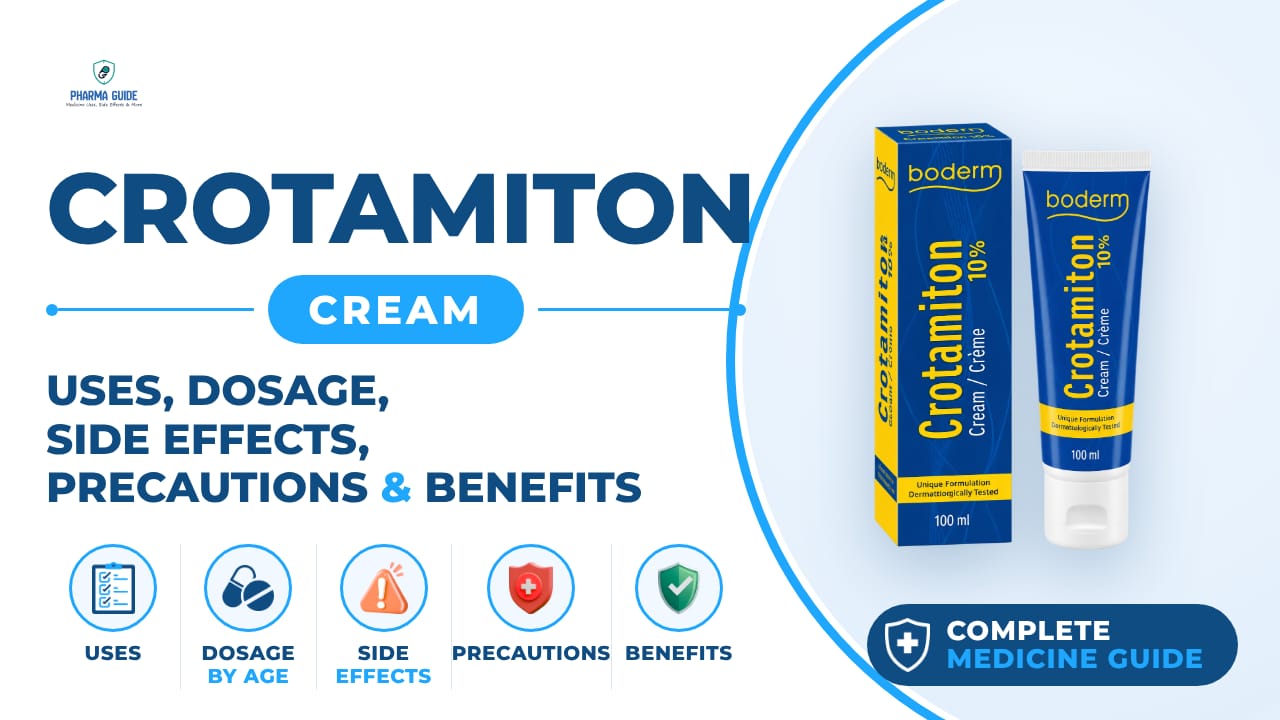
| Generic name | Crotamiton |
|---|---|
| Drug class | Scabicide and antipruritic (anti-itch) agent |
| Forms | Cream, Lotion |

Quick overview
Crotamiton Cream (generic name: crotamiton) is a scabicide and antipruritic (anti-itch) agent applied to the skin. It is used to treat scabies, a skin infection caused by tiny mites, and to relieve itching from scabies and other itchy skin conditions such as dermatitis. It works by killing the mites that cause scabies and by helping to relieve itching, although the exact way it reduces itching is not fully understood. It comes as a cream or a lotion for use on the skin only.
What is Crotamiton Cream
Crotamiton is a medicine applied to the skin. It is used to treat scabies, a skin infection caused by tiny mites, and to relieve itching from scabies and other itchy skin conditions.
Crotamiton Cream uses
- Treating scabies infection
- Relieving itching from scabies
- Relieving itching and irritation from other itchy skin conditions such as dermatitis
Benefits of Crotamiton Cream
- Kills the mites that cause scabies
- Relieves itching and irritation of the skin
- Can provide relief from itching for several hours after each application
How Crotamiton Cream works
Crotamiton kills the mites that cause scabies and also helps relieve itching, although exactly how it reduces itching is not fully understood.
Crotamiton Cream dosage
Apply this cream only to the skin. Do not swallow it. For scabies, apply a thin layer over the whole body from the chin or neck down to the toes, including skin folds, creases, between fingers and toes, and under the soles of the feet. Trim fingernails short and work the cream under the nails, since mites can live there; if you use a toothbrush to do this, wrap it in paper and throw it away afterward instead of reusing it.
Do not wash off the first application; apply a second coat about 24 hours after the first. Change into freshly washed clothing and bedding the morning after treatment. Take a bath to remove the medicine about 48 hours after the last application.
For itching not related to scabies, gently massage a thin layer into the affected areas until it is absorbed, and repeat as needed or as directed by your doctor, usually a few times a day. If using a lotion form, shake well before use.
Dry your skin thoroughly after bathing or showering before applying the cream, and wash your hands before and after applying it. Avoid showering for several hours after application, as this may reduce how well the medicine works. Avoid using tight bandages or dressings over treated skin unless your doctor tells you to. Do not apply near the eyes, mouth, nose, or other mucous membranes, or on skin that is broken, raw, oozing, or very inflamed.
If you miss a dose, apply it as soon as you remember, unless it is nearly time for the next dose — in that case skip the missed one. Do not use double the amount to make up for it.
| Age group | Dose |
|---|---|
| Under 3 years | Only under medical supervision; maximum once daily |
| 3–17 years | Apply to affected areas 2–3 times daily for itching; for scabies, generally once daily for 3–5 days |
| 18–64 years | Apply to affected areas 2–3 times daily for itching; for scabies, once daily for 3–5 days |
| 65+ years | Same adult dosing; no specific age-based adjustment |
Available forms and strengths
- Cream
- Lotion
Side effects of Crotamiton Cream
Common
- Redness, itching, or irritation at the site where the cream is applied
- Skin rash
Serious
- Swelling of the mouth, face, lips, tongue, or throat
- Severe allergic reaction (breathing difficulty, severe dizziness, hives)
- Worsening skin irritation or new rash not present before use
Warnings and precautions
Use crotamiton only on the skin. Do not swallow it, and avoid getting it in your eyes, mouth, nose, or other mucous membranes, as this can cause irritation; rinse thoroughly with water if this happens by accident. For external use only; do not use internally.
Do not apply this cream to open wounds, oozing sores, or skin that is irritated, broken, swollen, weeping, affected by acute eczema, or severely inflamed, since this can increase the chance of side effects.
There isn't enough safety information to recommend crotamiton for children younger than 3 years old; it should only be used in this age group if a doctor prescribes it.
Do not use if you are allergic to crotamiton or any ingredient in the cream. Stop treatment if severe irritation, rash, or allergic reaction develops.
Crotamiton should only be used during pregnancy if your doctor decides it is necessary, because there isn't enough safety information about its effects in pregnancy. Talk to your doctor before using crotamiton while breastfeeding, since there isn't enough information to know if it's safe for your baby; avoid applying to the nipple area while breastfeeding.
It isn't known whether crotamiton interacts with alcohol, so check with your doctor before drinking alcohol while using this medicine.
Genital itching should be treated with medical supervision. Some ingredients may cause contact dermatitis, burning, stinging, or delayed allergic reactions.
Avoid smoking and naked flames while using the product. Clothing, bedding, or dressings contaminated with the cream can present a fire hazard.
Tell your doctor about any other creams or topical medicines you are using, as crotamiton may interact with them. Do not use more cream, or use it more often, than your doctor recommends.
Keep out of reach of children.
Storage
- Store in a closed container at room temperature (about 20 to 25°C / 68 to 77°F), away from heat, moisture, and direct light.
- Keep from freezing.
- Keep out of reach of children and pets.
- Do not keep outdated or unwanted medicine; take it to a pharmacy for safe disposal.
When to see a doctor
- Get emergency medical help right away if you notice signs of an allergic reaction, such as skin rash, itching or swelling of the face, tongue, or throat, severe dizziness, or trouble breathing.
- If you accidentally swallow this medicine, get emergency medical help immediately.
- Stop using the cream and speak with a doctor or pharmacist if your skin condition gets worse or you develop a new allergic-type rash.
Alternatives
- Permethrin 5% cream
- Sulfur 5–10% ointment
- Crotamiton 10% lotion
Watch the video
FAQs
What is Crotamiton Cream used for?
It is used to treat scabies, a skin infection caused by tiny mites, and to relieve itching from scabies and other itchy skin conditions such as dermatitis.
How does Crotamiton Cream work?
It kills the mites that cause scabies and also helps relieve itching, although exactly how it reduces itching is not fully understood.
How do you apply Crotamiton Cream for scabies?
Apply a thin layer over the whole body from the chin or neck down to the toes, including skin folds, creases, between fingers and toes, and under the soles of the feet. Do not wash off the first application; apply a second coat about 24 hours later, then bathe to remove the medicine about 48 hours after the last application.
What are the common side effects of Crotamiton Cream?
Common side effects include redness, itching, or irritation at the application site, and skin rash.
Can Crotamiton Cream be used during pregnancy or breastfeeding?
It should only be used during pregnancy if a doctor decides it is necessary, and you should talk to your doctor before using it while breastfeeding, avoiding the nipple area.
General information, not medical advice
Your prescriber and the leaflet in your pack know your situation. This page does not.
- Follow your prescriber and the leaflet
- Don't start, stop, or change a dose on your own
- Doses and warnings differ by country and product
Sources
Video
Related medicines

Injectafer Injection: Uses, Dosage, Side Effects, Precautions and Alternates
Iron products
Injectafer (ferric carboxymaltose) treats iron deficiency anemia and heart failure-related iron deficiency via IV. Learn uses, dosage, side effects, and

Gliclazide Tablet: Uses, Dosage, Side Effects, Precautions and Alternates
Sulfonylurea (hypoglycemic/antidiabetic agent)
Gliclazide Tablet is a sulfonylurea for type 2 diabetes that boosts insulin release. Learn about dosage, side effects, warnings, and precautions.