
Safety
General information, not medical advice
Your prescriber and the leaflet in your pack know your situation. This page does not.
- Follow your prescriber and the leaflet
- Don't start, stop, or change a dose on your own
- Doses and warnings differ by country and product
Curam Tablet: Uses, Dosage, Side Effects, Precautions and Alternates
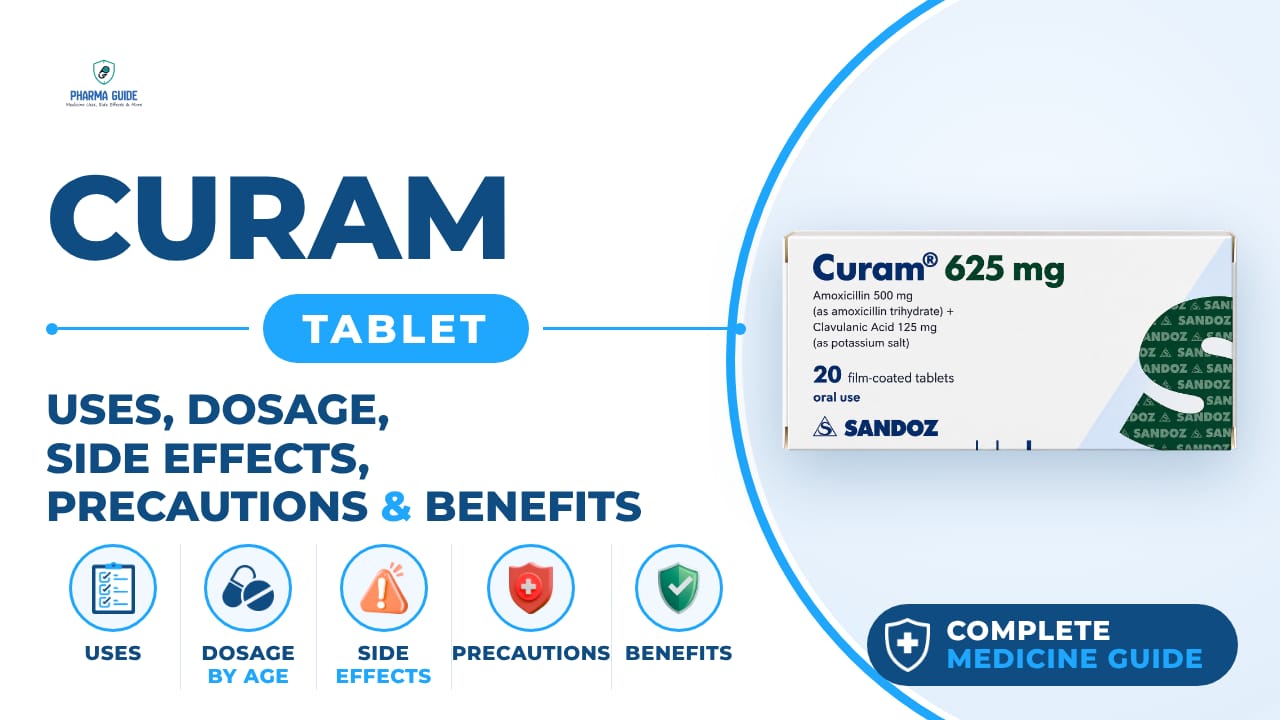
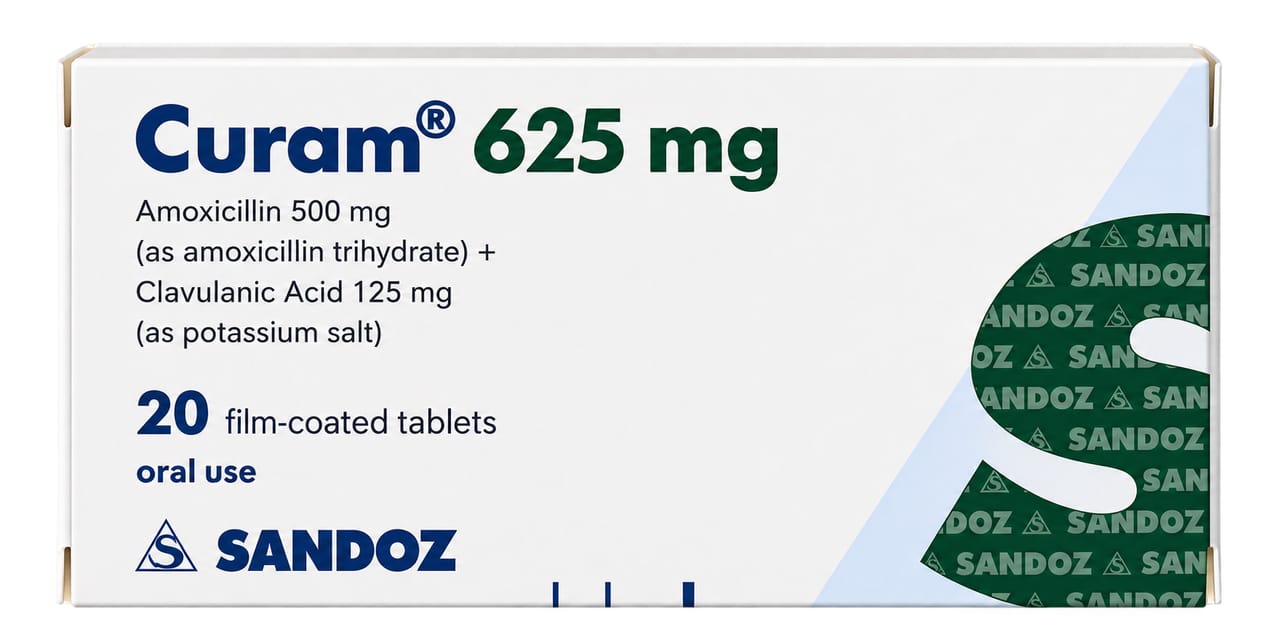
| Generic name | Amoxicillin + Clavulanic Acid |
|---|---|
| Drug class | Beta-lactamase inhibitors, Aminopenicillins (Penicillin antibiotic) |
| Forms | Tablet, Injection, Suspension, Syrup, Drops |
Quick overview
Curam Tablet is an antibiotic combination of Amoxicillin and Clavulanic Acid, used to treat infections caused by bacteria. It belongs to the Beta-lactamase inhibitor and Aminopenicillin (Penicillin antibiotic) drug classes. Clavulanic acid helps protect amoxicillin so it can work effectively against bacteria that might otherwise resist treatment. It is available in several forms, including tablets, injection, suspension, syrup, and drops.
What is Curam Tablet
Curam Tablet is an antibiotic combination containing Amoxycillin and Clavulanic acid. It is used to treat infections caused by bacteria.
Curam Tablet uses
- Ear infection
- Sinusitis
- Pharyngitis/Tonsilitis
- Skin and Soft tissue infections
- Urinary Tract Infection
- Lower Respiratory Tract Infection
- Bronchitis and pneumonia
- Bladder infections (cystitis)
- Bone and joint infections (osteomyelitis)
- Skin infections
Benefits of Curam Tablet
- Helps stop bacterial growth and supports recovery from infection symptoms
- Clavulanic acid enhances the activity of Amoxycillin in treating infections caused by susceptible bacteria
How Curam Tablet works
Curam contains amoxicillin and clavulanic acid. Amoxicillin is a penicillin-type antibiotic that stops bacteria from building their cell walls, which kills them. Clavulanic acid protects amoxicillin from being broken down by certain bacteria, making the antibiotic more effective against germs that would otherwise resist it.
Curam Tablet dosage
Take with food or at the start of a meal, as this helps absorption and lowers the chance of an upset stomach. Swallow the tablet whole with a glass of water; do not crush, break, or chew it. Finish the full course of treatment even if you feel better after a few doses; stopping early may let the infection come back and become harder to treat. Space doses evenly throughout the day as directed by your doctor. Do not use leftover medicine for a future infection without consulting your doctor. Drink plenty of fluids such as water or juice while taking this medicine. According to one source, this medicine is not recommended for children below 12 years of age, though other sources describe pediatric suspension forms for younger children.
Use exactly as prescribed by your doctor or pharmacist.
Available forms and strengths
- Tablet
- Injection
- Suspension
- Syrup
- Drops
Side effects of Curam Tablet
Common
- Diarrhoea
- Nausea or vomiting
- Stomach pain
- Skin rash or itching
- Indigestion or flatulence
- Vaginal thrush
- Oral thrush (white, furry, sore tongue and mouth)
- Headache, dizziness, tiredness
- Altered sense of taste
- Change in colour of teeth (rare)
Serious
- Allergic skin reaction
- Joint pain
- Skin yellowing (jaundice)
- Easy bruising and bleeding
- Heavy menstrual bleeding
- Tooth discoloration
- Convulsions/seizures
- Painful intercourse
- Swelling of face, lips, eyelids, tongue, hands and feet
- Black or tarry stools
- Irregular heartbeat
- Severe watery or bloody diarrhoea
- Signs of liver problems such as yellowing of skin/eyes, dark urine, chest pain
- Fever, severe chills, sore throat or mouth ulcers (sign of low white blood cells)
- Flu-like symptoms with rash, fever, swollen glands (DRESS syndrome)
- Chest pain (possible sign of Kounis syndrome)
- Severe skin reactions with blistering or target-like rash
Warnings and precautions
- This medicine can cause a moderate to severe allergic reaction, especially in people already known to be allergic to antibiotics. Tell your doctor right away if you notice any allergic reaction.
- This medicine can cause diarrhoea because it may kill helpful bacteria in your gut. Get emergency help if the diarrhoea is severe, watery, or bloody.
- Don't take this medicine unless a bacterial infection is confirmed or strongly suspected, as unnecessary use can contribute to antibiotic resistance.
- This medicine should not be given to children under 12 years old, according to one source.
- This medicine can make birth control pills less effective, so an additional method of contraception may be needed.
- People with glandular fever (mononucleosis) may develop a skin rash after several days of treatment with this medicine, so it may not be suitable for them.
- Do not take this medicine if you have cholestasis or a history of liver problems linked to it or similar antibiotics.
- This medicine is advisable during pregnancy only if clearly needed. Your doctor may prescribe it if the benefits outweigh the risks, and will discuss the risks and benefits with you.
- Small amounts of this medicine pass into breast milk, but these are not expected to harm the infant. Still, talk to your doctor before taking it while breastfeeding.
- People with kidney disease need special care when taking this medicine because of the risk of kidney-related harm. Doses may need to be adjusted based on your condition.
- Avoid this medicine if you have cholestasis or a history of liver problems linked to this medicine or other antibiotics. Regular monitoring of liver enzymes is recommended during and after treatment.
- The interaction between this medicine and alcohol is not well known. It's best to check with your doctor before drinking alcohol while on this medicine.
- This medicine may cause dizziness and sleepiness in some people. Avoid driving or operating machinery if you feel dizzy or sleepy. However, some sources note it does not usually affect the ability to drive.
Storage
- Store Below 30° C
- Store in a cool dry place where the temperature stays below 25°C
- Keep the tablets in the original container until it is time to take them
- Store it in a cool dry place away from moisture, heat or sunlight; do not store in the bathroom, near a sink, in the car, or on window sills
- Keep it where young children cannot reach it
- If you no longer need to use this medicine or it is out of date, take it to any pharmacy for safe disposal
- Do not use this medicine after the expiry date
When to see a doctor
- Get emergency medical help if you notice signs of a serious allergic reaction, such as skin rash, itching or swelling of the face, tongue or throat, severe dizziness, or trouble breathing.
- Stop taking this medicine and tell your doctor immediately if you develop an itchy rash, or swelling of your face, throat, or tongue, or have difficulty breathing.
- Call your doctor right away, or go to the emergency department, if you get severe diarrhoea or stomach cramps, even if this happens several weeks after you stop taking the medicine.
- Tell your doctor if you notice yellowing of the skin or eyes, chest pain, or dark-coloured urine, as this may be a sign of liver problems, which can occur even weeks after stopping the medicine.
- Get medical attention right away if you notice a sore white mouth or tongue, or vaginal itching or discharge, which may be signs of a fungal infection.
- If you think you or someone else has taken too much of this medicine, contact your doctor or go to the emergency department right away, even if there are no symptoms.
Alternatives
- Amoxicillin
- Cefuroxime
- Azithromycin
Watch the video
FAQs
What is Curam Tablet used for?
Curam Tablet is used to treat bacterial infections such as ear infections, sinusitis, pharyngitis/tonsillitis, skin and soft tissue infections, urinary tract infections, lower respiratory tract infections, bronchitis, pneumonia, bladder infections, and bone and joint infections.
How should Curam Tablet be taken?
It should be taken with food or at the start of a meal to aid absorption and reduce stomach upset. Swallow the tablet whole with water without crushing, breaking, or chewing it, and complete the full course even if you feel better early.
What are the common side effects of Curam Tablet?
Common side effects include diarrhoea, nausea or vomiting, stomach pain, skin rash or itching, indigestion, vaginal or oral thrush, headache, dizziness, tiredness, and altered sense of taste.
Can Curam Tablet be taken during pregnancy or breastfeeding?
It is advisable during pregnancy only if clearly needed, and your doctor will weigh the benefits and risks. Small amounts pass into breast milk, but these are not expected to harm the infant; still, consult your doctor before use while breastfeeding.
Is Curam Tablet safe for children?
According to one source, this medicine is not recommended for children below 12 years of age, though other sources describe pediatric suspension forms for younger children.
General information, not medical advice
Your prescriber and the leaflet in your pack know your situation. This page does not.
- Follow your prescriber and the leaflet
- Don't start, stop, or change a dose on your own
- Doses and warnings differ by country and product
Sources
- https://www.practo.com/medicine-info/curam-250-125-mg-tablet-40341
- https://www.truemeds.in/medicine/curam-500125-mg-tablet-10-tm-tacr1-009978
- https://www.vinmec.com/eng/blog/uses-of-curam-tab-625mg-en
- https://medlineplus.gov/druginfo/meds/a685024.html
- https://www.nhs.uk/medicines/amoxicillin/
- https://pubchem.ncbi.nlm.nih.gov/compound/Amoxicillin
- https://pubchem.ncbi.nlm.nih.gov/compound/Clavulanic-acid
- https://dailymed.nlm.nih.gov/dailymed/drugInfo.cfm?setid=909c85de-c076-4444-b63c-cd8bdc556f36
- https://www.medicines.org.uk/emc/product/9127/smpc#gref
Video
Related medicines

Injectafer Injection: Uses, Dosage, Side Effects, Precautions and Alternates
Iron products
Injectafer (ferric carboxymaltose) treats iron deficiency anemia and heart failure-related iron deficiency via IV. Learn uses, dosage, side effects, and

Gliclazide Tablet: Uses, Dosage, Side Effects, Precautions and Alternates
Sulfonylurea (hypoglycemic/antidiabetic agent)
Gliclazide Tablet is a sulfonylurea for type 2 diabetes that boosts insulin release. Learn about dosage, side effects, warnings, and precautions.