
Safety
General information, not medical advice
Your prescriber and the leaflet in your pack know your situation. This page does not.
- Follow your prescriber and the leaflet
- Don't start, stop, or change a dose on your own
- Doses and warnings differ by country and product
Cutivate Cream: Uses, Dosage, Side Effects, Precautions and Alternates
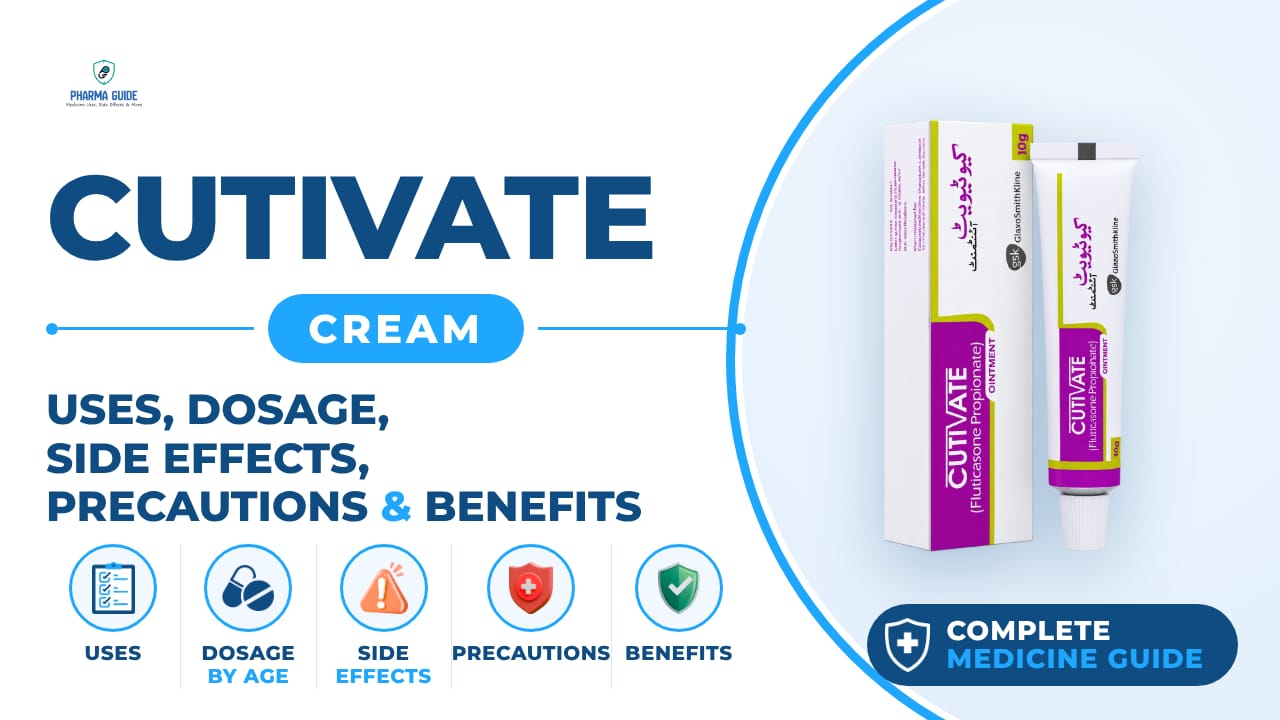
| Generic name | Fluticasone Propionate |
|---|---|
| Drug class | Topical corticosteroid (medium potency) |
| Forms | Cream |
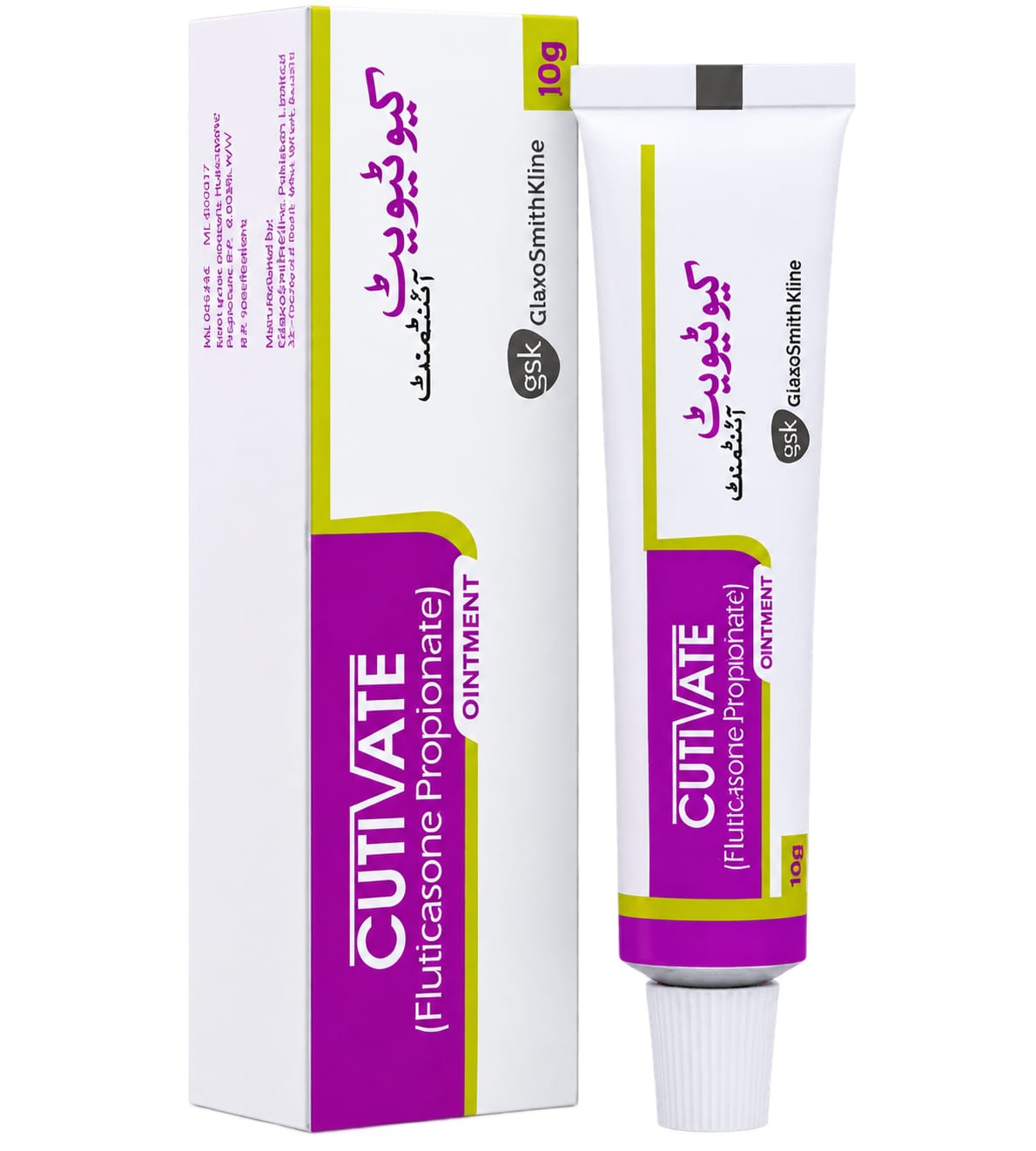
Quick overview
Cutivate Cream contains fluticasone propionate, a medium potency topical corticosteroid applied to the skin. It is used to calm inflamed, itchy skin conditions such as eczema, psoriasis, and dermatitis. The cream works by reducing inflammation, redness, swelling, and itching in the affected areas. It is available as a prescription cream for use in adults and children aged 3 months and older, under medical supervision.
What is Cutivate Cream
Cutivate Cream is a prescription skin cream containing fluticasone propionate, a steroid medicine applied to the skin. It is used to calm inflamed, itchy skin conditions.
Cutivate Cream uses
- Eczema (atopic and contact dermatitis)
- Psoriasis involving localized plaques
- Seborrhoeic dermatitis
- Irritant and allergic contact dermatitis
- Lichen planus
- Neurodermatitis
- Prurigo nodularis
- Discoid lupus erythematosus as adjunctive therapy
- Insect bite reactions with inflammation
Benefits of Cutivate Cream
- Reduces inflammation, redness, swelling, and itching in affected skin areas
- Helps provide relief from symptoms of various skin disorders that respond to corticosteroid therapy
How Cutivate Cream works
Cutivate contains fluticasone propionate, a steroid that reduces inflammation by blocking substances in the skin that cause redness, swelling, and itching. It attaches strongly to steroid receptors in the skin to produce this calming effect.
Cutivate Cream dosage
Apply a thin layer to the affected skin areas once or twice daily, or as prescribed by your doctor. Gently rub in until absorbed. Do not use occlusive dressings (airtight coverings) unless your doctor tells you to. Do not use on the face, underarms, or groin areas unless your doctor tells you to. Avoid contact with the eyes. Wash your hands after applying, unless your hands are the area being treated. Do not use in the diaper area on infants, since diapers or plastic pants can act like an occlusive covering. Stop use once your skin condition is under control. If there is no improvement within about 2 weeks, check with your doctor for reassessment. May be used in adults and children 3 months of age or older, under medical supervision.
| Age group | Dose |
|---|---|
| Under 3 months | Not established / not recommended |
| 3 months–17 years | Atopic dermatitis: thin layer once or twice daily. Other conditions: twice daily, only as directed by a doctor |
| 18–64 years | Atopic dermatitis: thin layer once or twice daily. Other responsive dermatoses: twice daily |
| 65+ years | Same as adults: thin layer once or twice daily for atopic dermatitis or twice daily for other responsive dermatoses |
Available forms and strengths
- Cream
Side effects of Cutivate Cream
Common
- Burning sensation at application site
- Dryness
- Itching
- Skin irritation
- Numbness of fingers
- Skin thinning (with prolonged use)
- Folliculitis (inflammation of hair follicles)
- Skin redness
- Hives or rash
- Excessive hair growth
Serious
- Signs of adrenal gland problems (such as ongoing tiredness, muscle weakness, poor appetite, weight loss, belly pain)
- Skin infections (redness, swelling, pain, pus, or symptoms that don't improve after 2 weeks)
- Severe allergic reaction (swelling, throat tightness, hives, trouble breathing)
- Pustular psoriasis (raised bumps with pus under the skin, especially in people with psoriasis)
- Signs of high blood sugar (increased thirst, hunger, urination, tiredness)
- Cushing syndrome (weight gain and rounding of the face)
- Vision changes
Warnings and precautions
- Do not use this cream if you are allergic to fluticasone propionate or any of its ingredients.
- Do not use on skin with untreated bacterial, viral, or fungal infections.
- Do not use this cream to treat rosacea or perioral dermatitis (a rash around the mouth).
- Do not cover the treated skin with bandages or airtight dressings unless your doctor tells you to, as this increases how much medicine your body absorbs.
- Using too much cream, using it for too long, or applying it over large areas of skin can lead your body to absorb more medicine than intended, which can affect your adrenal gland and hormone levels.
- Children may absorb more of this medicine relative to their body size than adults, raising their risk of side effects.
- Do not use this medicine on infants under 3 months of age without medical supervision, and do not use it in the diaper area.
- This cream contains an ingredient that can release small amounts of formaldehyde, which may cause allergic reactions or irritation in some people.
- Do not stop using this medicine suddenly after long-term daily use without talking to your doctor, as this can cause withdrawal symptoms.
- Cutivate should only be used during pregnancy if your doctor decides the benefit is worth the possible risk to the baby. Talk to your doctor before use if you are pregnant or planning to become pregnant.
- It isn't known if this medicine passes into breast milk in amounts that could affect a nursing baby, so caution is advised. Talk to your doctor if you are breastfeeding.
- This cream is applied to the skin, so it is unlikely to affect the kidneys, but tell your doctor if you have kidney problems before using it.
- Since this is a skin cream, it is unlikely to affect the liver, but people with liver problems should check with their doctor before use, especially since liver failure can raise the risk of the medicine being absorbed into the body.
- There is no known interaction between this topical cream and alcohol, but you can ask your doctor about alcohol use if you have concerns.
- This medicine is not expected to affect your ability to drive or operate machinery, though some people report feeling lightheaded.
Storage
- Store in a cool, dry place below 30°C
- Protect from direct sunlight
- Keep out of reach of children
When to see a doctor
- Contact your doctor right away if you notice signs of a skin reaction or infection, such as redness, itching, rash, hives, swelling, or tenderness.
- Seek medical advice if you have symptoms of adrenal or hormone withdrawal, such as long-term tiredness, muscle weakness, poor appetite, weight loss, or belly pain.
- Tell your doctor if your skin condition gets worse or does not improve after about 2 weeks of treatment.
- Get medical help if you notice signs of high blood sugar, such as being very thirsty or hungry, urinating often, feeling tired, or having blurry vision.
- Seek help right away for signs of a serious allergic reaction, such as swelling of the throat, trouble breathing, or widespread hives.
Alternatives
- Hydrocortisone 1% Cream
- Fluocinolone Acetonide Cream
- Triamcinolone Acetonide 0.1% Cream
Watch the video
FAQs
What is Cutivate Cream used for?
Cutivate Cream is used to treat inflamed, itchy skin conditions such as eczema, psoriasis, seborrhoeic dermatitis, contact dermatitis, lichen planus, neurodermatitis, prurigo nodularis, and insect bite reactions with inflammation.
How do you apply Cutivate Cream?
Apply a thin layer to the affected skin once or twice daily, or as prescribed, and gently rub it in until absorbed. Avoid occlusive dressings and areas like the face, underarms, or groin unless directed by your doctor, and wash your hands after applying unless they are the treated area.
Can Cutivate Cream be used on children?
Yes, it can be used in children 3 months of age or older under medical supervision, but it is not recommended for infants under 3 months and should not be used in the diaper area.
What are the common side effects of Cutivate Cream?
Common side effects include burning sensation at the application site, dryness, itching, skin irritation, numbness of fingers, skin thinning with prolonged use, folliculitis, skin redness, hives or rash, and excessive hair growth.
What precautions should be followed when using Cutivate Cream?
Avoid using it on untreated infections, rosacea, or perioral dermatitis, do not cover treated skin with airtight dressings unless told to, and do not stop long-term use suddenly without consulting your doctor, as this can cause withdrawal symptoms.
General information, not medical advice
Your prescriber and the leaflet in your pack know your situation. This page does not.
- Follow your prescriber and the leaflet
- Don't start, stop, or change a dose on your own
- Doses and warnings differ by country and product
Sources
Video
Related medicines

Injectafer Injection: Uses, Dosage, Side Effects, Precautions and Alternates
Iron products
Injectafer (ferric carboxymaltose) treats iron deficiency anemia and heart failure-related iron deficiency via IV. Learn uses, dosage, side effects, and

Gliclazide Tablet: Uses, Dosage, Side Effects, Precautions and Alternates
Sulfonylurea (hypoglycemic/antidiabetic agent)
Gliclazide Tablet is a sulfonylurea for type 2 diabetes that boosts insulin release. Learn about dosage, side effects, warnings, and precautions.