
Safety
General information, not medical advice
Your prescriber and the leaflet in your pack know your situation. This page does not.
- Follow your prescriber and the leaflet
- Don't start, stop, or change a dose on your own
- Doses and warnings differ by country and product
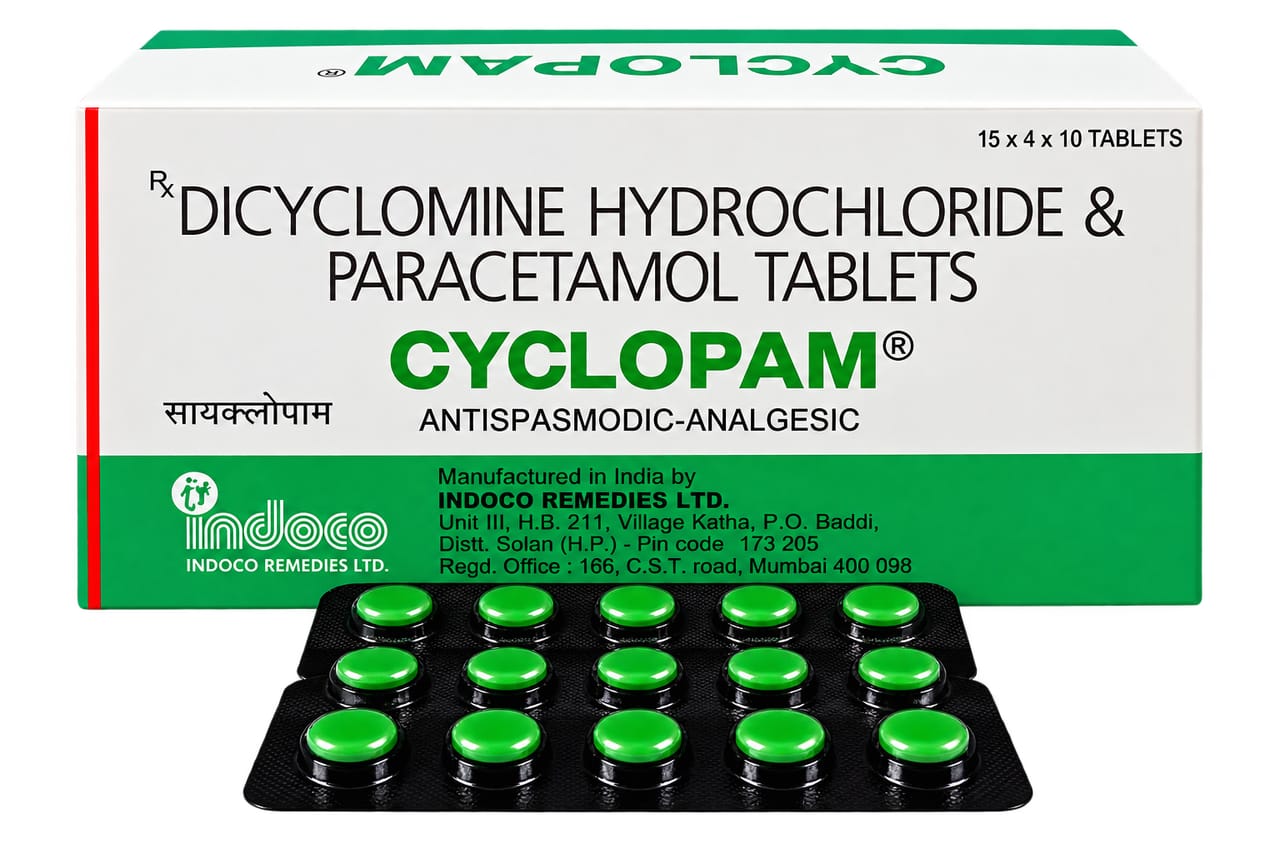
Cyclopam Tablet: Uses, Dosage, Side Effects, Precautions and Alternates

| Generic name | Dicyclomine Hydrochloride and Paracetamol |
|---|---|
| Drug class | Combination of muscarinic receptor antagonist (antispasmodic) and prostaglandin inhibitor (analgesic/antipyretic agents) |
| Forms | Tablet, Syrup |
Quick overview
Cyclopam Tablet is a combination medicine containing Dicyclomine Hydrochloride, an antispasmodic, and Paracetamol, a pain and fever reliever. It is used to relieve gastrointestinal spasms, abdominal pain, and menstrual cramps by relaxing gut muscles and reducing pain, fever, and inflammation. It is available as a tablet or syrup and should be taken exactly as directed by a doctor.
What is Cyclopam Tablet
Cyclopam tablet is a medicine that is a combination of dicyclomine and paracetamol (acetaminophen). It is commonly available in tablet or syrup form and needs to be taken as directed by the physician.
Cyclopam Tablet uses
- Relief of gastrointestinal smooth muscle spasms caused by conditions such as irritable bowel syndrome (IBS), biliary colic, renal colic, and intestinal colic
- Managing abdominal pain associated with functional bowel disorders
- Adjunct therapy alongside dietary and lifestyle changes for symptomatic relief in functional bowel disorders
- Used before diagnostic gastrointestinal procedures or surgeries to minimise spasms
- Treating smooth muscle spasms associated with gynaecologic conditions or spasmodic pain from surgical procedures
- Relief of menstrual pain (dysmenorrhea) by relaxing the smooth muscles in the uterus
Benefits of Cyclopam Tablet
- Relaxes gut muscles to reduce cramps and spasms
- Reduces pain, fever, and inflammation
- Provides relief from abdominal cramps, renal and biliary colic, and pain from gynaecologic or surgical conditions
How Cyclopam Tablet works
Cyclopam contains two ingredients that work together. Dicyclomine blocks a chemical called acetylcholine that causes muscles in the gut to tighten, helping relax the muscles and ease cramps and spasms. Paracetamol blocks chemicals called prostaglandins that cause pain, fever, and swelling, mainly acting in the brain and nervous system to raise the pain threshold and lower fever.
Cyclopam Tablet dosage
Cyclopam can be taken with or without food, usually as directed by the doctor, generally three times a day. Swallow the tablet whole with a full glass of water. If stomach upset occurs, it can be taken with food or antacids to minimise discomfort, though antacids may reduce how well it works so doses should be spaced apart. Dose adjustments may be needed for children and elderly patients. If a dose is missed, do not take a double dose; take the next dose at the regular time. Avoid alcohol as it can increase drowsiness and side effects. Generally, this medicine should not be used for longer than the prescribed duration. Tell your doctor about any allergies, heart problems, glaucoma, or liver or kidney disease, or if you are pregnant or breastfeeding. Be cautious with driving as it may cause drowsiness or dizziness. For ease of remembering, take it at around the same time every day. Do not stop using this medicine without consulting your doctor.
| Age group | Dose |
|---|---|
| Under 17 years | Safety and effectiveness are not established; no standard pediatric dose |
| 18–39 years | 0.5 mg twice daily initially |
| 40–64 years | 0.5 mg twice daily initially |
| 65–74 years | Usually 0.5 mg twice daily initially, with closer monitoring because complications from constipation may be more serious |
Available forms and strengths
- Tablet
- Syrup
Side effects of Cyclopam Tablet
Common
- Nausea or vomiting
- Dry mouth
- Blurred vision
- Skin rash
- Mouth ulcer
- Tiredness
- Dizziness
- Abdominal distension
- Confused state
- Cycloplegia (paralysis of the eye's focusing muscle)
- Delirium (acute mental status change)
- Dermatitis
- Erythema (reddening of the skin)
- Fatigue
- Hallucinations
- Insomnia
- Malaise
- Palpitation (abnormal heart rhythm)
- Stomach upset
- Bloating
- Headache
- Ringing or buzzing in the ears
- Weight gain
Serious
- Dizziness
- Dry mouth (xerostomia)
- Blurred vision
- Drowsiness (somnolence)
- Nervousness
- Weakness
- Shortness of breath
- Swelling of face, lips, eyelids, tongue, hands and feet
- Fast heartbeat
- Unusual bleeding or bruising
- Yellow coloured eyes or skin
- Difficult or painful urination
- Bloody and cloudy urine
Warnings and precautions
- Do not use if you are allergic to this medicine or any of its ingredients.
- Do not use if you have a blockage of the urinary tract or intestines.
- Do not use if you have glaucoma or increased pressure in the eye.
- Do not use if you have severe ulcerative colitis or myasthenia gravis.
- Not recommended for patients with severe liver or kidney disease due to risk of the drug building up and causing toxicity.
- Avoid in children under 6 months of age.
- Patients with an enlarged prostate or urinary retention problems must avoid this medicine.
- Long-term use may cause serious stomach and intestinal problems such as bleeding, ulcers, or perforation.
- May cause serious skin allergic reactions, which can rarely be fatal.
- Do not use this medicine to relieve pain after coronary artery bypass surgery.
- Cyclopam may be used during pregnancy; there is no known risk of fetal harm based on human data with short-term use. However, women are advised to use it only under medical supervision.
- Dicyclomine may pass into breast milk and may cause breathing problems in breastfed infants younger than 6 months, so tell your doctor if you are breastfeeding. Paracetamol has no known risk for breastfed infants based on human studies.
- Use with caution in patients with kidney disease, as the drug may build up in the body and increase the risk of side effects. Dose reduction and monitoring may be needed.
- Use with caution in patients with liver disease, as the drug may build up in the body, increasing the risk of toxicity. Because it contains paracetamol, it is generally not prescribed to patients with liver disorders.
- Avoid alcohol while taking this medicine, as it can increase drowsiness and the risk of stomach irritation.
- Be careful when driving or operating machinery, as this medicine can cause drowsiness, dizziness, or blurred vision.
Storage
- Cyclopam tablet needs to be stored in a cool and dry place away from direct sunlight at room temperature.
When to see a doctor
- Seek immediate medical help if you notice signs of a serious allergic reaction such as skin rash, itching or swelling (especially of the face, tongue, or throat), severe dizziness, or difficulty breathing.
- If you notice symptoms like blurred vision, dry mouth, nausea, confusion, dizziness, irregular heartbeat, or in severe cases seizures or breathing problems, seek immediate medical attention as this may be an overdose.
- Contact your doctor immediately if you notice any of the listed side effects.
- Talk to your doctor if diarrhea persists or you notice signs of dehydration such as decreased urination with dark-colored, strong-smelling urine.
Alternatives
- Dicyclomine
- Hyoscine butylbromide
- Mebeverine
Watch the video
FAQs
What is Cyclopam Tablet used for?
Cyclopam Tablet is used to relieve gastrointestinal smooth muscle spasms from conditions like IBS, biliary colic, renal colic, and intestinal colic, manage abdominal pain from functional bowel disorders, minimise spasms before GI procedures, and relieve menstrual pain by relaxing uterine muscles.
How does Cyclopam Tablet work?
Dicyclomine blocks acetylcholine, a chemical that causes gut muscles to tighten, helping relax muscles and ease cramps and spasms. Paracetamol blocks prostaglandins that cause pain, fever, and swelling, raising the pain threshold and lowering fever.
What is the dosage of Cyclopam Tablet?
Cyclopam is usually taken three times a day with or without food, swallowed whole with a full glass of water. For adults aged 18 to 64, the initial dose is typically 0.5 mg twice daily. It is not established for children under 17, and elderly patients aged 65-74 need closer monitoring.
What are the common side effects of Cyclopam Tablet?
Common side effects include nausea or vomiting, dry mouth, blurred vision, skin rash, tiredness, dizziness, abdominal distension, confusion, headache, bloating, and weight gain.
Can Cyclopam Tablet be used during pregnancy or breastfeeding?
Cyclopam may be used during pregnancy under medical supervision, as short-term human data show no known risk of fetal harm. Dicyclomine may pass into breast milk and cause breathing problems in infants younger than 6 months, so breastfeeding mothers should inform their doctor.
General information, not medical advice
Your prescriber and the leaflet in your pack know your situation. This page does not.
- Follow your prescriber and the leaflet
- Don't start, stop, or change a dose on your own
- Doses and warnings differ by country and product
Sources
Video
Related medicines

Injectafer Injection: Uses, Dosage, Side Effects, Precautions and Alternates
Iron products
Injectafer (ferric carboxymaltose) treats iron deficiency anemia and heart failure-related iron deficiency via IV. Learn uses, dosage, side effects, and

Gliclazide Tablet: Uses, Dosage, Side Effects, Precautions and Alternates
Sulfonylurea (hypoglycemic/antidiabetic agent)
Gliclazide Tablet is a sulfonylurea for type 2 diabetes that boosts insulin release. Learn about dosage, side effects, warnings, and precautions.