
Safety
General information, not medical advice
Your prescriber and the leaflet in your pack know your situation. This page does not.
- Follow your prescriber and the leaflet
- Don't start, stop, or change a dose on your own
- Doses and warnings differ by country and product
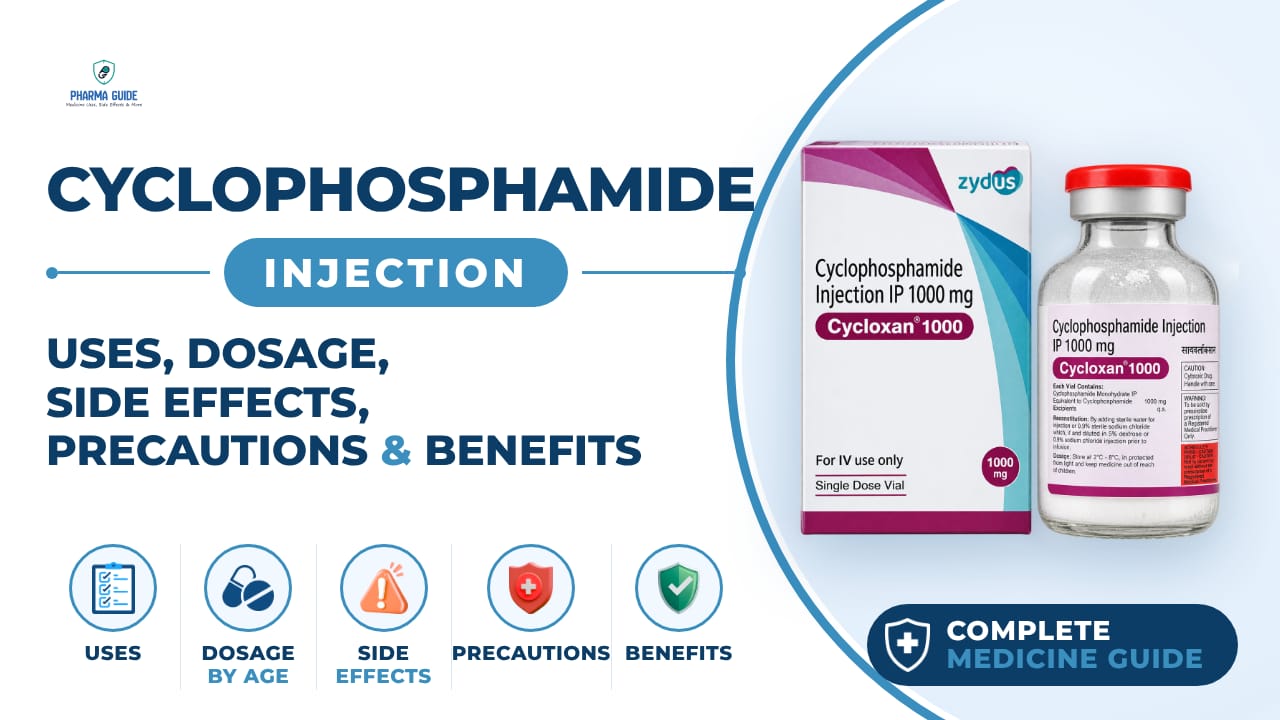
Cyclophosphamide Injection: Uses, Dosage, Side Effects, Precautions and Alternates
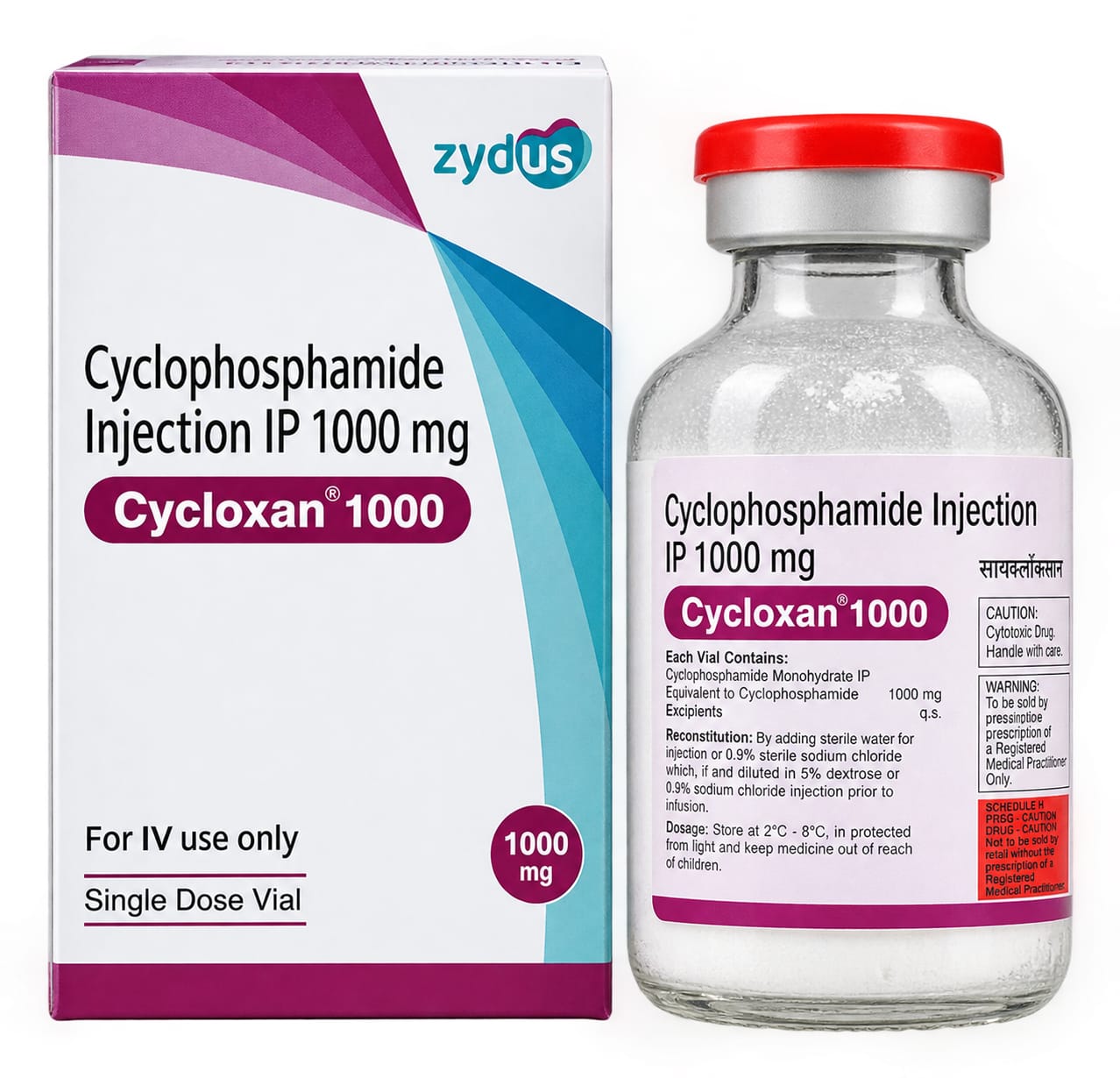
| Generic name | cyclophosphamide |
|---|---|
| Drug class | alkylating drug (antineoplastic agent related to nitrogen mustards) |
| Forms | Injection |
Quick overview
Cyclophosphamide Injection is a chemotherapy medicine given into a vein, belonging to a group of cancer medicines called alkylating agents. It is used to treat several types of cancer and certain immune-related kidney disease. The medicine works by damaging the DNA of fast-growing cells and by lowering immune system activity. It is associated with a range of common and serious side effects and requires careful monitoring during treatment.
What is Cyclophosphamide Injection
Cyclophosphamide Injection is a chemotherapy medicine given into a vein. It belongs to a group of cancer medicines called alkylating agents and is used to treat cancer and certain immune-related kidney disease. Its generic name is cyclophosphamide, and it is classed as an alkylating drug, an antineoplastic agent related to nitrogen mustards.
Cyclophosphamide Injection uses
- Hodgkin's disease and other lymphomas (lymphocytic lymphoma, mixed-cell type lymphoma, histiocytic lymphoma, Burkitt's lymphoma)
- Multiple myeloma
- Leukemias, including chronic lymphocytic leukemia, chronic granulocytic leukemia, acute myelogenous and monocytic leukemia, and acute lymphoblastic leukemia
- Mycosis fungoides (advanced disease)
- Neuroblastoma (disseminated disease)
- Cancer of the ovary (adenocarcinoma)
- Retinoblastoma
- Breast cancer
- Nephrotic syndrome (a kidney disease) in certain children
Benefits of Cyclophosphamide Injection
- Slows or stops the growth of cancer cells
- Can help manage certain kidney diseases by suppressing the immune system
- May be used alone or combined with other cancer drugs for added effect
How Cyclophosphamide Injection works
Once in the body, cyclophosphamide is changed into active forms that attach to and damage the DNA of fast-growing cells, such as cancer cells, stopping them from growing and multiplying. It also lowers the activity of the immune system.
Cyclophosphamide Injection dosage
Cyclophosphamide Injection is given as an injection into a vein by a doctor or nurse in a hospital or clinic setting. It is usually given in the morning to help lower the risk of bladder problems. Drink extra fluids and empty your bladder often, including at least once during the night, during treatment to help protect your kidneys and bladder. Your doctor may delay or adjust your treatment schedule based on how your body responds and any side effects you have. If you miss a dose, contact your doctor right away for a new dosing schedule.
| Age group | Dose |
|---|---|
| Under 18 years | Not fixed |
| 18–60 years | 500–1000 mg, once/day |
| 60+ years | 500–1000 mg, once/day |
Available forms and strengths
Injection
Side effects of Cyclophosphamide Injection
Common
- Nausea, vomiting, or diarrhea
- Loss of appetite or weight
- Stomach pain
- Hair loss
- Sores in the mouth or throat
- Changes in skin color
- Changes in color or growth of finger or toenails
- Fever, chills, fatigue
- Flushing, headache, increased sweating
- Dizziness
Serious
- Sore throat, fever, chills, or other signs of infection
- Poor or slow wound healing
- Black, tarry stools or other unusual bruising or bleeding
- Rash, hives, itching, or difficulty breathing or swallowing
- Shortness of breath; swelling of legs, ankles, or feet; fast, irregular, or pounding heartbeat; weight gain of more than 5 pounds in 24 hours
- New or worsening cough, chest pain, or shortness of breath
- Yellowing of the skin or eyes, extreme tiredness, nausea or vomiting, right-sided stomach pain, dark colored urine, decreased appetite (signs of liver problems)
- Pink or red colored urine or blood in the urine, or frequent, urgent, or painful urination (signs of bladder/urinary toxicity)
- Increased risk of developing other cancers later in life
Warnings and precautions
- This medicine can severely weaken the immune system, raising the risk of serious and sometimes fatal infections. Regular blood tests are needed to monitor for this.
- Bladder and kidney damage, including bleeding in the bladder, can occur and may be life-threatening. Drinking plenty of fluids helps lower this risk.
- Heart problems, including inflammation of the heart, fluid around the heart, irregular heartbeat, and heart failure, have occurred and can be fatal.
- Lung damage, including scarring and breathing failure, can occur during or after treatment.
- This medicine can increase the risk of developing a new cancer later in life.
- Serious liver disease affecting the small veins can occur and may be fatal.
- This medicine may cause permanent infertility in both men and women.
- Cyclophosphamide can affect wound healing, so tell your doctor or dentist about this medicine before any surgery.
- A serious condition causing low sodium levels and fluid buildup in the body can occur and may be fatal.
- This medicine can harm an unborn baby.
- Women and men who can have children should use effective birth control during treatment and for a period after finishing treatment, and should tell their doctor right away if pregnancy occurs.
- Do not breastfeed during treatment and for one week after the last dose, because the medicine passes into breast milk and can harm a nursing baby.
- People with severe kidney problems may need closer monitoring because the drug and its breakdown products can build up in the body and increase the risk of side effects.
- Severe liver problems can reduce how well the drug is converted into its active form, which may make it less effective.
- This injection contains alcohol, which can affect the brain and nervous system. This should be considered for people who need to avoid or limit alcohol.
- Because of the alcohol content and possible dizziness or vision changes, do not drive or use machinery right after receiving an infusion until you know how the medicine affects you.
Storage
- Store the vials refrigerated at 2°C to 8°C (36°F to 46°F)
- After first use, store a partially used multiple-dose vial in its original carton at 2°C to 8°C (36ºF to 46°F) for up to 28 days, then discard any unused portion
- Cyclophosphamide is a hazardous drug — follow special handling and disposal procedures
- Diluted solutions should be stored according to the time limits given by your pharmacy or healthcare provider for room temperature or refrigerated storage
When to see a doctor
- Get medical help right away if you notice pink or red colored urine, blood in the urine, or have frequent, urgent, or painful urination.
- Contact a healthcare professional immediately for new or worsening shortness of breath, cough, swelling of the ankles or legs, palpitations, rapid weight gain of more than 5 pounds in a day, dizziness, or loss of consciousness.
- Report any new or worsening breathing symptoms promptly, as they could signal lung damage.
- Monitor your temperature often and report any fever immediately, since this medicine can cause serious infections.
- Tell your doctor right away if you or your partner becomes pregnant during treatment.
- Seek care for signs of serious bleeding or clotting problems, such as black tarry stools or unusual bruising/bleeding.
- Seek care for signs of an allergic reaction such as rash, hives, itching, or difficulty breathing or swallowing.
- Seek care for yellowing of the skin or eyes, extreme tiredness, nausea or vomiting, right-sided stomach pain, dark urine, or decreased appetite, which can be signs of liver problems.
Alternatives
- Ifosfamide Injection
- Chlorambucil
- Azathioprine
Watch the video
FAQs
What is Cyclophosphamide Injection used for?
It is used to treat several cancers, including lymphomas, multiple myeloma, leukemias, mycosis fungoides, neuroblastoma, ovarian cancer, retinoblastoma, and breast cancer, as well as nephrotic syndrome (a kidney disease) in certain children.
How does Cyclophosphamide Injection work?
Once in the body, it is changed into active forms that attach to and damage the DNA of fast-growing cells, such as cancer cells, stopping them from growing and multiplying. It also lowers immune system activity.
Why is Cyclophosphamide Injection given in the morning?
It is usually given in the morning to help lower the risk of bladder problems, and patients are advised to drink extra fluids and empty their bladder often, including once during the night.
What are the serious side effects of Cyclophosphamide Injection?
Serious effects include severe infections, bladder and kidney damage with bleeding, heart problems, lung damage, liver disease, infertility, and an increased risk of developing other cancers later in life.
How should Cyclophosphamide Injection be stored?
Vials should be stored refrigerated at 2°C to 8°C. After first use, a partially used multiple-dose vial can be stored in its original carton at 2°C to 8°C for up to 28 days before any unused portion is discarded.
General information, not medical advice
Your prescriber and the leaflet in your pack know your situation. This page does not.
- Follow your prescriber and the leaflet
- Don't start, stop, or change a dose on your own
- Doses and warnings differ by country and product
Sources
- FDA prescribing information (accessdata.fda.gov, Dr. Reddy's Laboratories, revised 03/2025)
- DailyMed label, Cyclophosphamide injection (Eugia US LLC, revised 4/2025)
- MedlinePlus Drug Information: Cyclophosphamide Injection
- Mayo Clinic: Cyclophosphamide (oral route, intravenous route)
Video
Related medicines

Injectafer Injection: Uses, Dosage, Side Effects, Precautions and Alternates
Iron products
Injectafer (ferric carboxymaltose) treats iron deficiency anemia and heart failure-related iron deficiency via IV. Learn uses, dosage, side effects, and

Gliclazide Tablet: Uses, Dosage, Side Effects, Precautions and Alternates
Sulfonylurea (hypoglycemic/antidiabetic agent)
Gliclazide Tablet is a sulfonylurea for type 2 diabetes that boosts insulin release. Learn about dosage, side effects, warnings, and precautions.