
Safety
General information, not medical advice
Your prescriber and the leaflet in your pack know your situation. This page does not.
- Follow your prescriber and the leaflet
- Don't start, stop, or change a dose on your own
- Doses and warnings differ by country and product
Cyclophosphamide Tablet: Uses, Dosage, Side Effects, Precautions and Alternates
| Generic name | cyclophosphamide |
|---|---|
| Drug class | alkylating agent, antineoplastic |
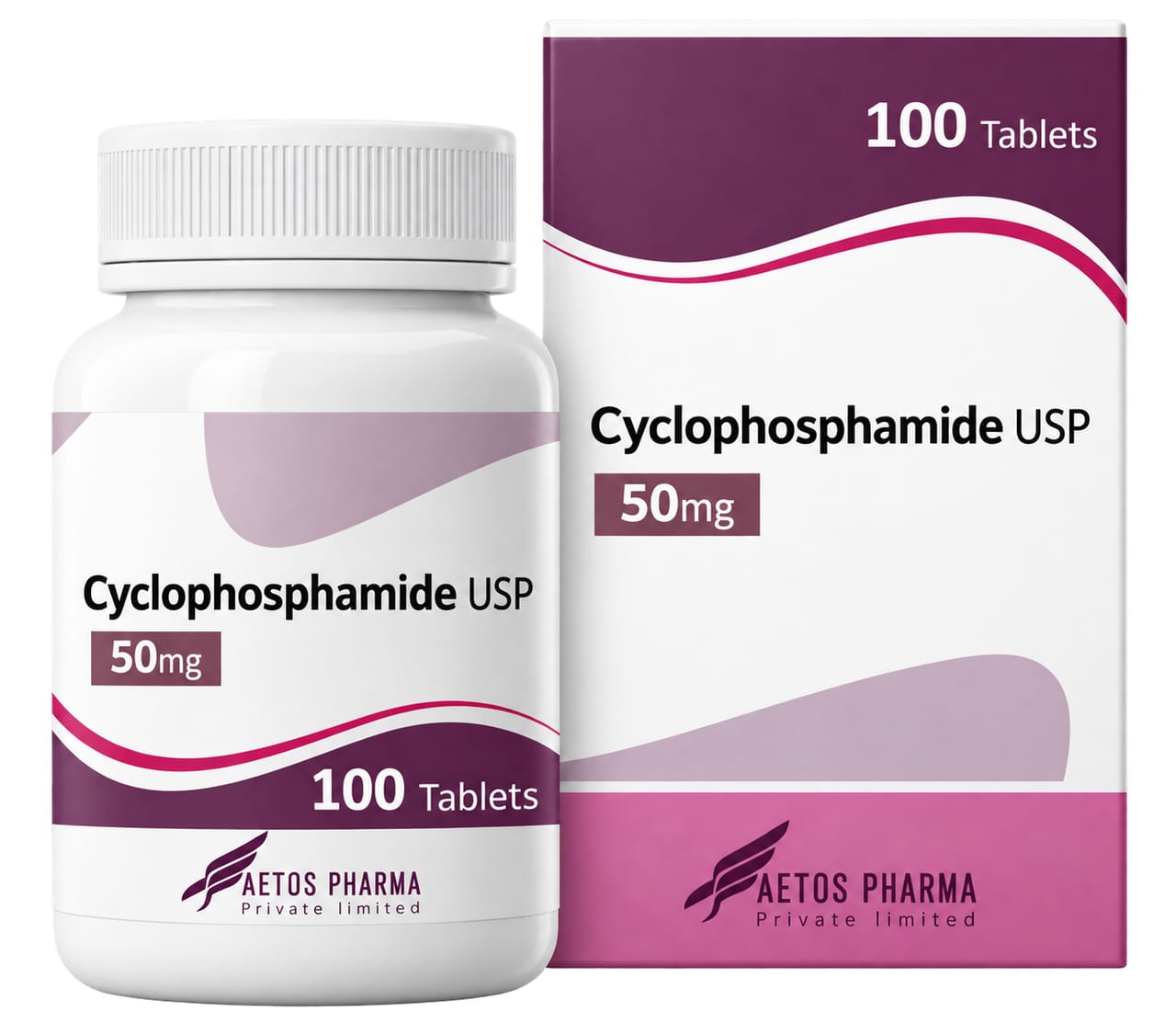
| Forms | Tablet (25 mg and 50 mg), Capsule (25 mg and 50 mg), Injection (powder for solution) |
Quick overview
Cyclophosphamide Tablet is a man-made anticancer medicine related to nitrogen mustards, classed as an alkylating agent and antineoplastic. It is used to treat certain cancers, including lymphomas, multiple myeloma, leukemias, and advanced mycosis fungoides, and is also used as an immune-suppressing medicine for certain kidney problems in children. It works by damaging the DNA of fast-growing cells or by calming an overactive immune system. It carries important risks, including effects on the bladder, blood cells, heart, lungs, and fertility, so it should be used exactly as prescribed.
What is Cyclophosphamide Tablet
Cyclophosphamide is a man-made anticancer medicine related to nitrogen mustards. It is also used as an immune-suppressing medicine for certain kidney problems in children.
Cyclophosphamide Tablet uses
- Malignant lymphomas, including Hodgkin's disease and Burkitt's lymphoma
- Multiple myeloma
- Leukemias such as chronic lymphocytic leukemia, chronic granulocytic leukemia, acute myelogenous and monocytic leukemia, and acute lymphoblastic leukemia in children
- Advanced mycosis fungoides
Benefits of Cyclophosphamide Tablet
- Can slow or stop the growth of certain cancers by damaging the DNA of fast-growing cells
- Can help children with minimal change nephrotic syndrome go into remission when steroids alone are not enough
- Can destroy or suppress rapidly dividing cancer cells
- Can be combined with other anticancer medicines
How Cyclophosphamide Tablet works
Cyclophosphamide is changed by the liver into active forms that attach to and cross-link the DNA inside fast-growing cells, including cancer cells. This stops the cells from multiplying. For kidney problems, it works by calming down an overactive immune system.
Cyclophosphamide Tablet dosage
Take this medicine in the morning with water. Swallow tablets whole; do not open, chew, split, or crush them. Caregivers should wear gloves when handling the tablets, and should wash their hands right away if they touch a broken tablet. Drink enough fluids and urinate often to help protect your bladder, as advised by your health care provider.
If you miss a dose of the tablet, take it as soon as you remember, but if it is almost time for your next dose, skip the missed dose and take your next dose as scheduled; do not take double doses.
Children generally have a similar safety profile to adults when taking this medicine. Elderly patients may be more sensitive to this medicine, so doctors usually start with a lower dose and adjust carefully.
| Age group | Dose |
|---|---|
| Children under 12 years | For malignant diseases: 1–5 mg/kg orally once daily, with the exact dose determined by the oncology team |
| 12–17 years | For malignant diseases: 1–5 mg/kg orally once daily, individualized according to treatment protocol and blood counts |
| 18–39 years | Usually 1–5 mg/kg orally once daily for malignant diseases |
| 40–64 years | Usually 1–5 mg/kg orally once daily, adjusted according to treatment response and toxicity |
Available forms and strengths
- Tablet (25 mg and 50 mg)
- Capsule (25 mg and 50 mg)
- Injection (powder for solution)
Side effects of Cyclophosphamide Tablet
Common
- Nausea and vomiting
- Loss of appetite
- Diarrhea
- Hair loss (hair usually grows back after treatment)
- Skin rash
- Mouth sores
- Changes in taste
- Fatigue
- Dizziness
- Headaches
- Fever
- Muscle aches
- Joint pain
- Bladder irritation
Serious
- Hemorrhagic cystitis (bleeding and inflammation of the bladder) and bladder fibrosis
- Severe drop in white blood cells, red blood cells, or platelets, raising the risk of infection, anemia, or bleeding
- Serious or fatal infections due to a weakened immune system
- Heart problems such as inflammation of the heart muscle, fluid around the heart, heart failure, or irregular heartbeat
- Lung scarring or inflammation that can cause breathing problems, sometimes years later
- Severe allergic (anaphylactic) reactions, which can be fatal
- Development of a second cancer, including leukemia or bladder cancer
- Liver disease, including veno-occlusive liver disease
- Low sodium levels in the blood, which can be life-threatening
- Wound healing problems
- Infertility or sterility, which may be permanent
- Harm to an unborn baby if used during pregnancy
Warnings and precautions
- Some people treated with this medicine have developed second cancers, especially of the bladder or blood/lymph system, sometimes years after stopping treatment.
- This medicine can cause bleeding and inflammation of the bladder, which can rarely be severe or fatal. Drinking plenty of fluids and urinating often can help prevent this.
- This medicine can harm the heart, especially at high doses, sometimes causing severe or fatal heart failure after just one dose.
- This medicine can severely weaken the immune system, leading to serious and sometimes fatal infections.
- Severe allergic reactions have occurred with this medicine, including some that were fatal.
- This medicine can affect fertility in both men and women, and the effect may not go away even after stopping treatment.
- People with a urinary tract blockage that makes it hard to urinate should not use this medicine.
- This medicine can cause fetal harm and has been linked to birth defects. Women who can become pregnant should avoid pregnancy while taking this medicine and should use effective birth control during and after treatment. Tell your health care provider right away if you become pregnant.
- This medicine passes into breast milk. You and your doctor need to decide whether you should stop breastfeeding or stop the medicine, based on how important the medicine is for your treatment.
- Special care and monitoring are needed if you have impaired kidney function, since this can increase the chance of side effects.
- Special care and monitoring are needed if you have impaired liver function, since this can increase the chance of side effects.
- It is not fully known how alcohol affects this medicine, but heavy drinking can weaken your immune response and make it harder for your body to fight cancer. Some liquid forms of this medicine contain alcohol, which can be a concern if you need to avoid alcohol.
- This medicine can affect your alertness or coordination. Do not drive or do activities that need alertness until you know how this medicine affects you.
Storage
- Store tablets at or below 25°C (77°F); tablets will withstand brief exposure to temperatures up to 30°C (86°F) but should be protected from temperatures above 30°C (86°F).
- Oral liquid preparations made from the injection form should be stored under refrigeration in glass containers and used within 14 days.
- Keep cyclophosphamide out of the reach of children.
- Caution should be exercised when handling and preparing bottles containing cyclophosphamide tablets; always wear gloves when handling them.
When to see a doctor
- Get emergency help right away if you have trouble breathing, wheezing, chest pain, or a racing heart, or swelling of the face, lips, mouth, tongue, or throat — these can be signs of a severe allergic reaction.
- Contact your health care provider right away if you notice blood in your urine, or urine that looks pink or red.
- Get help right away for signs of a blood disorder such as fever, shortness of breath, pale or yellowish skin, easy bruising or bleeding, frequent infections, unusual weakness, or fast or abnormal heartbeat.
- Seek emergency care for signs of heart problems, such as chest pain, dizziness or fainting, trouble breathing (especially while lying down), swelling in your feet or legs, sudden weight gain, or unusual tiredness.
- Tell your health care provider right away if you develop a cough, shortness of breath, fever, or chest pain, which could be signs of lung damage.
- Call your health care provider right away if you notice nausea, stomach pain, fever, unusual tiredness, itching, loss of appetite, light-colored stools, dark urine, or yellowing of the skin or eyes, which can be signs of liver problems.
- Call your health care provider or get emergency help right away if you have headache, drowsiness, muscle weakness or cramps, confusion, or seizures, which could be signs of dangerously low sodium levels.
- If you take too much of this medicine, get medical help right away or contact your local poison control center.
Alternatives
- Ifosfamide
- Chlorambucil
- Melphalan
Watch the video
FAQs
What is Cyclophosphamide Tablet used for?
It treats malignant lymphomas, multiple myeloma, various leukemias, and advanced mycosis fungoides, and is also used as an immune-suppressing medicine for certain kidney problems in children.
How should I take Cyclophosphamide Tablet?
Take it in the morning with water, swallowing tablets whole without opening, chewing, splitting, or crushing them. Drink enough fluids and urinate often to help protect your bladder, as advised by your health care provider.
What are the serious side effects of Cyclophosphamide Tablet?
Serious effects include hemorrhagic cystitis and bladder fibrosis, severe drops in blood cell counts, serious infections, heart problems, lung scarring, severe allergic reactions, second cancers, liver disease, low sodium levels, wound healing problems, and infertility.
What happens if I miss a dose of Cyclophosphamide Tablet?
Take the missed dose as soon as you remember, but if it is almost time for your next dose, skip the missed one and continue your regular schedule; do not take double doses.
Can Cyclophosphamide Tablet affect fertility?
Yes, it can affect fertility in both men and women, and the effect may not go away even after stopping treatment.
General information, not medical advice
Your prescriber and the leaflet in your pack know your situation. This page does not.
- Follow your prescriber and the leaflet
- Don't start, stop, or change a dose on your own
- Doses and warnings differ by country and product
Sources
Video
Related medicines

Injectafer Injection: Uses, Dosage, Side Effects, Precautions and Alternates
Iron products
Injectafer (ferric carboxymaltose) treats iron deficiency anemia and heart failure-related iron deficiency via IV. Learn uses, dosage, side effects, and

Gliclazide Tablet: Uses, Dosage, Side Effects, Precautions and Alternates
Sulfonylurea (hypoglycemic/antidiabetic agent)
Gliclazide Tablet is a sulfonylurea for type 2 diabetes that boosts insulin release. Learn about dosage, side effects, warnings, and precautions.