
Safety
General information, not medical advice
Your prescriber and the leaflet in your pack know your situation. This page does not.
- Follow your prescriber and the leaflet
- Don't start, stop, or change a dose on your own
- Doses and warnings differ by country and product
Cyramza Injection: Uses, Dosage, Side Effects, Precautions and Alternates
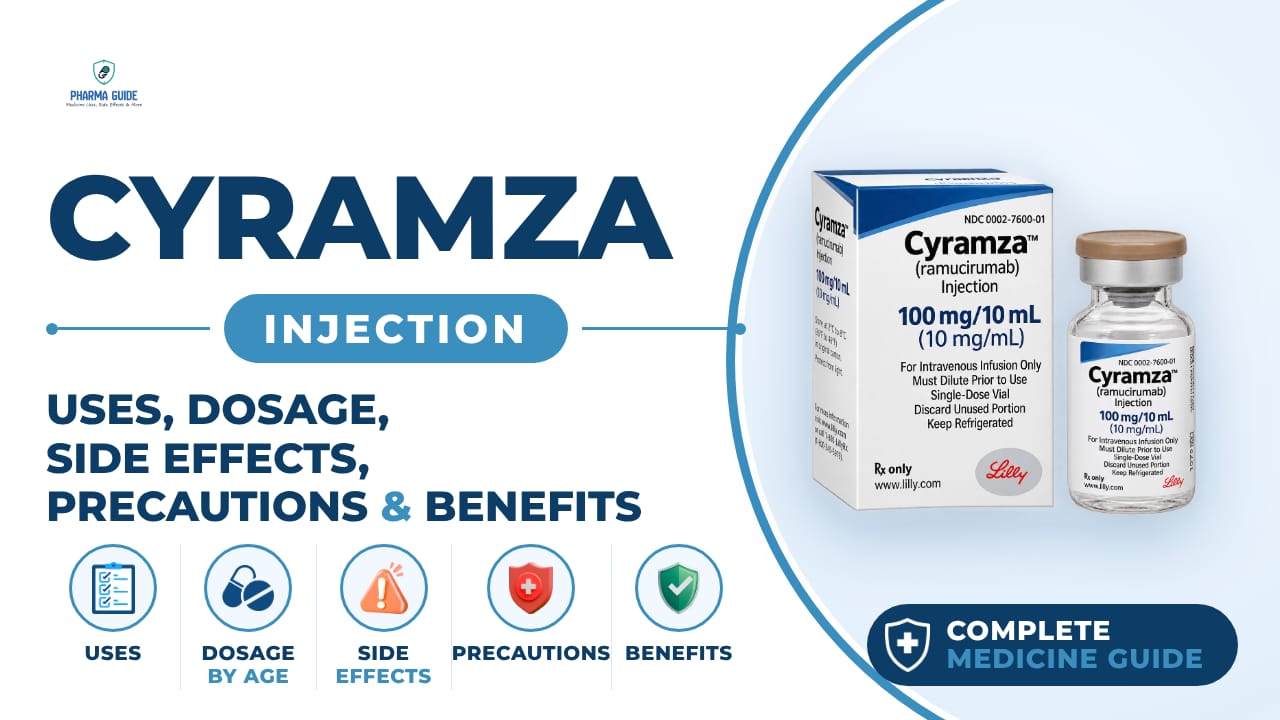
| Generic name | ramucirumab |
|---|---|
| Drug class | VEGF/VEGFR inhibitor |
| Forms | Injection |
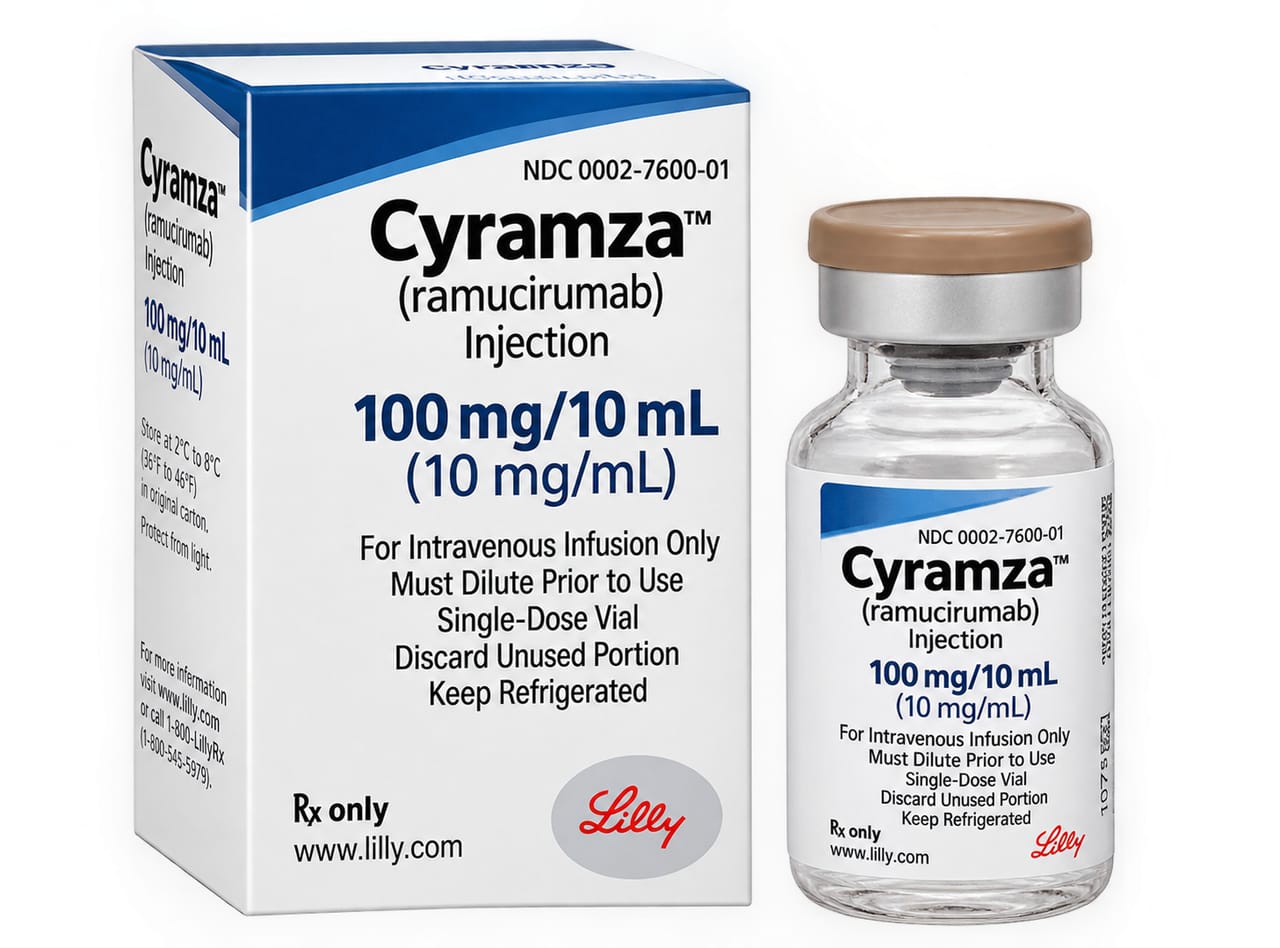
Quick overview
Cyramza Injection contains ramucirumab, a VEGF/VEGFR inhibitor given by IV infusion to treat certain advanced cancers, including stomach, lung, colorectal, and liver cancers. It works by blocking a protein that tumors need to grow new blood vessels, which can help slow or stop tumor growth. Cyramza is given every 2 or 3 weeks by a healthcare professional and requires regular monitoring for side effects such as bleeding, high blood pressure, and infusion reactions.
What is Cyramza Injection
Cyramza is a cancer medicine given by IV infusion. It contains ramucirumab, a lab-made antibody that targets a protein called VEGF receptor 2, which tumors need to grow new blood vessels.
Cyramza Injection uses
- Advanced or metastatic stomach cancer or cancer of the gastroesophageal junction, after prior chemotherapy no longer works, used alone or with paclitaxel
- Metastatic non-small cell lung cancer (NSCLC) with certain EGFR mutations, used with erlotinib as a first treatment
- Metastatic NSCLC after disease progression on platinum-based chemotherapy, used with docetaxel
- Metastatic colorectal cancer after progression on prior therapy with bevacizumab, oxaliplatin, and a fluoropyrimidine, used with FOLFIRI chemotherapy
- Advanced liver cancer (hepatocellular carcinoma) with high alpha-fetoprotein levels, in patients previously treated with sorafenib, used alone
Benefits of Cyramza Injection
- Given as an infusion every 2 or 3 weeks, which can be more convenient than daily treatments
- After the first dose, later infusions may be shorter (about 30 minutes)
- Targets cancer cells more precisely than traditional chemotherapy
- Shown in clinical studies to improve overall survival and progression-free survival compared with placebo, when added to standard treatments
How Cyramza Injection works
Cyramza blocks a protein called VEGF receptor 2 that tumors use to build new blood vessels. By blocking this receptor, the medicine cuts off the blood supply the cancer needs to grow, which can slow or stop tumor growth.
Cyramza Injection dosage
Cyramza is given as an intravenous infusion by a healthcare professional; it is not taken by mouth. You will usually be given another medicine (such as an antihistamine) before each infusion to help prevent reactions. The first infusion typically takes about 1 hour; later infusions may be shorter if the first one goes well. Treatment is continued until the disease progresses or side effects become unacceptable.
Tell your doctor if you are planning any surgery, since treatment needs to be paused for a period before and after a procedure to allow wounds to heal. Your blood pressure, urine protein, liver function, and thyroid function will be checked regularly during treatment. Older adults may need extra monitoring, as some studies showed more side effects or less benefit with increasing age.
Use exactly as prescribed by your doctor or pharmacist.
Cyramza Injection dosage
Current U.S. labeling specifies 8 mg/kg every 2 weeks for gastric/GEJ cancer, colorectal cancer, and hepatocellular carcinoma. For certain non-small cell lung cancer regimens, 10 mg/kg is used either every 2 weeks with erlotinib or on Day 1 of each 21-day cycle with docetaxel.
| Under 18 years | Safety and effectiveness are not established; there is no standard pediatric dose |
| 18–39 years | 8 mg/kg IV every 2 weeks or 10 mg/kg IV on an indication-specific schedule |
| 40–64 years | Same adult weight-based dosing: 8 mg/kg every 2 weeks or 10 mg/kg according to the prescribed regimen |
| 65–74 years | No routine age-based dose adjustment; dosing remains weight- and indication-based |
| 75 years and older | No separate standard geriatric dose; individualized by the oncology team with close monitoring |
Available forms and strengths
- Injection
Side effects of Cyramza Injection
Common
- Fatigue
- Low blood cell counts
- Diarrhea
- Bloody nose (epistaxis)
- Swelling in the arms and legs
- High blood pressure
- Mouth sores
- Loss of appetite
- Headache
- Protein in the urine
- Low albumin in the blood
- Low sodium in the blood
- Constipation/intestinal issues
- Increased tearing
- Hair loss (with certain combinations)
Serious
- Severe bleeding, including vomiting blood or coughing up blood, or black/bloody stools
- Stomach or intestinal tears (gastrointestinal perforation)
- Blood clots in the arteries, which can cause heart attack or stroke
- Severe high blood pressure, including hypertensive crisis
- Posterior reversible encephalopathy syndrome (PRES) - seizures, headache, confusion, vision loss
- Infusion-related reactions, including chest pain, trouble breathing, and feeling faint
- Kidney problems, including nephrotic syndrome
- Liver problems, including worsening of liver disease
- Low thyroid hormone levels (hypothyroidism)
- Heart failure
- Abnormal tube-like connections between organs (fistula)
- Slow or poor wound healing after surgery
Warnings and precautions
- Cyramza can cause serious, sometimes life-threatening bleeding anywhere in the body. Treatment must be permanently stopped if this happens.
- This medicine can cause a hole or tear in the stomach or intestine, which can be life-threatening.
- Cyramza can slow wound healing, so treatment must be paused for a period before and after any surgery.
- Serious and sometimes fatal blood clots in the arteries, including heart attack and stroke, have occurred with this medicine.
- This medicine can raise blood pressure, sometimes severely, and needs regular monitoring.
- Reactions during the infusion can be serious and even life-threatening, especially during the first or second dose.
- A rare but serious brain condition called posterior reversible encephalopathy syndrome (PRES) has occurred, which can be fatal.
- This medicine can cause too much protein in the urine, which can signal kidney damage and may require stopping treatment.
- Cyramza can cause fetal harm, so effective contraception is needed during and for 3 months after treatment.
- Cyramza can harm an unborn baby and is not recommended during pregnancy. Women who can become pregnant should use effective birth control during treatment and for 3 months after the last dose.
- Breastfeeding should be stopped during treatment and for some time after the last dose, since it isn't known if the medicine passes into breast milk and could harm the baby.
- Cyramza can increase the risk of kidney problems. People with severe kidney impairment have limited safety data, so your doctor will monitor your kidney function closely.
- People with more severe liver disease (cirrhosis) may be at higher risk of liver complications worsening, such as confusion, fluid buildup, or kidney problems linked to liver failure. Treatment should only be used if the benefits are thought to outweigh the risks.
- This medicine is not expected to affect your ability to drive or use machines, but if you have symptoms that affect your concentration or reactions, you should avoid driving or using machinery until they go away.
Storage
- Store in a refrigerator (2°C to 8°C / 36°F to 46°F)
- Do not freeze
- Keep the vial in the outer carton to protect from light
- Do not shake the vial
- Discard any unused portion left in the vial, since it has no preservatives
- Ask your pharmacist how to safely dispose of unused medicine
When to see a doctor
- Get medical help right away for signs of severe bleeding, such as lightheadedness, black or bloody stools, or coughing up blood or vomit that looks like coffee grounds.
- Seek care immediately for severe vomiting, diarrhea, or stomach pain that doesn't go away, which could mean a tear in the stomach or intestine.
- Call for emergency help for chest pain, sudden severe headaches, trouble breathing, or sudden changes in speech or vision, which could be signs of a heart attack, stroke, or blood clot.
- Tell your doctor right away about a severe headache, lightheadedness, or confusion, which could mean dangerously high blood pressure.
- Seek help urgently for headache, feeling sluggish or confused, or vision loss, which could be signs of a rare brain condition called PRES.
- Tell your care team immediately if you feel chest pain, tremors, back pain, chills, trouble breathing, or flushing during or after an infusion.
- Get medical help for signs of an allergic reaction, such as rash, itching, hives, or swelling of the face, lips, tongue, or throat.
Alternatives
- Stivarga
- Zaltrap
- Avastin
Watch the video
FAQs
What is Cyramza Injection used for?
Cyramza treats advanced or metastatic stomach cancer, non-small cell lung cancer, colorectal cancer, and liver cancer (hepatocellular carcinoma), often combined with other treatments after prior therapies have stopped working.
How is Cyramza given?
Cyramza is given as an intravenous infusion by a healthcare professional every 2 or 3 weeks. The first infusion usually takes about 1 hour, while later infusions may be shorter, around 30 minutes, if the first is well tolerated.
What are the serious side effects of Cyramza?
Serious side effects include severe bleeding, stomach or intestinal perforation, blood clots leading to heart attack or stroke, severe high blood pressure, PRES, infusion-related reactions, kidney and liver problems, and poor wound healing after surgery.
Can Cyramza be used during pregnancy?
No, Cyramza can harm an unborn baby and is not recommended during pregnancy. Effective birth control should be used during treatment and for 3 months after the last dose.
How should Cyramza be stored?
Cyramza should be stored in a refrigerator between 2°C and 8°C, kept in its original carton to protect from light, not frozen, and not shaken; any unused portion should be discarded since it contains no preservatives.
General information, not medical advice
Your prescriber and the leaflet in your pack know your situation. This page does not.
- Follow your prescriber and the leaflet
- Don't start, stop, or change a dose on your own
- Doses and warnings differ by country and product
Sources
Video
Related medicines

Injectafer Injection: Uses, Dosage, Side Effects, Precautions and Alternates
Iron products
Injectafer (ferric carboxymaltose) treats iron deficiency anemia and heart failure-related iron deficiency via IV. Learn uses, dosage, side effects, and

Gliclazide Tablet: Uses, Dosage, Side Effects, Precautions and Alternates
Sulfonylurea (hypoglycemic/antidiabetic agent)
Gliclazide Tablet is a sulfonylurea for type 2 diabetes that boosts insulin release. Learn about dosage, side effects, warnings, and precautions.