
Safety
General information, not medical advice
Your prescriber and the leaflet in your pack know your situation. This page does not.
- Follow your prescriber and the leaflet
- Don't start, stop, or change a dose on your own
- Doses and warnings differ by country and product
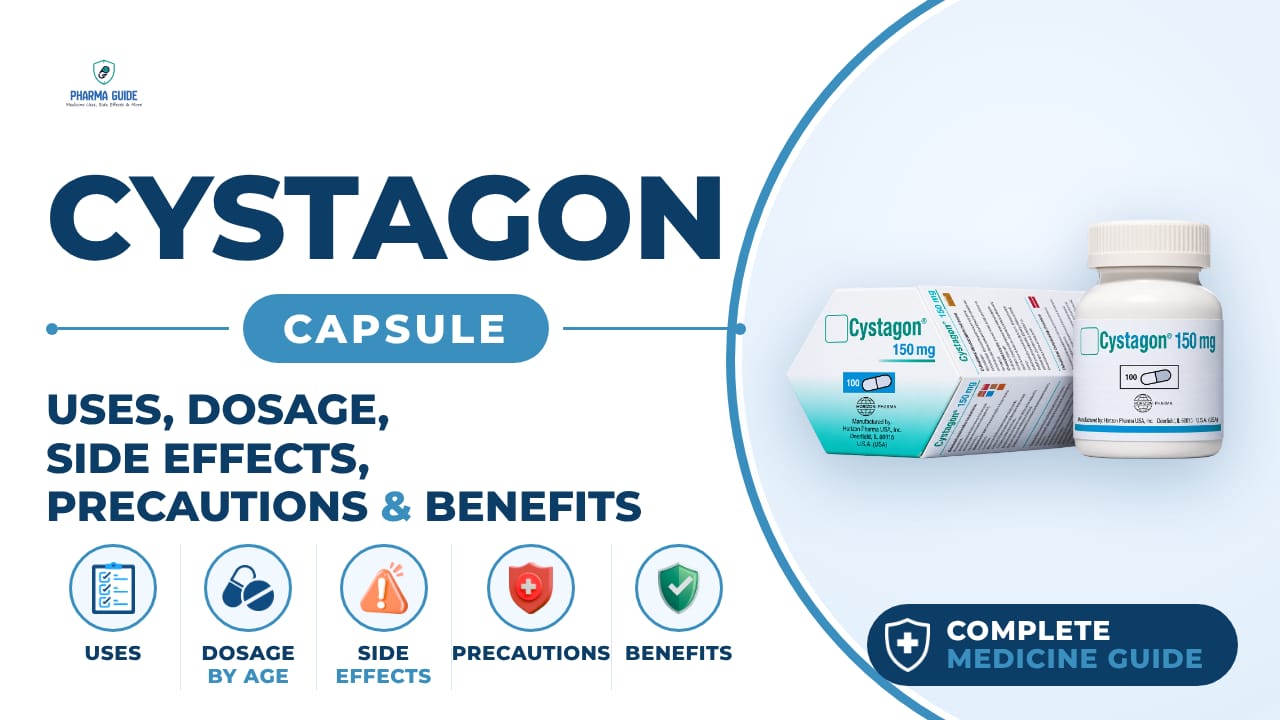
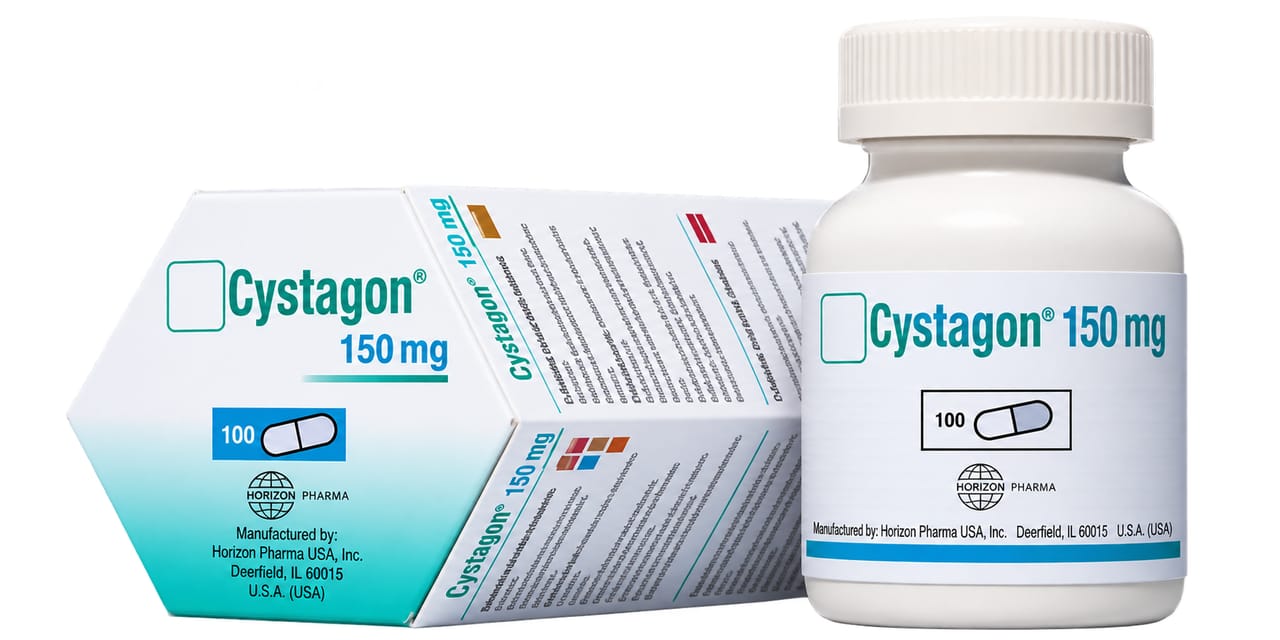
Cystagon Capsule: Uses, Dosage, Side Effects, Precautions and Alternates
| Generic name | cysteamine (mercaptamine bitartrate) |
|---|---|
| Drug class | Miscellaneous uncategorized agents |
| Forms | Hard capsule |
Quick overview
Cystagon Capsule contains cysteamine (mercaptamine bitartrate), a miscellaneous uncategorized agent used to manage nephropathic cystinosis, a rare inherited disorder in which cystine builds up in the kidneys and other organs, causing kidney damage. It works by reducing cystine buildup inside cells, helping to protect organs from this damage. Cystagon is taken by mouth four times a day, exactly as prescribed by a doctor.
What is Cystagon Capsule
Cystagon is a prescription medicine used to manage nephropathic cystinosis, a rare inherited disorder where the amino acid cystine builds up in the kidneys and other organs, causing kidney damage.
Cystagon Capsule uses
- Treats nephropathic cystinosis
- Reduces intracellular cystine accumulation
- Helps protect organs from cystine-related damage
Benefits of Cystagon Capsule
- Reduces cystine build-up in cells such as white blood cells, muscle and liver cells
- When started early, can delay the development of kidney failure
- Helps maintain kidney function over time compared with no treatment
How Cystagon Capsule works
Cysteamine reacts chemically with cystine inside cells, changing it into a different substance that the cell can then remove, which lowers the cystine level in the cells.
Cystagon Capsule dosage
Take by mouth exactly as your doctor tells you; do not change the amount without your doctor's approval. Take the medicine four times a day, spaced about every 6 hours, trying to keep the timing as regular as possible. Taking it just after or with food helps the stomach tolerate it better. Swallow capsules whole; do not crush or chew them.
Children under about 6 years old who may choke should not be given whole capsules — instead the capsule can be opened and the contents sprinkled on soft foods such as milk, potatoes, or other starch-based foods, or mixed into formula. Avoid mixing the opened capsule contents with acidic drinks such as orange juice, as the powder may not mix well.
Treatment is usually continued long-term/indefinitely as directed by your doctor. Do not stop taking this medicine suddenly without checking with your doctor, as this may make your condition worse. If you miss a dose, take it as soon as you remember, but if it is within two hours of your next dose, skip the missed dose and continue your normal schedule — do not double up.
| Age group | Dose |
|---|---|
| 6–11 years | Target dose: 1300 mg/m²/day, divided into 4 doses |
| 12–17 years, body weight 50 kg or more | Usually 500 mg four times daily = 2000 mg/day |
| 18–64 years | Usually 500 mg four times daily = 2000 mg/day |
Available forms and strengths
- Hard capsule
Side effects of Cystagon Capsule
Common
- Vomiting, nausea, diarrhoea
- Loss of appetite
- Headache
- Abdominal pain or discomfort
- Unpleasant breath and body odour
- Skin rash
- Fever and feeling tired or drowsy
- Liver function test abnormalities
Serious
- Severe allergic reaction (hives, difficulty breathing, swelling of face or throat)
- Severe skin reaction (fever, sore throat, burning eyes, skin pain, red or purple rash with blistering and peeling)
- Seizures/fits
- Depressed mood, extreme drowsiness
- Low white blood cell counts
- Skin lesions (hard lumps on elbows), skin striae (stretch marks)
- Bone problems such as fractures, bone deformities, scoliosis, joint laxity, leg pain
- Stomach ulcer or bleeding in the digestive tract (pain, vomiting blood or material that looks like coffee grounds)
- Kidney problems such as nephrotic syndrome (swelling of extremities, weight gain)
- Signs of increased pressure inside the skull (severe headache, ringing in ears, dizziness, vision problems, pain behind the eyes)
- Hallucinations, nervousness
Warnings and precautions
- Cystagon should not be used during pregnancy, especially in the first three months, unless your doctor decides it is clearly necessary, because it has caused birth defects in animal studies.
- Breastfeeding is not allowed while taking Cystagon.
- People on dialysis may tolerate cysteamine less well, so closer monitoring of cystine levels in white blood cells is recommended for these patients.
- People with liver problems usually do not need a dose change, but their white blood cell cystine levels should still be monitored.
- Alcohol may worsen gastrointestinal or neurologic adverse effects. This medicine can cause drowsiness; until you know how it affects you, avoid driving or doing anything that could be dangerous if you are not alert.
- Children with hard, lump-like skin lesions on the elbows, along with stretch-mark-like skin changes and bone problems, have been reported in children on high doses of cysteamine medicines. Regular skin checks and sometimes bone X-rays are recommended, and the dose may need to be lowered if these appear.
- Do not use doses higher than the recommended maximum, as higher doses are linked to these serious skin and bone problems.
- Regular blood cell count checks are recommended while on this medicine.
- This medicine does not stop cystine crystals from building up in the eyes, so if you use cysteamine eye drops for that purpose, you should keep using them.
- Whole capsules should not be given to children under about 6 years old because of a choking/aspiration risk.
- Do not stop or change your dose without checking with your doctor, as stopping suddenly may make your condition worse.
Storage
- Do not store above 25°C
- Keep the container tightly closed in order to protect from light and moisture
- Keep out of the reach and sight of children
- Do not use after the expiry date which is stated on the label
When to see a doctor
Get emergency help right away if you notice signs of a severe allergic reaction such as hives, trouble breathing, or swelling of the face or throat, or signs of a severe skin reaction such as fever, sore throat, burning eyes, skin pain, or a red/purple rash with blistering and peeling.
Call your doctor right away if you experience low mood, extreme drowsiness, a seizure, unusual bruising or skin streaking, bone pain or abnormal joint movement, signs of electrolyte imbalance (increased thirst or urination, confusion, constipation, leg cramps, irregular heartbeat, tingling), signs of increased pressure in the skull (severe headaches, ringing in ears, dizziness, vision problems, pain behind the eyes), or stomach problems such as pain, nausea, vomiting, loss of appetite, or coughing up blood or vomit that looks like coffee grounds.
If you think you or someone else has taken too much of this medicine, get urgent medical attention right away, even if there are no symptoms yet. Tell your doctor immediately if you or your child notice any new skin or bone changes, such as lumps, stretch marks, fractures, or joint problems.
Alternatives
- Procysbi
- Cysteamine bitartrate
Watch the video
FAQs
What is Cystagon Capsule used for?
Cystagon is a prescription medicine used to manage nephropathic cystinosis, a rare inherited disorder where cystine builds up in the kidneys and other organs, causing kidney damage.
How is Cystagon Capsule taken?
Cystagon is taken by mouth four times a day, spaced about every 6 hours, as regularly as possible. Taking it with or just after food helps the stomach tolerate it better. Capsules should be swallowed whole and not crushed or chewed.
Can children take Cystagon Capsule?
Children under about 6 years old who may choke should not be given whole capsules. Instead, the capsule can be opened and the contents sprinkled on soft foods like milk or potatoes, or mixed into formula, avoiding acidic drinks like orange juice.
What should I do if I miss a dose of Cystagon?
If you miss a dose, take it as soon as you remember, but if it is within two hours of your next dose, skip the missed dose and continue your normal schedule without doubling up.
What are the serious side effects of Cystagon Capsule?
Serious side effects include severe allergic reactions, severe skin reactions, seizures, depressed mood, low white blood cell counts, skin lesions and stretch marks, bone problems like fractures and scoliosis, stomach ulcers or bleeding, kidney problems, and signs of increased pressure inside the skull.
General information, not medical advice
Your prescriber and the leaflet in your pack know your situation. This page does not.
- Follow your prescriber and the leaflet
- Don't start, stop, or change a dose on your own
- Doses and warnings differ by country and product
Sources
Video
Related medicines

Injectafer Injection: Uses, Dosage, Side Effects, Precautions and Alternates
Iron products
Injectafer (ferric carboxymaltose) treats iron deficiency anemia and heart failure-related iron deficiency via IV. Learn uses, dosage, side effects, and

Gliclazide Tablet: Uses, Dosage, Side Effects, Precautions and Alternates
Sulfonylurea (hypoglycemic/antidiabetic agent)
Gliclazide Tablet is a sulfonylurea for type 2 diabetes that boosts insulin release. Learn about dosage, side effects, warnings, and precautions.