
Safety
General information, not medical advice
Your prescriber and the leaflet in your pack know your situation. This page does not.
- Follow your prescriber and the leaflet
- Don't start, stop, or change a dose on your own
- Doses and warnings differ by country and product
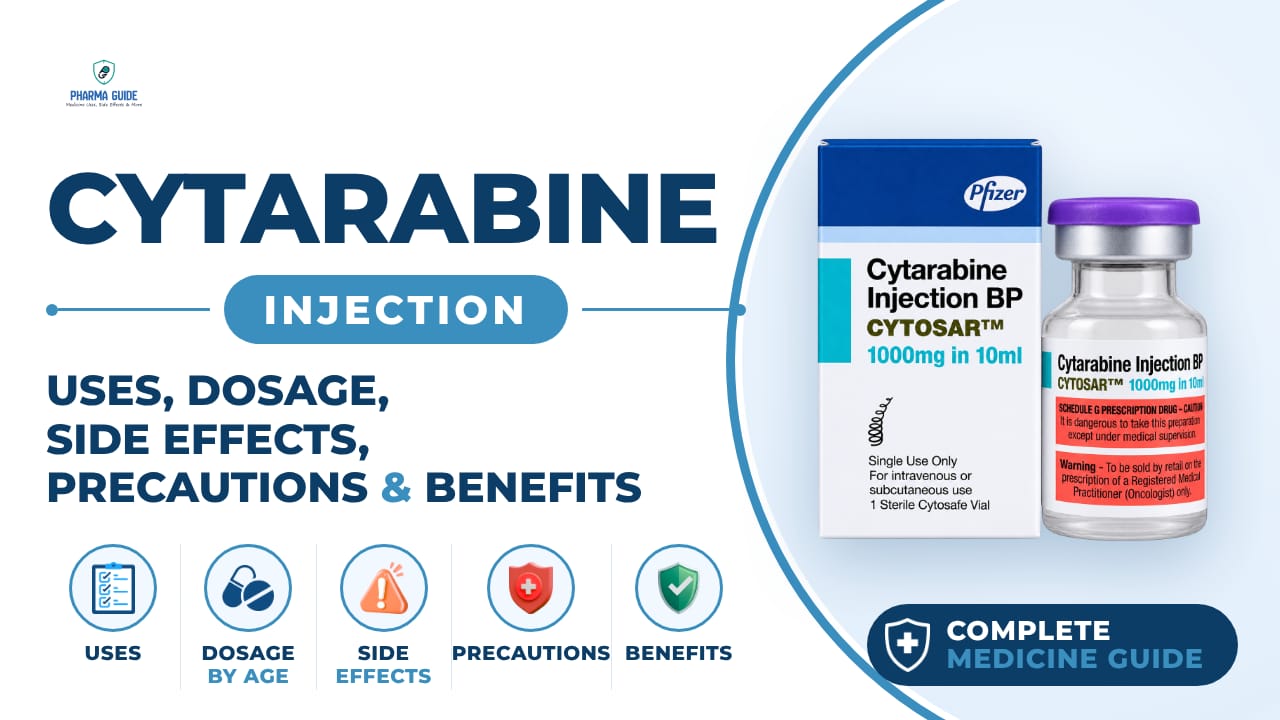
Cytarabine Injection: Uses, Dosage, Side Effects, Precautions and Alternates
| Generic name | cytarabine |
|---|---|
| Drug class | antimetabolite (antineoplastic) |
| Forms | Injectable solution (given into a vein, under the skin, or into the spinal canal), Powder mixed with liquid for injection |
Quick overview
Cytarabine Injection is a prescription chemotherapy medicine used to treat certain blood and bone marrow cancers, including leukemias and some types of non-Hodgkin's lymphoma. It must be given under the care of a doctor experienced in chemotherapy treatment. It is administered as an injection into a vein, under the skin, or into the fluid-filled space around the spinal canal, and it works by interfering with how cancer cells make DNA.
What is Cytarabine Injection
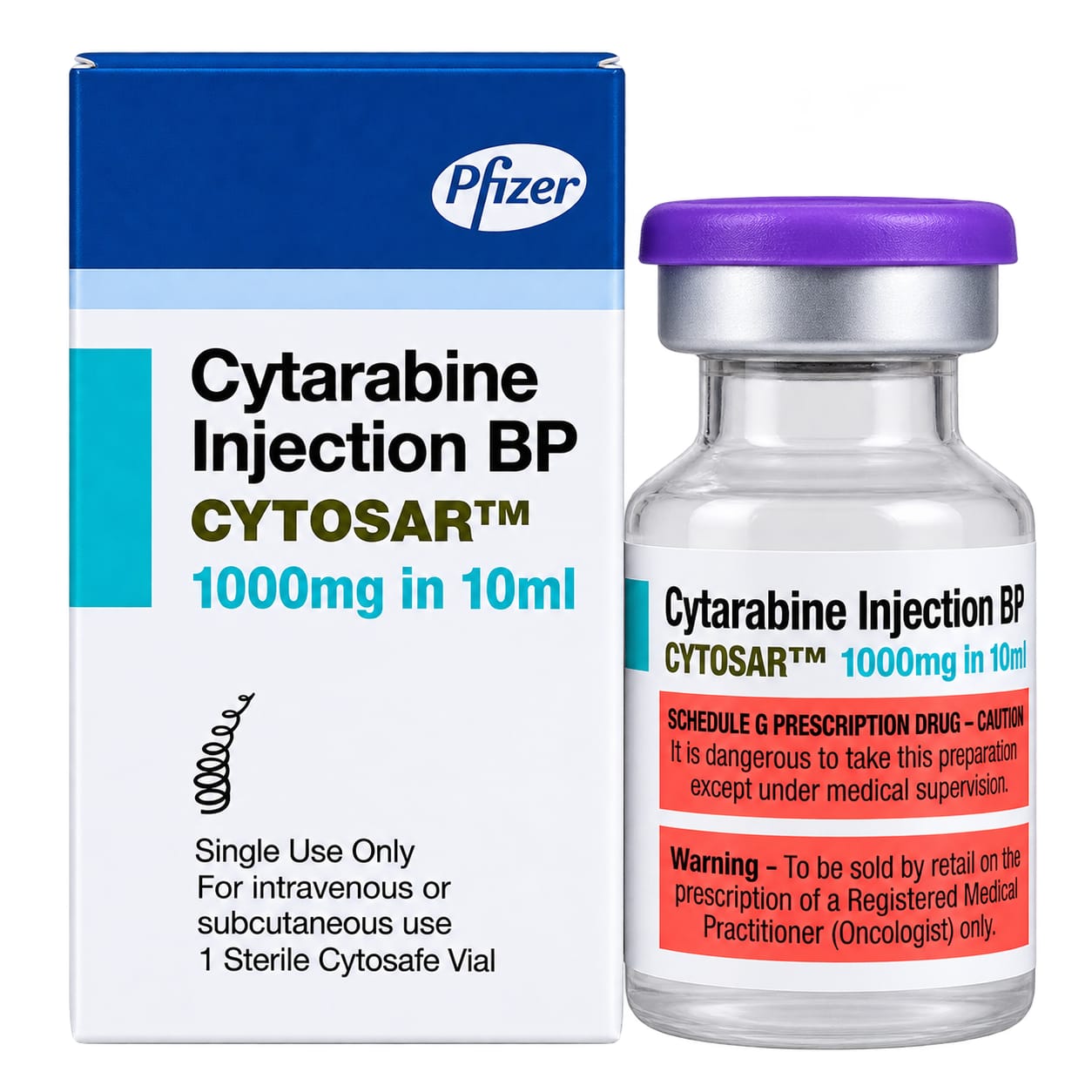
Cytarabine Injection is a prescription chemotherapy medicine used to treat certain blood and bone marrow cancers. It must be given under the care of a doctor experienced in chemotherapy treatment. The generic name is cytarabine, and it belongs to the antimetabolite (antineoplastic) drug class.
Cytarabine Injection uses
- Treats acute myeloid leukemia (AML)
- Treats acute lymphocytic leukemia (ALL)
- Treats chronic myelocytic leukemia (CML) in blast phase
- Treats certain types of non-Hodgkin's lymphoma
- Can be given near the spine to treat or prevent leukemia that has spread to the brain and spinal cord (meningeal leukemia)
Benefits of Cytarabine Injection
- Slows or stops the growth and spread of cancer cells
- Can treat cancer that has spread to the central nervous system when injected near the spine
How Cytarabine Injection works
Cytarabine is a type of chemotherapy called an antimetabolite. It works by interfering with the way cancer cells make their DNA, which slows or stops the cells from growing and multiplying.
Cytarabine Injection dosage
Cytarabine Injection is given as an injection into a vein, under the skin, or into the fluid-filled space around the spinal canal by a doctor or nurse in a medical facility. How often you receive it depends on your condition and how your body responds to treatment. You will not store or give this medicine yourself at home.
Unless your doctor tells you otherwise, continue your normal diet while receiving this medicine. Drink plenty of fluids while using this medication unless your doctor tells you otherwise, to help your kidneys remove the drug and reduce some side effects.
If you miss a scheduled dose or appointment, contact your doctor right away to arrange a new dosing schedule.
| Age group | Dose |
|---|---|
| Children / adolescents | Usually 100–200 mg/m²/day, depending on leukemia protocol and combination regimen |
| 18–64 years | Common AML induction regimen: 100 mg/m²/day by continuous IV infusion for 7 days |
Available forms and strengths
- Injectable solution (given into a vein, under the skin, or into the spinal canal)
- Powder mixed with liquid for injection
Side effects of Cytarabine Injection
Common
- Nausea, vomiting, diarrhea, and stomach pain
- Loss of appetite
- Sores in the mouth and throat
- Hair loss
- Tiredness
- Sore or red eyes
- Fever
- Rash
- Liver problems
- Blood clots
- Swelling of the anus
Serious
- Signs of infection such as fever, sore throat, cough, or congestion
- Pale skin, tiredness, fast heartbeat, fainting, or dizziness (possible signs of low blood cell counts)
- Unusual bleeding or bruising, black and tarry stools, blood in stool or vomit
- Ongoing stomach pain that may spread to the back
- Redness, pain, swelling, or burning where the injection was given
- Rash, itching, hives, or trouble breathing or swallowing (signs of allergic reaction)
- Shortness of breath or trouble breathing
- Yellowing of the skin or eyes (signs of liver problems)
- Dark-colored urine or decreased urination (signs of kidney problems)
- Sudden change or loss of vision
- Seizures
- Confusion, sleepiness, or changes in personality
- Numbness, burning, or tingling in the hands, arms, feet, or legs
- Fever, muscle or bone pain, chest pain, rash, weakness, and pink eye occurring together (cytarabine syndrome)
Warnings and precautions
- This medicine can severely lower the number of blood cells made in your bone marrow, raising your risk of serious infection and bleeding.
- High doses or injections near the spine can cause dizziness, confusion, slurred speech, or balance problems due to effects on the nervous system.
- This medicine can cause liver problems or severe digestive system issues. It must be given under the supervision of a doctor experienced in chemotherapy treatment for cancer.
- Do not use this medicine if you are pregnant, think you might be pregnant, or are breastfeeding. Pregnant women should avoid contact with this medication. Cytarabine can harm an unborn baby. You should not become pregnant while receiving this medicine, and you should use effective birth control. If you become pregnant during treatment, contact your doctor right away.
- It is not known if cytarabine passes into breast milk. Tell your doctor if you are breastfeeding or plan to; your doctor will advise whether you should stop breastfeeding or stop the medicine.
- Tell your doctor if you have or have ever had kidney disease, since this may affect how the medicine is used. Tell your doctor if you have or have ever had liver disease, since this medicine can cause liver problems.
- It isn't known for certain how alcohol affects this medicine, but heavy drinking can weaken your immune response and make it harder for your body to fight cancer.
Storage
- Cytarabine is usually given by a health care provider in a hospital or clinic. You will not store it at home.
- Keep all medications away from children and pets.
- Do not flush medications down the toilet or pour them into a drain unless instructed to do so.
- Properly discard this product when it is expired or no longer needed. Consult your pharmacist or local waste disposal company.
When to see a doctor
- Call your doctor right away if you notice signs of infection, such as fever, sore throat, or ongoing cough and congestion.
- Call your doctor or get emergency help right away if you have unusual bleeding or bruising, black and tarry stools, blood in your stool, or bloody vomit or vomit that looks like coffee grounds.
- Get emergency help right away if you have signs of a serious allergic reaction, like trouble breathing, swelling of the face, lips, or throat, or hives.
- Call your doctor immediately or get emergency care if you have ongoing stomach pain that spreads to your back, yellowing of skin or eyes, sudden vision changes, seizures, confusion, or numbness and tingling in your hands, arms, feet, or legs.
- If you think you have taken too much of this medicine, get medical help right away or call your local poison control center.
Alternatives
- Azacitidine
- Decitabine
- Vyxeos
Watch the video
FAQs
What is Cytarabine Injection used for?
It is used to treat acute myeloid leukemia (AML), acute lymphocytic leukemia (ALL), chronic myelocytic leukemia (CML) in blast phase, certain types of non-Hodgkin's lymphoma, and leukemia that has spread to the brain and spinal cord when given near the spine.
How is Cytarabine Injection given?
It is given as an injection into a vein, under the skin, or into the fluid-filled space around the spinal canal by a doctor or nurse in a medical facility. You will not store or give this medicine yourself at home.
What should I do if I miss a scheduled dose of Cytarabine Injection?
If you miss a scheduled dose or appointment, contact your doctor right away to arrange a new dosing schedule.
What are the common side effects of Cytarabine Injection?
Common side effects include nausea, vomiting, diarrhea, stomach pain, loss of appetite, mouth and throat sores, hair loss, tiredness, sore or red eyes, fever, rash, liver problems, blood clots, and swelling of the anus.
Can Cytarabine Injection be used during pregnancy?
No, it should not be used if you are pregnant, think you might be pregnant, or are breastfeeding, as it can harm an unborn baby. Effective birth control should be used during treatment.
General information, not medical advice
Your prescriber and the leaflet in your pack know your situation. This page does not.
- Follow your prescriber and the leaflet
- Don't start, stop, or change a dose on your own
- Doses and warnings differ by country and product
Sources
Video
Related medicines

Injectafer Injection: Uses, Dosage, Side Effects, Precautions and Alternates
Iron products
Injectafer (ferric carboxymaltose) treats iron deficiency anemia and heart failure-related iron deficiency via IV. Learn uses, dosage, side effects, and

Gliclazide Tablet: Uses, Dosage, Side Effects, Precautions and Alternates
Sulfonylurea (hypoglycemic/antidiabetic agent)
Gliclazide Tablet is a sulfonylurea for type 2 diabetes that boosts insulin release. Learn about dosage, side effects, warnings, and precautions.