
Safety
General information, not medical advice
Your prescriber and the leaflet in your pack know your situation. This page does not.
- Follow your prescriber and the leaflet
- Don't start, stop, or change a dose on your own
- Doses and warnings differ by country and product
Cytisine Tablet: Uses, Dosage, Side Effects, Precautions and Alternates
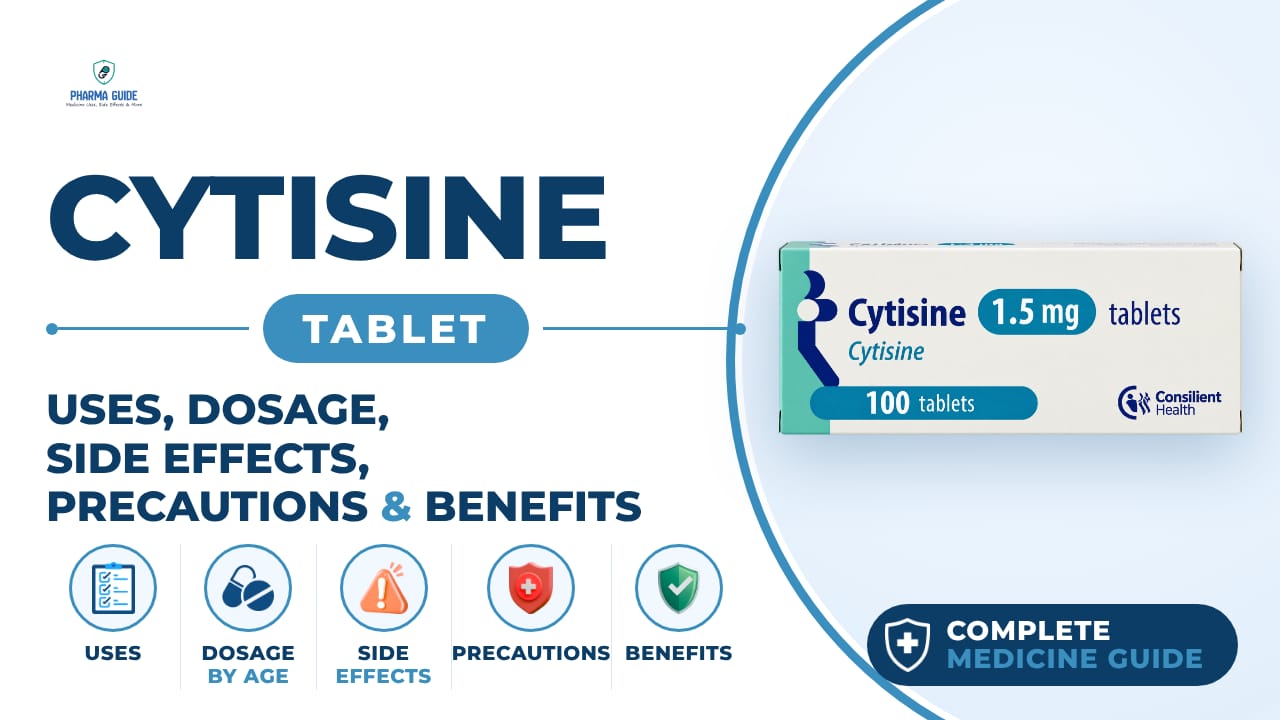
| Generic name | Cytisine |
|---|---|
| Drug class | Nicotine receptor partial agonist |
| Forms | Tablet, Capsule, Oral strip |
Quick overview
Cytisine Tablet (cytisine) is a nicotine receptor partial agonist used to support smoking cessation. It helps reduce nicotine cravings and withdrawal symptoms, following a gradually decreasing dosing schedule over several weeks. It is sold under the brand name Tabex and is marketed in the United States as an herbal product, not yet FDA approved as a prescription drug.
What is Cytisine Tablet
Cytisine is a natural alkaloid from the seeds and leaves of plants such as Laburnum anagyroides (also called Cytisus laburnum). It belongs to the drug class known as nicotine receptor partial agonists. Cytisine has been used for decades in Central and Eastern Europe to help people stop smoking, sold under the brand name Tabex. In the United States, it is marketed as an herbal product and has not been approved by the FDA as a prescription drug, though a company is working toward approval.
Cytisine Tablet uses
- Supports smoking cessation
- Reduces nicotine cravings
- Helps reduce nicotine-withdrawal symptoms
- Supports permanent cessation of nicotine-containing products
Benefits of Cytisine Tablet
- Provides a non-nicotine treatment option
- Acts on nicotinic acetylcholine receptors
- May reduce cravings during smoking cessation
- Uses a relatively short treatment course
How Cytisine Tablet works
Cytisine attaches to the same brain receptors that nicotine attaches to, but it doesn't activate them as strongly as nicotine does. By occupying these receptor sites, it blocks nicotine from attaching and creating its pleasurable effects, which helps reduce cravings. It also helps ease withdrawal symptoms because it provides some activity at the same receptors nicotine would normally stimulate.
Cytisine Tablet dosage
Cytisine is taken on a schedule where the number of tablets per day is highest at the start of treatment and is gradually reduced over several weeks. Doses are spread out evenly through the day, starting with shorter gaps between doses and gradually increasing the time between doses as treatment continues. A specific day early in treatment is usually set as the target day to stop smoking completely. Treatment is often combined with behavioral counseling or support sessions to help with quitting.
| Age group | Dose |
|---|---|
| Under 12 years | Not recommended; safety and effectiveness are not established |
| 18–39 years | Adult treatment uses 1.5 mg tablets in a gradually decreasing 25-day regimen prescribed according to the product schedule |
Available forms and strengths
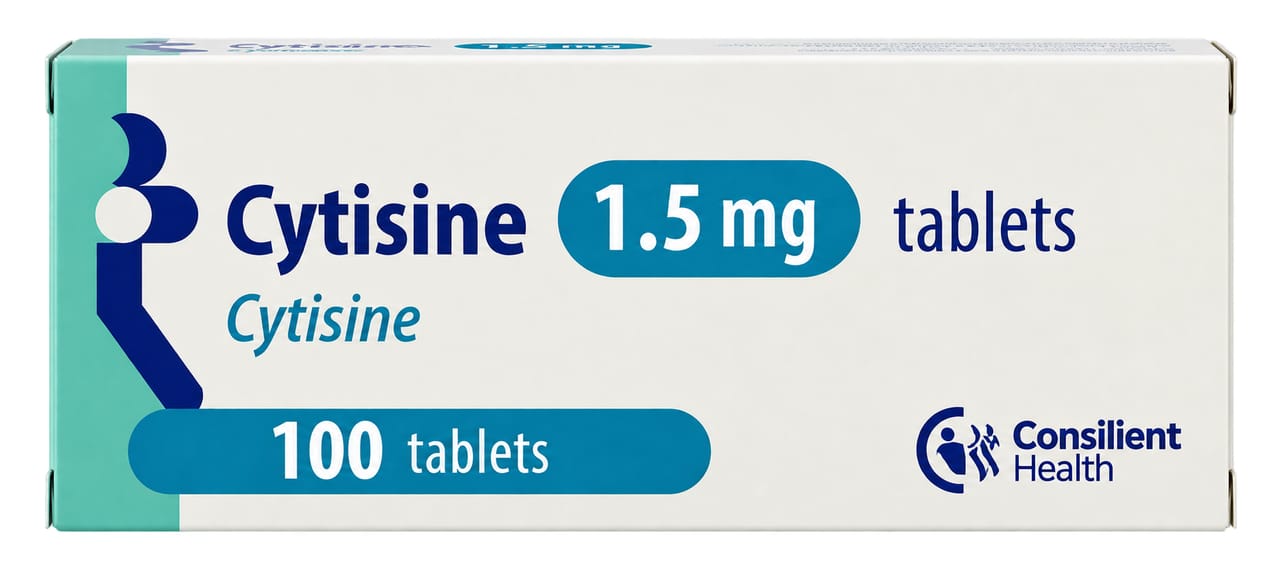
- Tablet (1.5 mg)
- Capsule
- Oral strip
Side effects of Cytisine Tablet
Common
- Upset stomach (dyspepsia) and nausea
- Headache
- Increased appetite
- Dry mouth
- Vivid dreams or nightmares
- Irritability
- Trouble sleeping
- Constipation
- Anxiety
Serious
- Severe toxicity, which can be life-threatening if too much is taken
Warnings and precautions
- Cytisine should be avoided during pregnancy, as there isn't enough information about whether it's safe for pregnant women or their babies.
- It should also be avoided while breastfeeding because there isn't enough safety information.
- People with severe kidney problems should not use cytisine; it was excluded in clinical studies because the drug is cleared from the body mainly by the kidneys. People with severe liver problems should also not use cytisine, as this group was excluded from clinical studies.
- No specific major interaction with alcohol is established, but caution is appropriate if dizziness or other side effects occur. The current product information states that cytisinicline has no expected effect on driving ability.
- Do not use cytisine if you have advanced hardening of the arteries (atherosclerosis) or uncontrolled high blood pressure.
- Using cytisine together with other stop-smoking medicines has not been well studied and should be avoided.
- Taking too much cytisine can be dangerous. Its toxicity depends on the amount taken, and there have been deaths from breathing failure after eating plant material containing cytisine.
- There is no specific antidote for cytisine poisoning; treatment focuses on supportive care only.
- Cytisine may reduce how well certain anti-seizure medicines work, including phenytoin, lamotrigine, lacosamide, levetiracetam, and pregabalin, based on animal studies.
- This product has not been reviewed by the FDA for safety or effectiveness and does not meet the same quality and safety standards required for most prescription drugs.
Storage
- Store cytisine tablets at room temperature, generally below 25°C (77°F) unless the specific product label gives a different limit.
- Keep the tablets in the original packaging, protected from moisture and excessive heat.
- Do not store them in a bathroom or other damp area.
- Keep the medicine out of sight and reach of children.
- Do not use cytisine after the expiry date printed on the package.
When to see a doctor
- Seek emergency help right away if you or someone else may have taken too much cytisine, since overdose can cause dangerous breathing problems and has been linked to deaths.
- If you are pregnant and having trouble quitting smoking, talk with your prenatal care provider for safe support and a quit plan, rather than using cytisine.
Alternatives
- Varenicline
- Bupropion
Watch the video
FAQs
What is Cytisine Tablet used for?
It supports smoking cessation by reducing nicotine cravings and withdrawal symptoms, helping with permanent cessation of nicotine-containing products.
How does Cytisine Tablet work?
Cytisine attaches to the same brain receptors as nicotine but activates them less strongly, blocking nicotine's pleasurable effects and easing withdrawal symptoms.
What is the dosing schedule for Cytisine Tablet?
Adults typically use 1.5 mg tablets in a gradually decreasing 25-day regimen, with doses spread evenly through the day and a target quit day set early in treatment.
What are the common side effects of Cytisine Tablet?
Common side effects include upset stomach, nausea, headache, increased appetite, dry mouth, vivid dreams, irritability, trouble sleeping, constipation, and anxiety.
Who should avoid taking Cytisine Tablet?
It should be avoided during pregnancy or breastfeeding, by people with severe kidney or liver problems, and by those with advanced atherosclerosis or uncontrolled high blood pressure.
General information, not medical advice
Your prescriber and the leaflet in your pack know your situation. This page does not.
- Follow your prescriber and the leaflet
- Don't start, stop, or change a dose on your own
- Doses and warnings differ by country and product
Sources
- https://www.tobaccopreventioncessation.com/Cytisine-for-smoking-cessation-A-40-day-treatment-with-an-induction-period,187556,0,2.html
- https://www.drugs.com/npp/cytisine.html
- https://www.goodrx.com/conditions/smoking-cessation/cytisine-smoking-cessation?srsltid=AYCX9vI8hY4HYeDL2yfMwtXHZjl_ASUo4loxX4vyJ1DeGV8px36KQvlY
Video
Related medicines

Injectafer Injection: Uses, Dosage, Side Effects, Precautions and Alternates
Iron products
Injectafer (ferric carboxymaltose) treats iron deficiency anemia and heart failure-related iron deficiency via IV. Learn uses, dosage, side effects, and

Gliclazide Tablet: Uses, Dosage, Side Effects, Precautions and Alternates
Sulfonylurea (hypoglycemic/antidiabetic agent)
Gliclazide Tablet is a sulfonylurea for type 2 diabetes that boosts insulin release. Learn about dosage, side effects, warnings, and precautions.