
Safety
General information, not medical advice
Your prescriber and the leaflet in your pack know your situation. This page does not.
- Follow your prescriber and the leaflet
- Don't start, stop, or change a dose on your own
- Doses and warnings differ by country and product
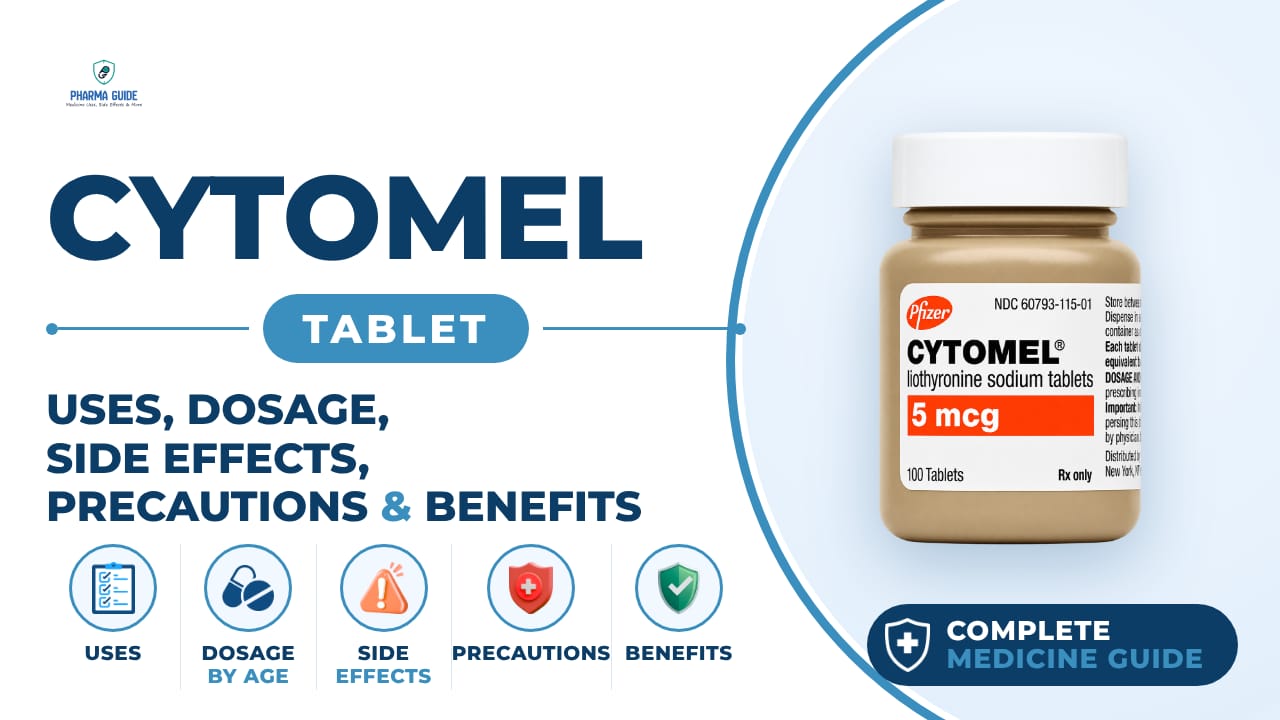
Cytomel Tablet: Uses, Dosage, Side Effects, Precautions and Alternates
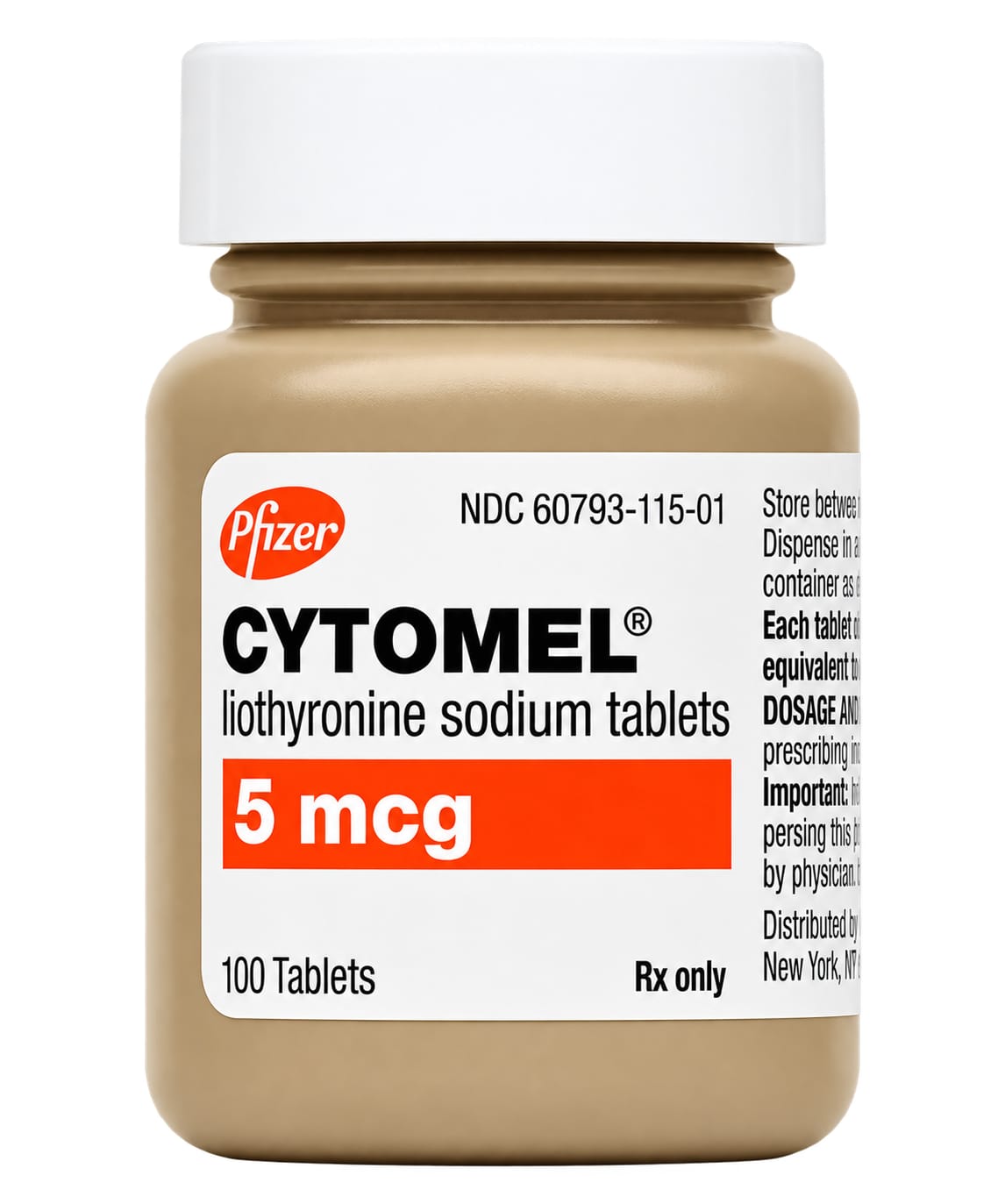
| Generic name | liothyronine |
|---|---|
| Drug class | Thyroid drugs |
| Forms | Tablet |
Quick overview
Cytomel Tablet (liothyronine) is a man-made form of a hormone normally produced by the thyroid gland to regulate the body's energy and metabolism. It belongs to the thyroid drugs class and is given when the thyroid does not produce enough of this hormone on its own. It is used to treat hypothyroidism, as part of certain thyroid tests, and alongside surgery and radioactive iodine therapy in thyroid cancer. It is taken once daily, with doses based on age and weight, and requires regular thyroid function testing.
What is Cytomel Tablet
Cytomel is a man-made form of a hormone that is normally produced by your thyroid gland to regulate the body's energy and metabolism. It is given when the thyroid does not produce enough of this hormone on its own.
Cytomel Tablet uses
- Treats hypothyroidism (low thyroid hormone)
- Used as part of a medical test for thyroid disorders
- Used together with surgery and radioactive iodine therapy in people with thyroid cancer
- Used as replacement or supplemental therapy in patients with hypothyroidism of any cause, including cretinism, myxedema, and hypothyroidism from thyroid surgery, radiation, or drugs
- Used as a pituitary thyroid-stimulating hormone (TSH) suppressant to treat or prevent euthyroid goiters, including thyroid nodules, chronic lymphocytic thyroiditis (Hashimoto's), and multinodular goiter
- Used as a diagnostic agent in suppression tests to help diagnose suspected mild hyperthyroidism or thyroid gland autonomy
- Can be used in patients allergic to desiccated thyroid or thyroid extract derived from pork or beef
Benefits of Cytomel Tablet
- Replaces thyroid hormone the body is not making enough of, helping restore normal energy and metabolism
How Cytomel Tablet works
Thyroid hormones increase how much oxygen body tissues use and speed up the body's metabolism of carbohydrates, fats, and proteins. This affects nearly every organ system and is especially important for brain and nervous system development.
Cytomel Tablet dosage
Follow all directions on your prescription label and read all medication guides or instruction sheets. Use the medicine exactly as directed.
Older adults may be more sensitive to this medicine, and doses are generally lower for people in this age group.
If you are switching to Cytomel from any other thyroid medicine, stop using the other medicine before you start taking this one.
Doses are based on weight, especially in children and teenagers, so your dose needs may change if you gain or lose weight.
When given as part of a thyroid suppression test, you will need to take it for several days in a row before the test; tell your doctor if you miss any doses during this time.
Your thyroid function will need to be tested often, even if you have no symptoms, so your doctor can check if the medicine is working.
If you need surgery, tell your surgeon you are using this medicine, since you may need to stop it for a short time.
Tell any doctor who treats you that you are using this medicine, since it can affect the results of certain medical tests.
Keep using this medicine as directed, even if you feel well; you may need to take thyroid medication for the rest of your life.
Do not change brands or switch to a generic product without first asking your doctor, since different brands may not work the same way.
Take this medicine once a day as recommended.
If you miss a dose, take it as soon as you can, but skip it if it is almost time for your next dose. Do not take two doses at one time.
| Age group | Dose |
|---|---|
| Pediatric patients | 5 mcg once daily, adjusted by a clinician |
| Adults 18–64 years | 25 mcg once daily |
| 65 years and older | 5 mcg once daily initially, with cautious adjustment |
Available forms and strengths
- Tablet
Side effects of Cytomel Tablet
Common
- Trouble breathing
- Headache
- Tremors, feeling nervous or irritable
- Muscle weakness
- Increased appetite
- Diarrhea
- Irregular menstrual periods
- Weight loss
- Feeling hot
- Rash
- Sleep problems (insomnia)
- Sweating
- Increased urination
Serious
- Weak or shallow breathing
- Confusion
- Feeling cold all the time
- Changes in weight or appetite
- Chest pressure spreading to your jaw or shoulder
- A light-headed feeling, like you might pass out
- Severe headaches, ringing in your ears, dizziness, vision problems, pain behind your eyes
- A seizure
- In a child or teenager, pain, stiffness, and trouble moving the legs
- Signs of an allergic reaction: hives, difficult breathing, swelling of face, lips, tongue, or throat
- Symptoms of thyroid toxicity, such as chest pain, fast or pounding heartbeats, feeling hot or nervous, or sweating more than usual
Warnings and precautions
- This medicine should not be used to treat obesity or weight problems. In people with normal thyroid function, doses within the normal replacement range do not cause weight loss, and larger doses can cause serious or even life-threatening toxicity, especially when combined with certain weight-loss drugs.
- You may not be able to take this medicine if you have an adrenal gland problem that is not under control with treatment, or if you have untreated overactive thyroid.
- This medicine should be used with great caution in people with heart problems, such as angina (chest pain), or in elderly patients, who are more likely to have hidden heart disease, because the medicine can worsen heart problems.
- In rare cases, this medicine can trigger an overactive thyroid state or make existing overactive thyroid worse.
- People with diabetes may need their diabetes medicine doses adjusted when starting or stopping this medicine, since thyroid hormone changes can affect blood sugar control.
- If you take blood thinners, your prothrombin time (a blood clotting test) should be checked often, since this medicine can change how your blood thinner works.
- Thyroid hormones do not easily cross into the placenta, and current evidence does not show harm to babies when pregnant women take thyroid hormone.
- Hypothyroid women should not stop thyroid replacement therapy during pregnancy.
- Controlling your thyroid hormone levels is very important during pregnancy, and your dose needs may be different during each trimester.
- Only small amounts of thyroid hormone pass into breast milk, and it is not linked with serious side effects or cancer risk, but caution is still advised when a nursing mother takes this medicine.
- This medicine is substantially removed from the body by the kidneys, so people with reduced kidney function may have a greater risk of side effects. Because older adults are more likely to have reduced kidney function, care should be taken when choosing their dose and kidney function may need to be monitored.
- Use Cytomel only at the dose prescribed by a clinician.
- Take it consistently and follow scheduled thyroid blood tests.
- Tell your clinician if you have heart disease, chest pain, an irregular heartbeat, or high blood pressure.
Storage
- Store at room temperature away from moisture and heat.
- Store between 15° and 30°C (59° and 86°F).
When to see a doctor
- Get emergency medical help if you have signs of an allergic reaction: hives, difficulty breathing, or swelling of your face, lips, tongue, or throat.
- Stop using this medicine and call your doctor if you have symptoms of thyroid toxicity, such as chest pain, fast or pounding heartbeats, feeling hot or nervous, or sweating more than usual.
- Call your doctor right away if you have weak or shallow breathing, confusion, feeling cold all the time, changes in weight or appetite, chest pressure spreading to your jaw or shoulder, a light-headed feeling like you might pass out, severe headaches, ringing in your ears, dizziness, vision problems, pain behind your eyes, a seizure, or in a child or teenager, pain, stiffness, and trouble moving the legs.
- If you think you have taken too much of this medicine, seek emergency medical attention or call your local poison control center right away.
Alternatives
- Combination T4/T3 therapy when specifically prescribed
- Desiccated thyroid preparations
- Levothyroxine
Watch the video
FAQs
What is Cytomel Tablet used for?
Cytomel treats hypothyroidism, is used as part of thyroid diagnostic tests, and is used alongside surgery and radioactive iodine therapy for thyroid cancer. It also helps treat or prevent euthyroid goiters and can be used in patients allergic to desiccated thyroid or thyroid extract.
How is Cytomel Tablet taken?
It is taken once daily exactly as prescribed. Adults 18-64 years typically take 25 mcg once daily, pediatric patients start at 5 mcg once daily adjusted by a clinician, and those 65 and older start at 5 mcg once daily with cautious adjustment. Doses are based on age and weight.
What are the common side effects of Cytomel Tablet?
Common side effects include trouble breathing, headache, tremors, nervousness or irritability, muscle weakness, increased appetite, diarrhea, irregular menstrual periods, weight loss, feeling hot, rash, insomnia, sweating, and increased urination.
Can Cytomel Tablet be used for weight loss?
No, this medicine should not be used to treat obesity or weight problems. In people with normal thyroid function, normal replacement doses do not cause weight loss, and larger doses can cause serious or even life-threatening toxicity, especially combined with certain weight-loss drugs.
Is Cytomel Tablet safe during pregnancy and breastfeeding?
Thyroid hormones do not easily cross into the placenta, and current evidence does not show harm to babies when pregnant women take thyroid hormone. Hypothyroid women should not stop therapy during pregnancy. Only small amounts pass into breast milk, though caution is still advised.
General information, not medical advice
Your prescriber and the leaflet in your pack know your situation. This page does not.
- Follow your prescriber and the leaflet
- Don't start, stop, or change a dose on your own
- Doses and warnings differ by country and product
Sources
Video
Related medicines

Injectafer Injection: Uses, Dosage, Side Effects, Precautions and Alternates
Iron products
Injectafer (ferric carboxymaltose) treats iron deficiency anemia and heart failure-related iron deficiency via IV. Learn uses, dosage, side effects, and

Gliclazide Tablet: Uses, Dosage, Side Effects, Precautions and Alternates
Sulfonylurea (hypoglycemic/antidiabetic agent)
Gliclazide Tablet is a sulfonylurea for type 2 diabetes that boosts insulin release. Learn about dosage, side effects, warnings, and precautions.