
Safety
General information, not medical advice
Your prescriber and the leaflet in your pack know your situation. This page does not.
- Follow your prescriber and the leaflet
- Don't start, stop, or change a dose on your own
- Doses and warnings differ by country and product
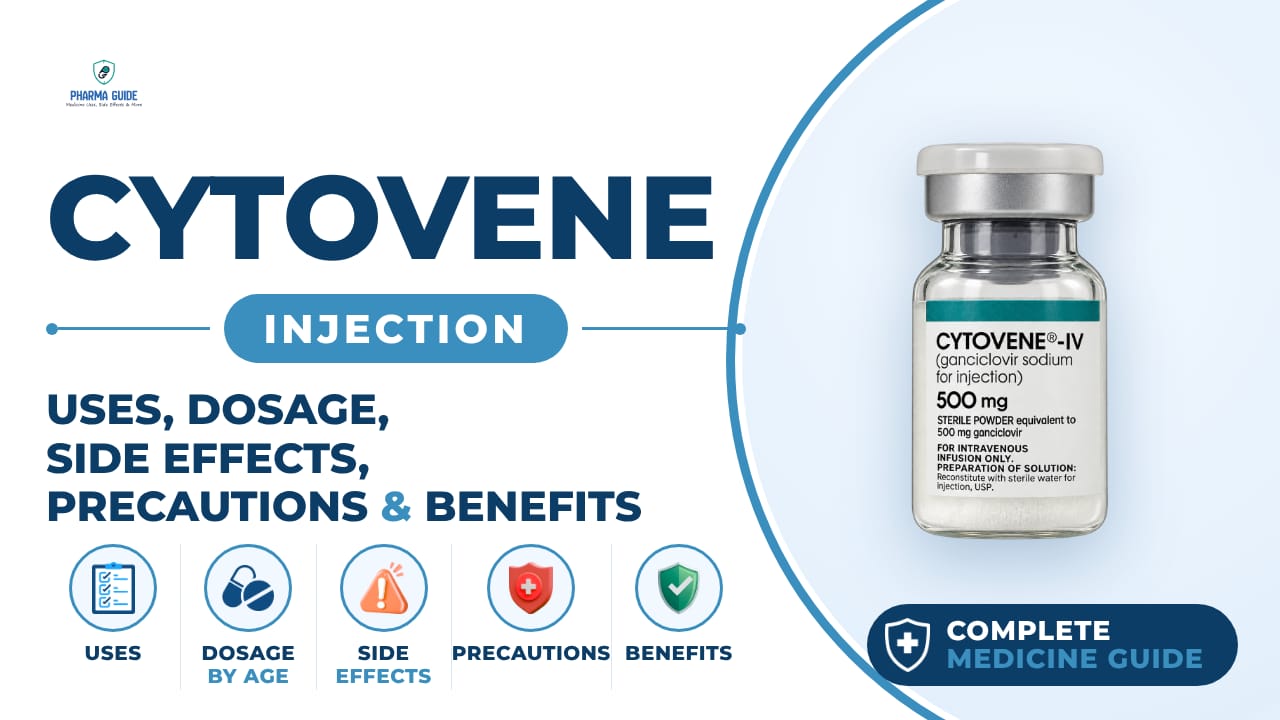
Cytovene Injection: Uses, Dosage, Side Effects, Precautions and Alternates
| Generic name | ganciclovir |
|---|---|
| Drug class | Antivirals, CMV (Purine nucleosides) |
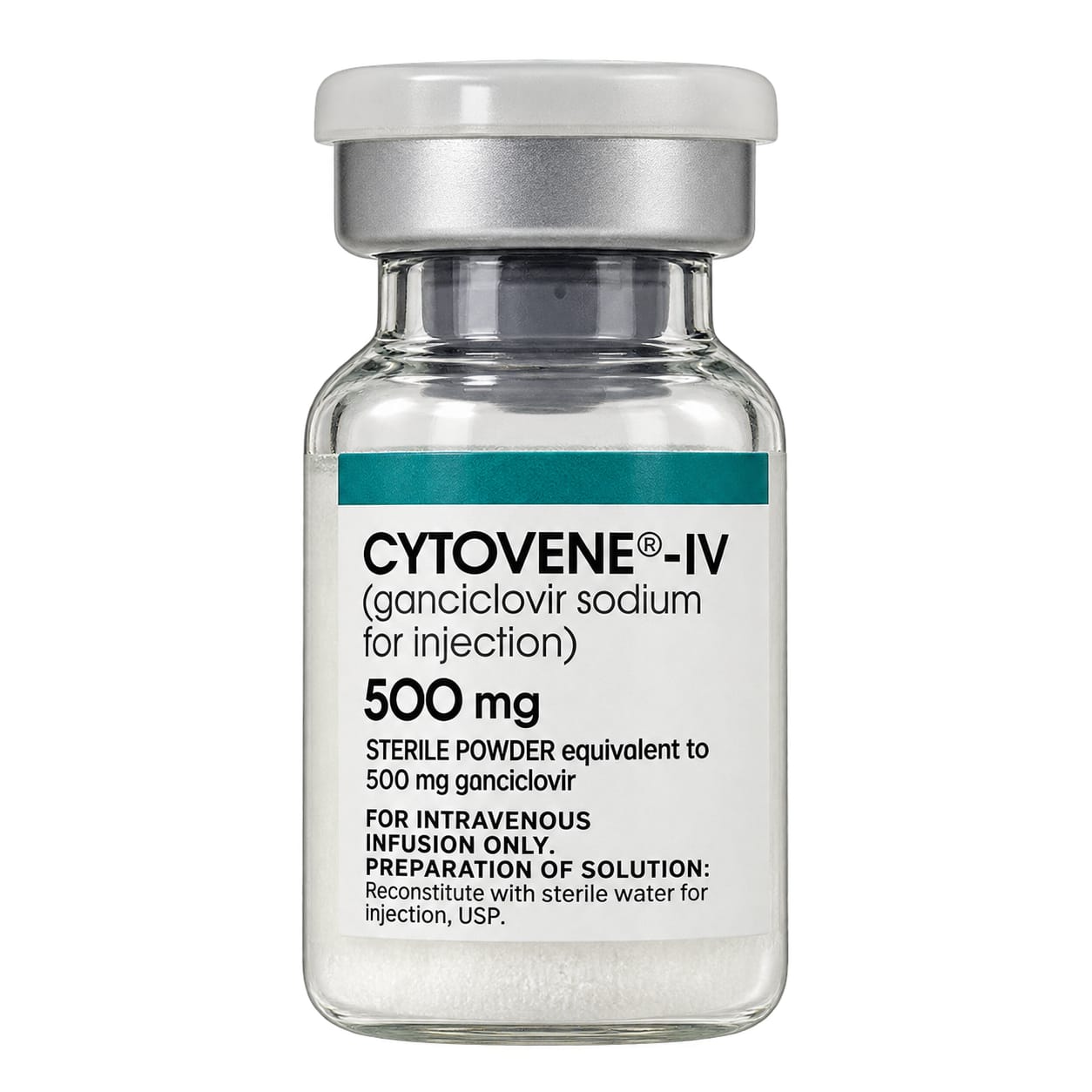
| Forms | Powder for solution (for injection into a vein) |
Quick overview
Cytovene Injection (ganciclovir) is an antiviral medicine from the CMV purine nucleosides class. It is used to treat CMV eye infections in people with weakened immune systems and to help prevent CMV disease in organ or bone marrow transplant patients at high risk. It is given as a slow infusion into a vein by a healthcare provider, and regular blood, kidney, and eye checks are needed during treatment.
What is Cytovene Injection
Cytovene (ganciclovir) is an antiviral injection used to treat and prevent cytomegalovirus (CMV) infections in people with weakened immune systems, such as patients with AIDS or those who have received organ or bone marrow transplants.
Cytovene Injection uses
- Treats CMV eye infections (CMV retinitis) in people with weakened immune systems, such as those with AIDS, to slow the infection from getting worse (it does not cure it)
- Helps prevent serious CMV infections and disease in people who have had an organ or bone marrow transplant and are at high risk
Benefits of Cytovene Injection
- Slows progression of CMV retinitis and helps protect eyesight
- Lowers the chance of developing CMV disease after an organ or bone marrow transplant
How Cytovene Injection works
The medicine is changed into an active form inside cells infected with the virus. This active form blocks an enzyme the virus needs to copy its DNA, which stops or slows the virus from spreading in the body.
Cytovene Injection dosage
This medicine is given as a slow infusion into a vein over about one hour; it must not be given as a quick injection. It should be given into a vein with good blood flow. You will be given plenty of fluids to drink or through an IV along with this medicine. This medicine must be prepared and given by a healthcare provider, not at home. Your blood counts, kidney function, and (if you have CMV retinitis) your eyes will be checked regularly while you are on this medicine.
| Age group | Dose |
|---|---|
| 18–64 years – CMV retinitis induction | 5 mg/kg IV every 12 hours for 14–21 days |
| 18–64 years – maintenance | 5 mg/kg IV once daily or 6 mg/kg IV once daily, 5 days/week |
Available forms and strengths
- Powder for solution (for injection into a vein)
Side effects of Cytovene Injection
Common
- Diarrhea
- Upset stomach, nausea, vomiting
- Decreased appetite
- Dizziness, drowsiness, unsteadiness
- Shaking (tremors)
- Pain, redness, or irritation where the IV was given
- Increased sweating
- Itching
- Fever, headache, tiredness, weakness
Serious
- Mental or mood changes, such as confusion or hallucinations
- Changes in the amount of urine (sign of kidney problems)
- Seizures
- Allergic reaction: trouble breathing, throat tightness, swelling of lips/tongue/face, or hives
- Paleness and tiredness, which may be signs of anemia
- Unusual bleeding or bruising
- Fever or other signs of infection
- Numbness or tingling in part of the body
- Decreased sperm production or infertility
Warnings and precautions
- This medicine can cause serious drops in blood cell counts, including white blood cells, red blood cells, and platelets, which can increase the risk of infection and bleeding.
- This medicine may cause temporary or permanent infertility in both men and women.
- Based on animal studies, this medicine could cause birth defects if used during pregnancy.
- Based on animal studies, this medicine may have the potential to cause cancer.
- Taking this medicine together with the antibiotic combination imipenem-cilastatin is not recommended because it has been linked to seizures.
- This medicine is not recommended if your blood counts are already very low before starting treatment.
- This medicine may harm an unborn baby. It should only be used during pregnancy if clearly prescribed. Women who can become pregnant should use effective birth control during treatment and for at least 30 days after stopping.
- Breastfeeding is not recommended while using this medicine because it may cause serious side effects in a nursing baby. If you have HIV, you should not breastfeed at all because the virus can pass through breast milk.
- This medicine is removed from the body mainly by the kidneys, so people with kidney problems can build up higher levels of the drug and need a lower dose. Kidney function should be checked before and during treatment.
- This medicine has not been studied in people with liver problems, so its safety and proper use in this situation are not well known.
- Alcohol is best avoided or limited during serious illness and antiviral treatment.
- This medicine may affect your ability to think clearly and to drive or operate machinery, because it can cause seizures, dizziness, or confusion in some people.
Storage
- Store the unopened medicine at room temperature, with brief excursions to slightly higher or lower temperatures allowed
- After mixing, the solution in the vial can be kept at room temperature for up to 12 hours; do not refrigerate or freeze it, and throw away any unused portion
- Once diluted for the infusion bag, the solution should be kept refrigerated and used within 24 hours; do not freeze
When to see a doctor
- Call your doctor right away if you think you have an infection, or if you develop a fever or chills.
- Call your doctor right away if you notice unusual bleeding or bruising, black tarry stools, blood in your urine or stool, or pinpoint red spots on your skin.
- Get medical help right away for signs of a serious allergic reaction, such as trouble breathing, throat tightness, or swelling of the lips, tongue, or face.
- Tell your doctor immediately about mental or mood changes such as confusion or hallucinations, seizures, or changes in how much you urinate.
- Tell your doctor about paleness and fatigue, which may be signs of anemia.
Alternatives
- Letermovir
- Cidofovir
- Foscarnet
- Valganciclovir
Watch the video
FAQs
What is Cytovene Injection used for?
It treats CMV eye infections (CMV retinitis) in people with weakened immune systems, such as those with AIDS, and helps prevent serious CMV infections in people who have had an organ or bone marrow transplant and are at high risk.
How is Cytovene Injection given?
It is given as a slow infusion into a vein over about one hour by a healthcare provider, into a vein with good blood flow. It must not be given as a quick injection and cannot be given at home.
What are the serious side effects of Cytovene Injection?
Serious side effects include mental or mood changes like confusion or hallucinations, changes in urine amount, seizures, allergic reactions, anemia symptoms like paleness and tiredness, unusual bleeding or bruising, fever or signs of infection, numbness or tingling, and decreased sperm production or infertility.
Can Cytovene Injection affect fertility or pregnancy?
Yes, it may cause temporary or permanent infertility in both men and women, and animal studies suggest it could cause birth defects if used during pregnancy. Women who can become pregnant should use effective birth control during treatment and for at least 30 days after stopping.
Does Cytovene Injection require monitoring during treatment?
Yes, blood counts, kidney function, and (for those with CMV retinitis) eyes should be checked regularly while on this medicine, since it can cause serious drops in blood cell counts.
General information, not medical advice
Your prescriber and the leaflet in your pack know your situation. This page does not.
- Follow your prescriber and the leaflet
- Don't start, stop, or change a dose on your own
- Doses and warnings differ by country and product
Sources
Video
Related medicines

Injectafer Injection: Uses, Dosage, Side Effects, Precautions and Alternates
Iron products
Injectafer (ferric carboxymaltose) treats iron deficiency anemia and heart failure-related iron deficiency via IV. Learn uses, dosage, side effects, and

Gliclazide Tablet: Uses, Dosage, Side Effects, Precautions and Alternates
Sulfonylurea (hypoglycemic/antidiabetic agent)
Gliclazide Tablet is a sulfonylurea for type 2 diabetes that boosts insulin release. Learn about dosage, side effects, warnings, and precautions.