
Safety
General information, not medical advice
Your prescriber and the leaflet in your pack know your situation. This page does not.
- Follow your prescriber and the leaflet
- Don't start, stop, or change a dose on your own
- Doses and warnings differ by country and product
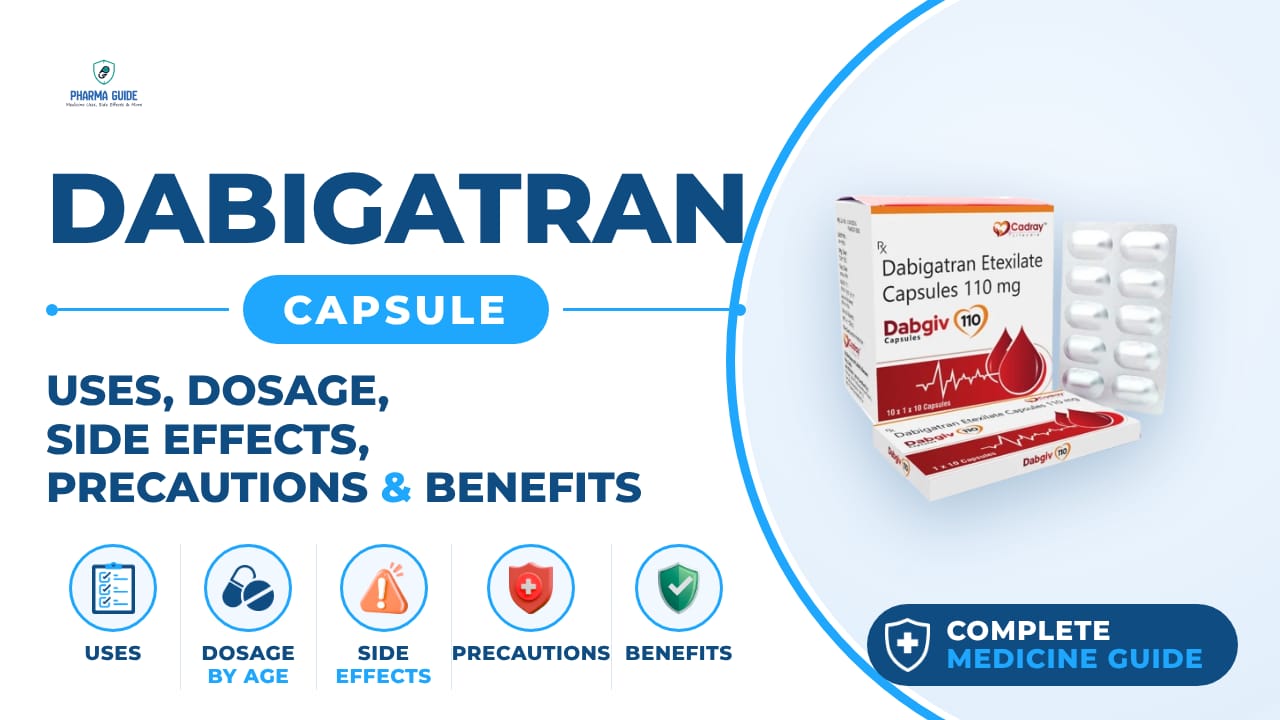
Dabigatran Capsule: Uses, Dosage, Side Effects, Precautions and Alternates
| Generic name | Dabigatran etexilate |
|---|---|
| Drug class | Direct thrombin inhibitor (anticoagulant / blood thinner) |
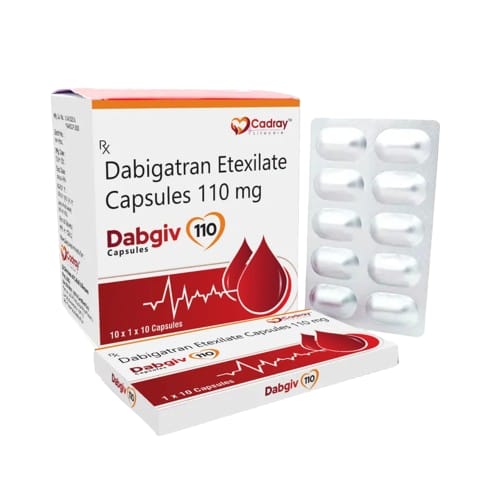
| Forms | Capsules (75 mg, 110 mg, and 150 mg strengths), Oral pellets (for pediatric use) |
Quick overview
Dabigatran Capsule (generic name dabigatran etexilate) is a prescription anticoagulant belonging to the direct thrombin inhibitor class. It helps stop harmful blood clots from forming in blood vessels, lowering the risk of stroke and other clot-related complications. It is used in adults with certain types of irregular heartbeat, in people treating or preventing leg and lung blood clots, and in some children who can swallow soft food.
What is Dabigatran Capsule
Dabigatran is a prescription blood-thinning medicine. It is an anticoagulant that helps stop harmful blood clots from forming in your blood vessels.
Dabigatran Capsule uses
- Reduce the risk of stroke and blood clots in adults with a type of irregular heartbeat called atrial fibrillation that is not caused by a heart valve problem
- Treat blood clots in the veins of the legs (deep vein thrombosis) and lungs (pulmonary embolism) after being treated with an injectable blood thinner for 5 to 10 days
- Reduce the risk of blood clots happening again in the legs or lungs after previous treatment
- Help prevent blood clots in the legs and lungs after hip replacement surgery
- Treat and help prevent blood clots from coming back in children (from the time they can swallow soft food up to age 18)
Benefits of Dabigatran Capsule
- Lowers the chance of having a stroke by helping prevent blood clots from forming
- Does not require routine blood test monitoring like some older blood thinners
- Available in capsule form for adults and other age-appropriate forms for children
How Dabigatran Capsule works
Dabigatran works by blocking a substance in the blood called thrombin. Thrombin normally helps turn a blood protein into fibrin, which forms the mesh of a blood clot. By blocking thrombin, dabigatran stops clots from forming and growing.
Dabigatran Capsule dosage
Take exactly as prescribed by your healthcare provider; do not take more or less, or more often, than directed. Swallow the capsule whole with a full glass of water; do not chew, break, or open the capsule or sprinkle the contents on food or into drinks. It can be taken with or without food, and taking it with food may help if it upsets your stomach.
For twice-daily dosing, space the two doses about 12 hours apart, at around the same times every day. If you miss a dose, take it as soon as you remember on the same day; if it is less than 6 hours until your next scheduled dose, skip the missed dose. Do not take a double dose to make up for a missed dose.
Do not stop taking this medicine without first talking to the healthcare provider who prescribed it, since stopping early can raise the risk of stroke or blood clots. Tell your doctor and dentist that you are taking this medicine before any surgery, dental work, or medical procedure, as it may need to be stopped temporarily beforehand.
| Age group | Dose |
|---|---|
| Under 18 years | Specialist-directed dosing required |
| 18–74 years | 150 mg twice daily for atrial fibrillation in patients with appropriate kidney function |
| 75–79 years | 150 mg twice daily; lower dose may be considered based on bleeding/kidney risk |
| 80 years & older | 110 mg twice daily is commonly used in some countries; local product guidance applies |
| Adults | 150 mg twice daily for many indications when kidney function is adequate |
Available forms and strengths
- Capsules (75 mg, 110 mg, and 150 mg strengths)
- Oral pellets (for pediatric use)
Side effects of Dabigatran Capsule
Common
- Indigestion, upset stomach, or burning sensation (dyspepsia)
- Stomach-area (abdominal) pain or discomfort
- Heartburn
- Nausea and vomiting
- Diarrhea
- Tiredness and lack of energy
Serious
- Serious or life-threatening bleeding, including bleeding that will not stop
- Pink or brown urine
- Red or black, tarry stools
- Coughing up blood or blood clots
- Vomiting blood or vomit that looks like coffee grounds
- Unusual bruising that appears without a known cause or gets larger
- Frequent or prolonged nosebleeds
- Unusual bleeding from the gums
- Bleeding from a cut that takes a long time to stop
- Heavier than normal menstrual or vaginal bleeding
- Unexpected pain, swelling, or joint pain
- Headaches, dizziness, or feeling faint or weak
- Signs of a serious allergic reaction: hives, rash, itching, chest pain or tightness, trouble breathing or wheezing, swelling of the face, lips, tongue, throat, or feeling dizzy or faint
- Signs of a spinal or epidural blood clot (in people who have had spinal procedures): back pain, tingling, numbness (especially in the legs and feet), muscle weakness, or loss of control of bowels or bladder
Warnings and precautions
- Stopping this medicine early, for reasons other than bleeding or completing treatment, increases the risk of stroke or dangerous blood clots. If it must be stopped, your doctor may prescribe another blood thinner temporarily.
- People who have a spinal injection, epidural, or spinal tap while taking this medicine are at risk of a blood clot near the spine that can cause long-term or permanent paralysis. Patients should be watched closely for signs like back pain, numbness, tingling, or loss of bladder/bowel control.
- This medicine can cause serious bleeding that can be life-threatening. The risk of bleeding is higher in older patients, those with kidney problems, and those taking certain other medicines that increase bleeding risk.
- This medicine should not be used by people with an artificial (mechanical) heart valve, as studies showed more blood clots and more bleeding in these patients compared to warfarin.
- This medicine is not recommended for people with a condition called antiphospholipid syndrome, especially those who test positive for all three related antibodies, because it may be less effective than older blood thinners in preventing clots in this group.
- Combining this medicine with certain other drugs that increase bleeding risk (such as aspirin, NSAIDs, other blood thinners, or certain antiplatelet drugs) can further raise the chance of bleeding.
- It is not known if this medicine will harm an unborn baby.
- Women who are pregnant should generally avoid this medicine unless a doctor decides the benefit outweighs the risk, and should tell their doctor right away if they become pregnant during treatment.
- Breastfeeding is not recommended while taking this medicine because it is not known whether the drug passes into breast milk in humans, though it has been found in animal milk.
- This medicine is removed from the body mainly through the kidneys, so poor kidney function can cause the drug to build up and increase bleeding risk. It should not be used in people with severe kidney impairment, and doses may need to be reduced for those with moderate kidney impairment. Kidney function should be checked before starting treatment and periodically afterward.
- This medicine is not recommended for people with severe liver impairment or liver disease that could affect survival, since it has not been studied in these patients.
- No specific interaction between this medicine and alcohol has been found in studies, but as with any blood thinner, heavy alcohol use may increase bleeding risk, so it should be used cautiously.
- This medicine is not expected to affect your ability to drive or use machinery.
Storage
- Store at room temperature, generally between 68°F to 77°F (20°C to 25°C)
- Keep the medicine in its original container, tightly closed, to protect it from moisture
- Do not store the capsules in pill boxes or pill organizers
- Only open one bottle at a time; finish the opened bottle before starting a new one
- After opening a bottle, use the capsules within 4 months and safely throw away any that are left after that time
- Keep out of the sight and reach of children and pets
- Dispose of unused or expired medicine through a medicine take-back program rather than flushing it down the toilet
When to see a doctor
- Get emergency medical help right away if you have signs of serious bleeding, such as coughing up blood, vomiting blood or material that looks like coffee grounds, red or black tarry stools, or pink or brown urine.
- Get emergency medical help if you have signs of a serious allergic reaction, such as chest pain or tightness, trouble breathing or wheezing, swelling of the face or tongue, or feeling dizzy or faint.
- Call your doctor right away if you fall or injure yourself, especially if you hit your head, since you may need to be checked for internal bleeding.
- Contact your doctor immediately if you notice signs of a spinal or epidural blood clot, such as back pain, tingling, numbness (especially in the legs), muscle weakness, or loss of control of bladder or bowels.
- Call your doctor or get prompt medical attention for less severe but concerning bleeding signs, such as joint pain or swelling, frequent nosebleeds, unusual gum bleeding, heavier than normal menstrual bleeding, or cuts that take a long time to stop bleeding.
Alternatives
- Pradaxa
- Apixaban
- Rivaroxaban
Watch the video
FAQs
What is Dabigatran Capsule used for?
It is used to reduce stroke risk in adults with atrial fibrillation not caused by a heart valve problem, treat and prevent blood clots in the legs (deep vein thrombosis) and lungs (pulmonary embolism), prevent clots after hip replacement surgery, and treat or prevent clots from recurring in children who can swallow soft food.
How should I take Dabigatran Capsule?
Swallow the capsule whole with a full glass of water without chewing, breaking, or opening it. It can be taken with or without food. For twice-daily dosing, space doses about 12 hours apart at the same times each day.
What should I do if I miss a dose?
Take the missed dose as soon as you remember on the same day. If it is less than 6 hours until your next scheduled dose, skip the missed dose and do not take a double dose.
What are the serious side effects of Dabigatran Capsule?
Serious side effects include life-threatening bleeding, pink or brown urine, red or black tarry stools, coughing up blood, vomiting blood or material that looks like coffee grounds, unusual bruising, frequent nosebleeds, unusual gum bleeding, heavier menstrual bleeding, and signs of a spinal or epidural blood clot.
Can I stop taking Dabigatran Capsule on my own?
No, you should not stop taking this medicine without talking to your healthcare provider first, since stopping early can increase the risk of stroke or blood clots.
General information, not medical advice
Your prescriber and the leaflet in your pack know your situation. This page does not.
- Follow your prescriber and the leaflet
- Don't start, stop, or change a dose on your own
- Doses and warnings differ by country and product
Sources
Video
Related medicines

Injectafer Injection: Uses, Dosage, Side Effects, Precautions and Alternates
Iron products
Injectafer (ferric carboxymaltose) treats iron deficiency anemia and heart failure-related iron deficiency via IV. Learn uses, dosage, side effects, and

Gliclazide Tablet: Uses, Dosage, Side Effects, Precautions and Alternates
Sulfonylurea (hypoglycemic/antidiabetic agent)
Gliclazide Tablet is a sulfonylurea for type 2 diabetes that boosts insulin release. Learn about dosage, side effects, warnings, and precautions.