
Safety
General information, not medical advice
Your prescriber and the leaflet in your pack know your situation. This page does not.
- Follow your prescriber and the leaflet
- Don't start, stop, or change a dose on your own
- Doses and warnings differ by country and product
Dacogen Injection: Uses, Dosage, Side Effects, Precautions and Alternates

| Generic name | decitabine |
|---|---|
| Drug class | Antimetabolites (DNA Methylation Inhibitor) |
| Forms | Injection (powder for reconstitution, given as an intravenous infusion) |
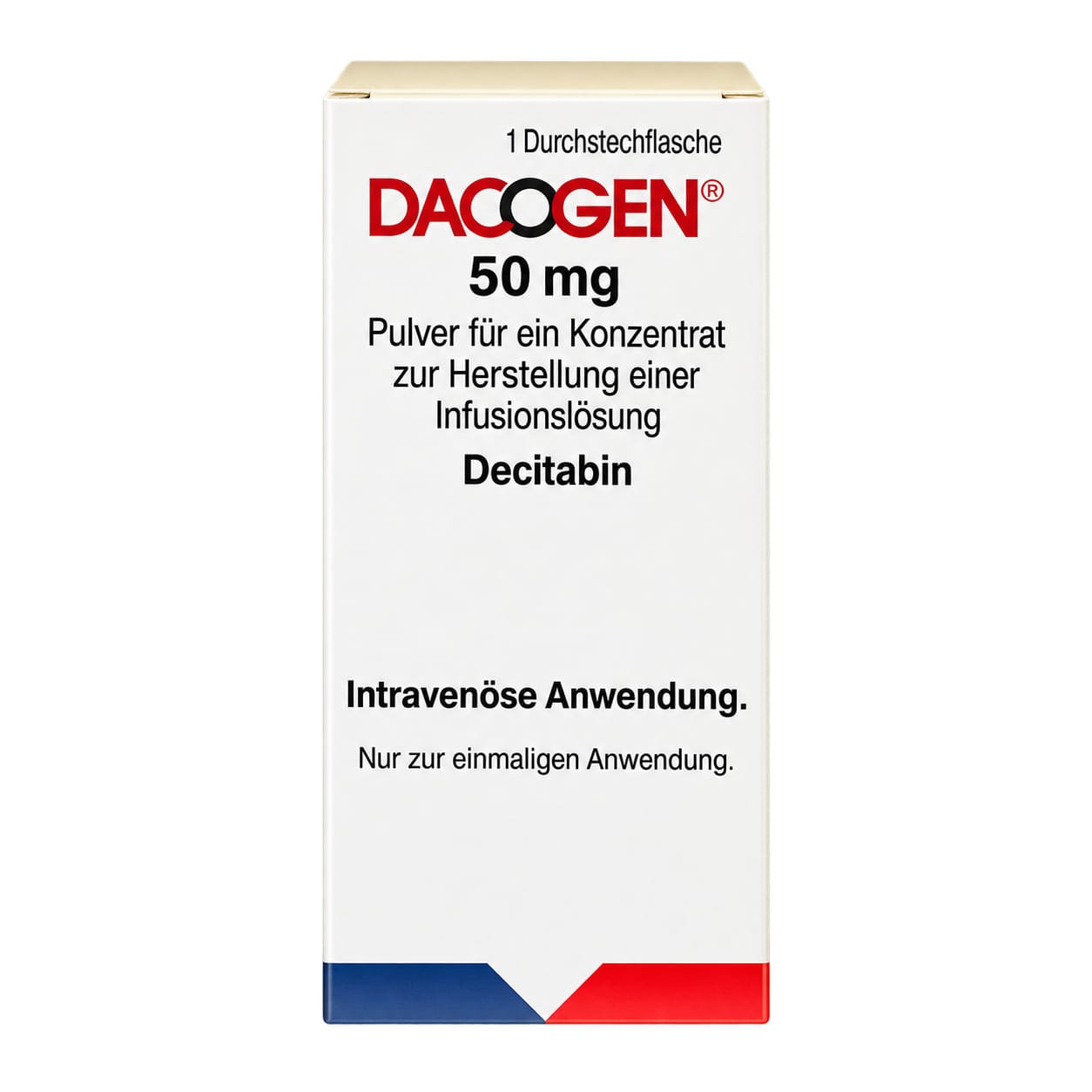
Quick overview
Dacogen Injection (decitabine) is a prescription chemotherapy medicine from the antimetabolite class, given as an intravenous infusion to treat certain blood and bone marrow cancers in adults. It works by interfering with the growth and spread of cancer cells. It is given by a care team in a hospital or clinic setting and requires regular blood monitoring.
What is Dacogen Injection
Dacogen is a prescription chemotherapy injection given through a vein (intravenously) to treat adult blood and bone marrow cancers. It interferes with the growth and spread of cancer cells in the body. The generic name is decitabine, and it belongs to the antimetabolite drug class, acting as a DNA methylation inhibitor.
Dacogen Injection uses
- Myelodysplastic Syndromes (MDS): a group of bone marrow diseases where the body fails to make healthy, mature blood cells, including previously treated and untreated, de novo and secondary MDS of all French-American-British subtypes
- Acute Myeloid Leukemia (AML): a fast-growing cancer of the blood and bone marrow, for adults age 65 and older who cannot use standard chemotherapy
Benefits of Dacogen Injection
- Destroys abnormal, rapidly dividing cells in the bone marrow
- Helps bone marrow create normal, healthy blood cells
- May reduce the need for regular blood transfusions
How Dacogen Injection works
Decitabine is believed to work by being taken up into the DNA of cancer cells and blocking an enzyme called DNA methyltransferase. This causes changes in the DNA that can help abnormal cells either turn back into more normal cells or die off. Cells that are not dividing rapidly are less affected by the drug.
Dacogen Injection dosage
This medicine is given as an infusion into a vein by your care team in a hospital or clinic setting; it is not self-administered or taken home. You may be given other medications to help prevent nausea or vomiting before receiving this treatment. Treatment is usually given in repeating cycles over several hours, with cycles repeated every few weeks depending on the regimen and how your blood counts recover.
It is important to keep all follow-up appointments and not miss a scheduled dose; call your care team if you cannot keep an appointment. Special care may be needed if this medicine is considered for children; talk to your care team about this. Regular blood tests are needed before and during treatment to check your blood counts, liver, and kidney function.
Use exactly as prescribed by your doctor or pharmacist.
Available forms and strengths
- Injection (powder for reconstitution, given as an intravenous infusion)
Side effects of Dacogen Injection
Common
- Low white blood cells (neutropenia), which raises infection risk
- Low red blood cells (anemia), causing tiredness or weakness
- Low platelets (thrombocytopenia), causing easy bruising or bleeding
- Nausea, vomiting, diarrhea, or constipation
- Fever, headache, and general weakness or fatigue
- Mouth sores
- Cough or lung infections like pneumonia
- Joint pain, trouble sleeping (insomnia)
- Increased thirst, increased urination, hunger, or high blood sugar
- Dizziness and drowsiness
Serious
- Signs of allergic reaction: hives, difficulty breathing, swelling of face, lips, tongue, or throat
- Signs of infection: fever, chills, sore throat, cough, wounds that don't heal, pain or trouble passing urine
- Unusual bruising or unusual bleeding, purple or red spots under the skin
- Pale skin, cold hands and feet, or signs of low red blood cells such as weakness, dizziness, or trouble breathing
- White patches or sores inside the mouth or on the lips, red or swollen gums
- Chest pain, wheezing, shortness of breath, or cough with yellow or green mucus
- Swelling, pain, tenderness, or redness anywhere on the body
- Signs of electrolyte imbalance: confusion, uneven heart rate, extreme thirst, increased urination, muscle jerking, leg discomfort, muscle weakness
- Serious eye symptoms: sudden vision loss, blurred vision, tunnel vision, eye pain or swelling, seeing halos around lights
- Serious heart symptoms: fast, irregular, or pounding heartbeat, fluttering in the chest, shortness of breath, sudden dizziness or passing out
- Severe headache, confusion, slurred speech, arm or leg weakness, trouble walking, loss of coordination, stiff muscles, high fever, profuse sweating, or tremors
Warnings and precautions
- This medicine can cause serious and sometimes fatal drops in blood cell counts (low white cells, red cells, and platelets), which is the most common reason doses are reduced, delayed, or stopped. Regular blood tests are needed to monitor for this.
- This medicine can cause serious harm to an unborn baby, including major birth defects, if used during pregnancy.
- This medicine weakens your immune system, raising your risk of getting infections, including serious or life-threatening ones. Avoid close contact with people who are sick, and tell your care team right away if you notice any signs of infection.
- Be extra careful when brushing or flossing your teeth, shaving, or doing activities that could cause bleeding or injury, since this medicine can make you bruise or bleed more easily.
- Avoid taking common pain or fever medicines like aspirin, acetaminophen, ibuprofen, naproxen, or ketoprofen unless your care team tells you to, because they can hide a fever that might be a sign of serious infection.
- This medicine may affect fertility, particularly in men, and the effect may not reverse after stopping treatment.
- Do not use this medicine if you are pregnant, as it could seriously harm the unborn baby, including causing birth defects.
- A pregnancy test is needed before starting treatment. Women should use effective birth control during treatment and for at least 6 months after the last dose. Men should use a condom and effective birth control for at least 3 months after their last dose, because the medicine may cause birth defects if a man fathers a child during this time.
- Tell your care team right away if a pregnancy occurs during treatment.
- Do not breastfeed while receiving this medicine and for at least 2 weeks after your last dose, because it is not known if the drug passes into breast milk and it could harm a nursing baby.
- Tell your care team if you have kidney disease before starting this medicine, since its safety has not been specifically studied in people with kidney problems. Kidney function should be monitored; limited data exist in severe renal impairment.
- Tell your care team if you have liver disease before starting this medicine, since its safety has not been specifically studied in people with liver problems.
- It is not known how this medicine interacts with alcohol, so check with your doctor before drinking alcohol during treatment.
Storage
- This medication is given in a hospital or clinic. It will not be stored at home.
- Store vials at room temperature between 68°F and 77°F (20°C to 25°C), with brief excursions allowed between 59°F and 86°F (15°C to 30°C).
When to see a doctor
- Get emergency help right away for signs of a severe allergic reaction, such as hives, trouble breathing, or swelling of the face, lips, tongue, or throat.
- Call your care team right away if you develop fever, chills, sore throat, cough, or other signs of infection, since this medicine raises your infection risk.
- Contact your care team promptly if you notice unusual bruising, unusual bleeding, or purple or red spots under your skin.
- Seek care if you have pale skin, cold hands and feet, or feel very tired, dizzy, or short of breath, which can be signs of low red blood cells.
- Seek urgent medical care for serious eye symptoms such as sudden vision loss, blurred vision, tunnel vision, eye pain or swelling, or seeing halos around lights.
- Seek urgent medical care for serious heart symptoms such as a fast, irregular, or pounding heartbeat, fluttering in the chest, shortness of breath, or sudden dizziness or fainting.
- Seek urgent medical care for a severe headache, confusion, slurred speech, arm or leg weakness, trouble walking, loss of coordination, very stiff muscles, high fever, heavy sweating, or tremors.
- If you think you have received too much of this medicine, contact a poison control center or emergency room right away.
Alternatives
- Lenalidomide in selected MDS cases
- Venetoclax-based regimens
- Oral decitabine/cedazuridine
- Azacitidine
Watch the video
FAQs
What is Dacogen Injection used for?
Dacogen is used to treat Myelodysplastic Syndromes (MDS) and Acute Myeloid Leukemia (AML) in adults age 65 and older who cannot use standard chemotherapy.
How is Dacogen Injection given?
It is given as an intravenous infusion by a care team in a hospital or clinic setting, usually in repeating cycles over several hours, with cycles repeated every few weeks depending on the regimen and blood count recovery.
What are the common side effects of Dacogen Injection?
Common side effects include low white blood cells, low red blood cells, low platelets, nausea, vomiting, diarrhea, fever, headache, fatigue, mouth sores, cough, joint pain, insomnia, increased thirst or urination, dizziness, and drowsiness.
Can Dacogen Injection be used during pregnancy?
No, Dacogen should not be used during pregnancy as it can cause serious harm to an unborn baby, including major birth defects. A pregnancy test is needed before starting treatment, and effective birth control is required during and after treatment.
What precautions should be taken while on Dacogen Injection?
Patients should avoid close contact with sick people due to infection risk, be careful to prevent bleeding or injury, avoid certain pain or fever medicines like aspirin or ibuprofen unless approved by their care team, and have regular blood tests to monitor blood counts, liver, and kidney function.
General information, not medical advice
Your prescriber and the leaflet in your pack know your situation. This page does not.
- Follow your prescriber and the leaflet
- Don't start, stop, or change a dose on your own
- Doses and warnings differ by country and product
Sources
Video
Related medicines

Injectafer Injection: Uses, Dosage, Side Effects, Precautions and Alternates
Iron products
Injectafer (ferric carboxymaltose) treats iron deficiency anemia and heart failure-related iron deficiency via IV. Learn uses, dosage, side effects, and

Gliclazide Tablet: Uses, Dosage, Side Effects, Precautions and Alternates
Sulfonylurea (hypoglycemic/antidiabetic agent)
Gliclazide Tablet is a sulfonylurea for type 2 diabetes that boosts insulin release. Learn about dosage, side effects, warnings, and precautions.