
Safety
General information, not medical advice
Your prescriber and the leaflet in your pack know your situation. This page does not.
- Follow your prescriber and the leaflet
- Don't start, stop, or change a dose on your own
- Doses and warnings differ by country and product
Dalbavancin Injection: Uses, Dosage, Side Effects, Precautions and Alternates
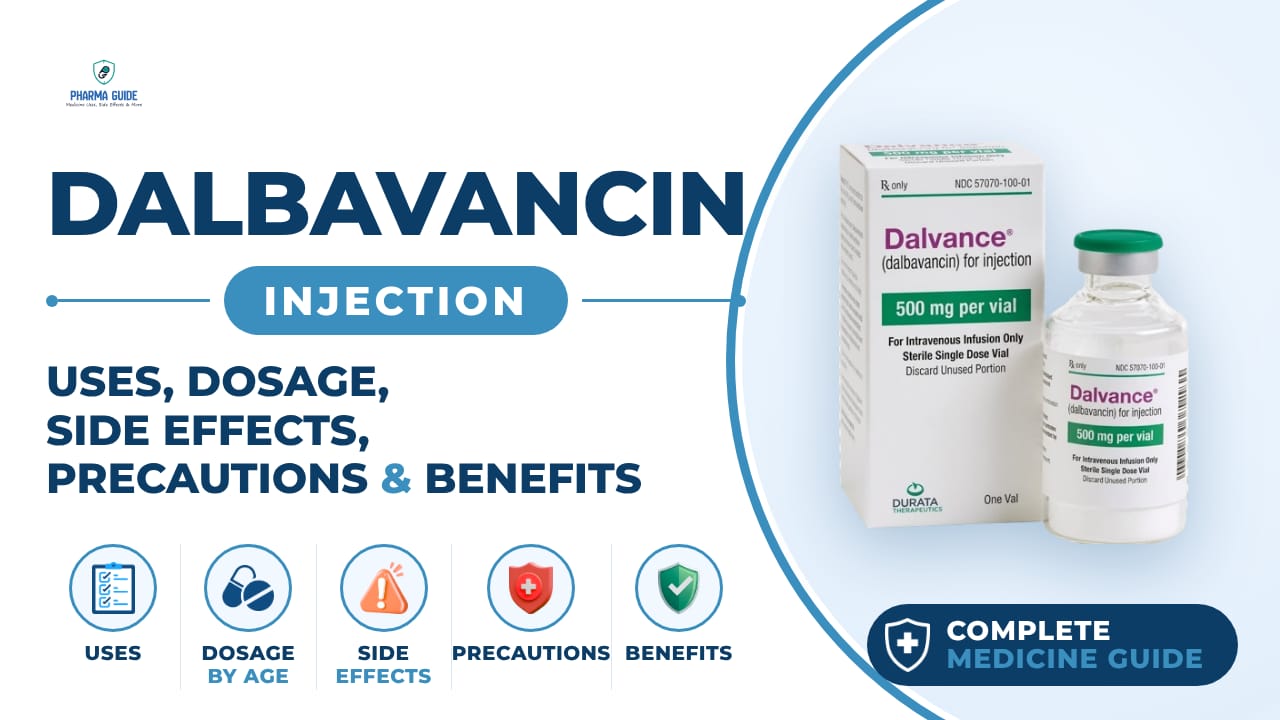
| Generic name | dalbavancin |
|---|---|
| Drug class | Glycopeptide antibiotics (lipoglycopeptide antibacterial) |
| Forms | Injection |
Quick overview
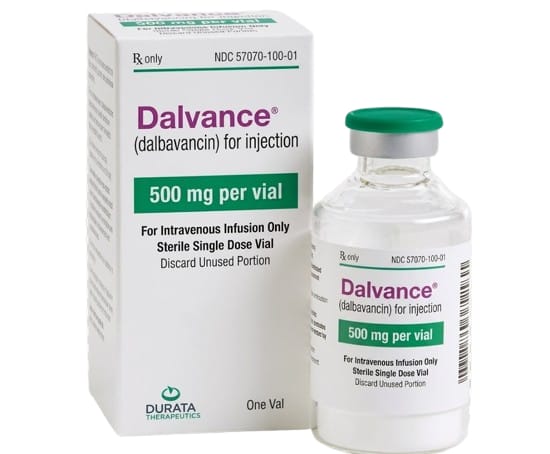
Dalbavancin Injection (generic name: dalbavancin) is a lipoglycopeptide antibiotic given by IV infusion. It is used to treat serious skin infections caused by certain gram-positive bacteria, including some resistant strains like MRSA. It is notable for its long-lasting activity, often requiring only one or two doses. It is given by a doctor or nurse in a hospital or clinic setting.
What is Dalbavancin Injection
Dalbavancin is an antibiotic given by IV infusion. It belongs to a group of medicines called lipoglycopeptide antibiotics and is used to treat serious skin infections caused by certain bacteria, including some resistant strains like MRSA.
Dalbavancin Injection uses
- Treatment of acute bacterial skin and skin structure infections (ABSSSI) caused by susceptible gram-positive bacteria such as Staphylococcus aureus (including MRSA), Streptococcus pyogenes, Streptococcus agalactiae, and related strains
- Sometimes used off-label, on a specialist's advice, for bone and joint infections or endocarditis (heart valve infection)
Benefits of Dalbavancin Injection
- Stays active in the body for a long time (up to about 14 days after one dose), so it usually only needs to be given once or as two doses a week apart
- This can mean fewer hospital visits for daily IV antibiotics, so some patients may be able to go home sooner
How Dalbavancin Injection works
Dalbavancin kills bacteria by attaching to a part of the bacterial cell wall building blocks, which stops the wall from being built properly. This weakens and destroys the bacteria.
Dalbavancin Injection dosage
Dalbavancin is given as an infusion into a vein by a doctor or nurse in a hospital or clinic setting. Each infusion takes at least 30 minutes to complete. It is usually given as a single dose, or as two doses one week apart.
Tell your caregiver right away if you feel itching, tingling, back pain, rash, or sudden warmth/redness in your upper body during the infusion, since infusing too quickly can cause these reactions; slowing or stopping the infusion can help.
Continue your normal diet unless your doctor tells you otherwise. Use this medicine for the full prescribed course, even if you start feeling better quickly. Keep all follow-up appointments, including blood tests, so your care team can check that the antibiotic is working. Tell any new healthcare provider that you have recently received dalbavancin, since it can affect other antibiotic choices for weeks afterward.
| Age group | Dose |
|---|---|
| Under 18 years | Not recommended |
| 18–64 years | 1,500 mg, once/day |
| 65+ years | 1,500 mg, once/day |
Available forms and strengths
- Injection
Side effects of Dalbavancin Injection
Common
- Nausea
- Headache
- Diarrhea
- Vomiting
- Rash
- Itching (pruritus)
- Decreased appetite
- Constipation
- Dizziness
- Flushing
- Altered taste
- Difficulty sleeping
Serious
- Serious allergic (anaphylactic) reactions with swelling of the face, lips, tongue, or throat, severe rash, tightening of the throat, difficulty swallowing or breathing
- Severe diarrhea (watery or bloody), possibly with fever and stomach cramps, which can be a sign of a serious bowel infection (C. difficile-associated diarrhea) and can occur up to 2 months or more after treatment
- Liver enzyme (ALT) elevations, which may indicate liver stress
- Infusion-related reactions resembling 'red-man syndrome' such as flushing of the upper body, hives, itching, and back pain
- Changes in hearing or kidney function
Warnings and precautions
- Serious, potentially life-threatening allergic reactions can happen during the IV infusion. If you have a history of allergy to similar antibiotics (glycopeptides), tell your doctor before starting treatment.
- Infusing dalbavancin too fast can cause flushing of the upper body, hives, itching, rash, and back pain. Slowing or stopping the infusion usually stops these reactions.
- This and other antibiotics can cause a serious bowel infection called C. difficile-associated diarrhea, which can range from mild diarrhea to a life-threatening colon infection, and can happen even months after treatment ends.
- Using antibiotics like dalbavancin when they aren't needed, or not completing the full course, can lead to bacteria becoming resistant to treatment in the future.
- There isn't enough information to know if dalbavancin is safe in pregnancy. It should only be used if the benefits outweigh the possible risks, and animal studies showed some effects on fetal development at high doses. Tell your doctor if you are or could become pregnant.
- It isn't known whether dalbavancin passes into human breast milk. It does pass into the milk of nursing rats, so caution is advised, and you should discuss the benefits and risks with your doctor.
- Dalbavancin is removed from the body mainly by the kidneys. If you have kidney problems, your dose may need to be lowered, and your doctor will check your kidney function.
- No dose change is needed for mild liver problems, but your doctor will be cautious if you have moderate or severe liver impairment because there isn't enough data on dosing in these cases.
- Dalbavancin can cause dizziness. If you feel dizzy, avoid driving or operating machinery until you know how the medicine affects you.
Storage
- Unreconstituted vials are stored at controlled room temperature of 25°C (77°F); brief excursions between 15°C to 30°C (59°F to 86°F) are permitted
- Reconstituted vials may be stored refrigerated at 2°C to 8°C (36°F to 46°F) or at room temperature 20°C to 25°C (68°F to 77°F); do not freeze
- Once diluted into an IV bag or bottle, the solution may be stored refrigerated or at controlled room temperature; do not freeze
- The total time from reconstitution to dilution to administration should not exceed 48 hours
When to see a doctor
- Get emergency help right away if you notice signs of a serious allergic reaction, such as hives, difficulty breathing or swallowing, or swelling of your face, lips, tongue, or throat.
- Call your doctor right away if you have severe stomach pain or diarrhea that is watery or bloody, as this could be a bowel infection, even if it happens weeks after you finish treatment.
- Tell your care team immediately if you feel itching, tingling, back pain, or sudden warmth in your upper body during the infusion.
- Contact your doctor if you think your infection is getting worse — for example, if you develop a fever, or the infected area becomes more red, swollen, painful, or starts spreading.
- Seek urgent medical advice if you notice any changes in your hearing.
Alternatives
- Telavancin
- Vancomycin
- Linezolid
Watch the video
FAQs
What is Dalbavancin Injection used for?
It treats acute bacterial skin and skin structure infections caused by susceptible gram-positive bacteria such as Staphylococcus aureus (including MRSA), Streptococcus pyogenes, and Streptococcus agalactiae. It is sometimes used off-label for bone and joint infections or endocarditis.
How often is Dalbavancin Injection given?
It is usually given as a single IV infusion, or as two infusions one week apart, because it stays active in the body for up to about 14 days after one dose.
What are the common side effects of Dalbavancin Injection?
Common side effects include nausea, headache, diarrhea, vomiting, rash, itching, decreased appetite, constipation, dizziness, flushing, altered taste, and difficulty sleeping.
What should I watch for during the Dalbavancin infusion?
Tell your caregiver right away if you feel itching, tingling, back pain, rash, or sudden warmth or redness in your upper body during the infusion, since infusing too quickly can cause these reactions; slowing or stopping the infusion can help.
Can Dalbavancin Injection cause a serious bowel infection?
Yes, it can cause C. difficile-associated diarrhea, which can range from mild diarrhea to a life-threatening colon infection and can occur up to 2 months or more after treatment ends.
General information, not medical advice
Your prescriber and the leaflet in your pack know your situation. This page does not.
- Follow your prescriber and the leaflet
- Don't start, stop, or change a dose on your own
- Doses and warnings differ by country and product
Sources
Video
Related medicines

Injectafer Injection: Uses, Dosage, Side Effects, Precautions and Alternates
Iron products
Injectafer (ferric carboxymaltose) treats iron deficiency anemia and heart failure-related iron deficiency via IV. Learn uses, dosage, side effects, and

Gliclazide Tablet: Uses, Dosage, Side Effects, Precautions and Alternates
Sulfonylurea (hypoglycemic/antidiabetic agent)
Gliclazide Tablet is a sulfonylurea for type 2 diabetes that boosts insulin release. Learn about dosage, side effects, warnings, and precautions.