
Safety
General information, not medical advice
Your prescriber and the leaflet in your pack know your situation. This page does not.
- Follow your prescriber and the leaflet
- Don't start, stop, or change a dose on your own
- Doses and warnings differ by country and product
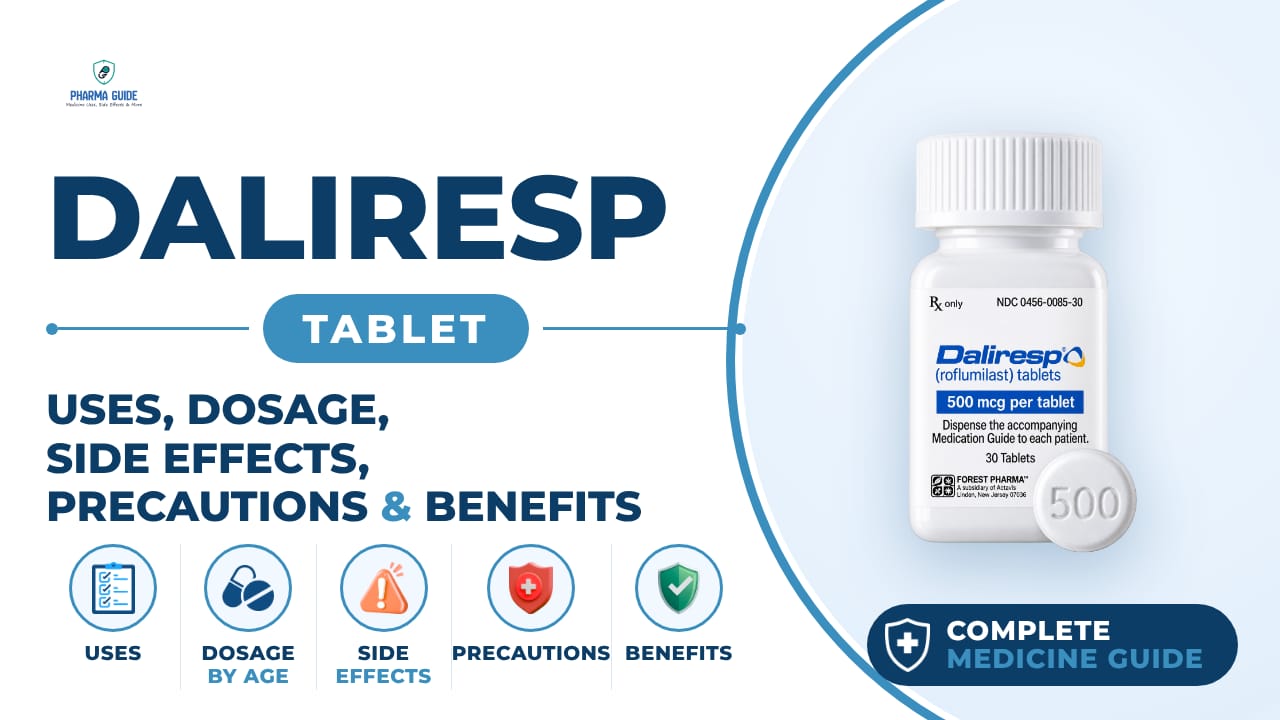
Daliresp Tablet: Uses, Dosage, Side Effects, Precautions and Alternates
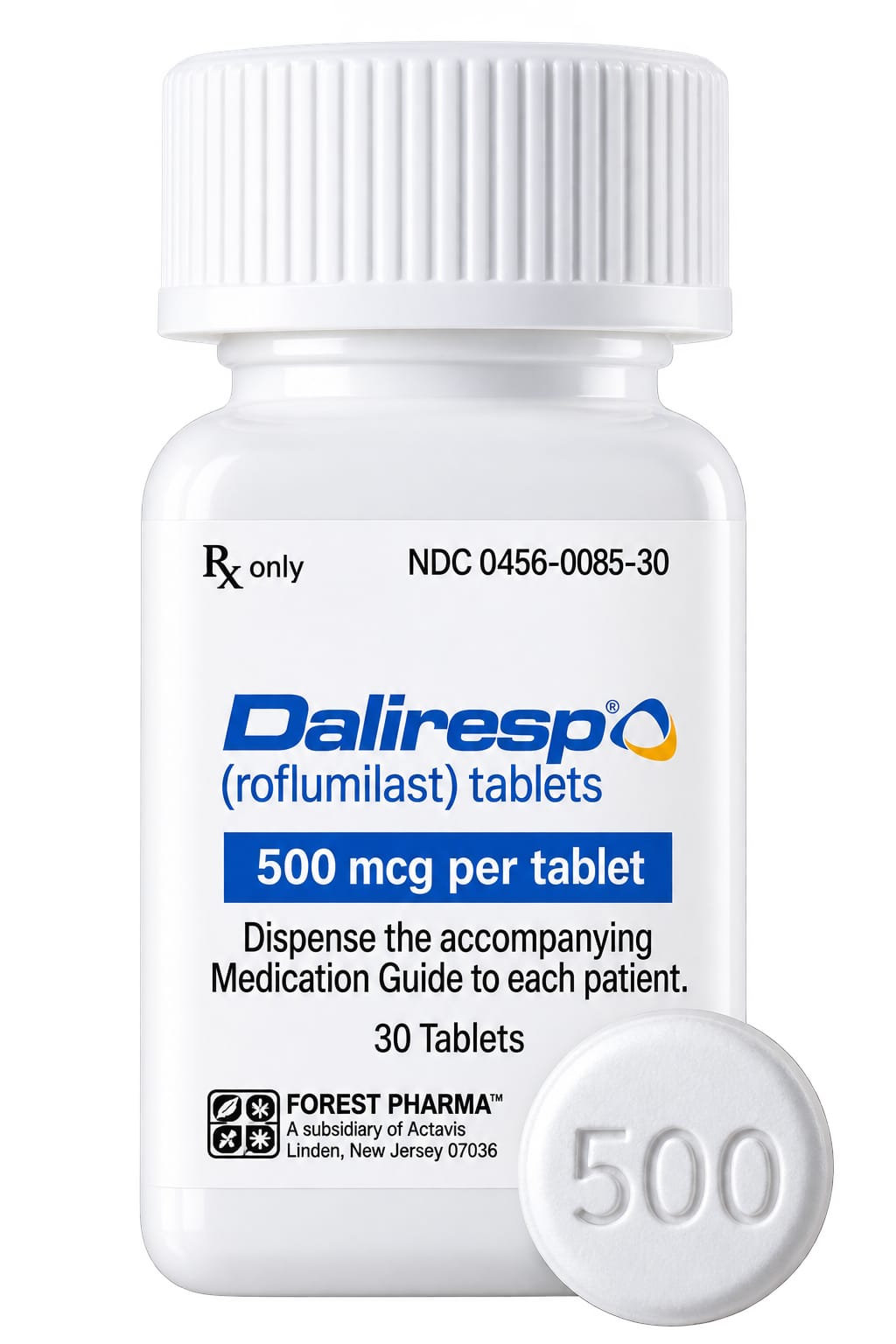
| Generic name | roflumilast |
|---|---|
| Drug class | Selective phosphodiesterase-4 (PDE4) inhibitor |
| Forms | Tablets: 250 mcg, Tablets: 500 mcg, Film-coated tablet (EU formulation) |
Quick overview
Daliresp Tablet (roflumilast) is a prescription medicine used in adults with severe COPD (chronic obstructive pulmonary disease) to help reduce the risk of flare-ups. It belongs to a class of medicines called selective phosphodiesterase-4 (PDE4) inhibitors. It is not a bronchodilator and will not relieve a sudden breathing attack. It is taken once daily by mouth.
What is Daliresp Tablet
Daliresp is a prescription tablet used in adults with severe COPD to help reduce the risk of flare-ups. It is not a bronchodilator, so it will not relieve a sudden breathing attack.
Daliresp Tablet uses
- Reduces the risk of COPD exacerbations (flare-ups or worsening of symptoms) in adults with severe COPD linked to chronic bronchitis who have had exacerbations before
- Reduces COPD exacerbations
- Used in severe COPD
Benefits of Daliresp Tablet
- Reduces the rate of moderate or severe COPD exacerbations compared to placebo
- Improves lung function (FEV1) compared to placebo
- Provides once-daily oral treatment
- Can reduce the risk of COPD flare-ups
- Provides a non-bronchodilator mechanism of COPD treatment
How Daliresp Tablet works
Daliresp blocks an enzyme called PDE4 that is found mainly in lung tissue. Blocking this enzyme raises levels of a molecule called cyclic AMP inside lung cells, which is thought to reduce the lung inflammation that drives COPD symptoms.
Daliresp Tablet dosage
Take the tablet exactly as your healthcare provider tells you to take it. It can be taken with or without food. Swallow the tablet with water and take it at the same time every day. Treatment usually starts with a lower-strength tablet for the first 4 weeks before moving to the regular daily dose. This medicine is not for treating sudden breathing problems; your doctor will give you a different medicine for that.
If you forget a dose, take it as soon as you remember on the same day; if you don't remember until the next day, just continue with your next scheduled dose — do not double up. Keep taking it regularly, even when you feel well, to help control your lung function. No dose change is needed because of age, kidney problems, gender, smoking status, or race.
| Age group | Dose |
|---|---|
| Under 18 years | Safety and effectiveness are not established; no standard pediatric dose |
| 18–39 years | 500 mcg (0.5 mg) once daily; some patients may start with 250 mcg once daily for 4 weeks before increasing |
| 40–64 years | 500 mcg (0.5 mg) once daily |
Available forms and strengths
- Tablets: 250 mcg
- Tablets: 500 mcg
- Film-coated tablet (EU formulation)
Side effects of Daliresp Tablet
Common
- Diarrhea
- Weight decrease
- Nausea
- Headache
- Back pain
- Influenza (flu-like symptoms)
- Insomnia (trouble sleeping)
- Dizziness
- Decreased appetite
Serious
- Suicidal thoughts or behavior, including completed suicide
- New or worsening depression, anxiety, or other mood changes
- Significant or unexplained weight loss
- Allergic reactions including angioedema, hives, and rash
- Tremor
Warnings and precautions
- Daliresp is not a bronchodilator and must not be used to treat a sudden breathing attack. A different rescue medicine should be used for that.
- Daliresp can cause or worsen mental health problems, including suicidal thoughts and actions. Patients, caregivers, and families should watch for new or worsening insomnia, anxiety, depression, suicidal thoughts, or other mood or behavior changes and contact the doctor if these occur.
- Daliresp can cause weight loss, which should be monitored regularly; your doctor may stop the medicine if you lose too much weight.
- Taking strong enzyme-inducing medicines (like rifampicin, phenobarbital, carbamazepine, or phenytoin) together with Daliresp is not recommended because it can make Daliresp less effective.
- Taking certain other medicines that inhibit specific liver enzymes (such as erythromycin, ketoconazole, fluvoxamine, enoxacin, or cimetidine) can raise Daliresp levels in the body and increase the risk of side effects.
- There are no adequate human studies of Daliresp in pregnant women. Animal studies showed some harmful effects at high doses. Talk with your doctor if you are pregnant or planning pregnancy; the EU version recommends not using it during pregnancy.
- It isn't known whether Daliresp passes into human breast milk, but it's thought to be likely based on animal studies. Women who are breastfeeding should not take this medicine.
- No dose change is needed for people with kidney problems, including severe kidney impairment.
- People with moderate or severe liver problems should not take this medicine. Caution is needed in people with mild liver impairment.
- This medicine is not expected to affect your ability to drive or use machines.
Storage
- Store DALIRESP tablets at 68°F to 77°F (20°C to 25°C); excursions permitted to 15° - 30°C (59° - 86°F)
- Keep DALIRESP Tablets and all medicines out of the reach of children
When to see a doctor
- Get emergency help right away if you notice signs of an allergic reaction, such as hives, difficulty breathing, or swelling of the face, lips, tongue, or throat.
- Call your doctor right away if you have thoughts of suicide, worsening depression or anxiety, trouble sleeping, or unusual changes in mood or behavior.
- Contact your doctor if you notice rapid or unexplained weight loss.
- If you take more than your prescribed dose, call your healthcare provider or go to the nearest hospital emergency room right away.
Alternatives
- Roflumilast generic
- Tiotropium
- Umeclidinium
Watch the video
FAQs
What is Daliresp Tablet used for?
Daliresp is used in adults with severe COPD linked to chronic bronchitis who have had exacerbations before, to reduce the risk of COPD flare-ups.
Is Daliresp a bronchodilator or rescue inhaler?
No, Daliresp is not a bronchodilator and will not relieve a sudden breathing attack. A different rescue medicine should be used for that.
How is Daliresp Tablet taken?
Daliresp is taken once daily by mouth, with or without food, at the same time every day. Treatment usually starts with a lower-strength tablet for the first 4 weeks before moving to the regular daily dose.
What are the serious side effects of Daliresp?
Serious side effects include suicidal thoughts or behavior, new or worsening depression or anxiety, significant unexplained weight loss, allergic reactions like angioedema or hives, and tremor.
Can pregnant or breastfeeding women take Daliresp?
There are no adequate human studies of Daliresp in pregnant women, so patients should talk with their doctor; it isn't known if it passes into human breast milk, but breastfeeding women should not take this medicine.
General information, not medical advice
Your prescriber and the leaflet in your pack know your situation. This page does not.
- Follow your prescriber and the leaflet
- Don't start, stop, or change a dose on your own
- Doses and warnings differ by country and product
Sources
Video
Related medicines

Injectafer Injection: Uses, Dosage, Side Effects, Precautions and Alternates
Iron products
Injectafer (ferric carboxymaltose) treats iron deficiency anemia and heart failure-related iron deficiency via IV. Learn uses, dosage, side effects, and

Gliclazide Tablet: Uses, Dosage, Side Effects, Precautions and Alternates
Sulfonylurea (hypoglycemic/antidiabetic agent)
Gliclazide Tablet is a sulfonylurea for type 2 diabetes that boosts insulin release. Learn about dosage, side effects, warnings, and precautions.