
Safety
General information, not medical advice
Your prescriber and the leaflet in your pack know your situation. This page does not.
- Follow your prescriber and the leaflet
- Don't start, stop, or change a dose on your own
- Doses and warnings differ by country and product
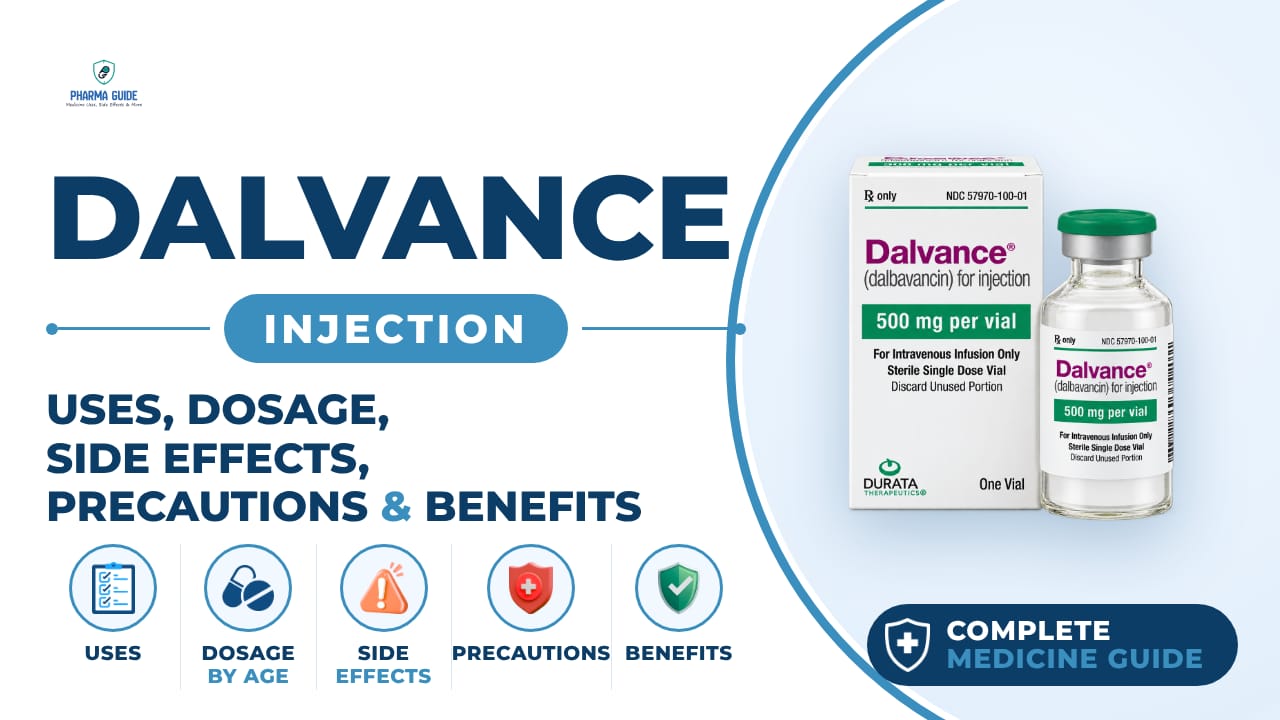
Dalvance Injection: Uses, Dosage, Side Effects, Precautions and Alternates
| Generic name | dalbavancin |
|---|---|
| Drug class | Glycopeptide antibiotic (lipoglycopeptide antibacterial) |
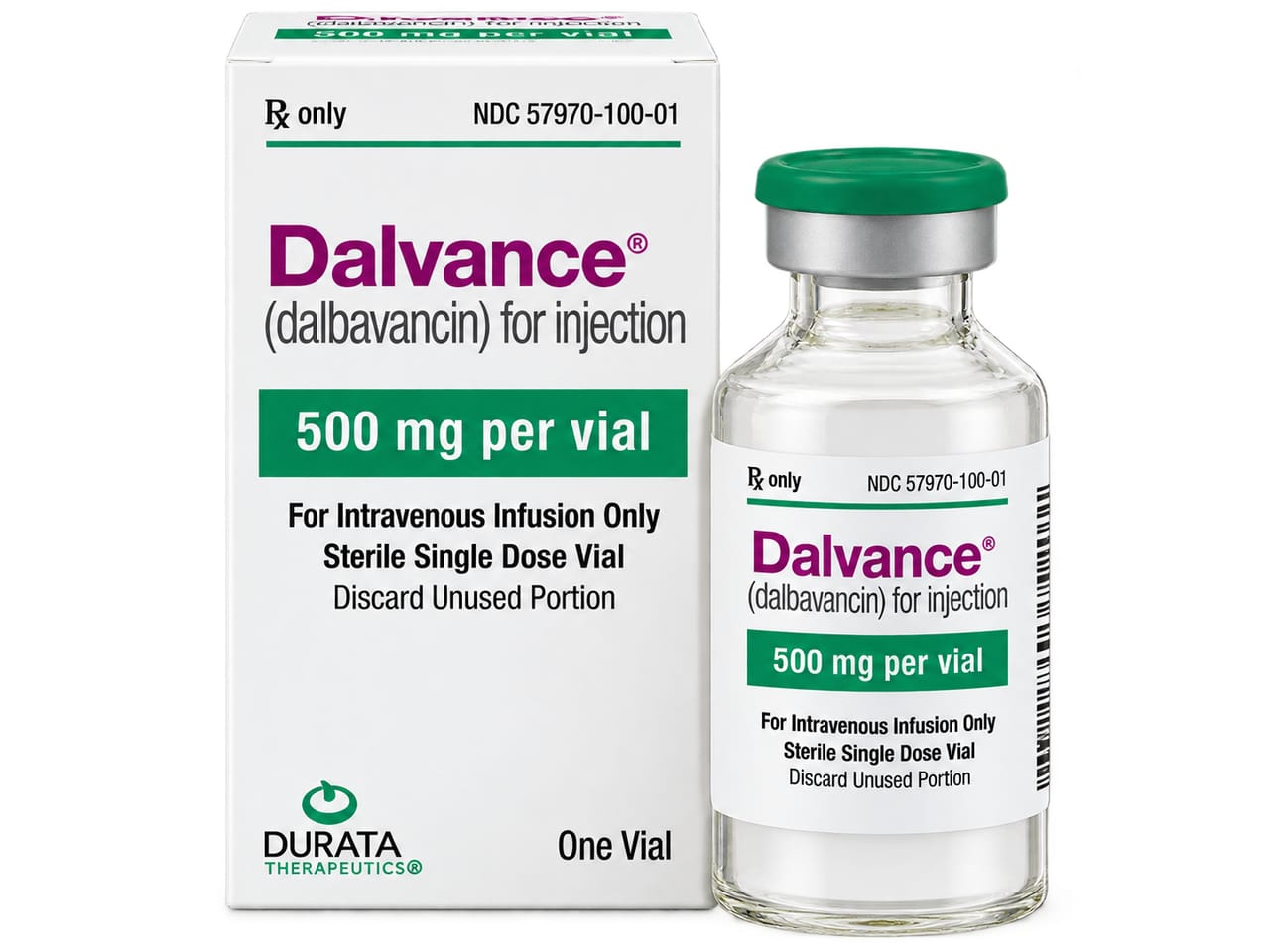
| Forms | Powder for injection/infusion (lyophilized powder in a single-dose vial, 500 mg per vial, to be mixed into a solution for IV infusion) |
Quick overview
Dalvance Injection (dalbavancin) is a glycopeptide antibiotic given by IV infusion to treat serious skin infections caused by susceptible Gram-positive bacteria, including MRSA. It works by interfering with bacterial cell wall formation, which stops the bacteria from surviving and multiplying. A notable feature of Dalvance is that it can often be given as just one or two IV doses rather than requiring daily infusions over several weeks.
What is Dalvance Injection
Dalvance is an antibiotic given by IV infusion that fights certain bacteria. It is used for serious skin infections caused by susceptible Gram-positive bacteria.
Dalvance Injection uses
- Treatment of adult and pediatric patients with acute bacterial skin and skin structure infections (ABSSSI) caused by susceptible Gram-positive bacteria such as Staphylococcus aureus (including MRSA), Streptococcus pyogenes, Streptococcus agalactiae, Streptococcus dysgalactiae, Streptococcus anginosus group, and Enterococcus faecalis (vancomycin-susceptible)
Benefits of Dalvance Injection
- Can treat serious skin infections with as little as one or two IV doses, instead of daily dosing for weeks
- Effective against methicillin-resistant Staphylococcus aureus (MRSA) and other resistant Gram-positive bacteria
- Treats susceptible Gram-positive bacterial infections
- Active against certain MRSA infections
- Provides a long duration of antibacterial activity
- May be given as a single IV dose
- Avoids the need for frequent daily antibiotic infusions in suitable patients
How Dalvance Injection works
Dalvance works by interfering with the bacteria's ability to build their cell walls, which stops the bacteria from surviving and multiplying.
Dalvance Injection dosage
Dalvance is given as an IV infusion into a vein by a healthcare provider; each infusion takes at least 30 minutes. It is usually given as either one single dose, or as two doses with the second dose given one week after the first.
The medicine must not be shaken after mixing, to avoid foaming. The mixed medicine should look clear or slightly yellow; do not use it if it has changed color or has particles in it. It should not be infused together with other medications or electrolytes in the same line without flushing the line first.
Tell your caregivers right away if you feel itching, tingling, back pain, rash, or sudden warmth/redness in your upper body during the infusion, since infusing too quickly can cause these reactions.
Use for the full length of time prescribed, even if you start feeling better quickly, since stopping early can allow the infection to come back or become resistant to treatment. Dosing for children is based on their age and body weight.
| Age group | Dose |
|---|---|
| Birth to under 6 years | 22.5 mg/kg IV as a single dose, maximum 1,500 mg |
| 6–17 years | 18 mg/kg IV as a single dose, maximum 1,500 mg |
| 18–64 years | 1,500 mg IV as a single dose, or 1,000 mg IV followed by 500 mg one week later |
Available forms and strengths
- Powder for injection/infusion (lyophilized powder in a single-dose vial, 500 mg per vial, to be mixed into a solution for IV infusion)
Side effects of Dalvance Injection
Common
- Nausea
- Headache
- Diarrhea
- Vomiting
- Rash
- Itching (pruritus)
Serious
- Serious allergic (anaphylactic) reactions and serious skin reactions
- Infusion-related reactions (flushing of the upper body, hives, itching, rash, back pain) from infusing too quickly
- Liver enzyme (ALT) elevations/liver problems
- Clostridioides difficile-associated diarrhea (severe watery or bloody diarrhea, which can signal a serious intestinal infection)
- Low blood counts (anemia, low white blood cells, low platelets)
- Gastrointestinal bleeding
- Bronchospasm
Warnings and precautions
- Dalvance can cause serious allergic reactions, including anaphylaxis, and serious skin reactions. If you have a history of allergy to other glycopeptide antibiotics (like vancomycin), tell your doctor, since there may be a higher chance of a similar reaction with Dalvance.
- Infusing Dalvance too quickly can cause flushing of the upper body, hives, itching, rash, and/or back pain. Slowing or stopping the infusion usually stops these reactions.
- Diarrhea caused by C. difficile bacteria has happened with almost all antibiotics, including Dalvance, and can range from mild to life-threatening. This can even occur more than two months after you finish treatment.
- Using Dalvance when there is no proven or strongly suspected bacterial infection is unlikely to help you and can increase the risk that bacteria become resistant to antibiotics.
- Dalvance should not be mixed with saline solutions, which can cause the drug to form particles, and should not be infused at the same time as other medicines or electrolytes through the same line.
- It isn't known whether Dalvance can harm an unborn baby, since there are no well-controlled studies in pregnant women. Tell your doctor if you are pregnant; this medicine should be used in pregnancy only if the benefit outweighs the possible risk.
- It isn't known whether Dalvance passes into human breast milk. Your doctor will weigh the benefits of breastfeeding against your need for this medicine and any possible risks to the baby.
- People with reduced kidney function need a lower dose of Dalvance, since the drug is mainly removed from the body by the kidneys.
- No dose change is needed for mild liver problems, but doctors should be cautious prescribing Dalvance to people with moderate or severe liver impairment, since there isn't enough data to know the right dose for them.
- No major direct interaction with alcohol is established, but alcohol is best avoided if illness or treatment causes nausea or dizziness.
- Dalvance usually does not directly impair driving, but avoid driving if dizziness or other adverse effects occur.
Storage
- Store unmixed powder at room temperature away from moisture and heat
- After mixing (reconstitution), store refrigerated or at controlled room temperature; do not freeze
- Use the mixed and diluted medicine within 48 hours of mixing
- Each single-use vial is for one use only; throw away any unused medicine after the dose is given, even if some remains in the vial
When to see a doctor
- Get emergency medical help right away if you have signs of a serious allergic reaction, such as hives, difficulty breathing, or swelling of your face, lips, tongue, or throat.
- Call your doctor right away if you have severe stomach pain or diarrhea that is watery or bloody, as this could be a sign of a serious intestinal infection.
- Tell your caregivers immediately if you feel itching, tingling, back pain, or sudden warmth in your upper body during the infusion.
Alternatives
- Vancomycin
- Daptomycin
- Linezolid
Watch the video
FAQs
What is Dalvance Injection used for?
Dalvance treats acute bacterial skin and skin structure infections (ABSSSI) in adults and children caused by susceptible Gram-positive bacteria, including MRSA, Streptococcus species, and Enterococcus faecalis.
How many doses of Dalvance are needed?
Dalvance can often be given as just one or two IV doses, rather than daily infusions over several weeks. Adults may receive a single 1,500 mg dose or 1,000 mg followed by 500 mg one week later.
How is Dalvance given?
Dalvance is given as an IV infusion into a vein by a healthcare provider, with each infusion taking at least 30 minutes.
What are the common side effects of Dalvance?
Common side effects include nausea, headache, diarrhea, vomiting, rash, and itching (pruritus).
What should I watch for during a Dalvance infusion?
Tell your caregivers right away if you feel itching, tingling, back pain, rash, or sudden warmth/redness in your upper body during the infusion, since infusing too quickly can cause these reactions.
General information, not medical advice
Your prescriber and the leaflet in your pack know your situation. This page does not.
- Follow your prescriber and the leaflet
- Don't start, stop, or change a dose on your own
- Doses and warnings differ by country and product
Sources
Video
Related medicines

Injectafer Injection: Uses, Dosage, Side Effects, Precautions and Alternates
Iron products
Injectafer (ferric carboxymaltose) treats iron deficiency anemia and heart failure-related iron deficiency via IV. Learn uses, dosage, side effects, and

Gliclazide Tablet: Uses, Dosage, Side Effects, Precautions and Alternates
Sulfonylurea (hypoglycemic/antidiabetic agent)
Gliclazide Tablet is a sulfonylurea for type 2 diabetes that boosts insulin release. Learn about dosage, side effects, warnings, and precautions.