
Safety
General information, not medical advice
Your prescriber and the leaflet in your pack know your situation. This page does not.
- Follow your prescriber and the leaflet
- Don't start, stop, or change a dose on your own
- Doses and warnings differ by country and product
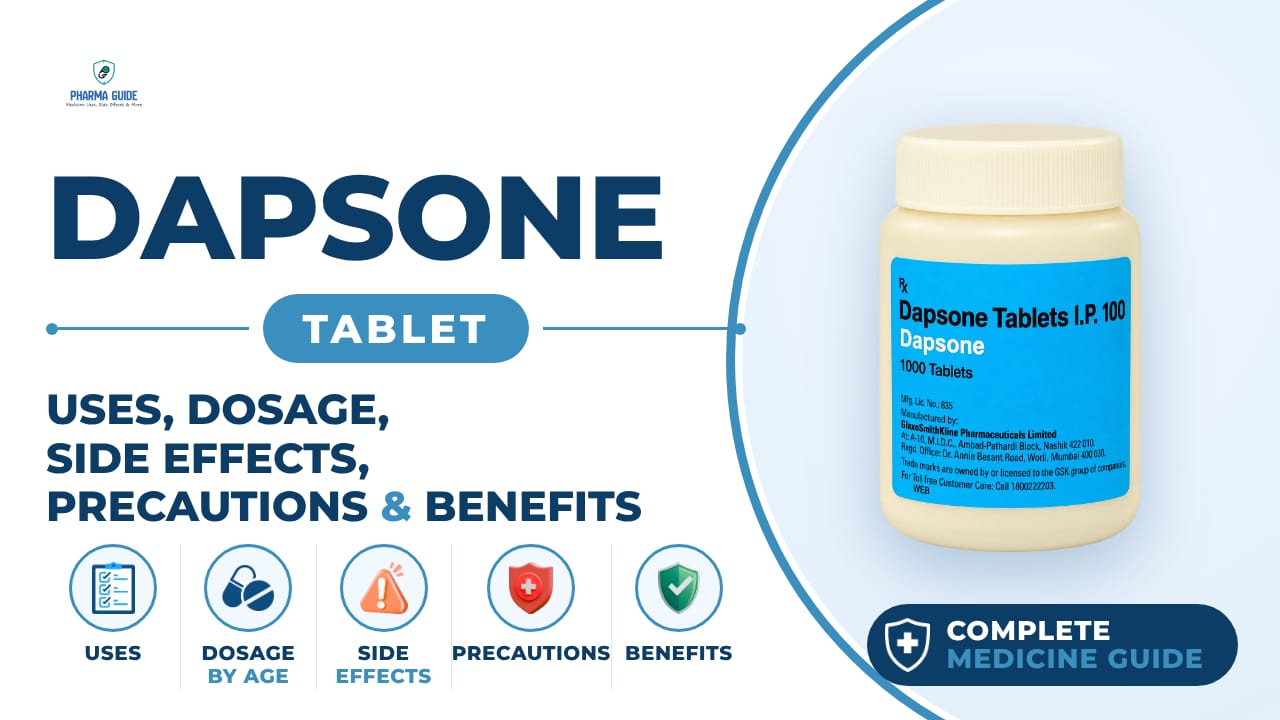
Dapsone Tablet: Uses, Dosage, Side Effects, Precautions and Alternates
| Generic name | Dapsone |
|---|---|
| Drug class | Sulfone (antibacterial anti-infective) |
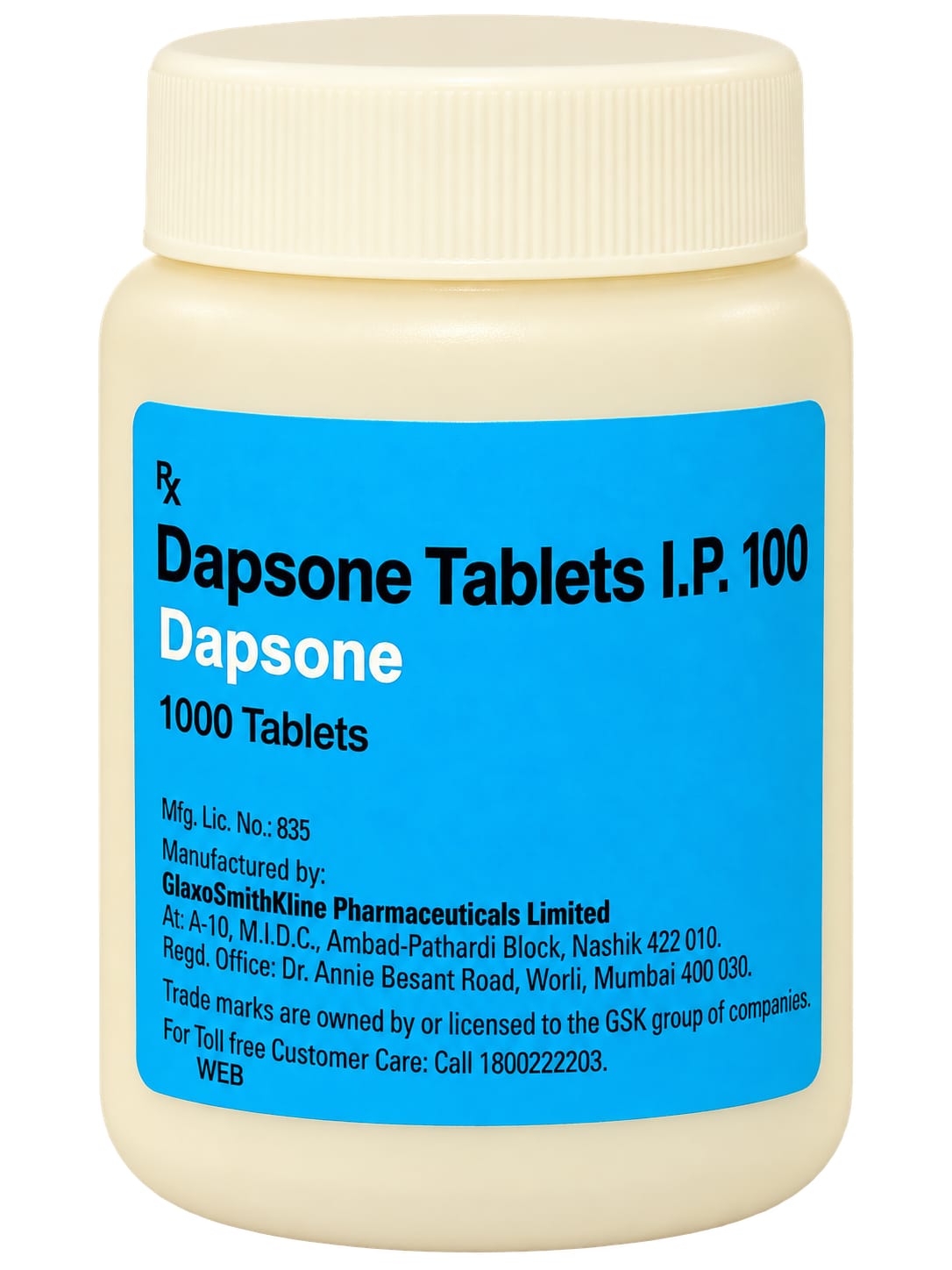
| Forms | Tablet (25 mg), Tablet (100 mg) |
Quick overview
Dapsone Tablet contains the sulfone antibacterial anti-infective Dapsone. It is used to treat leprosy, dermatitis herpetiformis, and Actinomycotic mycetoma, and it has also been used for prevention and treatment of certain lung and parasite infections and other inflammatory skin conditions. It works by killing or stopping the growth of the bacteria or fungi causing infection and by reducing skin blisters and itching in dermatitis herpetiformis. It is available as 25 mg and 100 mg tablets and should be used exactly as your doctor directs.
What is Dapsone Tablet
Dapsone is a sulfone medicine used as an anti-infective. It is used to treat leprosy, a skin condition called dermatitis herpetiformis, and a fungal disease called Actinomycotic mycetoma. It has also been used for other inflammatory skin conditions and for prevention and treatment of certain lung and parasite infections in some patients.
Dapsone Tablet uses
- Leprosy (Hansen's disease)
- Dermatitis herpetiformis (a skin condition with blisters and itching)
- Actinomycotic mycetoma (a fungal disease)
- Prevention and treatment of Pneumocystis carinii pneumonia (PCP)
- Treatment of toxoplasmosis gondii infections
- Other inflammatory skin conditions such as pyoderma gangrenosum, Sweet syndrome and vasculitis, when standard treatments do not work
Benefits of Dapsone Tablet
- Kills the bacteria or fungi causing infection or stops their growth
- Reduces skin blisters and itching in dermatitis herpetiformis
- Can be used as a safe and effective alternative for people who cannot tolerate other PCP treatments
- Used in treatment of leprosy
- Can help prevent or treat Pneumocystis jirovecii pneumonia in selected patients
- Has anti-inflammatory effects
- Used for certain dermatologic conditions such as dermatitis herpetiformis
How Dapsone Tablet works
Dapsone works by killing the bacteria or fungi causing the infection, or by stopping them from growing. For dermatitis herpetiformis, it reduces skin blisters and itching. It does not work against viral infections like colds or flu.
Dapsone Tablet dosage
Take with a full glass of water or another liquid, with or after food. Swallow tablets whole; do not split or crush the tablet. Take at the same time each day. If you have an upset stomach or nausea, it may help to take it with food. Keep taking the medicine for as long as your doctor tells you, even if you start feeling better, unless your doctor says to stop. It may take several months for the medicine to work, especially for infections. If you forget a dose, take it as soon as you remember, but if it is almost time for your next dose, skip the missed one and continue your normal schedule — do not take two doses at once. Dapsone dosing in children is based on body weight, as advised by the doctor.
| Age group | Dose |
|---|---|
| 12–17 years | Often 50–100 mg once daily, depending on indication and body weight |
| 18–64 years | Commonly 50–100 mg once daily; some conditions may require different regimens |
Available forms and strengths
- Tablet (25 mg)
- Tablet (100 mg)
Side effects of Dapsone Tablet
Common
- Nausea
- Vomiting
- Loss of appetite
- Headache
- Nervousness
- Dizziness
- Difficulty sleeping
- Stomach pain
- Back pain
- Loss of hair
- Blurred vision
- Ringing in the ears (tinnitus)
- Rapid heartbeat
- Increased skin sensitivity to sunlight
- Swelling of existing leprosy skin and nerve lesions
Serious
- Signs of an allergic reaction such as severe skin rash, yellowing of skin or eyes, fever, difficulty breathing
- Numbness or tingling
- Weakness in hands or feet
- Muscle weakness
- Unusually severe tiredness or weakness
- Bluish fingernails, lips or skin
- Itching, dryness, redness, scaling or peeling of the skin
- Severe fatigue, joint pain and loss of hair
- Mood or other mental state changes
- Chest pain, wheezing, shortness of breath
- Swelling around the eyes, ankles, and feet
- Pain and tenderness with impaired sensation and/or hypersensitivity in the testicles, eyes, or joints
- Loss of sensation or movement in the hands and feet
- Signs of low red blood cells (hemolytic anemia) such as rapid heart rate, shortness of breath, unusual tiredness, jaundice, dark urine, or bluish skin
- Signs of low white blood cells such as persistent fever, chills, increased infections, weakness, or bleeding gums
Warnings and precautions
- Do not use dapsone if you have ever had an allergic reaction to dapsone or any other sulfone drugs, or to any ingredient in the tablet. Do not stop taking your tablets just because you feel better, unless your doctor tells you to, since this can allow the infection to come back or not fully clear. Regular blood tests are important during treatment to monitor for blood problems such as anemia and methemoglobinemia, and your doctor should check for G6PD deficiency before starting dapsone.
- Do not give this medicine to anyone else, even if they seem to have the same condition. Some medicines can interact with dapsone, including certain HIV medicines, antibiotics like rifampicin and trimethoprim, other leprosy medicines, gout medicine, stomach ulcer medicine, and some antimalarials.
- Tell your doctor if you are pregnant or planning to become pregnant. Do not use dapsone while pregnant unless your doctor advises it. Dapsone has been used in pregnancy without clear evidence of harm to the baby, but the benefits must be weighed against possible risks. If taken during pregnancy, folic acid supplements are often recommended.
- Tell your doctor if you are breastfeeding or planning to. Dapsone passes into breast milk and may cause blood problems in nursing babies, so breastfeeding may need to stop, especially if the baby has G6PD deficiency.
- Tell your doctor if you have kidney disease, as dapsone should be used with caution in people with kidney problems, and it should not be used in people with advanced kidney amyloidosis.
- Tell your doctor if you have liver disease, as dapsone should be used with caution in people with liver problems.
- You may drink alcohol in moderation while taking dapsone.
- Dapsone may make you feel dizzy, so be careful when driving or using machines until you know how it affects you.
Storage
- Store below 25°C
- Protect from light
- Keep tablets in the original pack until it is time to take them
- Store in a cool, dry place away from moisture, heat, or sunlight
- Do not store in the bathroom or near a sink, or in a car or on windowsills
- Keep where young children cannot reach it
- If your doctor tells you to stop taking it, or it is out of date, take it to a pharmacy for safe disposal
- Do not use after the expiry date
When to see a doctor
- Stop taking dapsone and get urgent medical help if you notice signs of a serious allergic reaction, severe skin reactions, numbness or weakness in hands or feet, muscle weakness, severe tiredness, bluish skin or lips, mood changes, chest pain or breathing problems, or swelling around the eyes, ankles or feet
- If you think you have taken too much dapsone, get urgent medical help right away, even if you feel fine, by contacting your doctor or going to the nearest hospital emergency department
- Tell your doctor immediately if you become pregnant while taking dapsone
- Tell your doctor if your infection symptoms do not improve within 2 to 3 months, or if they get worse
- Get an urgent blood test if you notice symptoms like fatigue, shortness of breath, rapid heartbeat, fever, chills, mouth ulcers, sore throat, bruising, or prolonged bleeding, as these can signal serious blood problems
Alternatives
- Sulfamethoxazole/trimethoprim
- Atovaquone
- Pentamidine
Watch the video
FAQs
What is Dapsone Tablet used for?
It is used to treat leprosy, dermatitis herpetiformis, and Actinomycotic mycetoma, and for prevention and treatment of Pneumocystis carinii pneumonia, toxoplasmosis, and other inflammatory skin conditions like pyoderma gangrenosum, Sweet syndrome and vasculitis when standard treatments fail.
How should I take Dapsone Tablet?
Take it with a full glass of water or another liquid, with or after food, at the same time each day. Swallow the tablet whole without splitting or crushing it, and continue taking it for as long as your doctor advises, even if you feel better.
What should I do if I miss a dose of Dapsone?
If you forget a dose, take it as soon as you remember, but if it is almost time for your next dose, skip the missed one and continue your normal schedule. Do not take two doses at once.
What are the serious side effects of Dapsone Tablet?
Serious side effects include signs of an allergic reaction, numbness or weakness in hands or feet, bluish fingernails or skin, severe fatigue, mood changes, chest pain or breathing problems, swelling around the eyes or ankles, and signs of low red or white blood cells.
Can I drink alcohol or drive while taking Dapsone?
You may drink alcohol in moderation while taking dapsone. However, dapsone may make you feel dizzy, so be careful when driving or using machines until you know how it affects you.
General information, not medical advice
Your prescriber and the leaflet in your pack know your situation. This page does not.
- Follow your prescriber and the leaflet
- Don't start, stop, or change a dose on your own
- Doses and warnings differ by country and product
Sources
Video
Related medicines

Injectafer Injection: Uses, Dosage, Side Effects, Precautions and Alternates
Iron products
Injectafer (ferric carboxymaltose) treats iron deficiency anemia and heart failure-related iron deficiency via IV. Learn uses, dosage, side effects, and

Gliclazide Tablet: Uses, Dosage, Side Effects, Precautions and Alternates
Sulfonylurea (hypoglycemic/antidiabetic agent)
Gliclazide Tablet is a sulfonylurea for type 2 diabetes that boosts insulin release. Learn about dosage, side effects, warnings, and precautions.