
Safety
General information, not medical advice
Your prescriber and the leaflet in your pack know your situation. This page does not.
- Follow your prescriber and the leaflet
- Don't start, stop, or change a dose on your own
- Doses and warnings differ by country and product
Daridorexant Tablet: Uses, Dosage, Side Effects, Precautions and Alternates
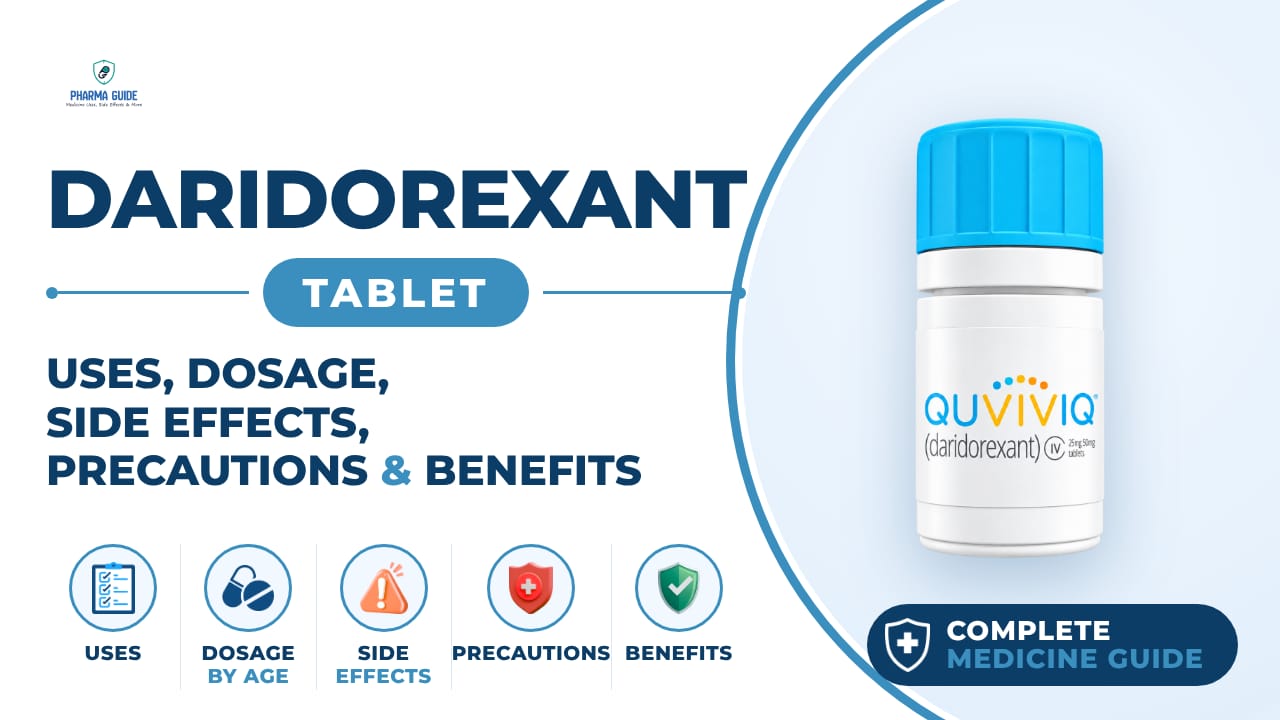
| Generic name | daridorexant |
|---|---|
| Drug class | Dual orexin receptor antagonist (DORA) |
| Forms | Tablet (25 mg and 50 mg) |
Quick overview
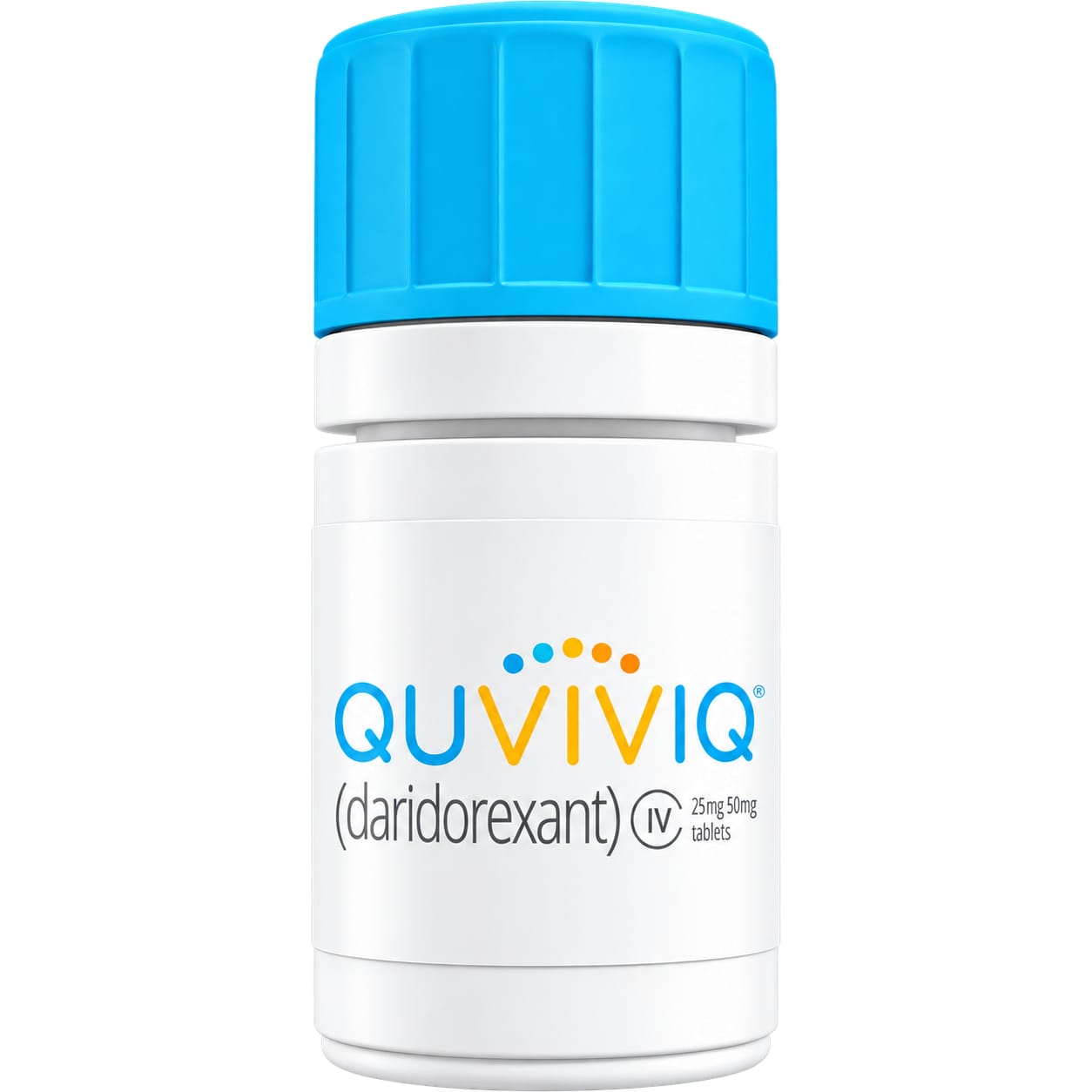
Daridorexant Tablet (generic name daridorexant, brand name Quviviq) is a prescription medicine used to treat ongoing insomnia in adults who have trouble falling asleep, staying asleep, or both. It belongs to a drug class called dual orexin receptor antagonists and works by blocking a brain chemical that keeps you awake. It is a controlled substance because it can be habit-forming, and it is available as 25 mg and 50 mg tablets.
What is Daridorexant Tablet
Daridorexant (brand name Quviviq) is a prescription tablet used to treat ongoing insomnia in adults who have trouble falling asleep, staying asleep, or both. It is a controlled substance because it can be habit-forming.
Daridorexant Tablet uses
- Treating insomnia (trouble falling asleep or staying asleep) in adults
- Treats insomnia
- Helps with difficulty falling asleep
- Helps with difficulty staying asleep
- May improve overall sleep duration
Benefits of Daridorexant Tablet
- Helps you fall asleep faster and stay asleep longer
- Improves total sleep time and reduces time spent awake at night
- May improve daytime alertness and functioning compared with older sleep medicines
- Lower risk of dependence, tolerance, or abuse than traditional sedatives or benzodiazepines
How Daridorexant Tablet works
Daridorexant blocks a brain chemical called orexin that keeps you awake. By turning down this wake signal, it helps you fall asleep and stay asleep.
Daridorexant Tablet dosage
Take only once per night, within 30 minutes of going to bed. Only take it if you can stay in bed for at least 7 hours before you need to be active again. You can take it with or without food, but it may work faster on an empty stomach; taking it with or right after a meal may make it work more slowly. Never take more than one dose in the same day, even if you are still having trouble sleeping. This medicine is taken only as needed, not on a fixed daily schedule.
Call your doctor if your sleep problems do not improve, or get worse, within 7 to 10 days of starting treatment. If you miss a dose and can still stay in bed for at least 7 hours afterward, you may take it; otherwise skip it and resume your normal schedule.
| Age group | Dose |
|---|---|
| Under 18 years | Safety and effectiveness are not established; no standard pediatric dose |
| 18–64 years | 25 mg or 50 mg once nightly, taken within about 30 minutes before bedtime |
| 65–74 years | Usually 25 mg or 50 mg once nightly; no routine age-based dose adjustment |
Available forms and strengths
- Tablet (25 mg and 50 mg)
Side effects of Daridorexant Tablet
Common
- Headache
- Excessive sleepiness, fatigue, or daytime drowsiness
- Dizziness
- Nausea or upset stomach
- Unusually deep or long sleep
Serious
- Next-day impairment in alertness, reaction time, and coordination, even if you feel awake
- Doing complex activities while asleep or not fully awake that you don't remember, such as sleepwalking, sleep-driving, making phone calls, or preparing and eating food
- New or worsening depression, unusual behavior changes, anxiety, hallucinations, or thoughts of self-harm
- Temporary inability to move or talk for a few minutes while falling asleep or waking up (sleep paralysis)
- Sudden leg weakness (cataplexy-like symptoms)
- Allergic reaction: hives, itching, rash, or swelling of the face, eyelids, lips, tongue, throat, hands, legs, feet, or sex organs; difficulty breathing or swallowing
Warnings and precautions
- Do not take this medicine if you have narcolepsy (extreme daytime sleepiness).
- This medicine may cause next-day drowsiness, poor coordination, and reduced alertness, which can raise the risk of falls, especially in older adults, or accidents while driving, even if you feel fully awake.
- Some people have done activities like driving, eating, walking, making phone calls, or having sex while asleep or not fully awake and had no memory of it afterward.
- This medicine can worsen depression or cause new mood or behavior changes, including thoughts of suicide.
- This medicine may be habit-forming. Do not take more than your prescribed dose or use it for longer than directed.
- Combining this medicine with alcohol, opioids, benzodiazepines, or other drugs that cause drowsiness can increase sedation and impairment.
- It is not known if this medicine will harm an unborn baby. Tell your doctor if you are pregnant or planning to become pregnant; you may be asked to join a pregnancy registry that tracks outcomes.
- There isn't enough research on using this medicine while breastfeeding. Ask your doctor whether it is safe for you.
- Avoid in severe hepatic impairment; dose reduction may be needed with moderate liver impairment. Use with caution if you have moderate liver disease, since the medicine may stay in your body longer and its effects may be stronger. It is not recommended for people with severe liver disease.
- Do not drink alcohol while taking this medicine, since it can cause dangerous side effects or worsen drowsiness.
- Avoid driving or doing anything dangerous until you know how this medicine affects you, since your reactions and alertness could be impaired, even the day after taking it.
Storage
- Store the medicine in a closed container at room temperature, away from heat, moisture, and direct light
- Keep from freezing
- Keep out of the reach of children
- Do not keep outdated medicine or medicine no longer needed
- Ask your healthcare professional how you should dispose of any medicine you do not use
- Do not flush this medication down the toilet; use a medicine take-back program
When to see a doctor
- Get emergency help right away if you have signs of an allergic reaction, such as hives, trouble breathing, or swelling of the face, lips, tongue, or throat.
- Call your doctor right away if you have new or sudden mood or behavior changes, worsening depression, or thoughts of suicide or self-harm.
- Tell your doctor if you find out you were driving, eating, or doing other activities while asleep that you don't remember.
- Call your doctor right away if you cannot move or talk for several minutes, or have hallucinations, while falling asleep or waking up.
- Call your doctor if your sleep problems don't improve or get worse within 7 to 10 days of starting treatment, since this could be a sign of another medical problem.
- If you take too much of this medicine, seek emergency medical help or contact a poison control center right away.
Alternatives
- Ramelteon
- Lemborexant
- Suvorexant
- Quviviq
Watch the video
FAQs
What is Daridorexant Tablet used for?
It is a prescription medicine used to treat ongoing insomnia in adults who have trouble falling asleep, staying asleep, or both.
How should I take Daridorexant Tablet?
Take it only once per night, within 30 minutes of going to bed, and only if you can stay in bed for at least 7 hours before needing to be active again. Take it with or without food, but it may work more slowly if taken with or right after a meal. Never take more than one dose per day.
What are the common side effects of Daridorexant Tablet?
Common side effects include headache, excessive sleepiness or fatigue, dizziness, nausea or upset stomach, and unusually deep or long sleep.
Who should not take Daridorexant Tablet?
People with narcolepsy should not take this medicine. It should also be avoided in severe liver impairment, and used cautiously with dose reduction in moderate liver impairment.
What should I avoid while taking Daridorexant Tablet?
Avoid drinking alcohol, since it can cause dangerous side effects or worsen drowsiness. Avoid driving or doing anything dangerous until you know how the medicine affects you, as it can impair alertness and coordination even the next day.
General information, not medical advice
Your prescriber and the leaflet in your pack know your situation. This page does not.
- Follow your prescriber and the leaflet
- Don't start, stop, or change a dose on your own
- Doses and warnings differ by country and product
Sources
Video
Related medicines

Injectafer Injection: Uses, Dosage, Side Effects, Precautions and Alternates
Iron products
Injectafer (ferric carboxymaltose) treats iron deficiency anemia and heart failure-related iron deficiency via IV. Learn uses, dosage, side effects, and

Gliclazide Tablet: Uses, Dosage, Side Effects, Precautions and Alternates
Sulfonylurea (hypoglycemic/antidiabetic agent)
Gliclazide Tablet is a sulfonylurea for type 2 diabetes that boosts insulin release. Learn about dosage, side effects, warnings, and precautions.