
Safety
General information, not medical advice
Your prescriber and the leaflet in your pack know your situation. This page does not.
- Follow your prescriber and the leaflet
- Don't start, stop, or change a dose on your own
- Doses and warnings differ by country and product
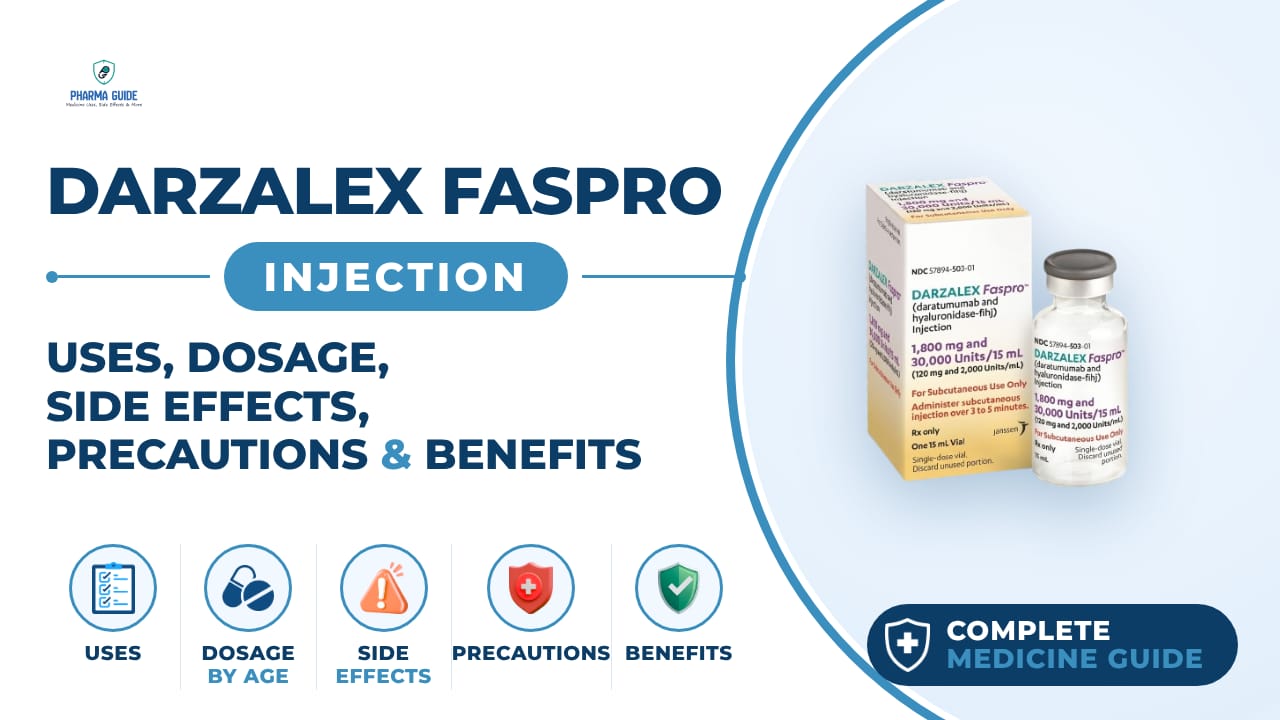
Darzalex Faspro Injection: Uses, Dosage, Side Effects, Precautions and Alternates
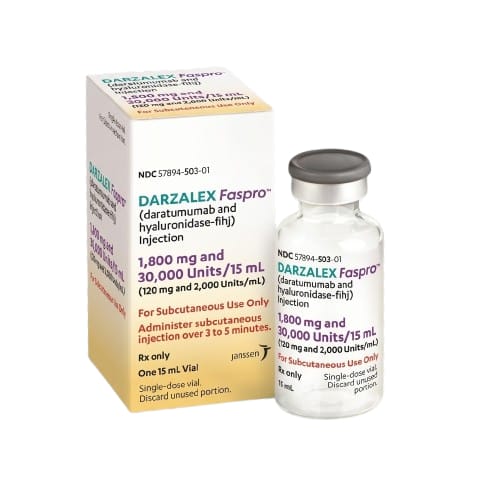
| Generic name | daratumumab and hyaluronidase-fihj |
|---|---|
| Drug class | CD38-targeted monoclonal antibody; antineoplastic, anti-CD38 monoclonal antibody |
| Forms | Injection |
Quick overview
Darzalex Faspro Injection contains daratumumab and hyaluronidase-fihj, a CD38-targeted monoclonal antibody used to treat certain adults with multiple myeloma, high-risk smoldering multiple myeloma, and light chain (AL) amyloidosis. It is given as an injection under the skin of the abdomen by a healthcare provider, rather than as an intravenous infusion. Dosing schedules vary over the course of treatment, and the medicine carries risks of injection reactions, infections, and blood count changes that require monitoring.
What is Darzalex Faspro Injection
Darzalex Faspro is an injectable cancer medicine used for multiple myeloma and light chain amyloidosis. It belongs to the CD38-targeted monoclonal antibody class of antineoplastic medicines. It is given as a shot under the skin of the abdomen, unlike the original Darzalex, which is given into a vein.
Darzalex Faspro Injection uses
- Treats certain adults with multiple myeloma, including newly diagnosed and relapsed or refractory disease, often combined with other cancer medicines
- Treats adults with high-risk smoldering multiple myeloma as a single medicine
- Treats light chain (AL) amyloidosis in adults, usually combined with other medicines
Benefits of Darzalex Faspro Injection
- Can be given as a subcutaneous injection lasting about 3 to 5 minutes instead of a lengthy intravenous infusion
- Comes in a ready-to-use, single-dose vial with a fixed dose so no weight-based calculations are needed
- Associated with fewer systemic administration-related reactions compared to the intravenous form of the medicine
How Darzalex Faspro Injection works
The medicine attaches to a protein called CD38 found on abnormal plasma cells, which helps directly kill these cells and also helps the immune system find and destroy them. An added ingredient temporarily opens up space under the skin so the medicine can be absorbed after an injection.
Darzalex Faspro Injection dosage
This medicine is given by a healthcare provider as an injection under the skin of the abdomen, not into a vein. Before each dose, you will usually be given other medicines such as an antihistamine, a pain/fever reducer, and a steroid to help prevent reactions. After some doses, your provider may also give you medicines the following day to help prevent delayed reactions.
How often you receive injections changes over time, starting weekly and then spacing out to every 2 weeks and eventually every 4 weeks depending on your treatment plan. If you are having a stem cell transplant, treatment is paused for the transplant and then may resume afterward. If you miss a scheduled injection appointment, call your healthcare provider right away to reschedule.
| Age group | Dose |
|---|---|
| Under 18 years | Not recommended |
| 18–64 years | 1,800 mg/30,000 units, once/week |
| 65+ years | 1,800 mg/30,000 units, once/week |
Available forms and strengths
- Injection
Side effects of Darzalex Faspro Injection
Common
- Infection in the nose or throat, sore throat, or common cold symptoms
- Muscle, bone, and joint pain
- Pain, itching, swelling, or redness near the injection site
- Tiredness
- Rash
- Nerve problems (tingling, pain, or numbness)
- Diarrhea or constipation
- Nausea and vomiting
- Trouble sleeping
- Fever
- Fluid build-up (edema)
- Changes in certain blood cell counts
Serious
- Severe allergic reactions (breathing problems, swelling of face/lips/tongue/throat, hives, dizziness)
- Serious injection reactions that can happen right away or be delayed, including trouble breathing, fast or abnormal heartbeat, chest discomfort, and blurred vision
- Low platelet levels (easy bruising or bleeding) and low white blood cell levels (frequent infections, fever)
- Serious or life-threatening infections such as pneumonia or sepsis
- Serious heart problems, especially in people with light chain amyloidosis treated with certain combination regimens
- Changes in blood test results used to match blood type, lasting up to 6 months after the last dose
Warnings and precautions
- This medicine can cause serious, life-threatening, or even fatal reactions during or after the injection, including severe allergic reactions. Your care team will watch you closely, especially after the first and second doses.
- This medicine can cause serious, life-threatening, or fatal infections, so you will be monitored for signs of infection before and during treatment.
- This medicine may worsen low white blood cell counts (neutropenia) and low platelet counts (thrombocytopenia) caused by other cancer medicines you are taking, so your blood counts will be checked regularly.
- Eye problems, including a serious type that can increase eye pressure or cause glaucoma, have happened with this type of medicine. If you develop eye symptoms, treatment is paused until you can be checked by an eye doctor.
- This medicine can interfere with certain blood bank tests used to match blood types, so you should tell blood transfusion centers and other healthcare providers that you have received this medicine.
- Combining this medicine with lenalidomide, thalidomide, or pomalidomide is not allowed during pregnancy because those medicines can cause birth defects or death of an unborn baby.
- People with a history of a certain inherited sugar intolerance should be aware this medicine (the IV form) contains an ingredient derived from fructose, which could cause serious side effects in that condition.
- This medicine can cause harm to an unborn baby, so it should not be used during pregnancy. People who can become pregnant should use effective birth control during treatment and for 3 months after the last dose.
- Breastfeeding is not recommended during treatment with this medicine, since it is not known whether it passes into breast milk.
- Administer only under the supervision of an oncology healthcare professional. Inform your doctor about hepatitis B infection or past hepatitis B.
- It isn't known whether alcohol affects this medicine, but alcohol can cause some of the same side effects, such as nausea, headache, and diarrhea, so drinking may make these side effects more likely or worse.
- Inform your healthcare team if you are pregnant or breastfeeding.
Storage
- This medicine is given by a healthcare provider in a hospital or clinic, so you will not store it at home
- Prior to administration, the vial is removed from refrigerated storage and allowed to reach room temperature, kept out of direct sunlight, and not shaken
- The unpunctured vial can be kept at room temperature and normal light for a maximum of 24 hours
- If the filled syringe is not used right away, it can be refrigerated for up to 24 hours and/or kept at room temperature for up to 12 hours under normal light; it should be discarded if these times are exceeded
When to see a doctor
- Get emergency help right away for signs of a severe allergic reaction, such as trouble breathing or wheezing, a racing heart, swelling of the face, lips, mouth, tongue, or throat, trouble swallowing, hives, dizziness or fainting.
- Get help right away if you have symptoms of an injection reaction after your dose, such as shortness of breath, dizziness or feeling faint, fast or abnormal heartbeat, throat tightness, fever or chills, chest discomfort, or blurred vision.
- Stop the medicine and get help right away if you notice signs of blood problems such as fever, shortness of breath, pale or yellowish skin, easy bruising or bleeding, frequent infections, unusual weakness, or a fast or abnormal heartbeat.
- Call your healthcare provider right away if you have signs of infection, such as burning or stinging when you urinate, coughing or coughing up blood, fever, sweats, chills, muscle aches, or shortness of breath.
- If you think you or someone else has received too much of this medicine, get medical help right away or contact a poison control center.
Alternatives
- Velcade
- Sarclisa
- Empliciti
Watch the video
FAQs
What is Darzalex Faspro Injection used for?
It treats certain adults with multiple myeloma (newly diagnosed and relapsed/refractory), high-risk smoldering multiple myeloma, and light chain (AL) amyloidosis, often in combination with other medicines.
How is Darzalex Faspro given?
It is given as an injection under the skin of the abdomen by a healthcare provider, lasting about 3 to 5 minutes, unlike the original Darzalex, which is given intravenously.
How often are Darzalex Faspro injections given?
Dosing starts weekly, then spaces out to every 2 weeks, and eventually every 4 weeks depending on your treatment plan. Treatment may pause for a stem cell transplant and resume afterward.
What are the serious side effects of Darzalex Faspro?
Serious side effects include severe allergic reactions, injection reactions, low platelet or white blood cell levels, serious or life-threatening infections, and in some AL amyloidosis patients, serious heart problems.
Can Darzalex Faspro be used during pregnancy?
No, it can cause harm to an unborn baby and should not be used during pregnancy. Effective birth control is recommended during treatment and for 3 months after the last dose.
General information, not medical advice
Your prescriber and the leaflet in your pack know your situation. This page does not.
- Follow your prescriber and the leaflet
- Don't start, stop, or change a dose on your own
- Doses and warnings differ by country and product
Sources
Video
Related medicines

Injectafer Injection: Uses, Dosage, Side Effects, Precautions and Alternates
Iron products
Injectafer (ferric carboxymaltose) treats iron deficiency anemia and heart failure-related iron deficiency via IV. Learn uses, dosage, side effects, and

Gliclazide Tablet: Uses, Dosage, Side Effects, Precautions and Alternates
Sulfonylurea (hypoglycemic/antidiabetic agent)
Gliclazide Tablet is a sulfonylurea for type 2 diabetes that boosts insulin release. Learn about dosage, side effects, warnings, and precautions.