
Safety
General information, not medical advice
Your prescriber and the leaflet in your pack know your situation. This page does not.
- Follow your prescriber and the leaflet
- Don't start, stop, or change a dose on your own
- Doses and warnings differ by country and product
Daunorubicin Injection: Uses, Dosage, Side Effects, Precautions and Alternates
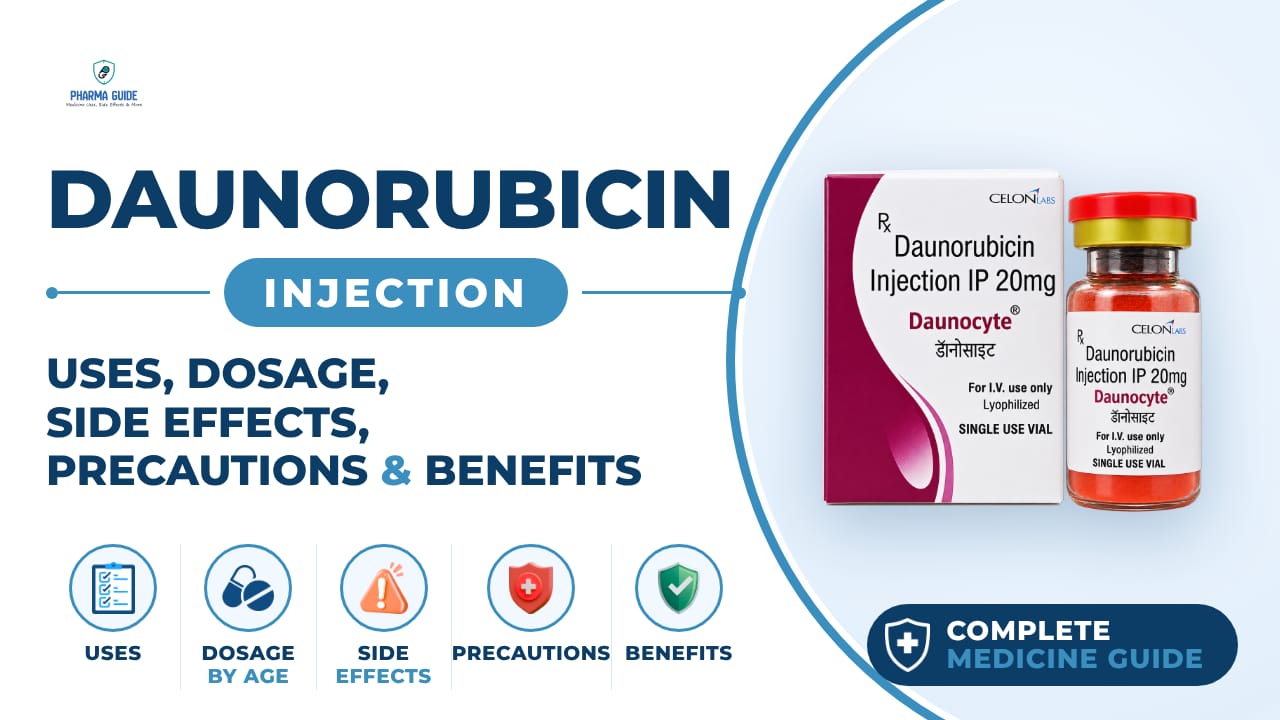
| Generic name | daunorubicin |
|---|---|
| Drug class | Antibiotics / antineoplastics |
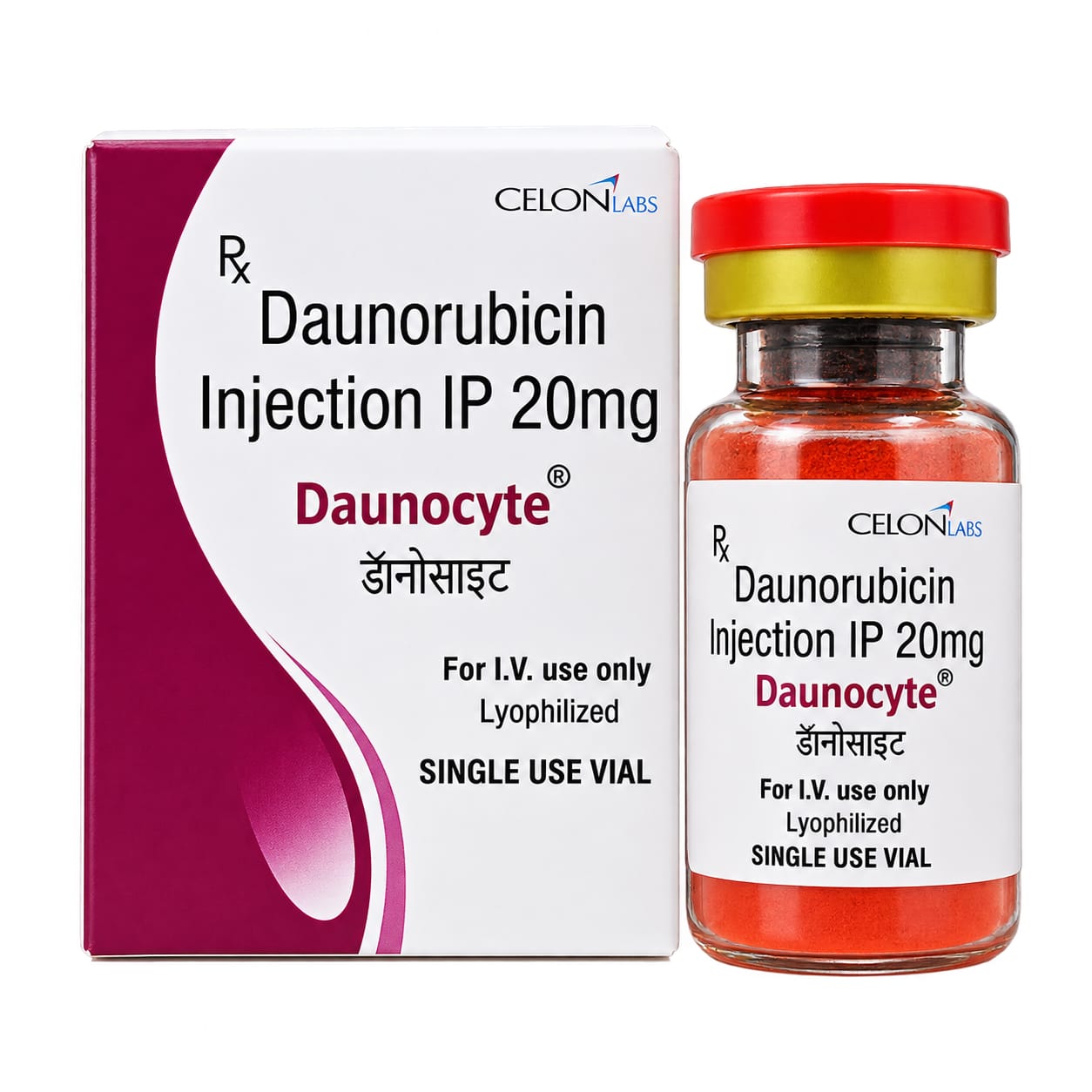
| Forms | Solution, Intravenous powder for injection (20 mg), Intravenous solution (5 mg/mL) |
Quick overview
Daunorubicin Injection (generic name: daunorubicin) is an intravenous chemotherapy medicine belonging to the antibiotic and antineoplastic drug class. It is used along with other drugs to treat certain types of leukemia by destroying fast-multiplying cancer cells. It is given only by a trained healthcare professional in a hospital or clinic setting and carries important warnings related to heart, blood cell, kidney, and liver effects.
What is Daunorubicin Injection
Daunorubicin is an intravenous chemotherapy medicine used along with other drugs to treat certain types of leukemia. It belongs to a group of medicines called antineoplastics, which are used to treat cancer.
Daunorubicin Injection uses
- Treats acute myeloid leukemia (AML)
- Treats acute lymphocytic leukemia (ALL)
- Used in combination chemotherapy to treat leukemia
Benefits of Daunorubicin Injection
- Destroys fast-multiplying cancer cells to help the body achieve remission
- Helps restore healthy blood cell production
How Daunorubicin Injection works
Daunorubicin works by slowing down the growth of cancer cells, interfering with how they grow until they are eventually destroyed. Because it also affects normal, healthy cells, it can cause other effects in the body.
Daunorubicin Injection dosage
This medicine is given as an infusion into a vein by a trained healthcare professional in a hospital or clinic setting; it is not taken at home. It is often given together with other medicines, so it's important to take each one at the right time if you have other medicines to take by mouth. You may be told to drink extra fluids during treatment to help you pass more urine and protect your kidneys.
This medicine often causes nausea and vomiting, but it is important to keep receiving it as scheduled even if you feel ill, unless your care team tells you to stop. Keep all follow-up appointments for your doses; do not skip or delay a scheduled dose. Before each dose, your heart, kidney, and liver function may be checked. There is a lifetime maximum amount of this medicine a person should receive, so tell your care team if you have had this medicine before.
Use exactly as prescribed by your doctor or pharmacist.
Available forms and strengths
- Solution
- Intravenous powder for injection (20 mg)
- Intravenous solution (5 mg/mL)
Side effects of Daunorubicin Injection
Common
- Hair loss (temporary; usually grows back after treatment)
- Red discoloration of urine lasting a day or two (not blood)
- Nausea and vomiting
- Diarrhea
- Sores or white patches in or around the mouth, trouble swallowing or talking, dry mouth, bad breath, altered sense of taste
- Stomach pain
- Darkening or redness of skin
Serious
- Allergic reaction: skin rash, itching, hives, swelling of the face, lips, tongue, or throat
- Heart failure: shortness of breath, swelling of the ankles, feet, or hands, sudden weight gain, unusual weakness or fatigue, irregular heartbeat
- High uric acid level: severe pain, redness, warmth, or swelling in joints, pain or trouble passing urine, pain in the lower back or sides
- Infection: fever, chills, cough, sore throat, wounds that don't heal, pain or trouble passing urine, general feeling of discomfort
- Low red blood cell level: unusual weakness or fatigue, dizziness, headache, trouble breathing
- Painful swelling, warmth, or redness of the skin, blisters or sores at the infusion site
- Tumor lysis syndrome: nausea, vomiting, diarrhea, decrease in amount of urine, dark urine, unusual weakness or fatigue, confusion, muscle pain or cramps, fast or irregular heartbeat, joint pain
- Unusual bruising or bleeding; black, tarry stools; blood in urine or stools; pinpoint red spots on skin
- Kidney problems: little or no urination, swelling in feet or ankles, feeling tired
- Liver problems: loss of appetite, stomach pain (upper right side), tiredness, itching, dark urine, clay-colored stools, jaundice
Warnings and precautions
- This medicine can weaken the heart muscle and may lead to heart failure, which can happen during treatment or years later.
- This medicine lowers white blood cell and platelet counts, increasing the risk of serious infections and unusual bleeding.
- If the medicine leaks out of the vein during the infusion, it can cause serious damage to the skin and surrounding tissue.
- Do not receive vaccines, including oral polio vaccine for people you live with, while being treated with this medicine or after stopping it, without your doctor's approval, since it can lower your body's resistance to infection.
- Using this medicine may increase the risk of developing other types of cancer, including leukemia, sometimes years later.
- There is a maximum lifetime amount of this medicine you can safely receive, so your care team will track how much you've had, including from past treatments.
- This medicine can cause serious birth defects if used during pregnancy. Effective birth control is recommended while taking it, and you should tell your doctor if you become pregnant or are trying to. Breastfeeding is not recommended while using this medicine.
- People with kidney disease may process this medicine more slowly, which can increase its effects, so tell your doctor if you have kidney disease. People with liver disease may process this medicine more slowly, which can increase its effects, so tell your doctor if you have liver disease. Liver impairment may require dose reduction because daunorubicin is partly cleared through the liver.
- Tell your healthcare professional if you drink alcohol, since certain medicines can interact with alcohol.
Storage
- This medication is given in a hospital or clinic. It will not be stored at home.
When to see a doctor
- Get emergency help right away if you have signs of an allergic reaction, such as hives, trouble breathing, or swelling of your face, lips, tongue, or throat.
- Call your doctor right away if you have signs of heart problems, such as swelling, rapid weight gain, or feeling short of breath.
- Call your doctor right away if you have signs of low blood cell counts, such as fever, chills, tiredness, mouth sores, skin sores, easy bruising, unusual bleeding, pale skin, cold hands and feet, or feeling light-headed.
- Call your doctor right away if you notice little or no urination, swelling in your feet or ankles, or feeling tired, which could be signs of kidney problems.
- Call your doctor right away if you have signs of liver problems, such as loss of appetite, upper right stomach pain, tiredness, itching, dark urine, clay-colored stools, or yellowing of the skin or eyes.
- Tell your caregivers right away if you feel burning, pain, or swelling around the IV needle while the medicine is being given.
- Call your care team if your urine is dark or brown rather than the normal harmless red color.
- Call your doctor immediately if you have signs of tumor lysis syndrome, such as nausea, vomiting, diarrhea, decreased urination, dark urine, weakness, confusion, muscle pain or cramps, fast or irregular heartbeat, or joint pain.
Alternatives
- Vyxeos
- Mitoxantrone
- Doxorubicin
- Idarubicin
Watch the video
FAQs
What is Daunorubicin Injection used for?
It is an intravenous chemotherapy medicine used along with other drugs to treat acute myeloid leukemia (AML) and acute lymphocytic leukemia (ALL) by destroying fast-multiplying cancer cells.
How is Daunorubicin Injection given?
It is given as an infusion into a vein by a trained healthcare professional in a hospital or clinic setting; it is not taken at home, and it is often given together with other medicines.
Does Daunorubicin Injection cause red urine?
Yes, it commonly causes red discoloration of urine lasting a day or two, which is not blood. However, dark or brown urine is not normal and should be reported to your care team.
What are the serious side effects of Daunorubicin Injection?
Serious effects include heart failure, low blood cell counts leading to infection or bleeding, high uric acid levels, tumor lysis syndrome, kidney problems, liver problems, and damage at the infusion site if the medicine leaks out of the vein.
Is there a lifetime limit on Daunorubicin Injection?
Yes, there is a maximum lifetime amount of this medicine a person should receive, so your care team will track how much you've had, including from past treatments.
General information, not medical advice
Your prescriber and the leaflet in your pack know your situation. This page does not.
- Follow your prescriber and the leaflet
- Don't start, stop, or change a dose on your own
- Doses and warnings differ by country and product
Sources
Video
Related medicines

Injectafer Injection: Uses, Dosage, Side Effects, Precautions and Alternates
Iron products
Injectafer (ferric carboxymaltose) treats iron deficiency anemia and heart failure-related iron deficiency via IV. Learn uses, dosage, side effects, and

Gliclazide Tablet: Uses, Dosage, Side Effects, Precautions and Alternates
Sulfonylurea (hypoglycemic/antidiabetic agent)
Gliclazide Tablet is a sulfonylurea for type 2 diabetes that boosts insulin release. Learn about dosage, side effects, warnings, and precautions.