
Safety
General information, not medical advice
Your prescriber and the leaflet in your pack know your situation. This page does not.
- Follow your prescriber and the leaflet
- Don't start, stop, or change a dose on your own
- Doses and warnings differ by country and product
Dayvigo Tablet: Uses, Dosage, Side Effects, Precautions and Alternates
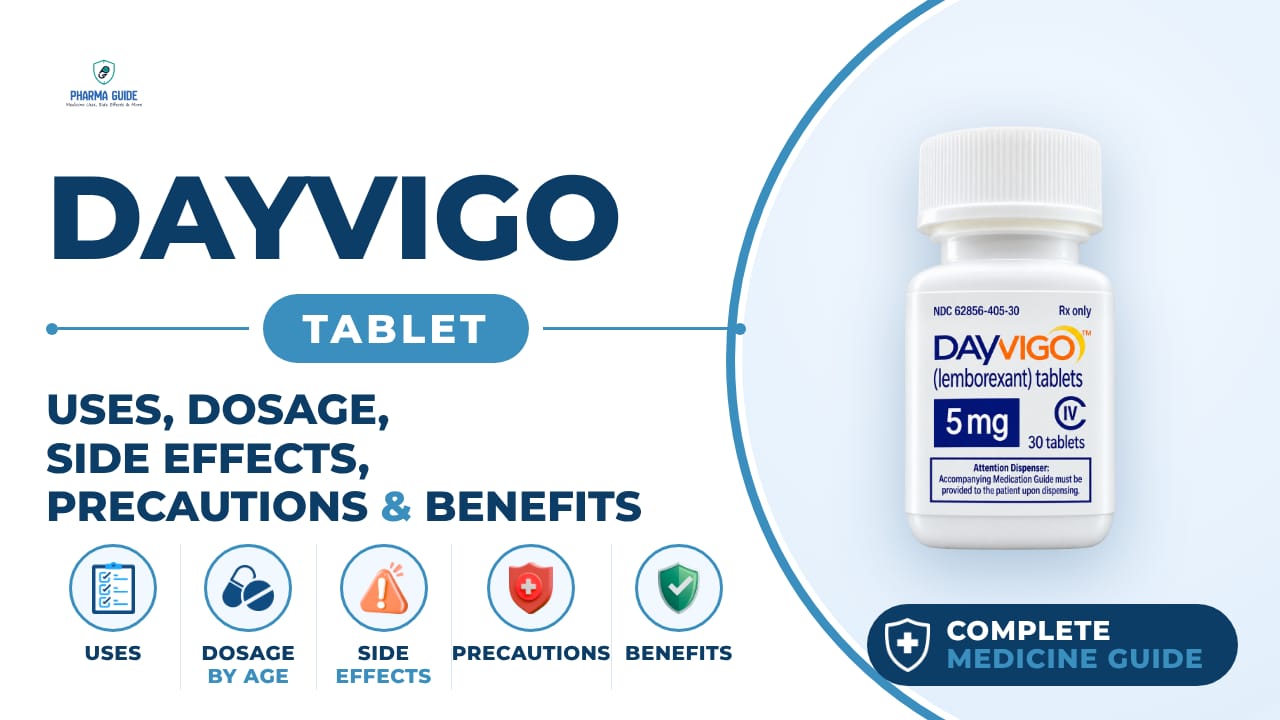
| Generic name | lemborexant |
|---|---|
| Drug class | Dual orexin receptor antagonist (miscellaneous anxiolytics, sedatives and hypnotics) |
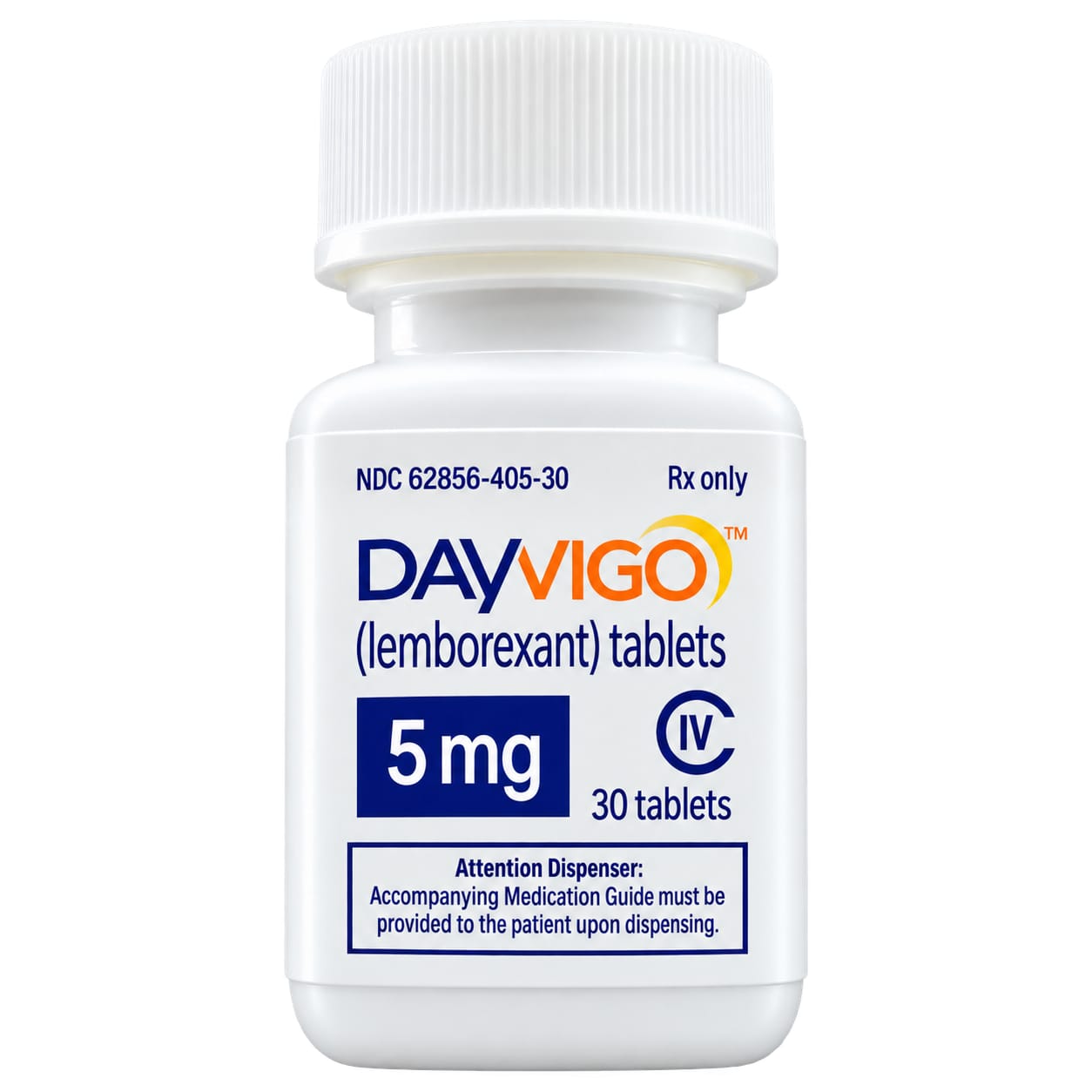
| Forms | Oral tablet (5 mg and 10 mg film-coated tablets) |
Quick overview
Dayvigo Tablet (lemborexant) is a prescription sleeping pill for adults who have trouble falling asleep, staying asleep, or both. It belongs to a drug class called dual orexin receptor antagonists and is taken once nightly. Dayvigo works by blocking a brain chemical called orexin that keeps you awake, helping you fall asleep faster and stay asleep longer.
What is Dayvigo Tablet
Dayvigo is a prescription sleeping pill used by adults who have trouble falling asleep or staying asleep. It helps you fall asleep faster and stay asleep longer. Its generic name is lemborexant, and it belongs to the dual orexin receptor antagonist class of medicines (miscellaneous anxiolytics, sedatives and hypnotics).
Dayvigo Tablet uses
- Treats insomnia in adults who have trouble falling asleep, staying asleep, or both
- Treats insomnia
- Helps with difficulty falling asleep
- Helps with difficulty staying asleep
- May improve overall sleep duration
Benefits of Dayvigo Tablet
- Helps you fall asleep faster
- Helps you stay asleep longer
- May help you get a better night's rest
- Provides once-nightly dosing
- Can improve both sleep onset and sleep maintenance
- Uses a different mechanism from benzodiazepines
How Dayvigo Tablet works
Dayvigo blocks orexin, a natural brain chemical that keeps you awake. By blocking orexin from attaching to its receptors, it helps quiet the urge to wake up, which helps you fall and stay asleep. It targets the brain's orexin wake-promoting system.
Dayvigo Tablet dosage
Take Dayvigo exactly as your doctor tells you to, only once each night, right before you get into bed. Only take it when you can stay in bed for a full night of at least 7 hours. It can be taken with or without food, but it may take longer to work if taken with or soon after a meal. Do not increase your dose on your own without talking to your doctor first. If your sleep problem does not improve within 7 to 10 days, or gets worse, tell your doctor. Avoid eating grapefruit or drinking grapefruit juice while taking this medicine unless your doctor says it is safe. If you miss a dose, skip it unless you can still get a full 7 hours of sleep afterward; do not take a double dose the next night.
| Age group | Dose |
|---|---|
| Under 18 years | Safety and effectiveness are not established; no standard pediatric dose |
| 18–64 years | 5 mg once nightly |
| 65–74 years | 5 mg once nightly |
Available forms and strengths
- Oral tablet, film-coated, available in 5 mg and 10 mg strengths
Side effects of Dayvigo Tablet
Common
- Excessive daytime sleepiness or drowsiness, including next-day drowsiness
- Headache
- Nightmares or unusual, vivid dreams
- Fatigue
- Temporary muscle or leg weakness (mild cataplexy-like symptoms)
- Heart palpitations
Serious
- Next-day impairment affecting alertness, coordination, and driving ability
- Complex sleep behaviors such as sleepwalking, sleep-driving, or preparing food with no memory of it
- Sleep paralysis (temporary inability to move or talk for a few minutes when falling asleep or waking up)
- Hallucinations when falling asleep or waking up
- Worsening depression or suicidal thoughts
- Severe allergic reaction (rash, itching, flushing, facial swelling)
- Slow or shallow breathing when combined with other drugs that cause drowsiness
Warnings and precautions
- Dayvigo can reduce your alertness and coordination the morning after you take it, which can affect your ability to drive safely.
- Some people do activities like sleepwalking, sleep-driving, or making food while not fully awake and have no memory of it afterward. Stop the medicine and tell your doctor right away if this happens.
- Dayvigo can cause a brief inability to move or speak when falling asleep or waking up, sometimes along with vivid hallucinations.
- This medicine can cause or worsen depression and suicidal thoughts.
- Dayvigo should not be used by people with narcolepsy and should not be combined with alcohol or other drugs that cause drowsiness.
- Dayvigo is a controlled substance because it has potential for misuse, abuse, or dependence.
- Pregnancy: It is not known if Dayvigo can harm an unborn baby. There is a pregnancy registry to track outcomes for people who take Dayvigo during pregnancy. Talk with your doctor about the risks and benefits.
- Breastfeeding: Dayvigo passes into breast milk in small amounts. Babies who are breastfed should be watched for excessive sleepiness.
- Liver: Avoid in severe hepatic impairment; lower dosing may be appropriate with moderate impairment.
- People with moderate liver problems should not take more than 5 mg, and Dayvigo is not recommended for people with severe liver problems.
- Alcohol: Do not drink alcohol while taking Dayvigo, as it can increase the chance of serious side effects like memory problems, poor coordination, and excessive sleepiness.
- Driving: Do not drive or do other activities that require full alertness until you know how Dayvigo affects you, especially if you got less than 7 hours of sleep or took more than prescribed.
Storage
- Store at room temperature between 68°F to 77°F (20°C to 25°C)
- Keep out of the reach of children
- Store away from light and moisture
- Do not store in the bathroom
- Do not flush medications down the toilet or pour them into a drain unless instructed to do so
- Properly discard this product when it is expired or no longer needed; consult your pharmacist or local waste disposal company
When to see a doctor
- Call your doctor right away if you experience sleepwalking, sleep-driving, or other activities done while not fully awake.
- Call your doctor right away if you have worsening depression or thoughts of suicide or dying.
- If you take too much Dayvigo, call your doctor or go to the nearest hospital emergency room right away.
- Call your doctor immediately if you notice confusion, new or worsening sadness or fear, thoughts of suicide, or unusual behavior.
- If side effects seem like a medical emergency, get emergency help immediately.
Alternatives
- Suvorexant
- Belsomra
- Daridorexant
- Quviviq
Watch the video
FAQs
What is Dayvigo Tablet used for?
Dayvigo is a prescription sleeping pill used by adults who have trouble falling asleep, staying asleep, or both, helping them fall asleep faster and stay asleep longer.
How does Dayvigo work?
Dayvigo blocks orexin, a natural brain chemical that keeps you awake, by preventing it from attaching to its receptors. This helps quiet the urge to wake up, allowing you to fall and stay asleep.
What is the dosage for Dayvigo Tablet?
Dayvigo is taken once each night right before bed, only when you can stay in bed for a full 7 hours. The typical dose for adults aged 18 to 74 is 5 mg once nightly, and it should not be increased without a doctor's guidance.
What are the serious side effects of Dayvigo?
Serious side effects include next-day impairment affecting alertness and driving ability, complex sleep behaviors like sleepwalking or sleep-driving, sleep paralysis, hallucinations, worsening depression or suicidal thoughts, and severe allergic reactions.
Can I drink alcohol while taking Dayvigo?
No, you should not drink alcohol while taking Dayvigo, as it can increase the chance of serious side effects like memory problems, poor coordination, and excessive sleepiness.
General information, not medical advice
Your prescriber and the leaflet in your pack know your situation. This page does not.
- Follow your prescriber and the leaflet
- Don't start, stop, or change a dose on your own
- Doses and warnings differ by country and product
Sources
Video
Related medicines

Injectafer Injection: Uses, Dosage, Side Effects, Precautions and Alternates
Iron products
Injectafer (ferric carboxymaltose) treats iron deficiency anemia and heart failure-related iron deficiency via IV. Learn uses, dosage, side effects, and

Gliclazide Tablet: Uses, Dosage, Side Effects, Precautions and Alternates
Sulfonylurea (hypoglycemic/antidiabetic agent)
Gliclazide Tablet is a sulfonylurea for type 2 diabetes that boosts insulin release. Learn about dosage, side effects, warnings, and precautions.