
Safety
General information, not medical advice
Your prescriber and the leaflet in your pack know your situation. This page does not.
- Follow your prescriber and the leaflet
- Don't start, stop, or change a dose on your own
- Doses and warnings differ by country and product
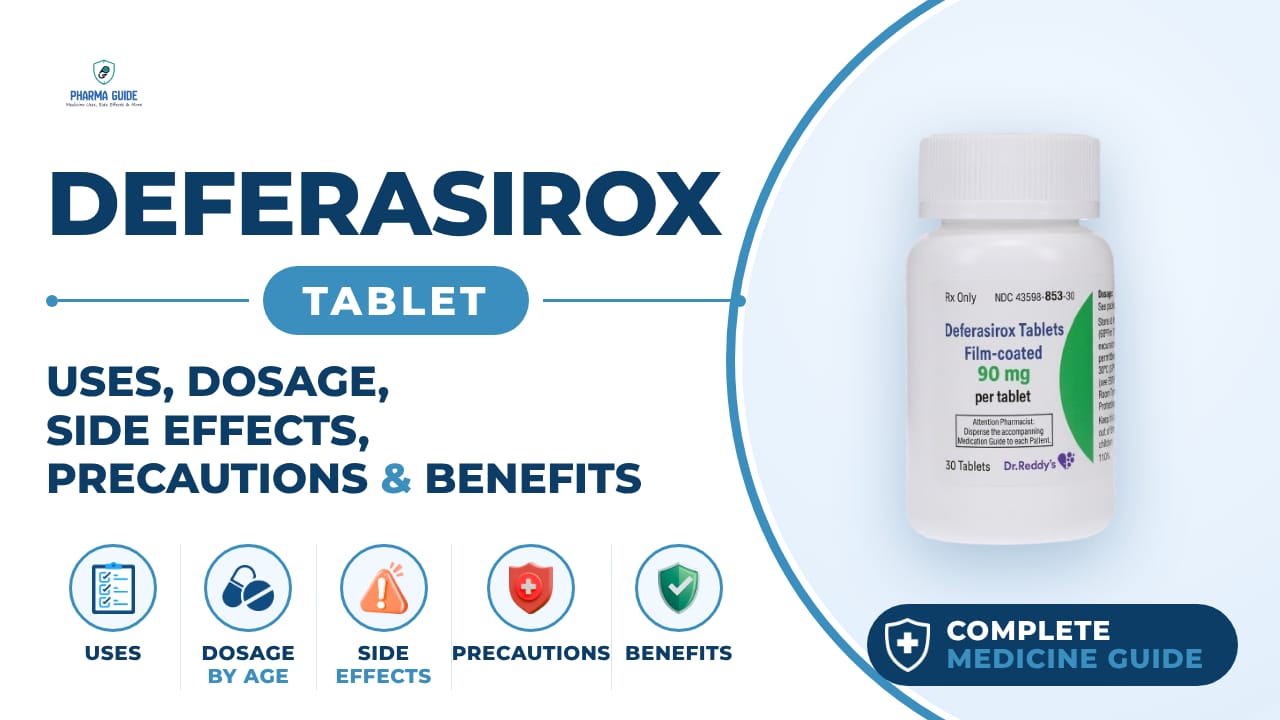
Deferasirox Tablet: Uses, Dosage, Side Effects, Precautions and Alternates
| Generic name | Deferasirox |
|---|---|
| Drug class | Iron chelating agent |
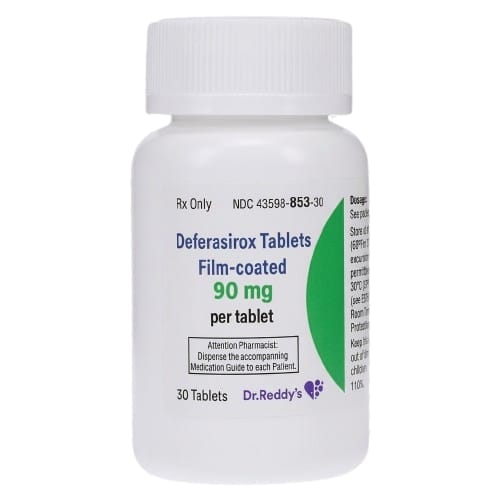
| Forms | Film-coated tablet, Granules |
Quick overview
Deferasirox is a prescription iron chelating agent used to remove extra iron from the body in people who have had repeated blood transfusions or who have thalassemia. It works by binding to iron in the blood so it can be removed, mainly through the stool. It is taken once daily and requires monitoring, as it can affect the kidneys, liver, and other body systems.
What is Deferasirox Tablet
Deferasirox is a prescription medicine that removes extra iron from the body. It is used in people who have too much iron because of repeated blood transfusions, or because of a condition called thalassemia.
Deferasirox Tablet uses
- Treating long-term (chronic) iron overload caused by frequent blood transfusions in people 2 years and older
- Treating iron overload in certain people 10 years and older with thalassemia who are not receiving regular blood transfusions
Benefits of Deferasirox Tablet
- Helps remove excess iron from the body, mainly through the stool
- Helps prevent organ damage (such as to the liver and heart) that can be caused by long-term iron overload
How Deferasirox Tablet works
Deferasirox attaches to iron in the blood, forming a combination that the body then removes, mainly in the stool.
Deferasirox Tablet dosage
Take it once a day, every day, at about the same time each day, with some water. You may take it on an empty stomach or with a light meal. Film-coated tablets should not be taken with a high fat meal.
If you cannot swallow the tablets whole, you can crush them and sprinkle all of it onto soft food like yogurt or apple sauce, then eat it all right away without saving any for later. Do not use store-bought pill crushers with serrated surfaces for crushing the 90 mg tablets.
Taking it at the same time each day can help you remember your dose. Continue taking it every day for as long as your doctor tells you, even if you feel well, since it controls but does not cure the condition. Do not stop taking it suddenly unless your doctor tells you to.
Do not take a double dose if you miss one; skip the missed dose if it is almost time for the next one. Elderly patients should be monitored closely by their doctor, as they may have more side effects.
| Age group | Dose |
|---|---|
| Under 2 years | Not recommended |
| 2–18 years | 20 mg, once/day |
| 18–60 years | 20 mg, once/day |
| 60+ years | 20 mg, once/day |
Available forms and strengths
- Film-coated tablet
- Granules
Side effects of Deferasirox Tablet
Common
- Headache
- Stomach or bowel problems such as abdominal pain, nausea, diarrhea, vomiting, bloating, indigestion, constipation
- Rash and itching
- Dizziness
- Trouble sleeping
- Fever or cold/flu-like symptoms, cough, sore throat
- Swelling of arms or legs
- Change in skin color
- Feeling sleepy or tired
- Anxiety
- Sore muscles or joints
- Hair loss
- Earache or pain in the ear
- Voice changes
Serious
- Changes in sight such as blurred or cloudy vision, or partial loss of vision
- Signs of severe skin reaction: rash, red skin, blistering of lips, eyes or mouth, skin peeling, high fever, flu-like symptoms, enlarged lymph nodes
- Severe itching of the skin with a red rash or raised bumps
- Swelling of the face, lips, tongue or throat
- Substantially reduced urine output (possible kidney problem)
- Vomiting with blood and/or black stools
- Hearing disturbances or decreased hearing
- Difficulty breathing or swallowing
- Sudden back pain or pain on the right side of the abdomen (possible gallstones)
- Severe upper stomach pain (possible pancreatitis)
- A tear in the stomach or intestine wall causing pain and nausea
- Drowsiness, upper right abdominal pain, yellowing of skin or eyes, and dark urine (possible liver problem)
Warnings and precautions
- This medicine can cause severe stomach and intestine bleeding or ulcers, sometimes with tears, that have caused death, especially in elderly people with advanced blood cancers or low platelet counts.
- This medicine may cause serious allergic reactions, usually within the first month of treatment.
- This medicine can affect the bone marrow, causing low white blood cell counts, decreased platelets, or worsening anemia, which may lead to death.
- Severe skin reactions can occur that can be life-threatening or fatal.
- Do not take this medicine if you have certain kidney problems, high-risk myelodysplastic syndrome, advanced cancer, or a low platelet count.
- Elderly people may be at higher risk of serious side effects and death from this medicine.
- Do not combine this medicine with other iron chelator medicines, as the safety of such combinations is not known.
- If you become pregnant while taking this medicine, tell your doctor right away, as it may affect your developing baby. This medicine is not recommended during pregnancy unless clearly necessary.
- Breastfeeding while taking this medicine is not recommended, as it is not known if it passes into human breast milk.
- This medicine can cause sudden kidney problems, including kidney failure. People who already have kidney problems may be at increased risk. It should not be used in people with severe kidney disease.
- This medicine can cause liver problems, including liver failure that can sometimes be fatal, and it is not recommended for people with severe liver impairment.
- It is not known how this medicine interacts with alcohol, so check with your doctor before drinking alcohol while taking it.
- This medicine may cause dizziness. Be careful driving or using machinery until you know how it affects you, and do not drive or operate machinery if you feel dizzy.
Storage
- Store in a cool dry place where the temperature is below 25°C, out of direct light
- Keep it in the original container, in a safe place away from children
- Do not store it in the bathroom or near a sink, or in the car or on window sills
- If you no longer need the medicine or it is out of date, take it to any pharmacy for safe disposal
- Do not use this medicine after the expiry date
- Keep the bottle closed tightly and away from moisture
When to see a doctor
- Call your doctor right away if you notice much less urine than usual, which could be a sign of a kidney problem.
- Call your doctor right away if you have drowsiness, upper right abdomen pain, yellowing of skin or eyes, or dark urine, which can be signs of a liver problem.
- Get emergency medical help right away if you vomit blood, pass black or bloody stools, or have severe stomach pain.
- Get medical help right away if you develop signs of a serious allergic reaction, such as difficulty breathing or swallowing, chest pain, rapid heartbeat, feeling faint, swelling of the face/lips/tongue/throat, severe itching with red rash or raised bumps, or hives.
- Get medical help right away if you notice signs of a severe skin reaction, such as rash or red skin, blisters on the lips or around the mouth or eyes, mouth sores, skin peeling, high fever or flu-like symptoms, or enlarged lymph nodes.
- Tell your doctor straight away if you develop a rash, red skin, blistering of the lips, eyes or mouth, skin peeling, high fever, flu-like symptoms, or enlarged lymph nodes, and stop taking the medicine immediately.
- If you think you have taken too much of this medicine, seek urgent medical attention even if you feel fine, by contacting your doctor, calling your local poison control center, or going to the nearest hospital emergency department.
Alternatives
- Ferriprox
- Deferiprone
- Deferoxamine
Watch the video
FAQs
What is Deferasirox tablet used for?
It treats chronic iron overload caused by frequent blood transfusions in people 2 years and older, and iron overload in certain people 10 years and older with thalassemia who are not receiving regular blood transfusions.
How does Deferasirox work?
Deferasirox attaches to iron in the blood, forming a combination that the body then removes, mainly through the stool.
How should I take Deferasirox tablets?
Take it once a day at about the same time, with water, on an empty stomach or with a light meal. If you cannot swallow it whole, you can crush it and sprinkle it onto soft food like yogurt or apple sauce and eat it right away.
What are the serious side effects of Deferasirox?
Serious side effects include vision changes, severe skin reactions, reduced urine output, vomiting blood or black stools, hearing disturbances, severe stomach pain, and signs of liver problems such as yellowing of skin or eyes and dark urine.
Can I drink alcohol while taking Deferasirox?
It is not known how this medicine interacts with alcohol, so you should check with your doctor before drinking alcohol while taking it.
General information, not medical advice
Your prescriber and the leaflet in your pack know your situation. This page does not.
- Follow your prescriber and the leaflet
- Don't start, stop, or change a dose on your own
- Doses and warnings differ by country and product
Sources
Video
Related medicines

Injectafer Injection: Uses, Dosage, Side Effects, Precautions and Alternates
Iron products
Injectafer (ferric carboxymaltose) treats iron deficiency anemia and heart failure-related iron deficiency via IV. Learn uses, dosage, side effects, and

Gliclazide Tablet: Uses, Dosage, Side Effects, Precautions and Alternates
Sulfonylurea (hypoglycemic/antidiabetic agent)
Gliclazide Tablet is a sulfonylurea for type 2 diabetes that boosts insulin release. Learn about dosage, side effects, warnings, and precautions.