
Safety
General information, not medical advice
Your prescriber and the leaflet in your pack know your situation. This page does not.
- Follow your prescriber and the leaflet
- Don't start, stop, or change a dose on your own
- Doses and warnings differ by country and product
Delstrigo Tablet: Uses, Dosage, Side Effects, Precautions and Alternates
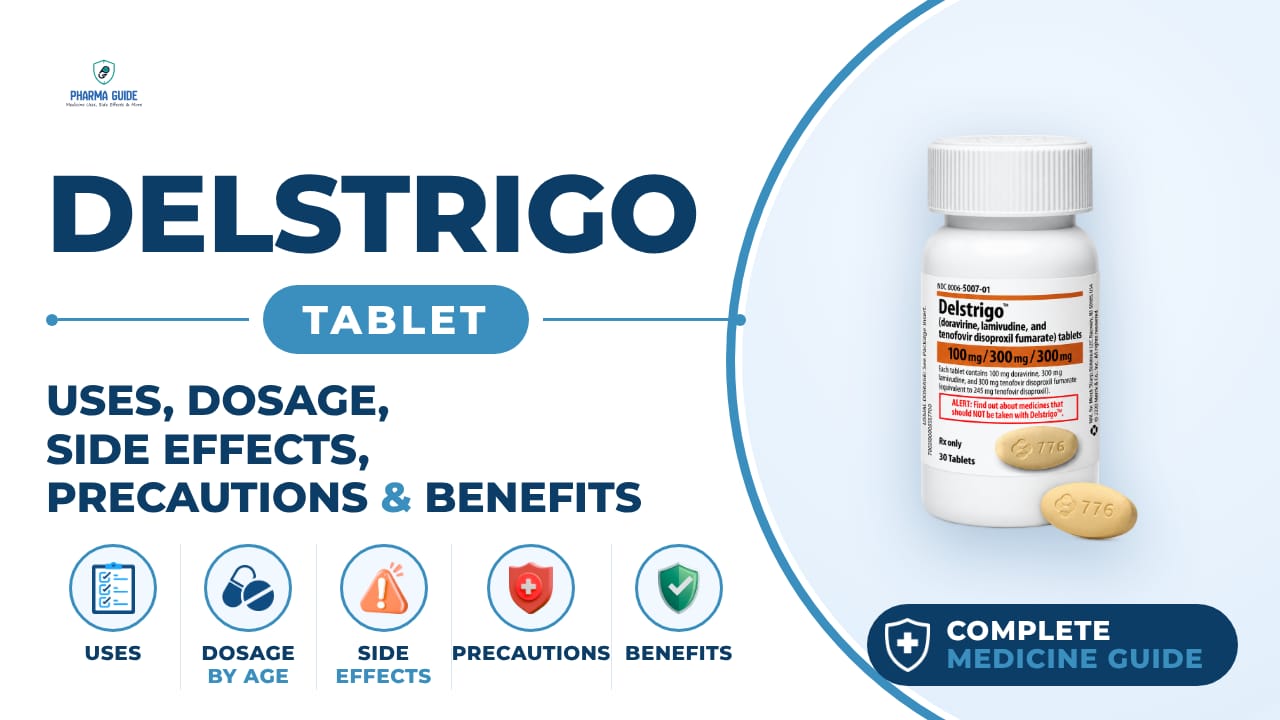
| Generic name | doravirine/lamivudine/tenofovir disoproxil fumarate |
|---|---|
| Drug class | Antiviral Agent (combination of NNRTI and two NRTIs) |
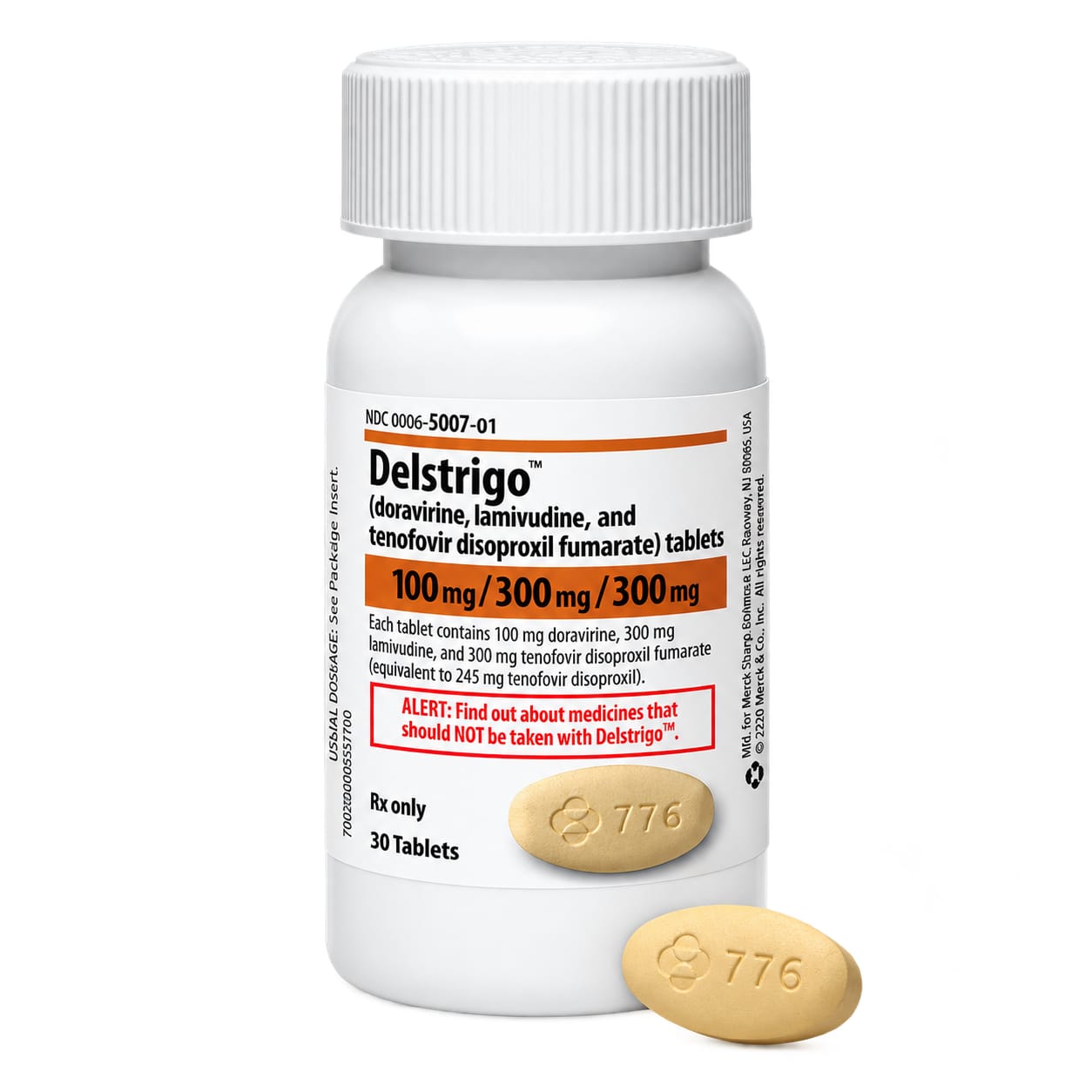
| Forms | Film-coated tablet (100 mg doravirine / 300 mg lamivudine / 300 mg tenofovir disoproxil fumarate) |
Quick overview
Delstrigo Tablet is a combination antiretroviral medicine containing doravirine, lamivudine, and tenofovir disoproxil fumarate, used to treat HIV-1 infection in adults. It works by blocking enzymes HIV needs to multiply, helping lower viral load and support immune function. It is taken once daily by mouth and comes with important precautions related to kidney function, liver health, and hepatitis B coinfection.
What is Delstrigo Tablet
Delstrigo is a tablet that combines three medicines used together to treat HIV-1 infection in adults. It belongs to a group of medicines called antiretroviral medicines.
Delstrigo Tablet uses
- Treatment of HIV-1 infection in adults without past or present evidence of resistance to doravirine, lamivudine, or tenofovir
- For people 18 years of age and older with HIV infection
Benefits of Delstrigo Tablet
- Can help lower the amount of HIV in your blood (your viral load)
- Can increase your CD4+ T cell count, which can make your immune system stronger
- May reduce your risk of death or getting infections that can happen when your immune system is weak
How Delstrigo Tablet works
Delstrigo contains three medicines that each block an enzyme HIV needs to make more copies of itself. This lowers the amount of HIV in the blood and helps the immune system recover, but it does not cure HIV.
Delstrigo Tablet dosage
Take exactly as your doctor tells you, by mouth, once a day at about the same time every day, with or without food. Swallow the tablet whole; do not crush or chew it. Delstrigo is taken by itself and should not be taken with other HIV medicines. Do not change your dose or stop taking this or any other HIV medicine without talking to your doctor.
If you miss a dose, take it as soon as you remember unless it is almost time for your next dose; do not take two doses at one time. If you also take rifabutin, your doctor may have you take an extra doravirine tablet about 12 hours after your Delstrigo dose. Do not run out of this medicine; refill your prescription before it is gone.
| Age group | Dose |
|---|---|
| Pediatric patients ≥35 kg | 1 tablet once daily |
| Adults 18–64 years | 1 tablet once daily |
Available forms and strengths
- Film-coated tablet (100 mg doravirine / 300 mg lamivudine / 300 mg tenofovir disoproxil fumarate)
Side effects of Delstrigo Tablet
Common
- Dizziness
- Abnormal dreams, insomnia, nightmares
- Headache
- Sleepiness (somnolence)
- Nausea, diarrhea, vomiting
- Feeling tired (fatigue)
- Feeling weak
- Depression
Serious
- Severe acute exacerbation of hepatitis B after stopping the drug in people coinfected with HIV and HBV
- Kidney problems, including acute renal failure and Fanconi syndrome
- Bone problems: bone pain, softening, or thinning, which may lead to fractures
- Lactic acidosis and severe hepatomegaly with steatosis
- Immune reconstitution inflammatory syndrome
- Severe allergic reactions, including swelling of face, lips, mouth, tongue, or throat
- Severe skin reactions such as Stevens-Johnson syndrome and toxic epidermal necrolysis
- Anemia and other blood cell abnormalities including pure red cell aplasia
Warnings and precautions
- If you have both HIV and hepatitis B, your hepatitis B can suddenly get much worse if you stop taking this medicine, and this can be life-threatening. Your doctor will need to monitor you closely for months after stopping treatment.
- This medicine can harm the kidneys, including causing kidney failure and a condition called Fanconi syndrome. Your doctor will check your kidney function before and during treatment.
- This medicine must not be taken with certain other drugs, including some seizure medicines, St. John's wort, and certain tuberculosis and cancer medicines, because they can make this medicine not work properly.
- This medicine does not stop you from being able to pass HIV to others through sex, sharing needles, or blood exposure, so safe practices should always be followed.
- This medicine can cause weakening of the bones over time, including bone pain, softening, or thinning that may lead to fractures.
- Delstrigo has not been studied in pregnant women and should only be used in pregnancy if the potential benefits outweigh the risks. There is a pregnancy registry to track outcomes for women who take this medicine while pregnant.
- Women with HIV should not breastfeed because HIV and components of this medicine can pass into breast milk and may be passed to the infant.
- This medicine should not be started in people with reduced kidney function (creatinine clearance below 50 mL/min) and should be stopped if kidney function declines below this level, because the kidney problems and other components of the drug cannot have their doses adjusted in this fixed combination tablet.
- No dose change is needed for mild or moderate liver impairment, but this medicine has not been studied in people with severe liver impairment, so caution is advised in that group.
- It is not specifically known if alcohol affects this medicine, but drinking alcohol may increase the risk of feeling dizzy.
- This medicine can cause tiredness, dizziness, and sleepiness, so you should avoid driving or operating machinery until you know how it affects you.
Storage
- Store in the original bottle. Keep the bottle tightly closed to protect from moisture.
- Do not remove the desiccants.
- Store at room temperature (15°C to 30°C).
- Keep out of reach and sight of children.
When to see a doctor
- Get medical help right away if you notice yellowing of the skin or eyes, dark urine, pale stools, loss of appetite, nausea, or stomach pain, as these can be signs of a serious liver or hepatitis flare-up problem.
- Seek immediate help for signs of a severe allergic reaction, such as swelling of the face, lips, mouth, tongue, or throat, which can cause trouble swallowing or breathing.
- Contact your doctor right away if you develop high fever, joint or muscle pain, redness, rash, swelling, fatigue, or other new symptoms after starting this medicine, as this could be a sign your immune system is reacting to a hidden infection.
- Seek medical help if you notice changes in urination, swelling in your legs and feet, or ongoing tiredness and lack of energy, which could be signs of kidney problems.
- Get medical attention right away for signs of a severe skin reaction, such as mouth sores or blisters on the body.
Alternatives
- Dolutegravir-based regimens
- Bictegravir-based regimens
- Darunavir-based regimens
Watch the video
FAQs
What is Delstrigo Tablet used for?
Delstrigo is used to treat HIV-1 infection in adults 18 years and older who have no past or present evidence of resistance to doravirine, lamivudine, or tenofovir.
How should I take Delstrigo Tablet?
Take it by mouth once a day at about the same time every day, with or without food. Swallow the tablet whole without crushing or chewing it, and do not take it with other HIV medicines.
What are the common side effects of Delstrigo Tablet?
Common side effects include dizziness, abnormal dreams, insomnia, nightmares, headache, sleepiness, nausea, diarrhea, vomiting, fatigue, weakness, and depression.
Can Delstrigo Tablet affect the kidneys?
Yes, Delstrigo can harm the kidneys, including causing kidney failure and Fanconi syndrome. It should not be started in people with a creatinine clearance below 50 mL/min and should be stopped if kidney function declines below this level.
What happens if I stop taking Delstrigo and I have hepatitis B?
If you have both HIV and hepatitis B, stopping Delstrigo can cause your hepatitis B to suddenly get much worse, which can be life-threatening, so your doctor will monitor you closely for months after stopping treatment.
General information, not medical advice
Your prescriber and the leaflet in your pack know your situation. This page does not.
- Follow your prescriber and the leaflet
- Don't start, stop, or change a dose on your own
- Doses and warnings differ by country and product
Sources
Video
Related medicines

Injectafer Injection: Uses, Dosage, Side Effects, Precautions and Alternates
Iron products
Injectafer (ferric carboxymaltose) treats iron deficiency anemia and heart failure-related iron deficiency via IV. Learn uses, dosage, side effects, and

Gliclazide Tablet: Uses, Dosage, Side Effects, Precautions and Alternates
Sulfonylurea (hypoglycemic/antidiabetic agent)
Gliclazide Tablet is a sulfonylurea for type 2 diabetes that boosts insulin release. Learn about dosage, side effects, warnings, and precautions.